Oven Control Board Failure: Signs, Causes, and What to Do Next
When your oven won’t heat, displays error codes, or turns on and off randomly, the culprit isn’t always the heating element—it could be the oven control board, the digital brain that manages temperature, timing, and power flow in modern ovens. Also known as an electronic control unit, this small circuit board is responsible for sending signals to the heating elements, fans, and display. If it fails, your oven might look fine but act completely broken.
Control board failure doesn’t happen overnight. It’s usually the result of heat buildup, power surges, or moisture from cleaning. In commercial kitchens—where ovens run 12 hours a day, seven days a week—this is a common issue. You might see flashing error codes like F1, F3, or E0, or the oven might power up but not heat. Sometimes, the display works but the oven won’t turn on at all. If you’ve already checked the heating element and thermostat, and those are fine, the control board is the next logical suspect. It’s not always the most expensive part to replace, but it’s often the most confusing to diagnose.
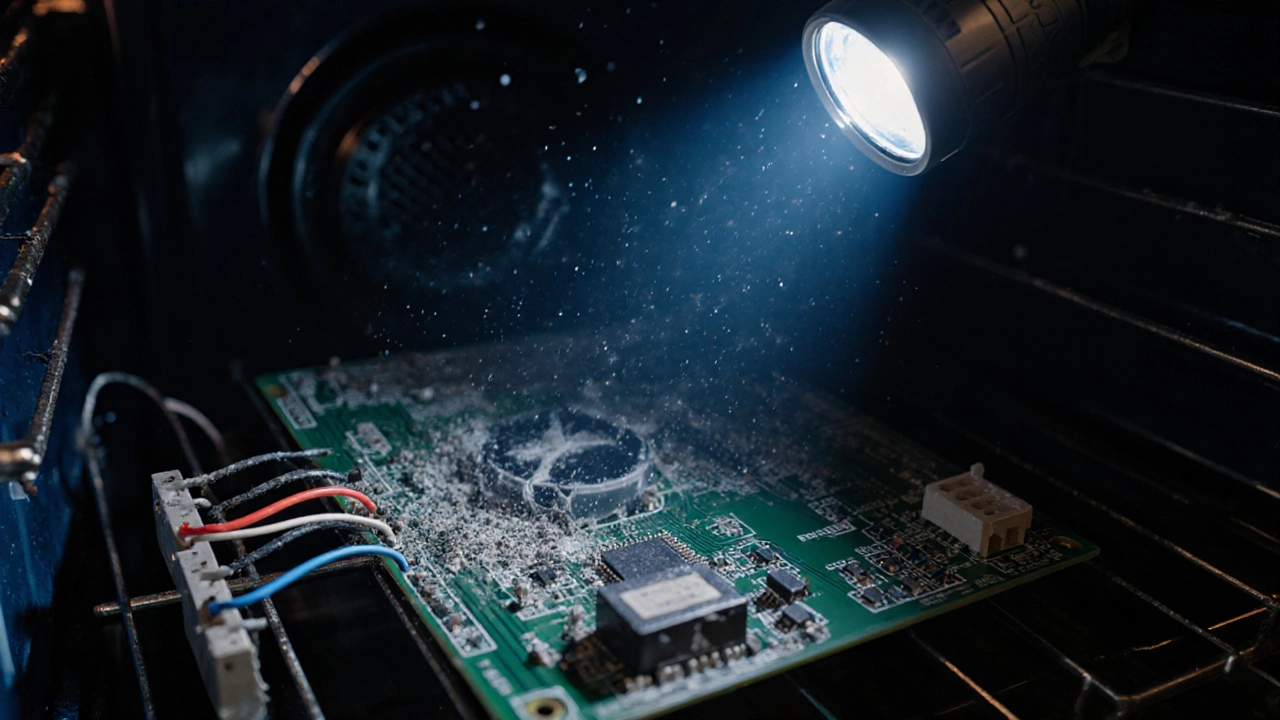
Many people assume a broken control board means a full oven replacement—but that’s not true. In many cases, especially with mid-range or commercial-grade ovens, swapping out the control board is cheaper and faster than buying new. You just need to know how to test it. Most boards can be tested with a multimeter for continuity, or by comparing voltage readings to the manufacturer’s specs. If the board is fried, you’ll often see burnt spots, swollen capacitors, or a strong smell of overheated plastic. If you’re not comfortable doing that yourself, a trained technician can pull the board, check the connections, and confirm the issue in under 30 minutes.
It’s also worth noting that control board failures often happen after a power surge. If your kitchen had a recent lightning storm or electrical glitch, that’s likely the trigger. Installing a surge protector for your oven isn’t expensive and can save you hundreds in repairs down the line. And if you’re running a restaurant, hotel, or catering business, having a backup plan for oven downtime isn’t optional—it’s essential.
What you’ll find in the posts below are real-world fixes, diagnostic steps, and cost comparisons from technicians who’ve seen it all. From how to tell if it’s the control board versus a faulty thermostat, to whether it’s worth repairing a 5-year-old oven after a board failure, these guides cut through the noise. No fluff. No theory. Just what actually works when your oven stops cooperating.
Is It Worth Replacing an Oven Control Board? Cost, Risks, and Real-World Decisions
Deciding whether to replace an oven control board? Learn the real costs, risks, and when it’s smarter to buy a new oven instead. Practical advice for Australian homeowners.