Oven Control Board Replacement: Fix, Test, and When to Call a Pro
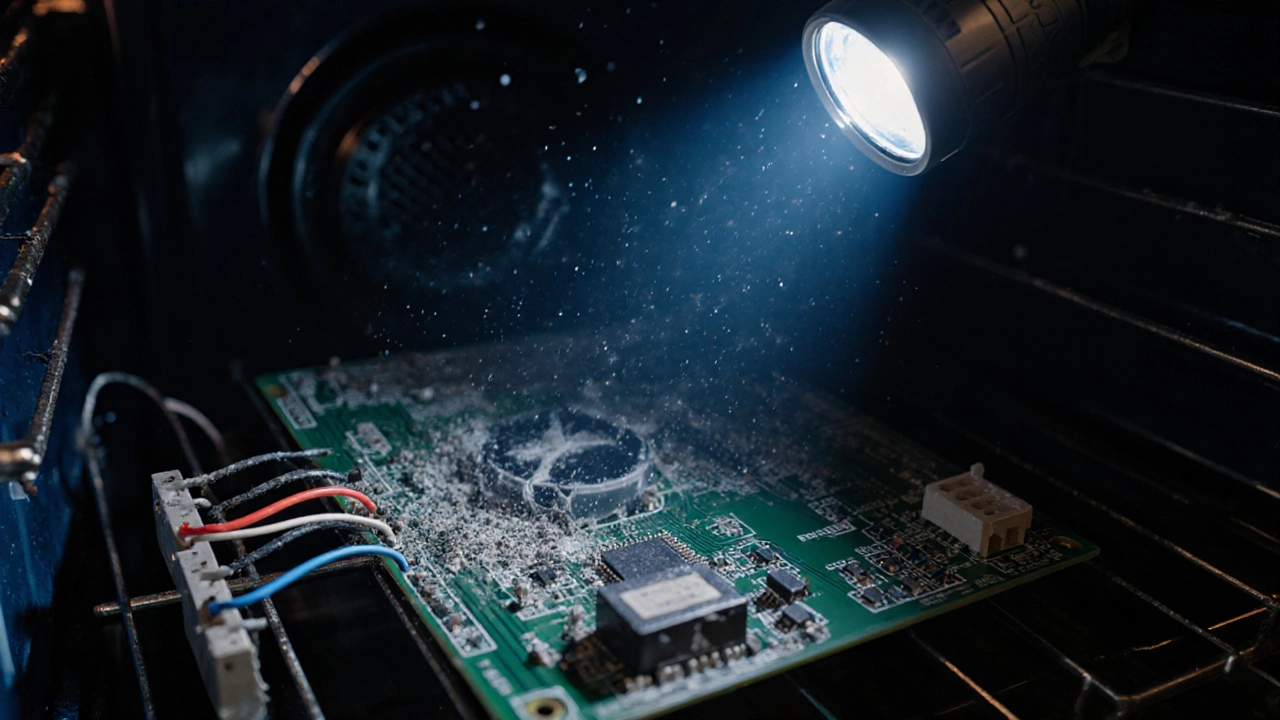
When your oven stops heating, shows error codes, or turns off randomly, the problem isn’t always the heating element or thermostat—it could be the oven control board, the brain of your oven that manages temperature, timing, and power distribution. Also known as oven motherboard, it’s the circuit board that tells your oven when to turn on, how hot to get, and when to shut down. If it’s faulty, even brand-new parts won’t fix the issue.
Most people assume a broken oven means a new appliance, but oven control board replacement often fixes the problem for a fraction of the cost. These boards fail from heat damage, power surges, or moisture buildup—especially in commercial kitchens where ovens run nonstop. You’ll see symptoms like unresponsive buttons, erratic temperatures, or the oven turning on and off by itself. It’s not always obvious, which is why many technicians start by testing the simpler parts first: the heating element, thermostat, or oven sensor. But if those check out fine, the control board is the next logical suspect.
Replacing it isn’t for everyone. You need basic tools—a multimeter to test voltage, a screwdriver set, and the right replacement part matched to your oven’s model number. Some boards are easy to swap; others are buried behind layers of insulation or wiring harnesses. If you’re not comfortable working with live electrical components, don’t risk it. A single mistake can fry the whole system. That’s why many restaurants, hotels, and commercial kitchens in Birmingham rely on trained technicians for this job. But if you’re handy and your oven is less than 10 years old, replacing the board yourself can save hundreds.
Before you buy a new board, double-check the part number. Oven manufacturers often use the same board across multiple models, but a mismatched part won’t work. Look up your oven’s model number—usually found on a sticker inside the door or on the back—and match it exactly. Cheap knock-offs might seem tempting, but they’re more likely to fail again in a few months. Stick with OEM or reputable aftermarket brands.
And here’s something most guides skip: sometimes the issue isn’t the board at all. It’s a loose wire, a bad relay, or a failed capacitor on the board. If you’ve got a multimeter, you can test for continuity and voltage at key points. If you find a blown capacitor or charred trace, you might be able to fix it with a soldering iron instead of replacing the whole board. But if the board looks fine but still doesn’t work? Then it’s time for a full replacement.
Below, you’ll find real-world guides from technicians who’ve fixed dozens of these issues—whether it’s a commercial range in a Birmingham pub or a home oven that won’t stop beeping. You’ll see step-by-step tests, part numbers, cost comparisons, and when to walk away from repair altogether. No fluff. Just what actually works.
Is It Worth Replacing an Oven Control Board? Cost, Risks, and Real-World Decisions
Deciding whether to replace an oven control board? Learn the real costs, risks, and when it’s smarter to buy a new oven instead. Practical advice for Australian homeowners.