Replace Oven Control Board: Signs, Costs, and When to DIY
When your oven won’t heat, displays error codes, or turns off randomly, the problem might not be the heating element—it could be the oven control board, the brain of your oven that manages temperature, timing, and power distribution. Also known as oven control unit or oven motherboard, it’s the circuit board that tells your oven when to turn on, how hot to get, and when to shut down. If this part fails, even a brand-new heating element won’t fix the issue.
Most people assume a broken oven means a new appliance, but replace oven control board is often a far cheaper fix. Control boards typically last 8–12 years, but grease buildup, power surges, or moisture from cleaning can fry them sooner. You’ll know it’s failing if the display flickers, the oven doesn’t respond to button presses, or it heats unevenly despite having good elements. Some models show error codes like F1, F3, or E0—these are usually control board signals, not just random glitches. Replacing it yourself can save $200–$400 compared to hiring a technician, especially if you’ve already ruled out simpler fixes like the thermostat or heating element.
Before you buy a new board, make sure you’ve checked the oven thermostat, the sensor that reads internal temperature and sends data to the control board. A faulty thermostat can trick the board into thinking the oven is too hot, causing it to shut down. You can test both with a multimeter—no special tools needed. Also, look at the oven wiring, the network of cables connecting the control board to elements, fans, and sensors. Loose or burnt wires often look like board failure but are easier and cheaper to fix.
Not all ovens are worth repairing. If your oven is over 15 years old, or if the control board costs more than half the price of a new unit, replacement might make more sense. But if you’ve got a reliable brand like Whirlpool, Bosch, or GE, and the board is under $150, replacing it is a smart move. Many of the guides below walk you through exact part numbers, safety steps, and how to avoid common mistakes—like forgetting to unplug the oven before touching wires, or mixing up terminal connectors.
Below, you’ll find real-world repair guides from technicians who’ve fixed these issues in Birmingham kitchens, restaurants, and hotels. From diagnosing error codes to swapping out the board without breaking the casing, these posts give you the exact steps—no fluff, no theory, just what works.
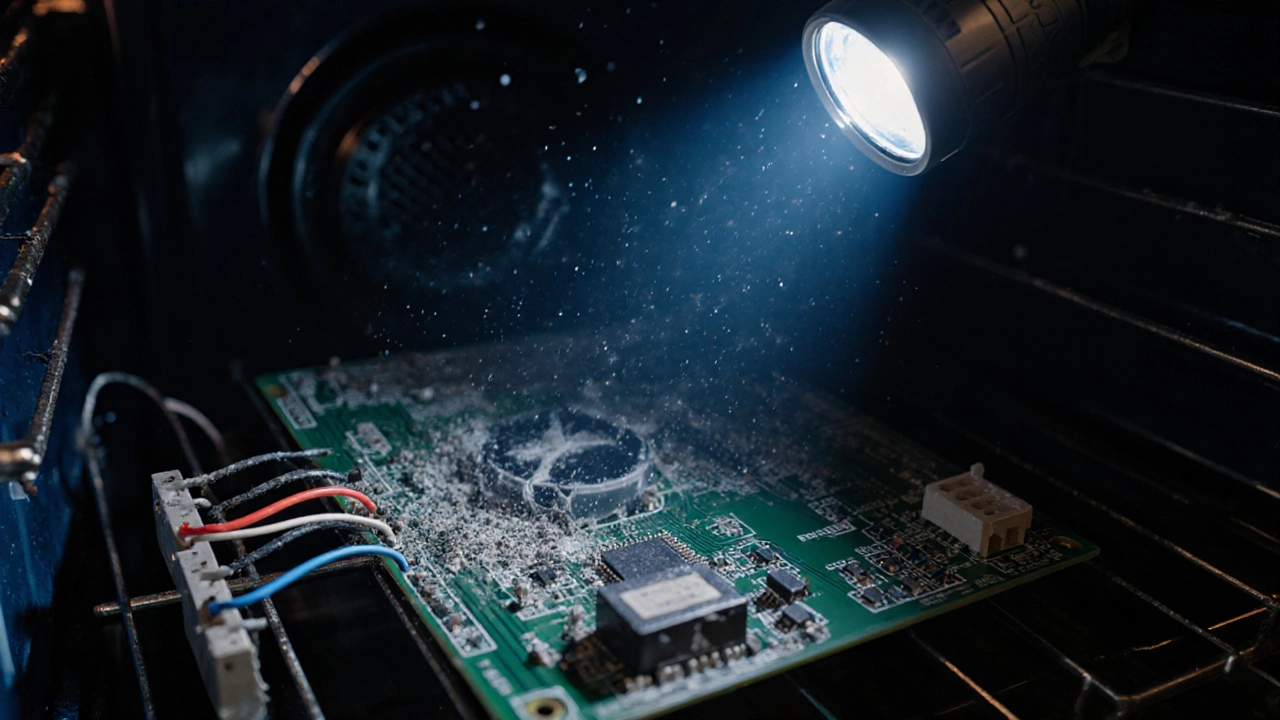
Is It Worth Replacing an Oven Control Board? Cost, Risks, and Real-World Decisions
Deciding whether to replace an oven control board? Learn the real costs, risks, and when it’s smarter to buy a new oven instead. Practical advice for Australian homeowners.