Bathroom Fan Installation: Guide to Repair, Replacement, and Ventilation
When you're dealing with bathroom fan installation, a system designed to remove moist air and odors from bathrooms to prevent mold and structural damage. Also known as extractor fan, it's not just about comfort—it's a basic requirement for healthy indoor air quality in any home or commercial space. A poorly installed or broken fan doesn’t just smell bad; it leads to peeling paint, warped wood, and black mold growing behind tiles. In places like Birmingham, where humidity swings are common, a working fan isn’t optional—it’s essential.
Most people think a bathroom fan is just a little motor in the ceiling, but it’s really a system. It includes the extractor fan, the unit that pulls air out, ducting that connects to the outside, a switch to control it, and sometimes a humidity sensor or timer. If any part fails—like a clogged duct, a worn motor, or faulty wiring—the whole system breaks down. That’s why many think they need a full bathroom ventilation, the complete process of removing humid air using mechanical or natural means upgrade when all they really need is a simple fix. We’ve seen dozens of cases where replacing a $30 fan motor saved someone from a $2,000 mold remediation bill.
Some homeowners try to install a fan themselves. It looks easy—just screw it in and flip the switch. But if the duct isn’t sealed right, or if it vents into the attic instead of outside, you’re making the problem worse. And if the wiring’s old or the circuit’s overloaded, you risk fire. That’s why most professionals recommend calling in someone who’s done this before, especially in older buildings where codes and layouts are tricky. We’ve fixed fans installed by DIYers who didn’t know the difference between AC and DC motors, or who used flexible ducting that collapsed after a year.
When your fan starts making noise, runs constantly, or doesn’t pull air at all, it’s not just annoying—it’s a warning. The same signs that tell you your kitchen extractor fan needs replacing apply here too: rattling, slow spin, or no airflow even when turned on. And if you’re noticing damp patches on the ceiling or walls after showers, that’s not condensation—it’s failure. A good fan should clear the air in under 15 minutes. If it’s taking longer, the unit’s too weak, the duct’s blocked, or the installation’s wrong.
Whether you’re dealing with a single-family home, a rented flat, or a small hotel bathroom, the rules are the same: ventilation matters. We’ve worked on everything from tiny ensuite bathrooms in 1970s terraces to large commercial restrooms in Birmingham hotels. The biggest mistake we see? People wait until the ceiling starts falling in before they act. Don’t be that person. A quick check, a simple replacement, or even a cleaning can save you months of headaches.
Below, you’ll find real guides from local technicians who’ve fixed, replaced, and installed hundreds of bathroom fans. From step-by-step DIY tips to when to walk away and call a pro, these posts cover what actually works—not just theory. Whether you’re trying to save money, avoid mold, or just stop the dripping ceiling, you’ll find the answers here.
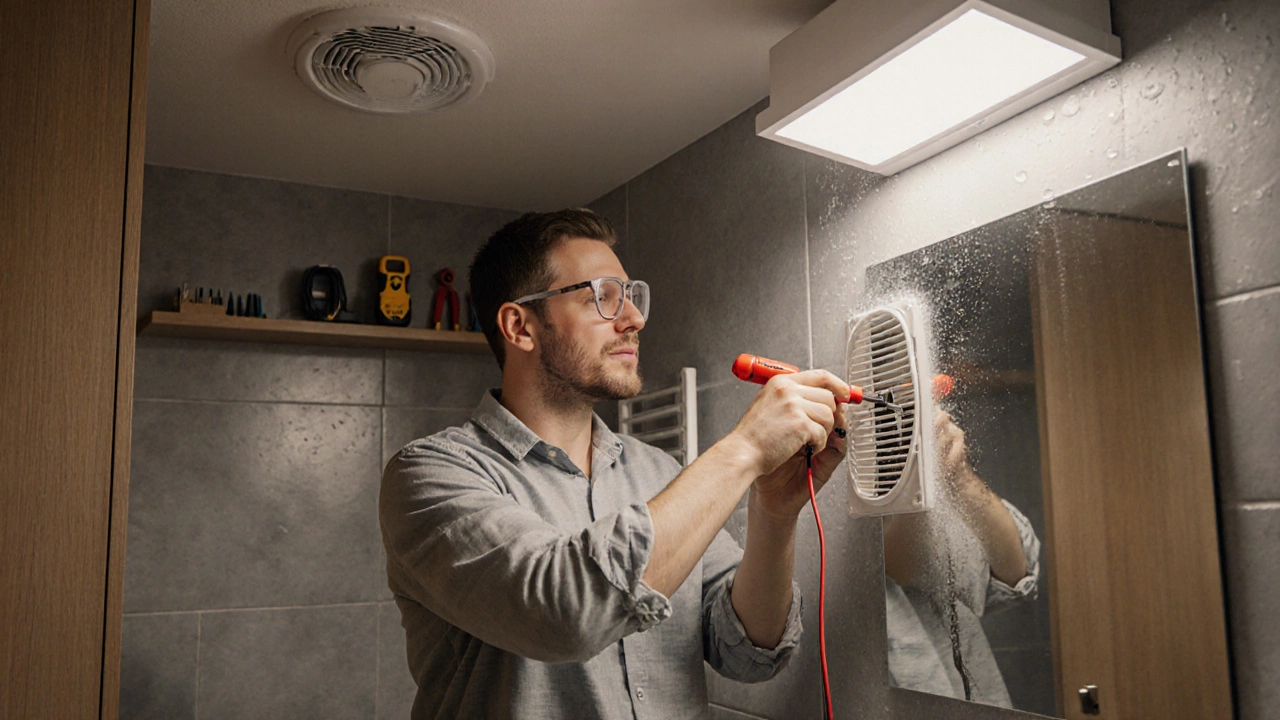
Is It Hard to Replace an Extractor Fan? A Simple Guide for Homeowners
Replacing an extractor fan is easier than most people think. Learn the steps, tools, and tips to do it safely and save money on professional repairs in Perth.