Ceramic Hob Damage: Causes, Fixes, and When to Replace
When your ceramic hob, a smooth, glass-like cooking surface commonly found on modern electric ranges. Also known as glass ceramic cooktop, it offers easy cleaning and sleek looks—but it’s not indestructible. A single dropped pot, a hot pan placed on a cold surface, or even a crack from thermal stress can turn your smooth cooktop into a safety hazard. Unlike old coil elements, ceramic hobs don’t just stop working—they can crack, chip, or develop invisible fractures that make them dangerous to use.
Most ceramic hob damage, physical or thermal stress that compromises the surface integrity happens because people don’t realize how sensitive the glass is to sudden temperature changes. Placing a boiling pot straight from the stove onto a cold ceramic surface? That’s a recipe for cracks. Dragging heavy pans across the surface? You’re scratching the coating. Even using the wrong type of cleaner can eat away at the protective layer over time. And if you’ve got kids or messy cooks in the house, accidental drops are the #1 cause of repair calls we see in Birmingham kitchens.
Some damage is fixable. Small surface scratches can often be buffed out with special ceramic polish. But if you see a visible crack—especially one that runs deep or spreads across the surface—you’re not just looking at an eyesore. That crack lets moisture in, which can short out the heating elements underneath. That’s when you risk fire, electrical failure, or worse. Replacing just the hob element, the heating coil hidden beneath the ceramic surface won’t help if the glass itself is broken. You need the whole top replaced. And yes, that’s expensive. But it’s cheaper than replacing your entire kitchen because of a fire caused by ignoring a tiny crack.
Most people wait too long. They think, "It still heats up, so it’s fine." But a damaged hob isn’t just unreliable—it’s risky. The surface can get hotter than normal in spots, food burns unevenly, and the electronics underneath can overheat. We’ve seen too many cases where a small crack turned into a full hob failure after just a few weeks of use. If your hob has more than one scratch, or any crack wider than a hairline, it’s time to act. Don’t wait for it to fail during dinner prep.
Below, you’ll find real-world guides on how to spot early signs of damage, whether you can fix it yourself, and when it’s smarter to replace the whole unit. We’ve covered everything from DIY cleaning tricks that prevent future damage to the exact costs of replacing a ceramic hob in commercial kitchens. No fluff. Just what you need to know before you make a costly mistake.
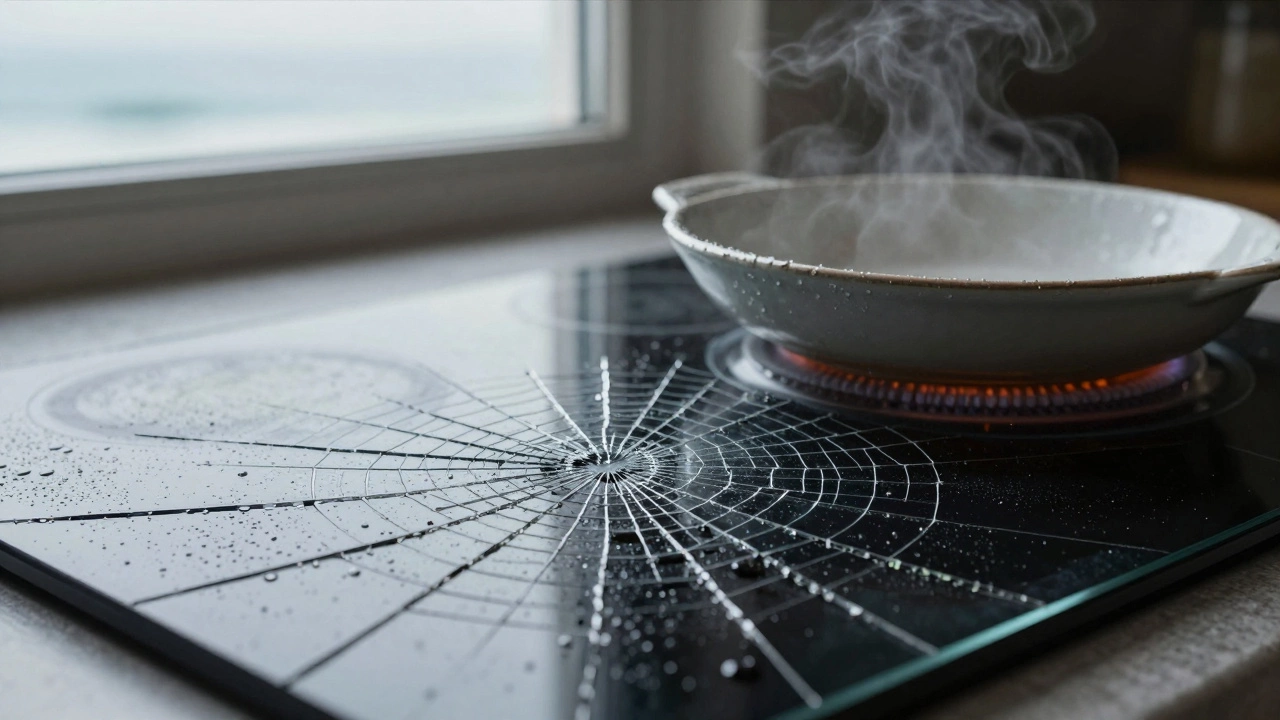
Why Would an Electric Hob Crack? Common Causes and What to Do
Electric hobs crack due to thermal shock, heavy cookware, moisture, or age. Learn the real causes, how to prevent it, and what to do when your hob breaks - without overspending or risking safety.