Leave Extractor Fan On: When It Helps, When It Hurts
When you’re done cooking, should you leave extractor fan on? Many people flip it off the moment the last dish is plated. But that’s often the worst thing you can do. An extractor fan, a mechanical system designed to remove airborne grease, smoke, steam, and odors from kitchens and bathrooms. Also known as range hood, it’s not just a noise-maker—it’s your first line of defense against mold, sticky surfaces, and ruined cabinetry. If you turn it off too soon, all that moisture lingers. In a Birmingham kitchen, where humidity swings with the seasons, that trapped steam doesn’t vanish—it settles. And over time, it eats away at wood, peels paint, and grows black spots you can’t scrub off.
The extractor fan runtime, how long the fan runs after cooking ends matters more than you think. Most experts recommend running it for at least 15–20 minutes after you finish cooking. Why? Because steam doesn’t disappear when the pot stops boiling—it keeps rising for minutes after. If you shut it off early, you’re letting humidity build up in walls and ceilings. That’s why older homes with poor ventilation often have peeling wallpaper or warped kitchen cabinets. Even if you don’t see it now, the damage is happening. And if your fan’s old or clogged with grease, running it longer isn’t just smart—it’s necessary. A extractor fan maintenance, regular cleaning and inspection to ensure airflow and prevent fire risk routine cuts down on strain. A dirty fan works harder, wears out faster, and costs more to run. Cleaning it every few months isn’t a chore—it’s insurance.
Some people worry about leaving the fan on too long. They think it wastes electricity or wears out the motor. But modern fans use very little power—often less than a light bulb. And a fan that runs regularly doesn’t wear out faster; it wears out slower. Why? Because short, frequent bursts of high-speed operation (like turning it on and off every 5 minutes) put more stress on the motor than a steady, low-speed run. Think of it like driving: stop-and-go traffic wears out your car faster than cruising on the highway. The same applies here.
If you’re unsure whether yours is working right, listen for changes. A fan that’s louder than usual, rattles, or doesn’t pull air like it used to? That’s not normal. It’s a sign of grease buildup, a failing motor, or a blocked duct. You don’t need to be a technician to spot these issues. A quick check of the grille for grease, a test of airflow with a tissue, or noticing if your windows fog up after showers can tell you more than any manual.
What you’ll find below isn’t just theory. It’s real advice from people who’ve dealt with moldy kitchens, burnt-out fans, and surprise repair bills. You’ll see how long fans actually last, when cleaning helps and when replacement is smarter, and what most homeowners get wrong about ventilation. No fluff. No guesswork. Just what works—in Birmingham homes, commercial kitchens, and everywhere moisture refuses to behave.
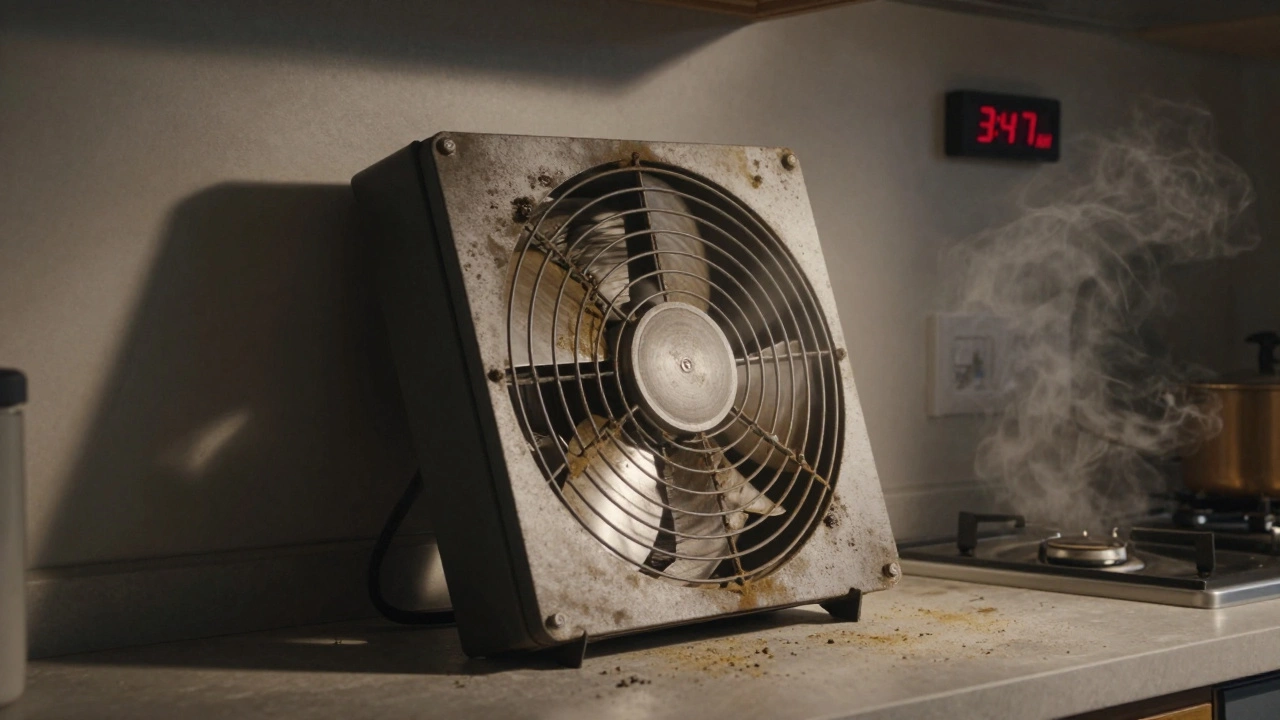
Is It OK to Leave Extractor Fan On? Safety, Energy, and Long-Term Damage Explained
Leaving your extractor fan on all day wastes energy, shortens its lifespan, and can increase fire risk. Learn when it's safe to run it longer and how to prevent damage with simple habits.