Extractor Fan Energy Calculator
Calculate how much money you're wasting by leaving your extractor fan running 24/7. Based on the article's findings that continuous use wastes energy without preventing mold.
Estimated Cost
$0.00 per month
($0.00 annually)
Leaving your extractor fan running all day might feel like a harmless habit-maybe you’re trying to get rid of cooking smells, reduce dampness, or just forget to turn it off. But is it really safe? And what does it do to your fan, your electricity bill, and your home over time?
Extractor fans aren’t designed for all-day use
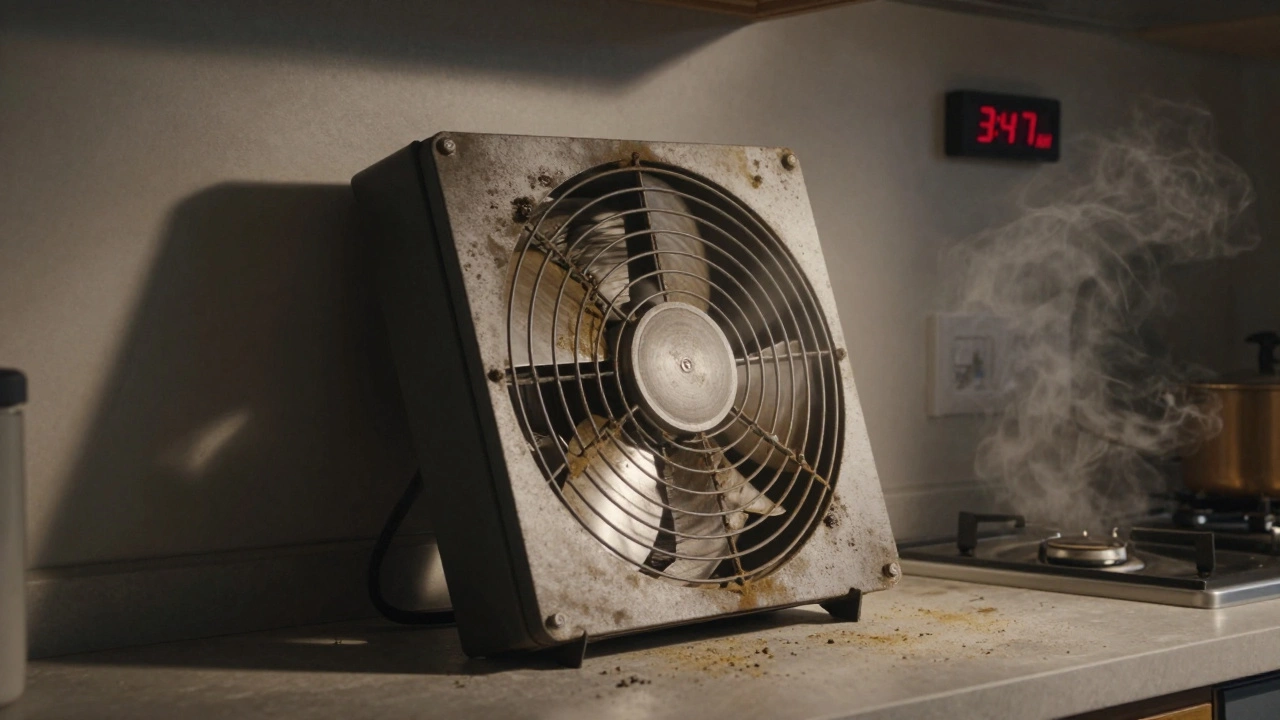
Most extractor fans you find in kitchens and bathrooms are built for short bursts, not continuous operation. They’re meant to clear steam, smoke, or odors after cooking or showering-usually 15 to 30 minutes. Even high-end models with timers or humidity sensors are designed to run for an hour at most before shutting off automatically.Running your fan nonstop puts constant strain on the motor. The bearings wear out faster. The blades accumulate grease and dust unevenly. Over time, this leads to louder operation, reduced airflow, and eventually, complete motor failure. In fact, repair technicians see more fan failures from continuous use than from age or poor installation.
Energy waste adds up quickly
A typical extractor fan uses between 15 and 60 watts, depending on its size and speed setting. Sounds small, right? But leave it running 24/7, and that’s 360 to 1,440 watt-hours per day. That’s 13 to 52 kilowatt-hours per month. At an average electricity rate of $0.15 per kWh, that’s $2 to $8 extra on your bill every month-just for one fan.Compare that to a smart thermostat or LED bulbs, which save you money. This is money you’re throwing away on something that doesn’t need to run constantly. Even if you think electricity is cheap, it’s still unnecessary waste. And if you live in a region with high energy costs or time-of-use pricing, the impact is even worse.
Mold and moisture risks aren’t solved by leaving it on
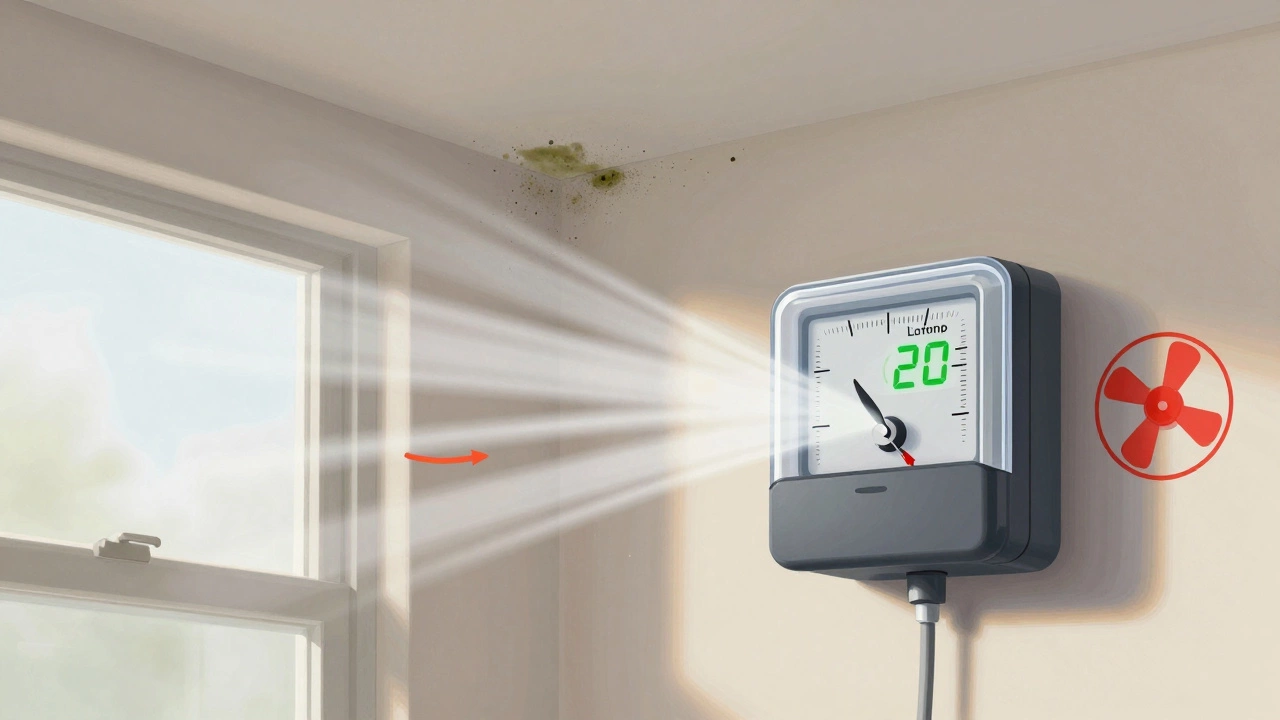
Many people think leaving the fan on will prevent mold. But that’s a myth. Mold grows when moisture sits on surfaces for long periods-like on walls, ceilings, or window frames. An extractor fan pulls air out, but if there’s no fresh air coming in to replace it, the pressure imbalance can actually draw damp air from other parts of the house, like the attic or crawl space.What really stops mold? Proper ventilation. That means opening a window briefly after showering, using a fan with a humidity sensor that turns off automatically, or installing a balanced ventilation system. Running the fan nonstop doesn’t fix the root problem-it just moves air around without solving the source of moisture.
Fire risk? It’s rare, but possible
Extractor fans in kitchens collect grease over time. If the fan runs constantly, that grease builds up inside the housing, on the blades, and in the ductwork. When grease heats up and mixes with a malfunctioning motor or electrical fault, it can ignite. This is rare, but it happens. The U.S. Fire Administration has documented cases where grease-laden extractor fans were the ignition source in kitchen fires.It’s even riskier if your fan isn’t cleaned regularly. A fan that’s been running nonstop for months without cleaning is a ticking time bomb. Most manufacturers recommend cleaning the grease filter every month and checking the duct every six months. If you’re leaving the fan on 24/7, you’re accelerating that buildup.
What about bathroom fans?
Bathroom extractor fans face different issues. They don’t collect grease, but they do deal with high humidity. Leaving them on all day might seem like a good idea to dry out the room. But again, it’s overkill. A 20-minute run after a shower is enough for most bathrooms.Modern bathroom fans with built-in timers or humidity sensors are the best solution. They turn on automatically when steam rises and shut off once the air is dry. No guesswork. No wasted energy. No motor strain. If your fan doesn’t have one, consider replacing it. A basic model with a humidity sensor costs under $50 and pays for itself in energy savings within a year.
When is it okay to leave it on longer?
There are exceptions. If you’re doing heavy cooking-like frying multiple batches of food, smoking meat, or baking bread for hours-it’s fine to run the fan for an hour or more. Same goes for deep cleaning with strong chemicals or painting a room. In those cases, the fan is doing real work.But even then, set a timer. Don’t just walk away and forget. Use your phone. Set a reminder. Or get a fan with a built-in delay function. Many newer models let you set a 10, 20, or 30-minute auto-shutoff. That’s the smart way to handle it.

Signs your fan is damaged from overuse
If you’ve been leaving your extractor fan on too long, watch for these warning signs:- It makes a loud grinding or rattling noise
- It’s slower than it used to be-airflow feels weak
- It turns on but doesn’t pull air properly
- You notice a burning smell near the fan
- Grease or dust is visibly caked on the grille or inside the housing
If you see any of these, stop using the fan immediately. A failing fan won’t just stop working-it could short-circuit, overheat, or even catch fire. Don’t wait until it breaks completely. Get it checked or replaced.
What to do instead
Here’s what actually works:- Turn the fan on before you start cooking or showering
- Let it run for 15-30 minutes after you finish
- Use a timer or humidity-sensing fan to automate it
- Clean the grease filter every month
- Check the duct for blockages every six months
- Replace the fan if it’s over 10 years old or shows signs of wear
These steps cost nothing but a few minutes of your time-and they’ll save you hundreds in repairs, energy bills, and potential fire damage.
Bottom line
No, it’s not OK to leave your extractor fan on all day. It wastes energy, shortens the fan’s life, increases fire risk, and doesn’t even solve moisture problems properly. The fan is a tool, not a permanent fixture. Use it when you need it. Turn it off when you don’t.Modern fans are smart enough to handle the rest. You just need to set them up right-and then let them do their job without micromanaging.
Can leaving an extractor fan on cause a fire?
Yes, it’s possible, especially in kitchen fans. Grease buildup combined with a worn motor or electrical fault can ignite. While rare, this is a documented cause of kitchen fires. Regular cleaning and avoiding continuous use greatly reduce this risk.
How long should I leave my extractor fan on after cooking?
15 to 30 minutes is enough for most cooking. If you’ve fried food, boiled a lot of water, or smoked something, run it for up to an hour. Use a timer if you tend to forget. Fans with humidity sensors will turn off automatically when the air is dry.
Does leaving the extractor fan on help with mold?
Not really. Mold grows because moisture sits on surfaces. A fan that runs constantly doesn’t remove moisture from walls or ceilings-it just moves air. To prevent mold, you need to reduce moisture at the source: open a window after showering, use a fan with a humidity sensor, or improve overall ventilation.
Is it cheaper to leave the extractor fan on or turn it on and off?
It’s always cheaper to turn it off when not needed. Even though fans use little power, running one 24/7 adds $2-$8 to your monthly bill. Turning it on for 20 minutes after cooking uses less than 10% of that energy. Plus, you’ll avoid costly repairs from motor burnout.
How often should I clean my extractor fan?
Clean the grease filter every month if you cook regularly. If you leave the fan on all day, clean it every two weeks. Check the duct for blockages every six months. A clogged duct makes the fan work harder and reduces airflow by up to 50%.
Should I replace my old extractor fan?
If it’s over 10 years old, noisier than before, or doesn’t shut off automatically, yes. New models are quieter, more energy-efficient, and often come with humidity sensors and timers. A basic replacement costs under $50 and pays for itself in energy savings within a year.