Reset Hot Water Heater: Common Causes and How to Fix It
When your hot water heater, a device that heats and stores water for household use, typically powered by electricity or gas. Also known as a water heater, it stops delivering hot water, the first thing you should check isn’t a broken pipe or a failed valve—it’s the reset button. Many electric water heaters have a red reset button near the thermostat, hidden behind a panel. Pressing it can bring your hot water back in seconds, if the issue is just a tripped safety switch. But if it trips again, you’re not fixing the problem—you’re just hiding it.
That reset button doesn’t activate for no reason. It’s a safety feature triggered by overheating, often caused by a failing water heater element, the metal coil inside the tank that heats the water when electricity passes through it. One element burning out can overload the other, causing the thermostat to shut everything down. Or maybe your thermostat is stuck, pushing the water past 180°F and forcing the reset to trip. If you hear popping or rumbling sounds, that’s likely sediment buildup—minerals settling at the bottom and trapping heat, making the element work harder than it should. And if you’ve got rusty water or a leak around the tank, you’re not dealing with a reset issue—you’re dealing with a tank that’s done.
Gas water heaters don’t have a reset button, but they have their own common failures. A faulty thermocouple, a clogged burner, or a broken pilot light can all make it feel like the heater just died. You might think it’s a power issue, but gas units don’t need electricity to ignite—unless they have electronic ignition. That’s why troubleshooting starts with checking the pilot light before anything else. If it’s out, relighting it might solve everything. If it won’t stay lit, the thermocouple is likely worn out and needs replacing. And if you’ve tried everything and still no hot water, the problem might be deeper: a bad gas valve, a blocked flue, or even a cracked heat exchanger.
Most people try to reset the heater once, get frustrated when it doesn’t stick, and call a pro. But you don’t always need one. Testing the heating elements with a multimeter takes five minutes and costs nothing. Checking the thermostat settings takes ten seconds. Flushing the tank once a year stops 70% of long-term failures. These aren’t fancy tricks—they’re basic maintenance that keeps your water heater running for 10, 12, even 15 years. And if you’re in Birmingham and your heater keeps failing, it’s not just bad luck. Hard water here eats through elements and tanks faster than in most places.
Below, you’ll find real fixes from people who’ve been there. Guides on how to test a water heater element, why your heater won’t turn on, what the red button really means, and when replacing it makes more sense than resetting it again. No fluff. No theory. Just what works.
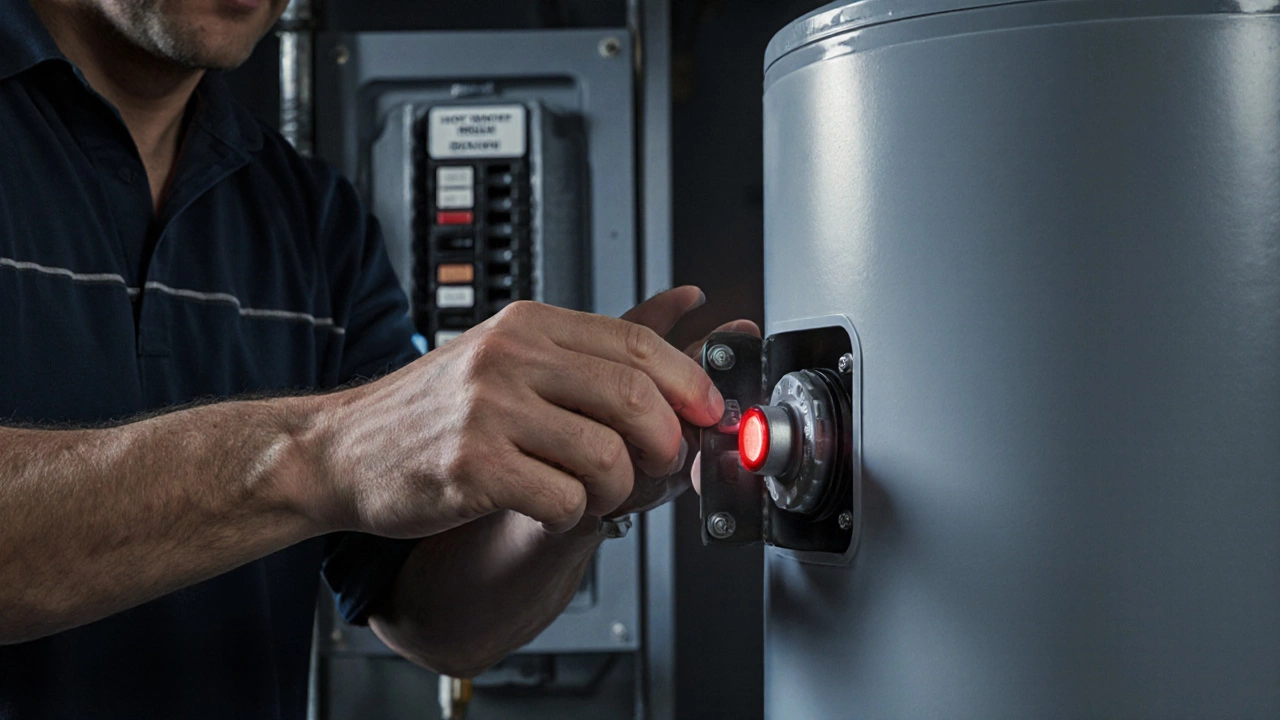
How to Reset a Hot Water Heater: Step-by-Step Guide for Homeowners
Learn how to safely reset your electric or gas water heater when it stops producing hot water. Step-by-step instructions for homeowners in Perth, including when to call a professional and how to prevent future issues.