Tumble Dryer Problems: Common Issues and How to Fix Them
When your tumble dryer, a household appliance that removes moisture from clothes using heat and tumbling action. Also known as a clothes dryer, it's one of the most used appliances in any home or business kitchen. stops working, it’s not just inconvenient—it’s a full-on laundry crisis. You’ve got clean clothes sitting in the washer, damp towels piling up, and no time to wait for a repair technician. The good news? Most tumble dryer problems aren’t as complicated or expensive as they seem. A lot of them can be fixed with basic checks you can do right now.
One of the biggest issues is the dryer not heating, a failure where the appliance runs but doesn’t generate enough heat to dry clothes. This often comes down to a blown thermal fuse, a faulty heating element, or a clogged vent. If your clothes come out just as wet as when you put them in, start by cleaning the lint trap and checking the exhaust hose. A blocked vent is the #1 reason dryers overheat and shut off. Then look at the heating element—it’s usually easy to test with a multimeter. If it’s broken, replacing it costs less than a new dryer.
Another common tumble dryer problem, a malfunction that prevents the appliance from operating as intended. is the drum not spinning. That could mean a broken belt, a worn-out roller, or a failed motor coupling. You’ll hear the motor running but the drum stays still. Most belts are cheap and simple to replace—you don’t need to be a technician. If the dryer makes a loud squealing or grinding noise, it’s likely the drum rollers or idler pulley are worn out. These parts don’t last forever, especially in busy laundries or hotels.
And let’s not forget the noise. A dryer noise issue, unusual sounds like banging, rattling, or screeching that indicate mechanical failure. isn’t always scary—sometimes it’s just a coin stuck in the drum or a loose screw. But if it’s a deep thumping sound, your drum might be out of balance, or the bearings are shot. In commercial settings, where dryers run 10+ hours a day, these parts wear out faster. Regular cleaning and checking for loose parts can double the life of your machine.
What most people don’t realize is that tumble dryer problems often start small. A little extra time on each load. A bit more lint in the trap. A faint burning smell. These aren’t just annoyances—they’re early warnings. Fixing them early saves you from a full breakdown and a costly replacement. You don’t need fancy tools or a degree in engineering. Just a little patience, a screwdriver, and the willingness to look under the hood.
Below, you’ll find real-world fixes from technicians who’ve seen it all—from small cafes with one dryer running nonstop to hotels with ten machines on the fritz. Whether your dryer’s stopped heating, won’t spin, or sounds like a jackhammer, there’s a guide here that’ll show you exactly what to check—and what to leave to the pros.
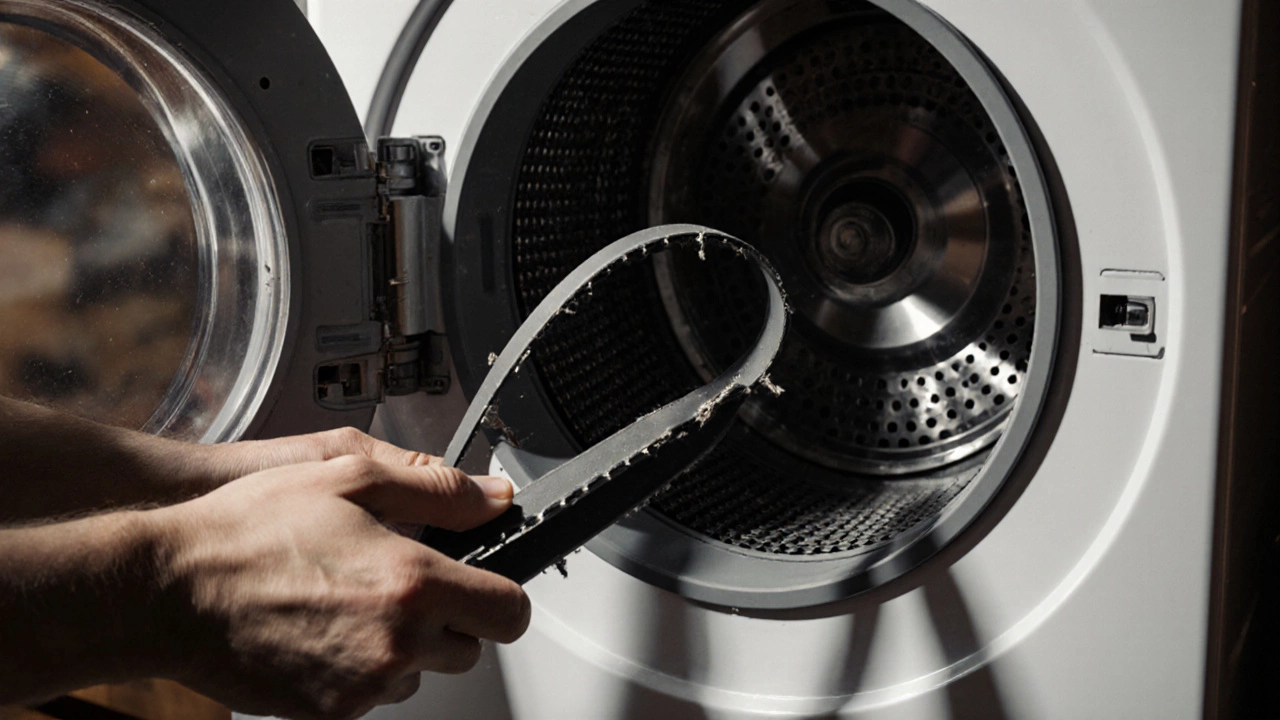
Why Is My Tumble Dryer Not Spinning Properly? Common Causes and Fixes
If your tumble dryer runs but the drum won’t spin, it’s usually a simple fix - broken belt, faulty capacitor, or clogged vent. Learn how to diagnose and repair common issues yourself.