If your tumble dryer is running but the drum won’t spin, you’re not alone. This is one of the most common complaints we see in Perth homes, especially with older models or machines that haven’t been maintained. The good news? Most of the time, it’s not a costly repair - and you can often fix it yourself without calling a technician.
Check the Power and Door Switch
Before you start tearing into the machine, make sure it’s actually getting power. Sometimes, the drum stops spinning because the dryer thinks the door is still open. Even if the light turns on and the heater runs, a faulty door switch can prevent the motor from engaging the drum.
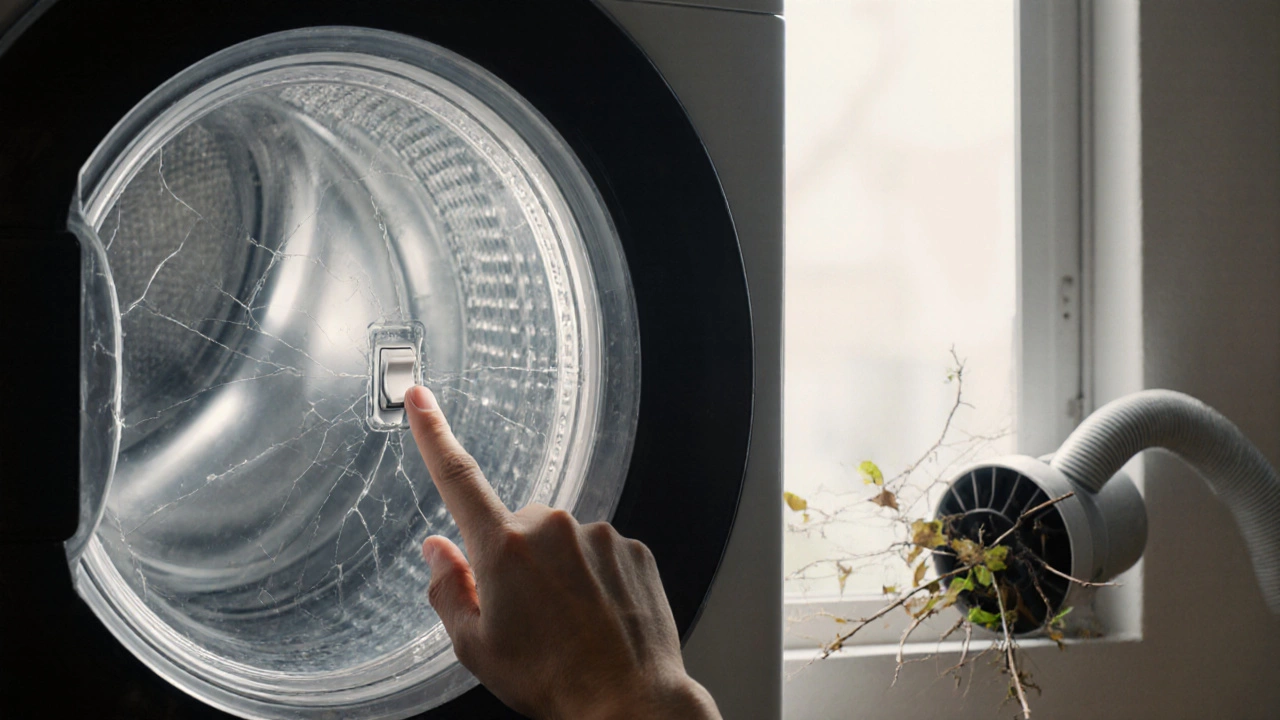
To test this, unplug the dryer, open the door, and locate the small plastic or metal switch near the door frame. Press it manually while the dryer is plugged in and set to a spin cycle. If the drum starts turning when you hold the switch down, it’s broken and needs replacing. These switches cost under $20 and are easy to swap out with a screwdriver.
Inspect the Drive Belt
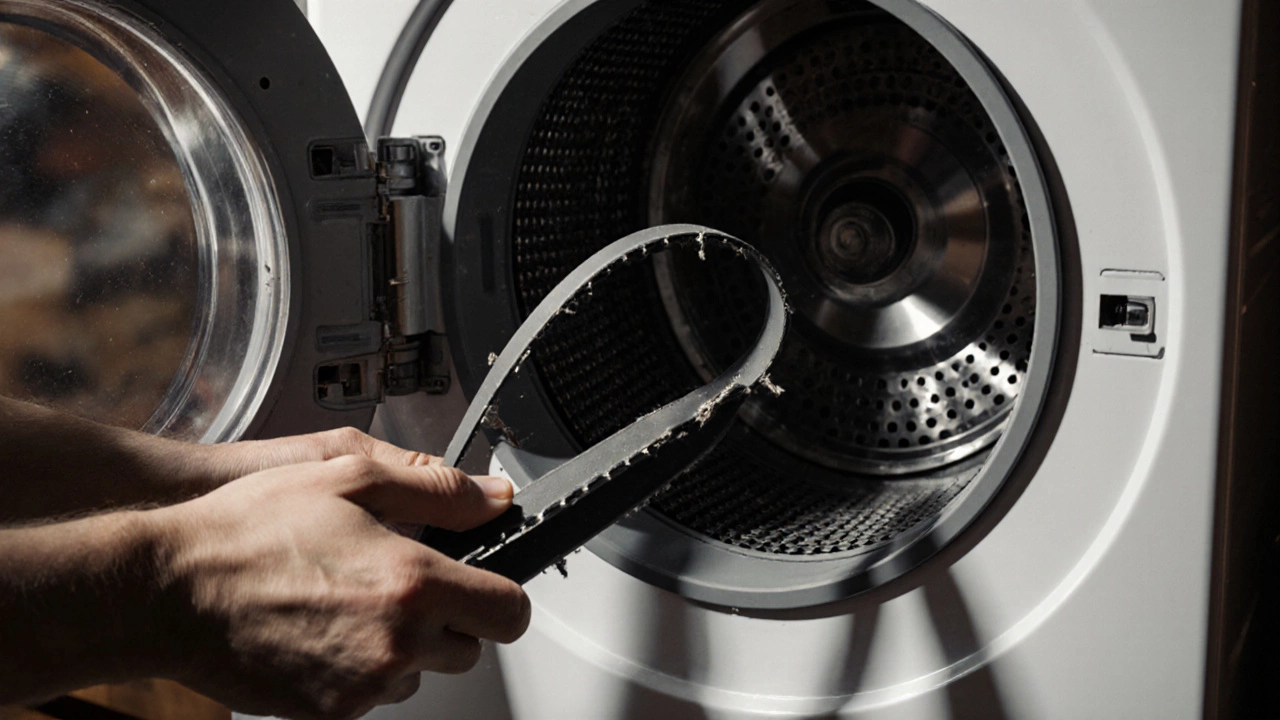
The most frequent cause of a non-spinning drum is a broken or slipped drive belt. This rubber belt wraps around the drum and connects to the motor. Over time, it stretches, frays, or snaps - especially if you’ve been overloading the dryer.
To check it, unplug the dryer and remove the front panel. Look for the belt around the drum. If it’s broken, frayed, or completely off the pulley, that’s your issue. Even if it looks intact, try turning the drum by hand. If it spins too easily with no resistance, the belt has lost tension or is broken.
Replacing the belt is a straightforward job. Buy a replacement that matches your model number (found on the back or inside the door). Most kits come with instructions. You’ll need to remove the drum, slip the new belt on, and reassemble. It takes about 45 minutes. Don’t skip cleaning the lint off the pulleys while you’re in there - buildup causes premature belt wear.
Examine the Motor and Capacitor
If the belt is fine but the drum still won’t turn, the motor might be struggling. Tumble dryers use a single-phase motor with a start capacitor to give it the initial kick to spin. When the capacitor fails, the motor hums but doesn’t turn.
You can test this by listening closely when you start the dryer. If you hear a loud hum but no movement, the capacitor is likely dead. The capacitor looks like a small silver or black cylinder, usually mounted near the motor. It’s not dangerous to handle if the dryer is unplugged, but don’t touch it if you’re unsure - it can hold a charge.
Capacitors cost between $15 and $30. Replacing one takes about 20 minutes. Make sure you match the microfarad (μF) rating exactly. Using the wrong one can damage the motor. If the capacitor checks out, the motor itself might be burnt out. That’s a more expensive fix - often not worth it on dryers over 8 years old.
Check the Drum Rollers and Axle
Over time, the small plastic or metal rollers that support the drum can wear out. When they do, the drum gets misaligned and binds against the housing. The motor might be working fine, but the drum can’t turn because it’s stuck.
Look for loud grinding or squeaking noises when the dryer runs. If you hear them, the rollers are probably worn. Remove the front panel and spin the drum by hand. If it feels rough, catches, or wobbles, the rollers or axle need replacing. These parts are cheap - around $10 to $25 for a set - and easy to install. While you’re at it, clean the shaft with a cloth and apply a bit of silicone grease before installing new rollers.
Look for a Blocked or Kinked Vent
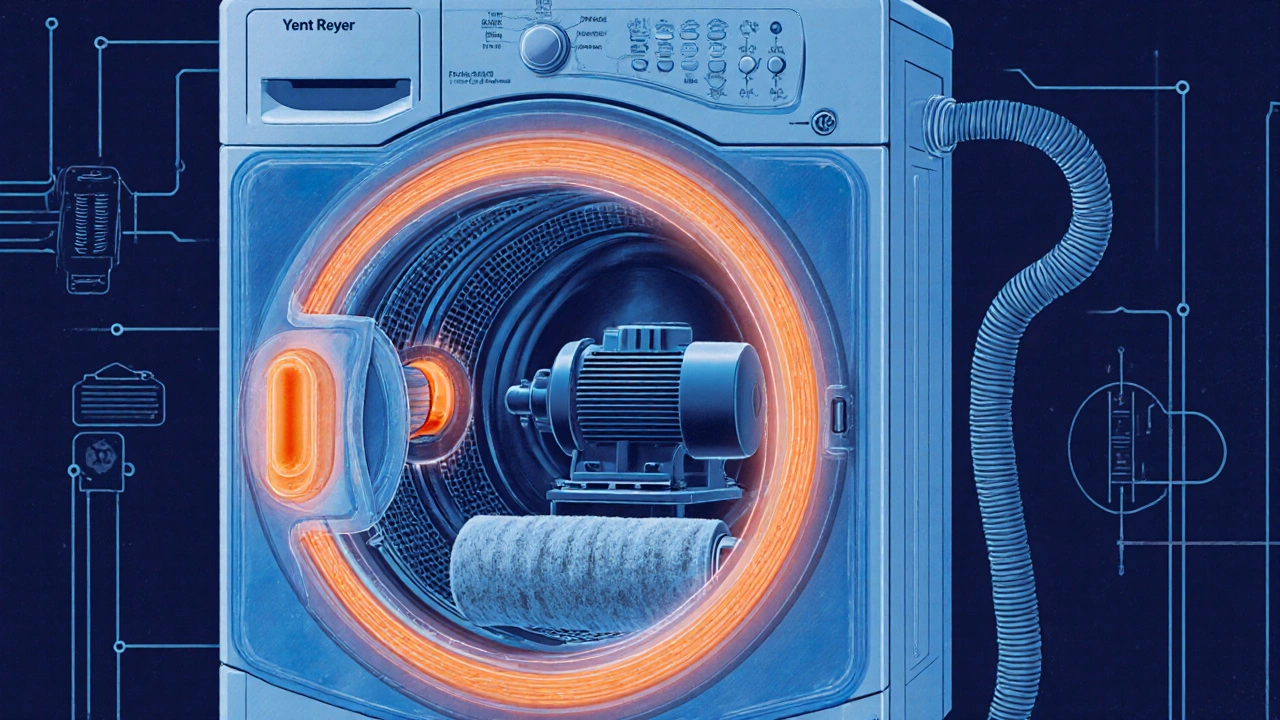
It sounds odd, but a clogged vent can sometimes stop the drum from spinning. Modern dryers have sensors that detect airflow. If the vent is blocked, the dryer thinks it’s overheating and shuts down the drum motor as a safety feature - even though the heater keeps running.
Check the vent hose behind the dryer. Is it crushed? Is there lint buildup inside? Pull it out and vacuum the inside. Also, check the exterior vent outside your house. If it’s blocked by leaves, bird nests, or snow, airflow is restricted. Clean it out. If you haven’t cleaned your vent in over a year, you’re risking fire and putting extra strain on the motor and drum system.
Worn Drum Bearings
If your dryer makes a loud rumbling or grinding noise that gets worse as it spins, the drum bearings might be shot. These are located at the back of the drum, where it connects to the motor shaft. When they fail, the drum becomes unstable and can’t turn smoothly.
Replacing bearings usually means removing the entire drum. It’s a more involved job than replacing a belt or capacitor. If you’re comfortable with tools and have time, you can do it yourself. The bearing kit costs $30-$50. But if your dryer is over 10 years old, it might be cheaper to replace the whole unit.
What Not to Do
Don’t keep running the dryer if the drum isn’t spinning. You’ll overheat the motor, damage the heating element, or even melt plastic parts. Don’t try to force the drum with your hands - you could break something worse. And don’t ignore the warning signs. A squeak, a hum, or a slow spin are early alerts - not normal wear.
Also, avoid using generic parts. Always match the model number. A belt that fits a Samsung might not fit a Bosch, even if they look similar. Using the wrong part leads to more damage and wasted money.
When to Call a Pro
You can fix most spinning issues yourself - belt, capacitor, rollers, door switch. But if you’ve checked all those and the drum still won’t turn, it could be a control board failure or a deeper electrical fault. Control boards are expensive ($100+) and hard to diagnose without a multimeter and wiring diagram.
Also, if your dryer is over 12 years old, consider replacement. New models use 30% less energy, have better sensors, and come with a 2-year warranty. Repairing an old machine often costs half the price of a new one - and you’ll be doing it again in a year.
Prevention Tips
Keep your dryer running smoothly with simple habits:
- Clean the lint filter after every load - yes, every single time.
- Inspect and clean the vent hose every 6 months.
- Don’t overload the drum - leave a hand’s width of space.
- Use the right detergent. Fabric softener residue builds up on the drum and sensors.
- Run a maintenance cycle with vinegar once a year to clean internal parts.
These small steps can add 5-7 years to your dryer’s life.
Why does my tumble dryer run but not spin?
The most common reason is a broken or slipped drive belt. Other causes include a faulty door switch, failed start capacitor, worn drum rollers, or blocked airflow. The dryer may still heat and run its cycle, but without the belt turning the drum, clothes won’t tumble.
Can I fix a tumble dryer that won’t spin myself?
Yes, in most cases. Replacing the drive belt, door switch, or capacitor are simple DIY jobs that take under an hour with basic tools. You’ll need to unplug the dryer, remove the front panel, and follow the model-specific repair guide. Always match replacement parts to your exact model number.
How much does it cost to replace a tumble dryer belt?
A replacement belt typically costs between $15 and $30. Labor if you hire someone runs $80-$150. Doing it yourself saves you most of that. The job takes about 45 minutes and requires a screwdriver, pliers, and a bit of patience.
Is it worth repairing a 10-year-old tumble dryer?
It depends on the cost. If the repair is under $100 and the dryer still heats well, yes. But if you’re spending $120+ on parts and labor, a new energy-efficient model costing $500-$700 will save you money on power bills and last longer. Most dryers over 10 years old are nearing end-of-life.
Can a blocked vent stop the drum from spinning?
Yes. Modern dryers have airflow sensors. If the vent is clogged, the machine may shut off the drum motor to prevent overheating - even if the heater keeps running. This is a safety feature, not a mechanical failure. Cleaning the vent often fixes the problem.
How often should I clean my tumble dryer vent?
Clean the vent hose every 6 months, and the exterior vent at least once a year. In homes with heavy dryer use - like families with kids - clean it every 3-4 months. Lint buildup reduces efficiency, increases fire risk, and strains the motor and drum system.
Next Steps
Start with the easiest checks: door switch and lint filter. Then move to the belt and vent. If you’re unsure about any step, look up your dryer model on YouTube - there are thousands of real repair videos for common brands like Samsung, LG, Bosch, and Whirlpool. Most problems are fixable without spending hundreds. But if you’ve tried everything and the drum still won’t turn, it might be time to consider a new machine. Don’t wait until it breaks completely - a slow spin now means a total failure soon.