Dishwasher Lifespan & Repair Estimator
Enter your dishwasher details below to estimate its expected lifespan and get a recommendation on whether to repair or replace.
You just spent $800 on a shiny new Bosch or Miele. It hums quietly, cleans spotlessly, and you assume it’ll run until your grandkids move in. Then, five years later, it starts leaking or refusing to drain. You’re left wondering: is this normal? Did I buy junk? Or did I break it?
The short answer is that the average dishwasher lasts between 7 and 12 years. But "average" is a dangerous word. Some units die at year three due to poor installation; others clock 15 years with basic care. Knowing what a good lifespan looks like helps you decide whether to call a technician for dishwasher repair or start shopping for a replacement.
What Determines Dishwasher Longevity?
It’s not just about the brand logo on the door. Three main factors dictate how long your machine survives: build quality, usage patterns, and maintenance habits.
Build quality matters more than marketing claims. Premium brands often use stainless steel tubs and commercial-grade pumps. Cheaper models frequently rely on plastic interiors and lighter-duty motors. A plastic tub might crack under thermal stress after eight years of hot cycles, while stainless steel shrugs it off. If you bought a budget model from a big-box store, expect a shorter life. If you invested in a high-end unit, you paid for parts designed to last longer.
Usage intensity is the second killer. Running the dishwasher twice a day wears out seals and bearings faster than running it once every two days. Overloading the racks strains the spray arms and motor. And let’s be honest-if you skip rinsing plates, food debris clogs filters and pumps, forcing the system to work harder. That extra strain shortens the lifespan significantly.
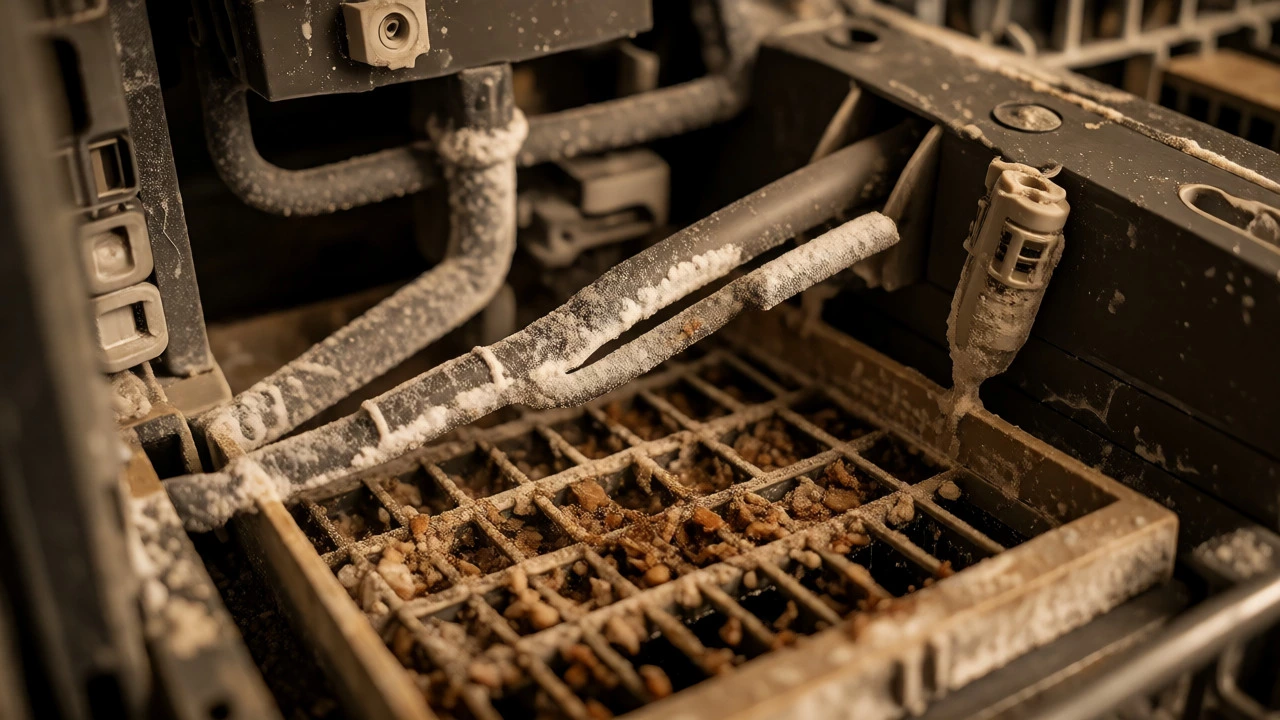
Maintenance is where most homeowners drop the ball. Ignoring the filter, forgetting to clean the door gasket, or using the wrong detergent creates a slow-motion disaster. Hard water buildup (limescale) coats heating elements and sensors, leading to overheating or false error codes. In areas with hard water, neglecting descaling can cut a dishwasher’s life by half.
Benchmarking Lifespan by Brand Tier
Not all dishwashers are created equal. While individual units vary, certain tiers consistently perform better over time. Here’s a realistic look at what to expect based on market positioning and component quality.
| Brand Tier | Examples | Average Lifespan | Common Failure Points |
|---|---|---|---|
| Premium | Miele, Bosch (High-End), Gaggenau | 12-15+ years | Electronic control boards, specialized sensors |
| Mid-Range | Samsung, LG, Whirlpool, Bosch (Standard) | 9-12 years | Pumps, door hinges, water inlet valves |
| Budget | Fisher & Paykel (Entry), Smeg (Basic), Generic Brands | 6-9 years | Plastic tub cracks, cheap seals, motor burnout |
Notice the gap. A premium Miele dishwasher uses a direct-drive induction motor instead of a traditional brush motor. This reduces friction and heat, extending mechanical life. Mid-range brands offer solid reliability but may use plastic components in high-stress areas. Budget brands prioritize low upfront cost, often sacrificing durability in the pump assembly and interior lining.
Signs Your Dishwasher Is Nearing the End
How do you know if your current machine is dying or just needs a tune-up? Look for these red flags. If you see multiple signs appearing simultaneously, replacement is likely more cost-effective than repair.
- Recurring Leaks: Water pooling under the unit usually means cracked tubs or failed door seals. On older machines, replacing a tub is rarely worth the labor cost.
- Cleaning Performance Decline: If dishes come out gritty despite clean filters and proper detergent, the circulation pump may be losing pressure. This is a gradual failure mode common in aging units.
- Excessive Noise: Grinding or rattling sounds indicate worn bearings in the wash motor or loose spray arm mounts. New bearings are cheap; labor isn’t always.
- Electrical Glitches: Intermittent power loss, unresponsive buttons, or random error codes suggest failing control boards. These are expensive to replace on units older than 8 years.
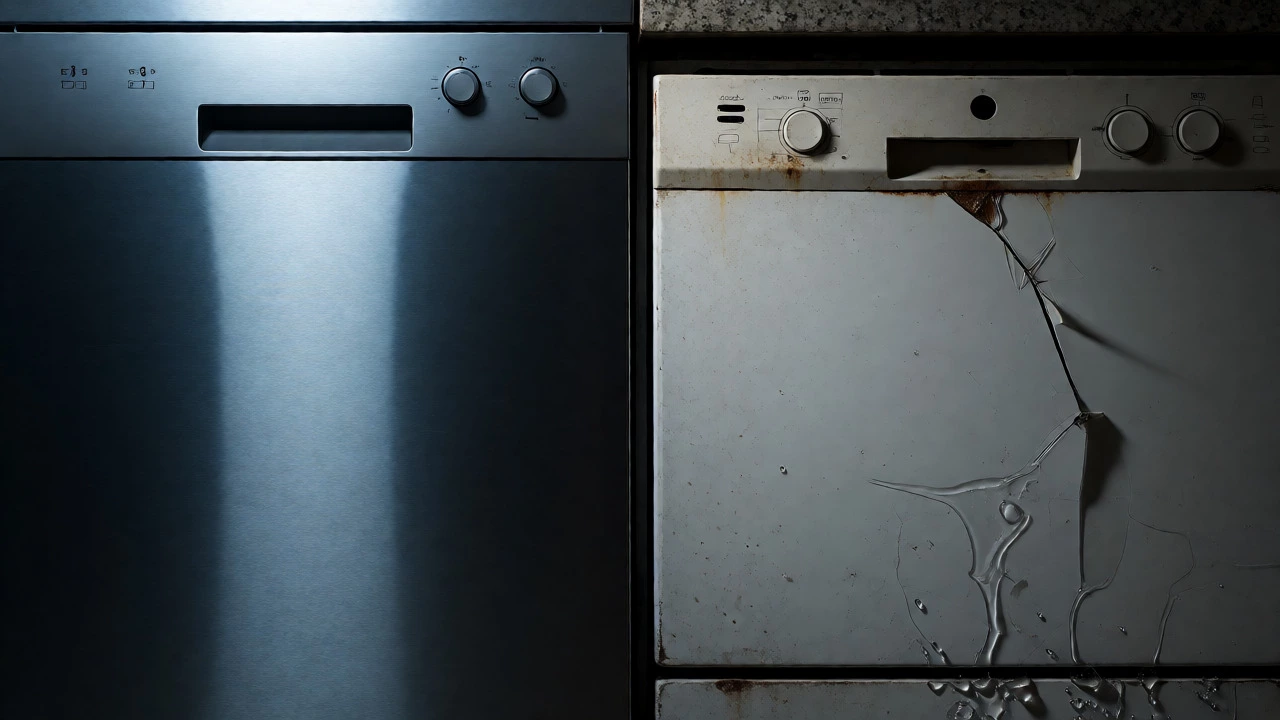
- Rust Spots: Visible rust inside the tub or around the door edge signals compromised protective coatings. Rust spreads quickly and stains clothes/dishes.
Maximizing Lifespan: The Maintenance Checklist
You can add years to any dishwasher by doing three simple things regularly. It’s not rocket science, but it requires consistency.
- Clean the Filter Monthly: Most modern dishwashers have a manual filter at the bottom. Remove it, rinse it under hot water, and scrub away grease. A clogged filter forces the pump to work harder, overheating the motor. Do this every month-no excuses.
- Descale Every 3-6 Months: Run an empty cycle with a cup of white vinegar or a dedicated dishwasher cleaner on the hottest setting. This dissolves limescale on heating elements and sensors. In hard water areas, increase frequency to monthly.
- Wipe Door Seals Weekly: Food particles and mold accumulate in the rubber gasket around the door. Wipe it down with a damp cloth to prevent leaks and bad odors. Check for tears or brittleness; dry rot leads to leaks.
Also, avoid common mistakes. Don’t use regular hand soap-it creates suds that overflow and damage electronics. Don’t overload the top rack so heavily that the spray arm hits the plates. And please, scrape your plates. You don’t need to pre-rinse them perfectly, but large chunks of potato skin will clog your pump.
Repair vs. Replace: The Cost-Benefit Analysis
This is the million-dollar question (or rather, the $500 question). When should you fix it, and when should you bin it?
Use the 50% Rule: If the repair cost exceeds 50% of the price of a new equivalent model, replace it. For example, if your 10-year-old dishwasher needs a $400 pump replacement, and a new comparable model costs $700, buy the new one. You get a warranty, better energy efficiency, and fresh parts.
However, there are exceptions. If the dishwasher is under 5 years old, repairs are almost always worth it. Parts are cheaper, and labor rates haven’t compounded yet. Also, if the issue is minor-like a broken latch or a clogged drain hose-repair it regardless of age. These are quick fixes.
Consider energy savings too. Modern dishwashers use 30-50% less water and electricity than models from 10 years ago. Replacing an old, inefficient unit can pay for itself in utility bills within a few years, especially in Australia where water restrictions and energy costs fluctuate.
Regional Factors: The Australian Context
If you live in Perth or other parts of Western Australia, hard water is a major factor. The mineral content here is higher than in many other regions, accelerating limescale buildup. Local technicians report seeing more heating element failures in WA homes compared to softer water areas.
Additionally, check your local water hardness levels. Many councils publish this data online. If your water is classified as "hard" or "very hard," invest in a built-in water softener or commit to rigorous descaling routines. Ignoring this will shorten your appliance’s life by 2-3 years on average.
Final Thoughts on Appliance Investment
A dishwasher is a significant investment. Treating it well pays dividends. Aim for 10+ years of service by choosing quality brands, maintaining filters, and addressing small issues before they become big ones. If your machine is past its prime, don’t feel guilty about upgrading. Newer models are quieter, smarter, and kinder to your wallet in the long run.
Is 10 years a long time for a dishwasher?
Yes, 10 years is considered excellent longevity for most standard dishwashers. The industry average sits between 7 and 12 years. If your unit has reached the decade mark without major failures, you’ve gotten great value. At this stage, consider replacement if repair costs exceed $300-$400.
Why do some dishwashers fail early?
Early failures are usually caused by improper installation (kinked hoses, unlevel feet), lack of maintenance (clogged filters), or manufacturing defects. Using incorrect detergents that create excess suds can also damage pumps and seals within the first few years.
Does running the dishwasher daily reduce its lifespan?
Daily use does wear components faster than occasional use, but modern appliances are designed for frequent cycling. However, running partial loads frequently is less efficient than waiting for full loads. To maximize lifespan, ensure the machine is properly leveled and the filter is cleaned regularly to handle the increased workload.
Are expensive dishwashers really worth it?
Often, yes. Premium brands like Miele or Bosch use stainless steel tubs and durable motors that last 12-15 years versus 6-9 for budget models. When amortized over their longer life and lower repair costs, the higher upfront price can be justified. Plus, they tend to be quieter and more energy-efficient.
Can I extend my dishwasher's life beyond 12 years?
Yes, through diligent maintenance. Regularly cleaning filters, descaling to remove limescale, and avoiding overloading can push a well-built unit past the 12-year mark. However, electronic components eventually fail regardless of mechanical care, so expect potential control board issues in very old units.