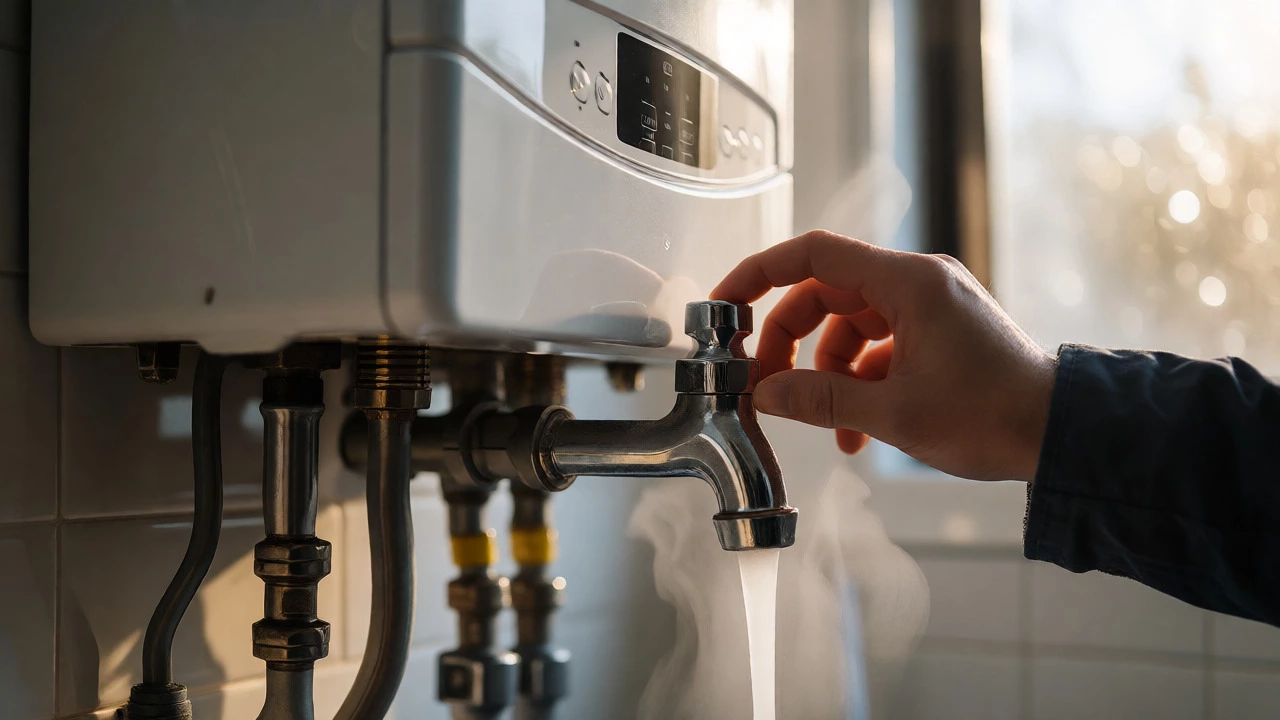
Boiler Troubleshooting Assistant
Select your current situation below to identify potential causes and next steps. This tool helps distinguish between minor fixes and major component failures.
Diagnosis Summary
Analyzing...Immediate DIY Checks
Professional Help Needed?
Note: If you smell gas or see soot, ventilate immediately and call a professional regardless of these results.You wake up on a cold morning in Perth, turn the tap to hot, and wait. And wait. The water stays icy. Your first thought is usually panic: "Is my boiler dead?" It’s a scary assumption because replacing a boiler is expensive. But here is the truth that might save you hundreds of dollars: a broken boiler does not automatically mean zero hot water. In fact, most "no hot water" issues are caused by things far simpler than a catastrophic system failure.
The confusion stems from how modern homes distribute heat. We tend to lump heating and hot water together because they often come from the same box on the wall. But they operate through different mechanisms depending on your setup. If you have a combi boiler, a system boiler, or a traditional heat-only setup with a cylinder, the answer changes completely. Before you call out an emergency plumber for a weekend rate, let’s figure out what is actually happening inside your pipes.
Understanding How Your System Works
To solve the problem, you need to know which type of heating system you own. This determines whether a fault stops both heating and water, or just one.
Combi Boilers: These are the most common in newer Australian builds. They heat water directly from the mains when you open a tap. There is no storage tank. If a combi boiler breaks, you likely lose both heating and hot water simultaneously because the unit itself is the bottleneck. However, if the boiler has power but only one function fails, it’s usually a specific component issue, not a total death.
System Boilers & Heat-Only Systems: These use a separate hot water cylinder (a big tank) to store heated water. Here’s the kicker: if your boiler fails, you might still have hot water for hours until the stored supply runs out. Conversely, if you have no hot water but your radiators are warm, the boiler is working fine-the problem is elsewhere.
Scenario 1: No Hot Water, But Heating Works
This is the most frustrating scenario because it seems contradictory. Why would the house be warm while you’re freezing in the shower? If your radiators are hot but the taps are cold, your boiler is definitely alive. The issue lies in the distribution of that heat.
In systems with a cylinder, the culprit is almost always the diverter valve. This small motorized part directs hot water either to your radiators or your hot water tank. Over time, these valves get stuck. They can jam in the "heating" position, sending all the energy to the radiators and none to the tank. You’ll notice the radiators getting very hot, perhaps even too hot, while the shower remains lukewarm.
Another common cause in combi systems is a faulty flow sensor. When you open a hot tap, this sensor tells the boiler to ignite. If it’s dirty or broken, the boiler doesn’t know you want hot water. It keeps running the central heating loop but ignores the domestic hot water demand. Cleaning or replacing a flow sensor is a quick job for a technician, costing significantly less than a new boiler.
Scenario 2: No Heating, But Hot Water Works
Believe it or not, this is good news. It means your primary heat exchanger and burner are functioning correctly. The boiler can make heat; it just isn’t pushing it around the house.
The usual suspect here is the circulation pump. This pump pushes hot water through your radiator pipes. If the pump seizes up-often due to sludge buildup or age-the water gets hot at the source but never reaches your rooms. You might hear a humming noise near the boiler, or feel the pipe leaving the boiler is scorching hot while the return pipe is cold.
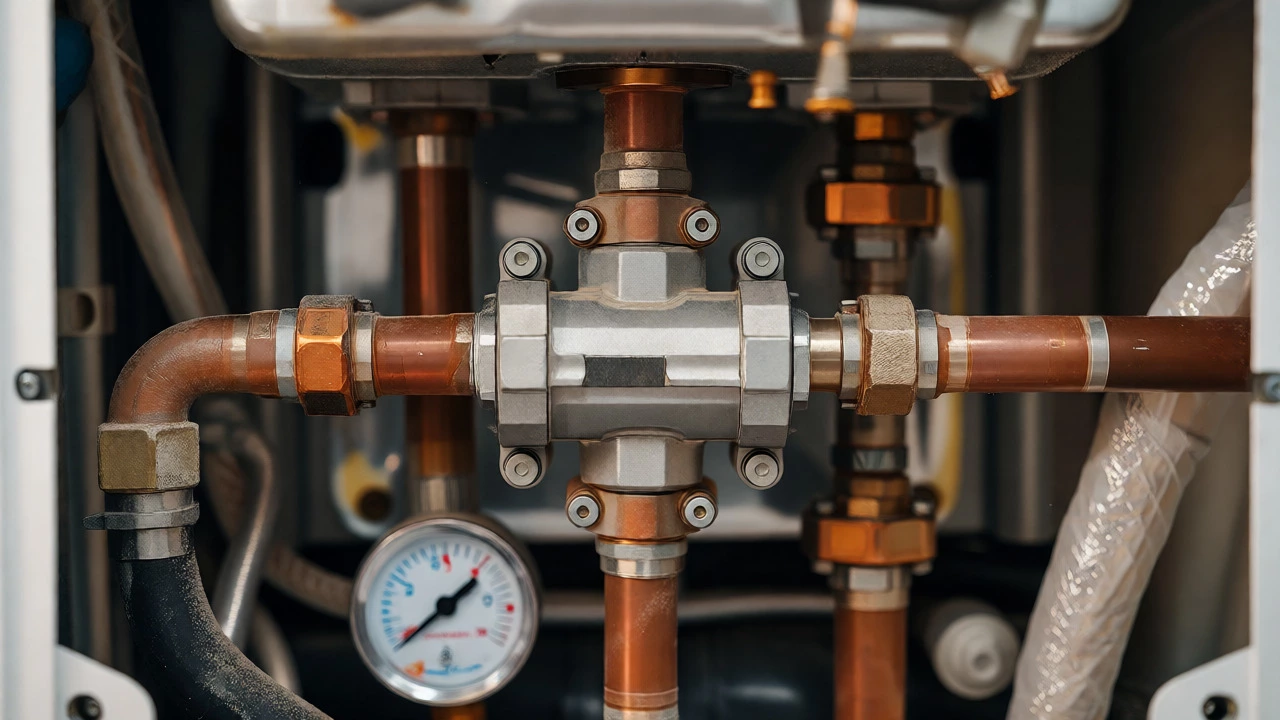
Airlocks are another frequent offender. If air gets trapped in the system, it blocks the flow of water. This is especially common after recent plumbing work or if you’ve recently bled your radiators incorrectly. Checking your pressure gauge is the first step. Most boilers need between 1 and 1.5 bar of pressure to operate efficiently. If it’s below 1 bar, topping up the system via the filling loop often solves the problem instantly.
Scenario 3: Neither Heating Nor Hot Water
Now we enter more serious territory. If both functions fail, the boiler is either off, blocked, or suffering a critical component failure. Don’t assume it needs replacement yet, though.
First, check the obvious. Is there gas? Is the electrical supply on? Sometimes a tripped circuit breaker or a blown fuse looks like a complex mechanical failure. Next, look at the display panel. Modern boilers show error codes. A code like F1 or E01 varies by brand (Vaillant, Baxi, Rinnai), but it points to a specific diagnosis. For instance, low pressure is a top cause for complete shutdowns. If the pressure gauge reads zero, the safety switch prevents the boiler from firing up to avoid damage.
If pressure is fine and power is on, you might have a failed printed circuit board (PCB). The PCB acts as the brain of the boiler, managing ignition sequences and temperature readings. Power surges can fry these boards. Replacing a PCB is cheaper than a new boiler, but it requires a qualified gas fitter to handle safely.
When Does a Broken Boiler Actually Mean No Hot Water?
So, when does a "broken" boiler truly leave you without hot water? It happens when the core heating mechanism fails. This includes a cracked heat exchanger, a failed gas valve, or a seized fan motor in sealed units. In combi boilers, since there is no backup tank, any major internal failure results in immediate loss of hot water.
However, even in these cases, "broken" doesn't always mean "end of life." Many components are replaceable. A heat exchanger leak, for example, is a serious repair, but if the rest of the unit is under warranty or relatively new, it’s worth fixing. If the boiler is over 15 years old and parts are scarce, then yes, the lack of hot water is a sign it’s time for an upgrade.
| Symptom | Likely Cause | DIY Check | Professional Help Needed? |
|---|---|---|---|
| No Hot Water, Heating OK | Stuck Diverter Valve / Flow Sensor | Check if radiators are overly hot | Yes (Gas Safe Plumber) |
| No Heating, Hot Water OK | Faulty Pump / Airlock | Bleed radiators; check pressure | Maybe (Try bleeding first) |
| Neither Working | Low Pressure / Tripped Breaker | Top up pressure; reset breaker | No (Often DIY fixable) |
| Neither Working | Failed PCB / Gas Valve | Check error codes on display | Yes (Immediate) |
Why Ignoring Small Signs Leads to Big Bills
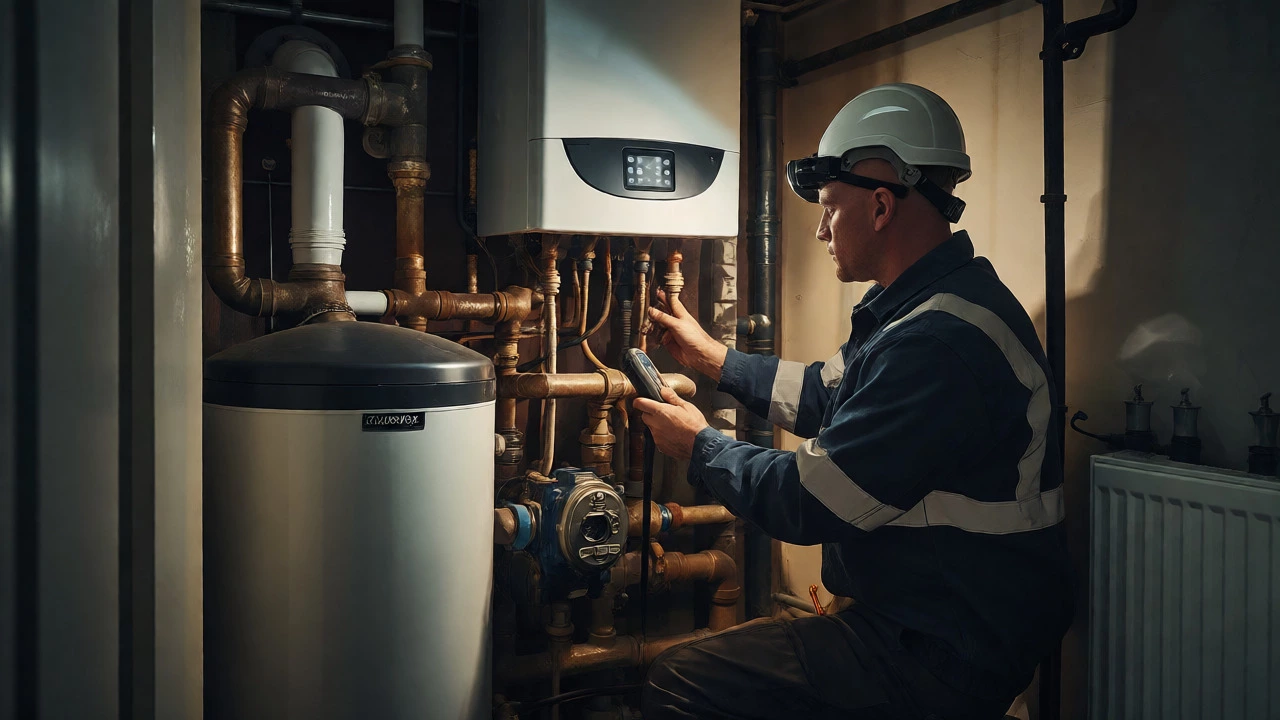
Many homeowners in Perth ignore strange noises-kettling sounds, banging pipes, or constant clicking-until the system dies completely. That kettling sound? It’s usually limescale buildup inside the heat exchanger. In hard water areas, this scale insulates the metal, causing it to overheat and crack. Once it cracks, you lose efficiency and eventually functionality.
Regular servicing catches these issues early. A licensed technician can flush the system, clean the diverter valve, and test the pressure relief valve before they become emergencies. Think of it like changing your car oil. You don’t wait for the engine to seize up before checking the dipstick.
What To Do Right Now
If you are standing in a cold kitchen right now, follow these steps before calling anyone:
- Check the Pressure: Look at the gauge. If it’s below 1 bar, try repressurizing using the filling loop (consult your manual). If it drops again quickly, you have a leak.
- Reset the Boiler: Turn the power off at the switch, wait 60 seconds, and turn it back on. This clears temporary electronic glitches.
- Inspect Other Appliances: If you have a gas stove, do the burners light? If not, you might have a general gas supply issue, not a boiler fault.
- Note Error Codes: Write down any flashing lights or codes. Tell this to the plumber when you book them. It saves diagnostic time and money.
Remember, a broken boiler doesn’t always equal a broken bank account. Often, it’s a minor mechanical hiccup waiting for a simple adjustment. But if you smell gas or see soot around the flue, stop everything and ventilate the room. Safety comes first, then comfort.
Can I shower if my boiler is broken?
It depends on your system type. If you have a combi boiler, the answer is generally no, as it heats water on demand. If you have a system boiler with a hot water cylinder, you may have residual hot water stored in the tank for several hours after the boiler fails. Once that stored water cools down, you will be left with cold showers.
Why is my boiler making noise but no hot water?
Noises like banging or gurgling often indicate airlocks, low water pressure, or limescale buildup (kettling). If you have no hot water, the noise suggests the boiler is trying to fire up but failing to transfer heat effectively, possibly due to a blockage or a failing pump.
How long does a boiler last?
With regular annual servicing, a standard gas boiler typically lasts between 10 to 15 years. High-quality brands installed correctly can sometimes reach 20 years. Neglected boilers often fail within 8 to 10 years due to component wear and corrosion.
Is it safe to run a boiler with no hot water?
If the heating still works, it is generally safe to run the boiler for central heating purposes, provided there are no gas leaks or carbon monoxide warnings. However, if neither heating nor hot water works, the boiler should be turned off until inspected by a professional to prevent further damage.
What is the average cost to fix a boiler in Australia?
Minor repairs like fixing a diverter valve or topping up pressure can range from $150 to $300 AUD. Major component replacements like a heat exchanger or PCB can cost between $400 and $900 AUD. Prices vary based on location, labor rates, and the specific brand of the boiler.