Hot Water Troubleshooter
Answer the questions below to diagnose why your shower has no hot water.
Likely Cause
Recommended Action
There is nothing quite like stepping into a cold shower on a grey morning. It wakes you up, sure, but not in the way you want. If your shower has suddenly turned ice-cold, don't panic. Most of the time, this isn't a catastrophic failure requiring a new unit. It's often a simple switch flipped, a filter clogged, or a pilot light that went out. Before you call a plumber and pay for a service call-out fee, let's walk through how to fix no hot water in shower yourself. We'll look at electric heaters, gas systems, and instant units, because each behaves differently when things go wrong.
The Quick Check: Is It Just Your Mixer?
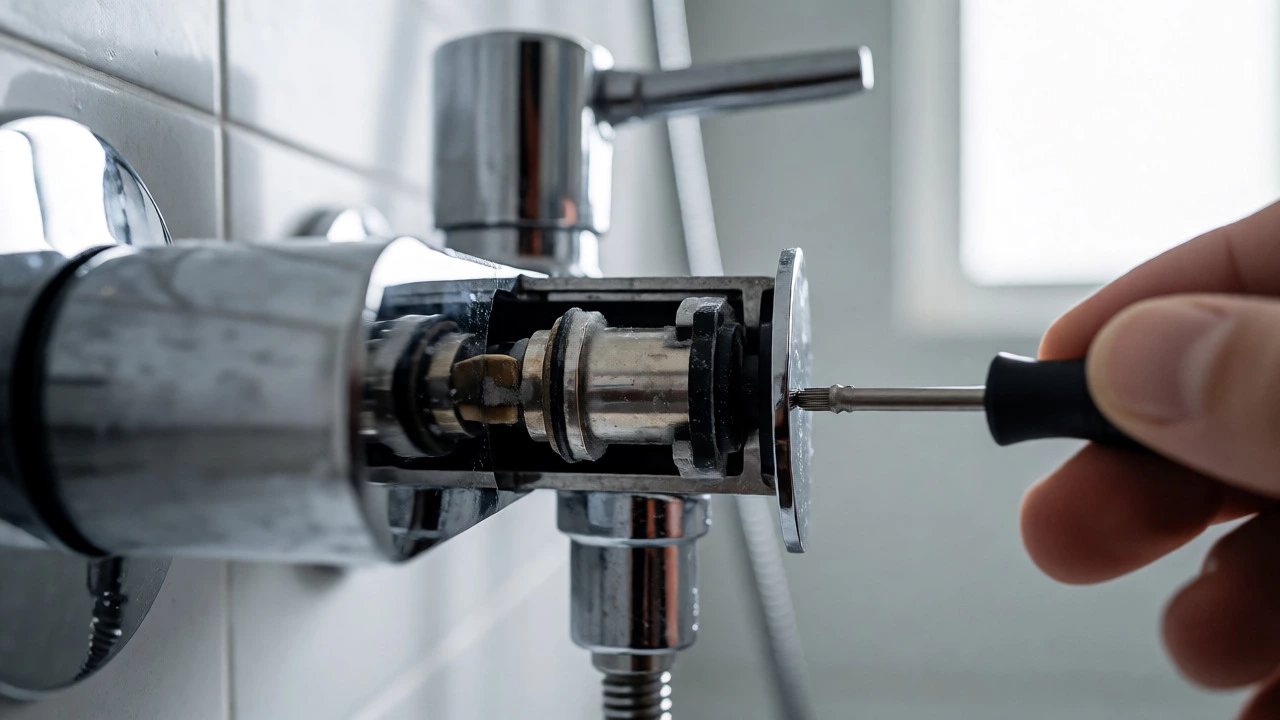
Before blaming the big tank in the garage, check the small stuff. Sometimes the problem isn't the heat source; it's the delivery. Grab your screwdriver. Pop off the faceplate of your shower mixer. Inside, you might find a cartridge stuck with limescale or debris. This is common in areas with hard water, like parts of Perth. If the cartridge is jammed, it won't allow hot water to mix properly, even if the heater is working perfectly.
Another sneaky culprit? The diverter valve. If you have a bathtub-shower combo, the diverter directs water from the tap to the showerhead. If it’s worn out, it might be leaking hot water back into the tub spout instead of sending it up to the shower. Try turning the diverter fully. If the pressure changes drastically but the temperature doesn't, the issue is likely mechanical within the fixture, not the heater itself.
Electric Storage Heaters: The Thermostat Trap
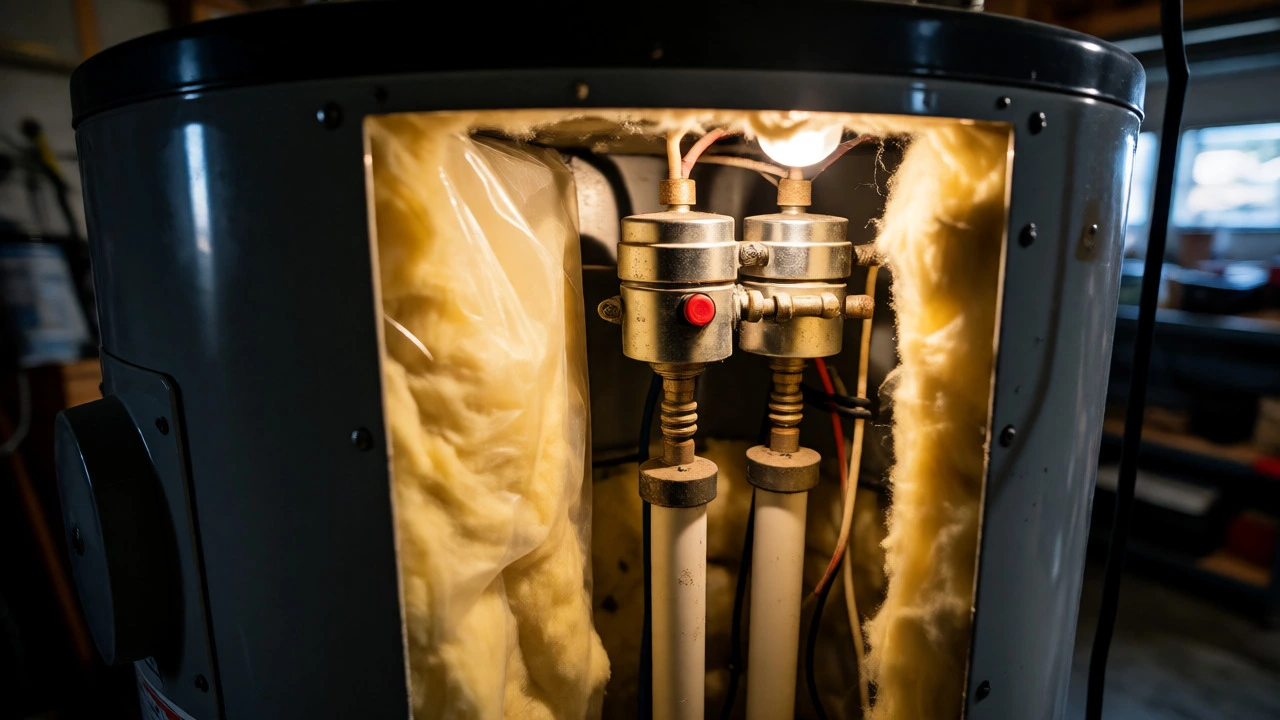
If you have a standard electric storage tank, the most common reason for no hot water is a tripped thermostat or a blown heating element. These units usually have two elements-one at the top, one at the bottom. They work in tandem to keep the tank full of hot water.
Here is what you need to do. Turn off the power at the circuit breaker. Safety first-water and electricity are bad friends. Remove the access panel on the side of the tank. You will see insulation, then a plastic cover. Behind that are the thermostats. Press the red reset button on the upper thermostat. If it clicks, great. Restore power and wait an hour. Still cold? The element might be burnt out. You can test this with a multimeter by checking for continuity. If there is no continuity, the element is dead and needs replacing. Parts cost about $20-$40, which is much cheaper than a replacement unit.
Gas Continuous Flow: The Pilot Light Panic
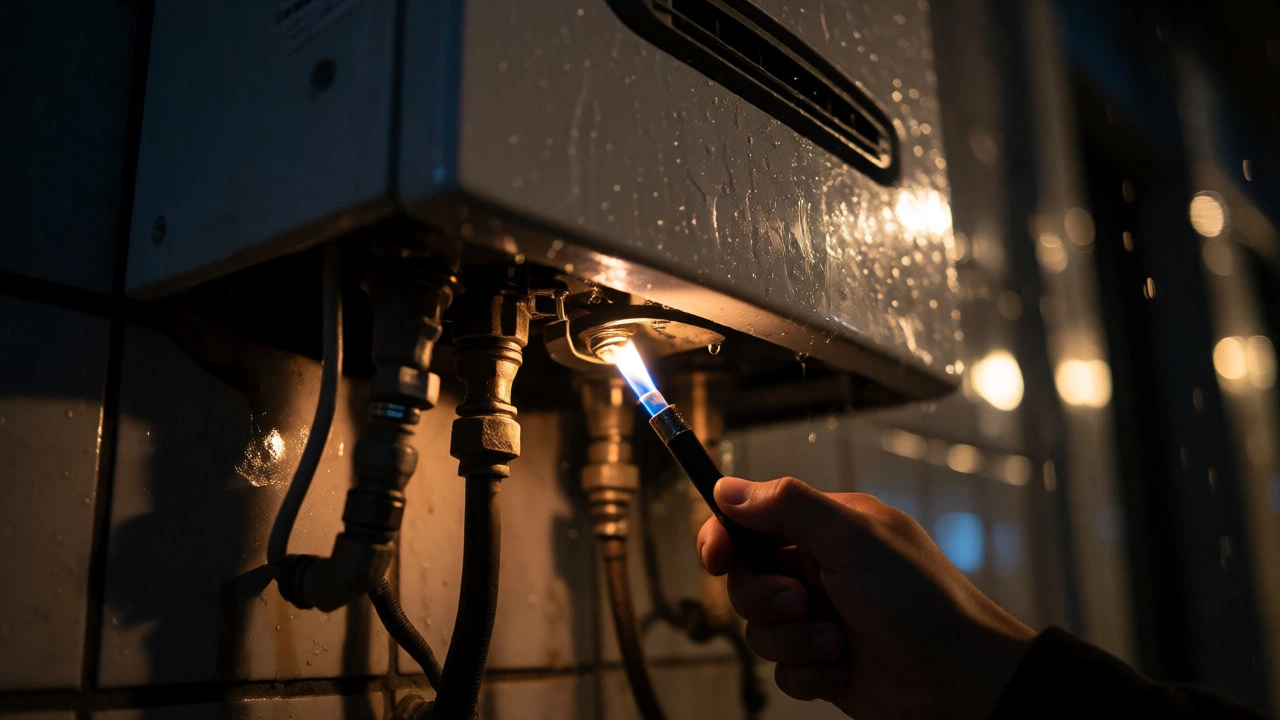
Gas continuous flow heaters (often called "instant" heaters) don't store water. They heat it as it flows past a burner. If you turn on the shower and get nothing but cold, listen closely. Do you hear a clicking sound? That is the ignition spark trying to light the pilot or main burner.
If you don't hear clicking, check the batteries. Many older gas models use a battery-powered igniter. If the batteries are flat, the spark won't happen. Replace them with fresh alkaline cells. If they click but don't ignite, the pilot light might be out. Follow the instructions on the sticker on the front of the unit. Usually, you press and hold a knob while lighting the pilot with a long match or lighter. Hold the knob for 30 seconds after the flame lights to keep the thermocouple warm. Release slowly. If the flame goes out immediately, your thermocouple is faulty. This is a cheap part ($15), but replacing it requires care.
Check the Pressure and Filters
Modern showers often have flow restrictors to save water. If your hot water pressure is low or non-existent, the heater might not trigger. Gas heaters, in particular, have a minimum flow rate requirement (usually around 2-3 liters per minute). If your showerhead is clogged with calcium deposits, the flow might drop below this threshold. The heater thinks nobody is using it, so it stays off.
- Clean the showerhead: Soak it in vinegar overnight to dissolve scale.
- Check inlet filters: Look for small mesh screens where the pipes enter the heater. Debris here blocks flow.
- Test other taps: If the kitchen sink has hot water but the shower doesn't, the issue is localized to the bathroom plumbing, not the central heater.
Solar and Heat Pump Systems: The Switch Confusion
Australia loves solar hot water. But these systems are complex. You have panels on the roof, a controller on the wall, and a tank inside. If you have no hot water, check the controller display. Does it show an error code? Common codes relate to sensor failures or pump errors.
Also, check the mode. Some controllers have a "boost" setting. If the weather has been cloudy for days, the tank might be empty of solar-heated water. Manually engage the boost function. This activates the backup electric element. Wait a few hours. If the boost works but solar doesn't, you might have a failed circulation pump or airlocks in the solar loop. Bleeding the system can sometimes fix airlocks, but this is tricky for DIYers. If you aren't comfortable bleeding high-pressure lines, call a pro.
When to Call a Professional
You've checked the fuses, reset the thermostats, cleaned the filters, and replaced the batteries. Still no hot water? Time to pick up the phone. Certain repairs involve gas lines or high-voltage components that are dangerous if mishandled. In Australia, gas work must be done by a licensed plumber/gasfitter. Doing it yourself can void insurance and lead to leaks or carbon monoxide risks.
| Heater Type | Likely Cause | DIY Fixability | Estimated Cost (Parts) |
|---|---|---|---|
| Electric Storage | Tripped Reset Button | High | $0 |
| Electric Storage | Burnt Element | Medium | $20 - $40 |
| Gas Instant | Flat Batteries | High | $5 |
| Gas Instant | Faulty Thermocouple | Low/Medium | $15 - $30 |
| Solar/Heat Pump | Controller Error | Low | N/A |
Frequently Asked Questions
Why does my hot water run out quickly?
If your hot water starts fine but turns cold after a few minutes, you likely have a broken dip tube. This tube directs incoming cold water to the bottom of the tank. If it breaks, cold water mixes with hot at the top, causing rapid depletion. Alternatively, your tank size may simply be too small for your household usage.
Can I replace a water heater element myself?
Yes, if you are handy and confident with tools. You must drain the tank completely before removing the old element. Use a socket wrench to unscrew it, apply Teflon tape to the new threads, and install carefully to avoid cracking the tank lining. Always turn off the power at the mains first.
My gas heater clicks but doesn't light. What now?
First, change the batteries. If that fails, the gas supply might be interrupted (check if your stove works). If gas is flowing and batteries are new, the igniter or gas valve could be faulty. These require a licensed technician to diagnose and replace safely.
Is it cheaper to repair or replace an old water heater?
For units over 10 years old, replacement is often better. Repairs like element swaps are cheap, but if the tank itself is rusting or leaking, patching is temporary. New energy-efficient models can save significant money on bills, offsetting the upfront cost over time.
How often should I flush my water heater?
Once a year is recommended, especially in hard water areas. Sediment builds up at the bottom of the tank, insulating the water from the heating element and reducing efficiency. Flushing removes this sediment and extends the life of your unit.
Next Steps and Maintenance Tips
Once you have hot water again, take a moment to prevent future headaches. Set a reminder on your phone to check your anode rod every two years. This sacrificial rod protects the steel tank from corrosion. If it's eaten away, replace it immediately. It costs less than $30 and saves you thousands in premature replacement.
Also, consider installing a timer on your electric heater if you don't already have one. Running the heater during peak tariff hours adds up. Shifting usage to off-peak times can cut your water heating bill by half. And remember, if you smell gas at any point, leave the house immediately and call your gas provider. Don't flip switches or use phones indoors until you are safe outside.