Kitchen Extractor Fan Maintenance Planner
Select your fan details and click "Generate Plan" to see your schedule.
There is nothing quite as frustrating as turning on your kitchen extractor fan is a ventilation device designed to remove smoke, steam, and cooking odors from the kitchen air only to hear it wheeze, rattle, or blow warm air back into your face. You just fried some onions, the smell is lingering, and instead of clearing the air, the fan sounds like it’s about to give up. This usually means one thing: your unit is blocked by grease, dust, or debris.
A clogged extractor fan doesn’t just smell bad; it becomes a fire hazard and can damage your kitchen cabinets with excess heat. The good news? In most cases, you don’t need to call a technician immediately. With a few household items and some patience, you can unblock your fan and restore its airflow. Here is exactly how to do it safely and effectively.
Gather Your Tools Before You Start
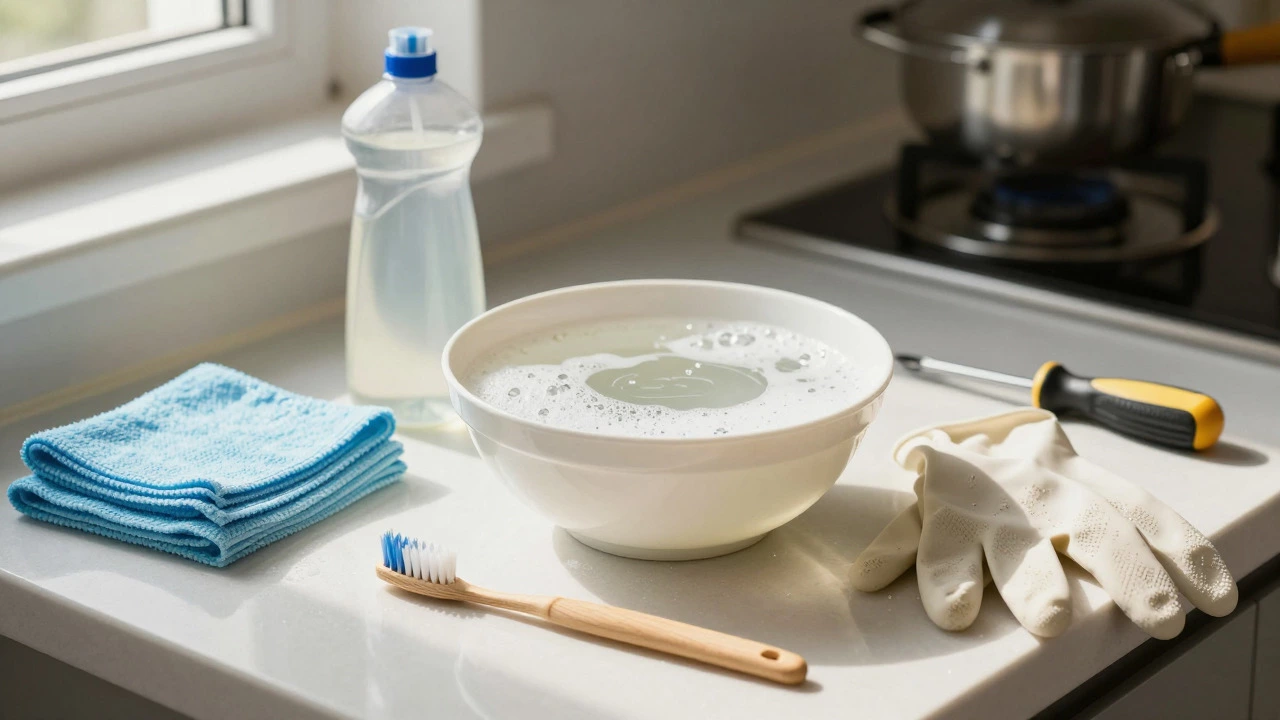
Before you climb onto a chair or disassemble anything, make sure you have the right supplies. Trying to clean a greasy fan with just a paper towel is a recipe for frustration-you’ll end up with black smudges everywhere and a fan that’s still dirty. Keep these items within reach:
- Mixed solution: Warm water, washing-up liquid (dish soap), and white vinegar. Vinegar cuts through grease better than soap alone.
- Old toothbrush: Essential for scrubbing the intricate mesh of filters.
- Screwdriver: Usually a flathead or Phillips head, depending on your model.
- Microfiber cloths: For wiping down surfaces without leaving lint.
- Vacuum cleaner: Ideally one with a brush attachment to suck out loose dust before wet cleaning.
- Gloves: Grease gets under your fingernails fast. Protect your hands.
If your fan is ducted (connected to a pipe leading outside) rather than recirculating (using charcoal filters), you might also need a long flexible brush or a mirror to check the ductwork for blockages further down the line.
Step 1: Safety First - Cut the Power
This is the step most people skip, but it’s the most important. Water and electricity do not mix well. Even though your fan is low voltage, you want to avoid any accidental shocks or short circuits while you’re working with liquids.
Turn off the fan switch at the wall. Better yet, go to your fuse box or circuit breaker and switch off the power to the kitchen lighting and appliances. If you’re unsure which breaker controls the fan, turn off the main supply. It’s safer to be in the dark for ten minutes than to risk an accident.
Step 2: Remove and Clean the Grease Filter
The first line of defense against clogging is the metal mesh filter located beneath the hood. Over time, this filter traps fat particles from your cooking. When it gets saturated, air can’t pass through, causing the motor to work harder and overheat.
- Locate the release mechanism: Most filters slide out or clip out. Look for small tabs or levers on the sides. Gently press or pull them to release the filter.
- Pre-clean: Take the filter outside if possible. Shake off any loose crumbs or dried food particles. Use your vacuum cleaner to suck up the heavier grime.
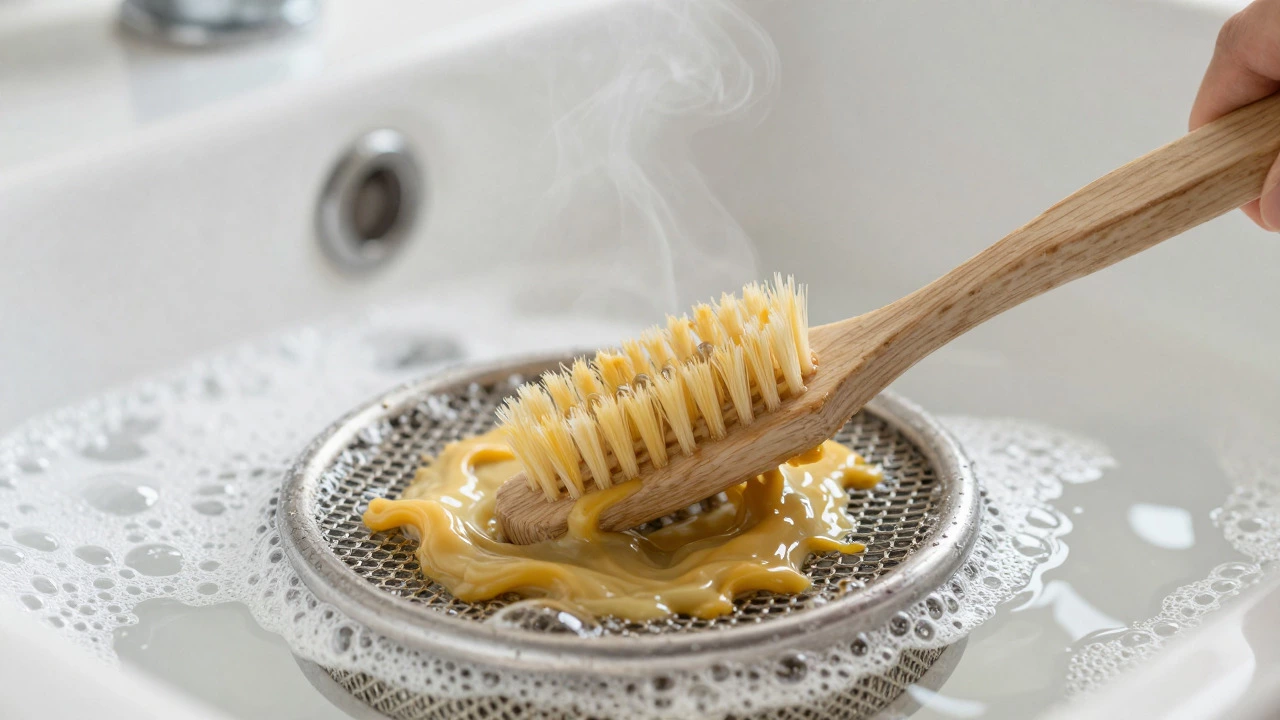
- Soak: Fill a sink or large basin with very hot water, a squirt of dish soap, and half a cup of white vinegar. Submerge the filter completely. Let it soak for at least 30 minutes. For heavily clogged filters, leave it overnight.
- Scrub: After soaking, use the old toothbrush to scrub both sides of the mesh. Pay attention to the corners where grease loves to hide. The grease should now come off easily.
- Rinse and Dry: Rinse thoroughly with warm water. Shake off excess water and let it air dry completely. Do not reinstall a wet filter-it can lead to mold growth or electrical issues.
While the filter is drying, move on to the next part of the fan assembly.
Step 3: Access and Clean the Fan Blades
If cleaning the filter didn’t solve the problem, the blockage is likely deeper inside the housing. The fan blades themselves accumulate a thick layer of sticky grease that makes them unbalanced and inefficient. This imbalance causes the noise and vibration you’ve been hearing.
To access the blades, you usually need to remove the outer cover or baffle filters. These are the angled metal plates that sit above the grease filter. They often unscrew or twist to release. Once removed, you’ll see the central hub holding the fan impeller (the blades).
Here is where caution is key. The blades are often held in place by a nut that threads in the opposite direction to standard nuts (left-hand thread). This prevents them from loosening while spinning. To remove them:
- Hold the blade steady with one hand so it doesn’t spin.
- Use a wrench or pliers to turn the nut clockwise to loosen it.
- Once the nut is off, slide the blade off the motor shaft.
Clean the blade using the same vinegar-soap solution. Use a cloth wrapped around your finger to get into the crevices. Also, wipe down the interior walls of the fan housing. Use a spray bottle with your cleaning solution to mist the inside, then wipe with a microfiber cloth. Avoid pouring water directly into the housing, as it can drip onto the motor bearings.
Step 4: Check the Ductwork (For Ducted Fans)
If you have a ducted system, the blockage might not be in the fan itself but in the pipes leading outside. Birds’ nests, leaves, or built-up grease can obstruct the vent.
Go outside and locate the exhaust point on your roof or exterior wall. Check if the flap opens when someone turns on the fan inside. If it doesn’t move, something is blocking it. Use a flashlight to look down the duct if possible. If you see a blockage, try to push it out gently with a long pole or flexible brush. If the duct runs through your ceiling space, you may need to access it from there to clear the obstruction.
For recirculating fans, check the charcoal filters. These cannot be washed. If they are black and brittle, they are exhausted and need replacing. A clogged charcoal filter acts like a brick wall to airflow.
Step 5: Reassemble and Test
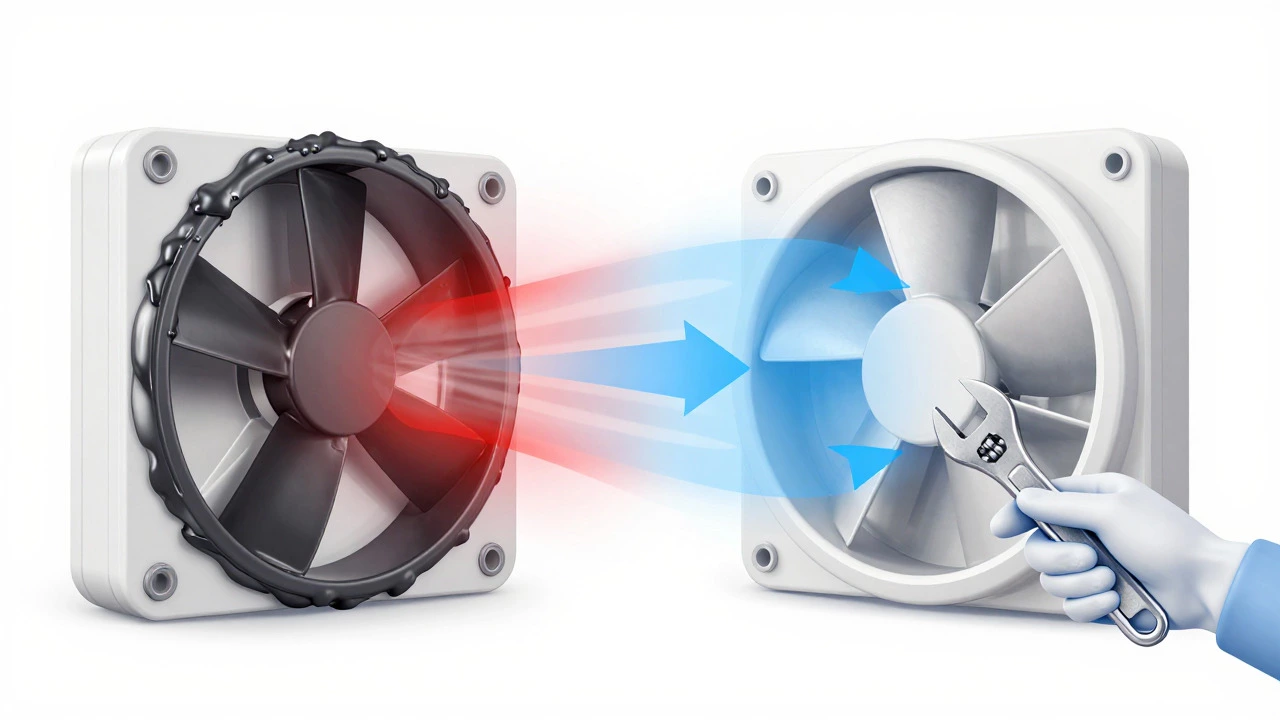
Once all parts are completely dry, reassemble the fan in reverse order. Ensure the fan blade is seated correctly on the motor shaft and the nut is tightened securely (remember, counter-clockwise to tighten for left-hand threads). Put the baffle filters and grease filter back in place.
Restore power at the circuit breaker. Turn on the fan. Listen carefully. It should run smoothly and quietly. Feel the airflow at the top of the hood. If it feels strong and cool, you’ve successfully unblocked your fan.
When to Call a Professional
Sometimes, DIY cleaning isn’t enough. Call a professional repair technician if:
- The motor hums but doesn’t spin: This indicates seized bearings or a burnt-out capacitor.
- You smell burning plastic: Turn it off immediately. This suggests electrical insulation failure.
- The noise persists after cleaning: The motor bearings may be worn out and need lubrication or replacement.
- You are uncomfortable with electrical work: Safety always comes first.
Regular maintenance is cheaper than replacement. Aim to clean your grease filters every month and deep clean the blades every six months. This keeps your kitchen air fresh and your fan running efficiently for years to come.
Why is my extractor fan blowing hot air?
If your fan is blowing hot air, it is likely blocked by grease or dust, preventing proper ventilation. The heat from your cooking has nowhere to go but back into the room. Another cause could be a failing motor that is overheating due to friction from dirty bearings.
Can I wash the charcoal filters in my dishwasher?
No, charcoal filters should never be washed. They are designed to absorb odors, and water destroys their effectiveness. Once they are saturated, usually after 3-6 months, they must be replaced with new ones.
No, charcoal filters should never be washed. They are designed to absorb odors, and water destroys their effectiveness. Once they are saturated, usually after 3-6 months, they must be replaced with new ones.
How often should I clean my extractor fan?
You should clean the metal grease filters once a month. A deep clean of the internal blades and housing should be done every 6 to 12 months, depending on how much you cook. Heavy frying requires more frequent cleaning.
What is the best way to remove heavy grease buildup?
A mixture of hot water, dish soap, and white vinegar is highly effective. For extremely stubborn grease, you can use a commercial degreaser, but ensure you rinse thoroughly afterward to avoid chemical fumes when the fan is turned back on.
Is it dangerous to leave a blocked extractor fan running?
Yes, it can be. A blocked fan causes the motor to overheat, which increases the risk of electrical fires. Additionally, accumulated grease is flammable and can ignite if exposed to high heat from nearby stovetops.