Stove Repair vs. Replace Calculator
Imagine you’re mid-dinner when your gas stove sputters out, leaving you with cold pasta and a cloud of smoke. You check the label: manufactured in 2011. Fifteen years old. The immediate question hits hard: is it worth fixing a 15-year-old stove, or should you just buy a new one?
The answer isn't black and white. It depends on the type of fault, the cost of parts, and whether you value energy efficiency over saving a few hundred dollars today. Let’s break down the real numbers so you can make a decision that doesn’t hurt your wallet or your sanity.
Key Takeaways
- Repair Cost Threshold: If the repair costs more than 50% of the price of a new equivalent model, replace it.
- Age Factor: Appliances typically last 10-15 years. At 15, you are at the end of the expected lifespan.
- Safety First: Gas leaks or electrical shorts in old units often warrant replacement due to hidden risks.
- Efficiency Gap: New stoves use up to 30% less energy than models from two decades ago.
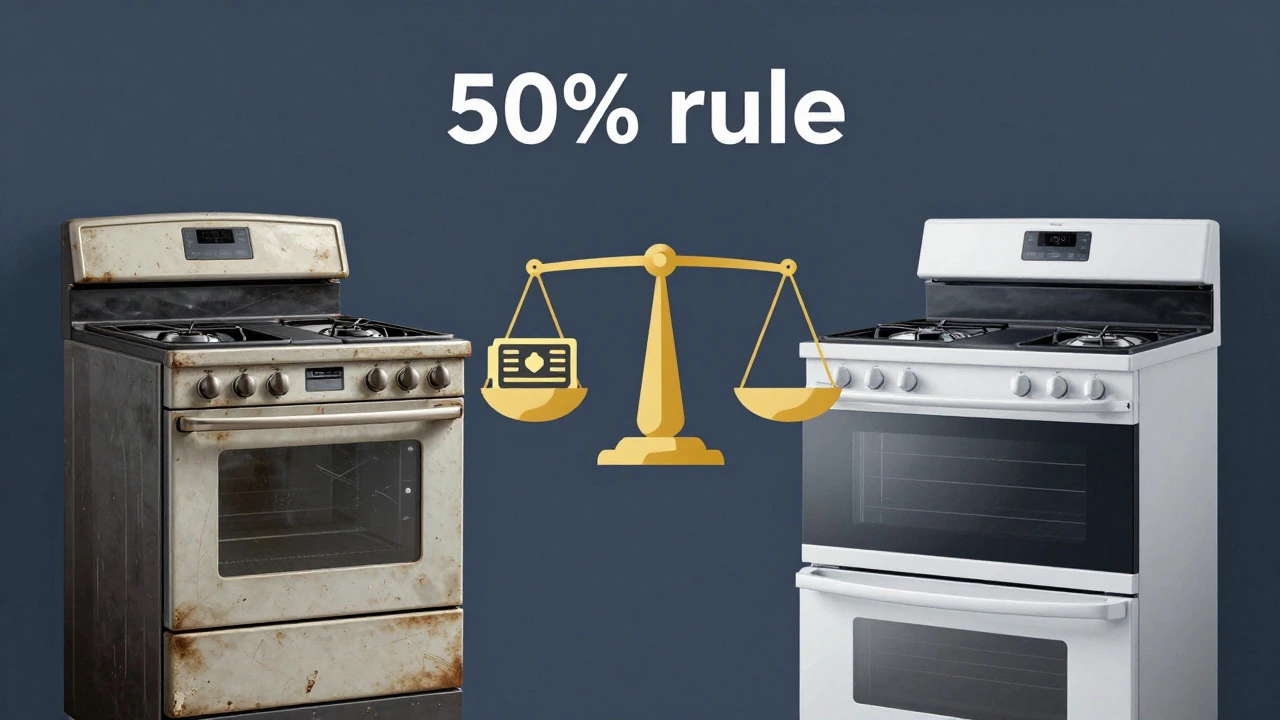
The 50% Rule for Appliance Repairs
There is a simple heuristic used by most professional technicians: the 50% rule. If the estimated repair bill exceeds half the cost of buying a new unit of similar quality, you should replace the appliance. For a standard freestanding range, a new mid-range model might cost between $800 and $1,200. That means if the repair quote is over $400-$600, the math usually favors a new purchase.
Why does this work? Because once you pay for a major repair on an aging unit, you’re likely to face another failure within the next 1-2 years. Think of it like maintaining an old car. You fix the transmission, but then the suspension goes. The total cost of keeping it running often surpasses the value of a reliable newer vehicle.
| Factor | Repair Recommended | Replace Recommended |
|---|---|---|
| Repair Cost | Less than 50% of new unit price | More than 50% of new unit price |
| Fault Type | Minor (igniter, knob, small part) | Major (control board, gas valve, burner assembly) |
| Energy Efficiency | Current usage is low or stable | High energy bills or inefficient design |
| Warranty Status | Still under extended warranty | No warranty coverage |
| Future Plans | Staying in home for 5+ years | Moving soon or selling home |
Common Failures in Older Cookers
When a stove reaches its 15th birthday, certain components become prone to failure. Understanding what breaks helps you gauge the severity.
- Igniters: On gas models, the spark igniter may fail to create a strong enough spark. This is a cheap fix, often under $100 including labor.
- Control Boards: Electric ranges rely on electronic control boards. These are expensive ($150-$300 for the part) and difficult to source for discontinued models.
- Gas Valves: If a gas valve sticks or leaks, it’s a safety hazard. Replacing the valve assembly can be costly and requires certified installation.
- Heating Elements: In electric ovens, the bake or broil element burns out. While easy to replace, frequent failures suggest the entire heating system is degrading.
If the issue is just an igniter or a single heating element, repairing makes sense. But if the problem involves the main control board or multiple burners failing simultaneously, the internal architecture is likely compromised.
Safety Risks of Keeping an Old Stove
Beyond money, there’s the safety angle. A 15-year-old gas stove has been exposed to heat cycles, grease buildup, and potential corrosion. The National Fire Protection Association notes that cooking equipment is a leading cause of home fires. Older units may have deteriorated gaskets, cracked ceramic glass, or frayed wiring that isn’t visible until it fails.
Electric stoves pose different risks. Aging insulation on wires can lead to short circuits. If you’ve noticed scorch marks around the plug or intermittent power loss, don’t ignore it. A technician might tell you it’s “fine,” but the risk of electrical fire increases with age. When weighing whether it is worth fixing a 15-year-old stove, factor in the peace of mind that comes with a modern, code-compliant unit.
Energy Efficiency and Operating Costs
Newer stoves are significantly more efficient. According to the Department of Energy, induction cooktops and modern gas ranges have improved thermal efficiency compared to older designs. If you’re using an old electric coil stove, switching to a newer model could reduce your monthly electricity bill by $5-$10. Over five years, that’s $300-$600 saved.
Also consider features. Modern stoves offer convection fans, self-cleaning cycles, and better temperature accuracy. If you enjoy baking, the inconsistent heating of a 15-year-old oven might frustrate you more than the initial repair cost would save you.
When Repair Is Still the Better Choice
Despite the age, there are scenarios where fixing is smart:
- High-End Models: If you have a premium range (e.g., Wolf, Viking, Thermador) that costs $3,000+, a $500 repair is negligible. These brands also have better parts availability.
- Minor Issues: A broken knob or a stuck door latch is a minor inconvenience. Fixing it extends life without significant investment.
- Short-Term Use: If you’re moving in six months, spending $200 to fix a burner is cheaper than buying a new stove you’ll leave behind.
- Parts Availability: If the manufacturer still produces parts for your model, reliability is higher. Discontinued models often have long wait times for replacements.
How to Get an Accurate Repair Quote
Don’t guess. Call a licensed appliance repair technician. Ask specifically:
- What is the diagnostic fee? (Usually $75-$100, often waived if you proceed with repair.)
- Are parts available immediately, or will they need to be ordered?
- Do you guarantee the repair for 90 days or longer?
If the technician says, “It’s probably the control board,” ask for the part number. Check online to see if third-party parts exist. Sometimes, independent suppliers offer cheaper alternatives to OEM (Original Equipment Manufacturer) parts, though compatibility varies.
FAQ
How long do stoves typically last?
Most residential stoves have an average lifespan of 10 to 15 years. High-end models may last longer with proper maintenance, while budget models often fail earlier due to lower-quality components.
Is it safe to use a 15-year-old gas stove?
Yes, provided it has been regularly maintained and inspected for leaks. However, if you notice a rotten egg smell, hissing sounds, or yellow flames, turn off the gas and call a professional immediately. Age alone isn’t dangerous, but neglect is.
Should I repair or replace if my stove is under warranty?
If it’s under warranty, always repair first. Warranty repairs are free or low-cost. Only consider replacing if the same issue recurs after the warranty period ends or if the repair compromises future warranty coverage.
Does insurance cover stove repairs?
Homeowners insurance rarely covers routine repairs. It only covers damage from covered events like water leaks or fire. If your stove broke due to normal wear and tear, expect to pay out of pocket unless you have a separate home warranty plan.
What is the most common reason for stove failure after 10 years?
For gas stoves, it’s usually the igniter or gas valve. For electric stoves, it’s the control board or heating elements. These components degrade over time due to heat exposure and frequent use.