Electric Oven Diagnostic Assistant
Select the symptom you are experiencing with your electric oven below to see the most likely cause and recommended next steps.
Diagnosis Result
Please select a symptom from the left to begin diagnosis.
You put a tray of cookies in the electric oven and pull it out twenty minutes later to find them still raw in the middle. Or maybe the kitchen is sweltering because the heat isn't staying inside. It’s frustrating, especially when you have guests coming over or you’re just trying to get dinner on the table without ordering takeout again. Before you panic and call for an emergency service, you need to figure out if the appliance is actually dead or if it’s just acting up.
Most electric ovens fail in predictable ways. The heating elements burn out, the temperature sensors drift, or the door seals degrade. Knowing which part is failing saves you money on unnecessary repairs and helps you communicate better with technicians. Here is how to diagnose the problem yourself, step by step, using simple observations and basic tools.
The Heating Element Check
This is the most common culprit when an oven won’t heat up. Most modern electric ovens have two main heating elements: a bake element at the bottom and a broil element at the top. If your food isn’t cooking evenly, or not at all, start here.
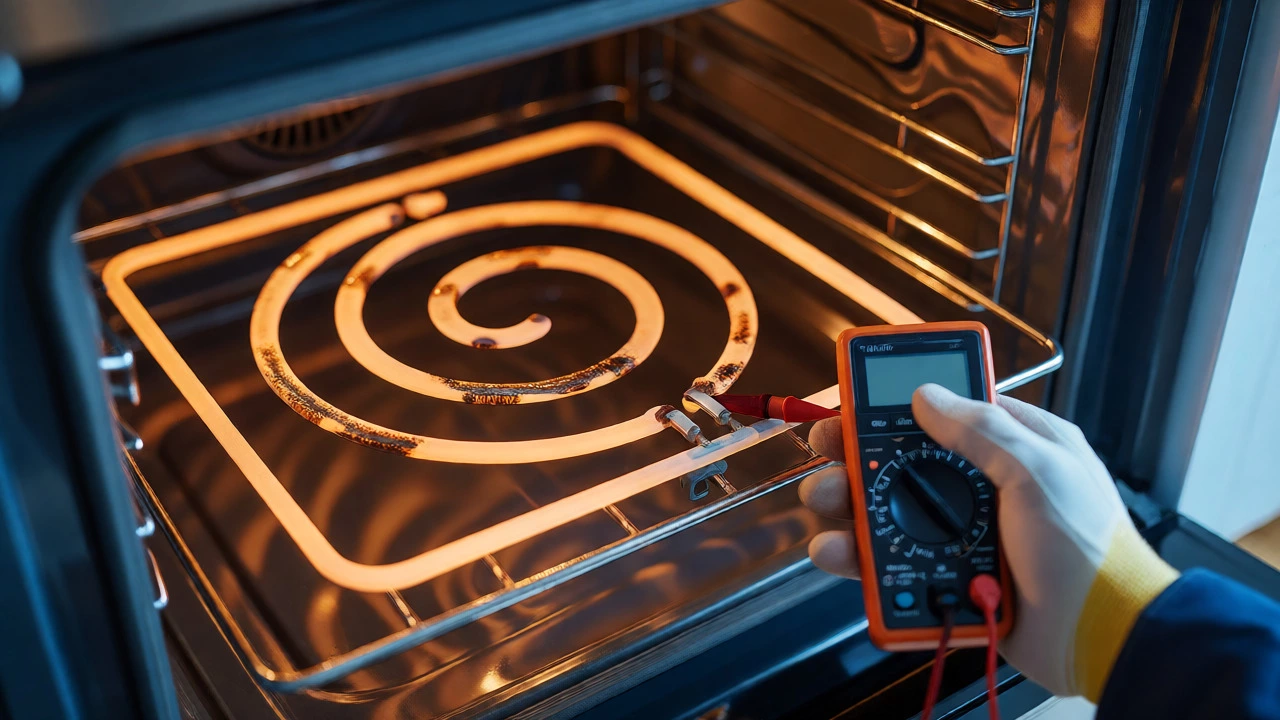
Turn off the power to the oven at the circuit breaker. This is non-negotiable-working with live electricity is dangerous. Once the power is off, open the oven door and look at the bottom element. In older models, this might be exposed coils; in newer ones, it could be hidden under the floor panel. Look for obvious signs of damage:
- Blistering or bubbling: The metal surface should be smooth. Blisters indicate overheating and imminent failure.
- Cracks or breaks: Any visible gap in the coil means the circuit is broken. No current flows, no heat.
- Dark spots: While some discoloration is normal from food spills, deep black scorch marks often point to electrical arcing.
If the element looks physically intact but the oven still doesn’t heat, you’ll need a multimeter. Set it to continuity mode (the setting that beeps when probes touch). Touch one probe to each terminal of the element. If the meter reads infinite resistance (often displayed as "OL" or "1"), the element is burnt out and needs replacement. A good element usually shows very low resistance, typically between 10 and 50 ohms depending on the wattage.
Temperature Sensor Drift
Does your oven run too hot or too cold? You might have baked a cake that came out burnt on the outside and raw inside, while the thermometer says it was 180°C. This points to the temperature sensor, also known as the thermostat probe.
This small metal rod, usually located near the top back wall of the cavity, tells the control board what temperature the air inside is. Over time, these sensors can drift. They don’t always break completely; they just become inaccurate. To test this, you need an independent oven thermometer. Place it in the center of the rack, set the oven to 180°C, and wait until the preheat light goes off. Then check the actual temperature on your thermometer.
If there is a difference of more than 15-20 degrees Celsius, the sensor is likely faulty. You can sometimes calibrate certain models via the control panel, but if the drift is significant, replacement is the only fix. These parts are relatively cheap, but labor costs can add up if you hire someone.
The Door Seal Test
A lot of people ignore the rubber gasket around the door frame, assuming it’s just cosmetic. It’s not. That seal keeps heat inside and ensures the oven reaches temperature efficiently. If your electric bills are creeping up or the oven takes forever to preheat, inspect the seal.
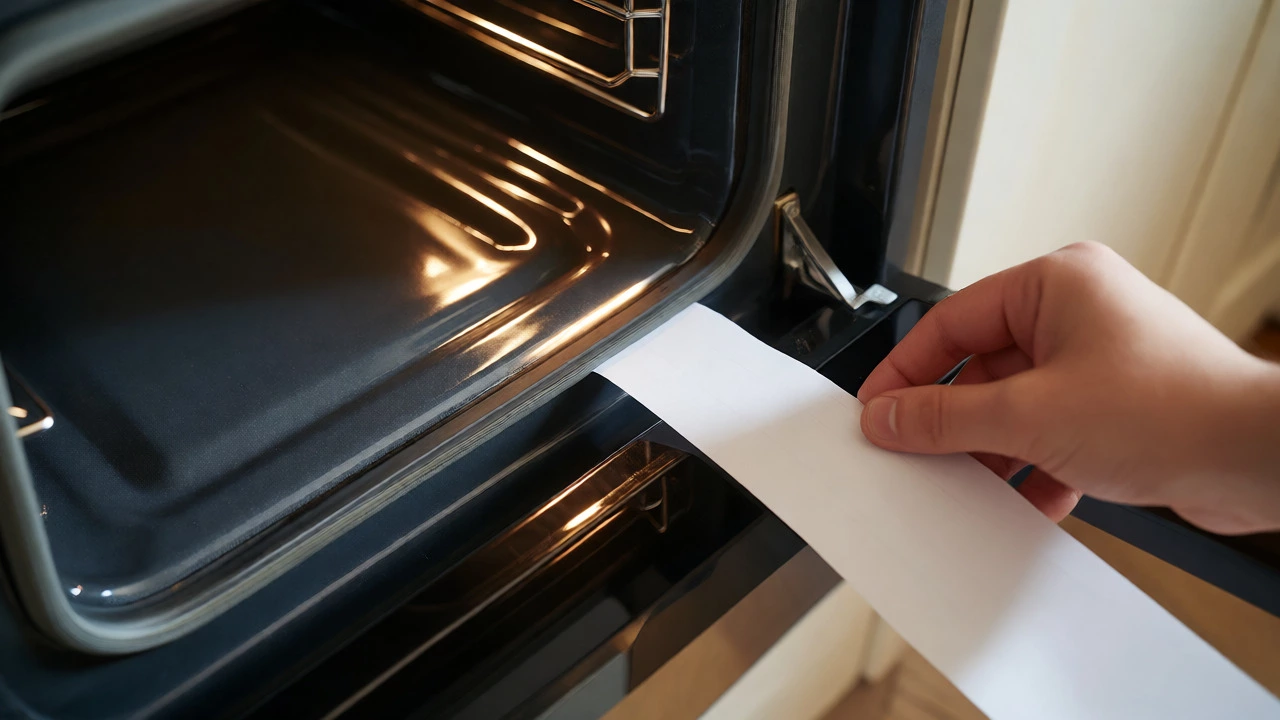
Clean the seal thoroughly first, as grease buildup can make it look worse than it is. Then, close the door and try to slide a piece of paper between the door and the frame at various points around the perimeter. If the paper slides through easily without resistance, the seal is compromised. Another trick: turn on an internal light and close the door. If you see bright light leaking out around the edges, the seal isn’t making proper contact.
A bad seal causes uneven baking. The side closest to the leak will cook faster than the rest. Replacing a door seal is a straightforward DIY job for many models, but ensure you buy the exact part number for your specific oven model. Generic seals rarely fit perfectly.
Control Board and Power Issues
Sometimes the problem isn’t mechanical or thermal-it’s electronic. If your oven’s display is blank, flickering, or showing error codes, the control board might be failing. This is the brain of the appliance.
First, rule out simple power issues. Check your home’s circuit breaker box. Ovens draw a lot of power, and tripped breakers are common. Reset the breaker and see if the oven comes back to life. If the display works but the oven doesn’t respond to commands, the issue could be the user interface membrane or the relay on the control board.
Error codes are your friend here. Consult your owner’s manual (or search online for your model number plus "error code") to decode what the oven is telling you. For example, an "F3" error on many brands indicates an open circuit in the temperature sensor, while "F5" often points to a cooling fan failure. Ignoring these codes leads to guesswork and wasted money on parts you didn’t need.
Fan Motor Failures
Convection ovens rely on a fan to circulate hot air. If you hear a loud grinding noise, a high-pitched squeal, or complete silence when the convection setting is on, the fan motor is suspect. Unlike conventional ovens, convection models depend on this airflow for even cooking.
To test, remove the back panel inside the oven cavity (usually held by screws) to expose the fan blade. Turn the blade by hand. It should spin freely. If it feels stiff, gritty, or doesn’t move at all, the bearings are seized. Sometimes debris like burnt-on food gets stuck behind the blade, blocking rotation. Clean it out first. If the blockage clears but the noise persists upon powering up, the motor windings are likely burned out.
| Symptom | Likely Cause | DIY Difficulty |
|---|---|---|
| Oven doesn't heat at all | Burnt heating element or blown thermal fuse | Moderate |
| Oven heats but too slowly | Faulty temperature sensor or bad door seal | Easy to Moderate |
| Uneven baking (hot spots) | Failed convection fan or damaged element | Moderate |
| Display blank/flickering | Control board failure or power supply issue | Hard |
| Loud grinding noise | Seized fan motor or loose component | Moderate |
When to Call a Professional
While replacing a heating element or cleaning a seal is manageable for many homeowners, some jobs require a licensed technician. In Australia, working with mains voltage carries legal and safety implications. If you are unsure about disconnecting wires or testing components with a multimeter, stop.
Call a pro if:
- The control board needs replacement. These are expensive parts, and misdiagnosis can cost hundreds.
- The oven smells strongly of burning plastic or electrical insulation.
- There is soot or carbon buildup inside the cavity (more common in gas, but possible in electric due to short circuits).
- Your oven is under warranty. DIY repairs often void manufacturer guarantees.
Also, consider the age of the appliance. If your electric oven is over 15 years old and requires multiple part replacements, it might be more cost-effective to replace the unit entirely. Newer models are significantly more energy-efficient, which pays off over time.
How long do electric oven heating elements last?
Typically, heating elements last between 5 and 10 years. However, heavy usage, frequent self-cleaning cycles, and poor maintenance can shorten this lifespan. Signs of wear include blistering or uneven glowing patterns during operation.
Can I use my oven if the temperature sensor is broken?
Technically yes, but it's risky. Without a functioning sensor, the oven may overheat or fail to reach temperature. You would need to monitor cooking times closely and potentially adjust settings manually, but this increases the risk of burning food or damaging the appliance further.
Why is my electric oven smoking?
Light smoke is often caused by food residue or grease burning off during high-heat cycles. Thick, dark smoke suggests a larger spill or a failing electrical component. If the smoke smells like burning plastic or rubber, turn off the oven immediately and check for melting wires or insulation.
Is it cheaper to repair or replace an electric oven?
If the repair cost exceeds 50% of the price of a new oven, replacement is usually the better option. Additionally, if the oven is more than 10-15 years old, energy savings from a new model may offset the purchase price within a few years.
What does a thermal fuse do in an electric oven?
The thermal fuse is a safety device that cuts power to the heating elements if the oven overheats excessively. It is a one-time use component; once it blows, it must be replaced. A blown fuse often indicates an underlying issue, such as a failed cooling fan or blocked vents, causing the overheating.