Water Heater Reset Troubleshooter
Is your electric water heater's red reset button popping out repeatedly? This tool will guide you through the most common causes based on symptoms. Safety First: Always turn off power at the breaker before inspecting internal components.
Question Text
You’re standing in your utility closet or basement, staring at a cold shower that won’t warm up. You press the little red reset button on your electric water heater, hear a faint click, and hope for hot water. But five minutes later, it’s cold again. Or maybe the breaker keeps tripping every time you try to run the dishwasher. This isn’t just annoying; it’s a specific signal from your appliance telling you something is wrong internally.
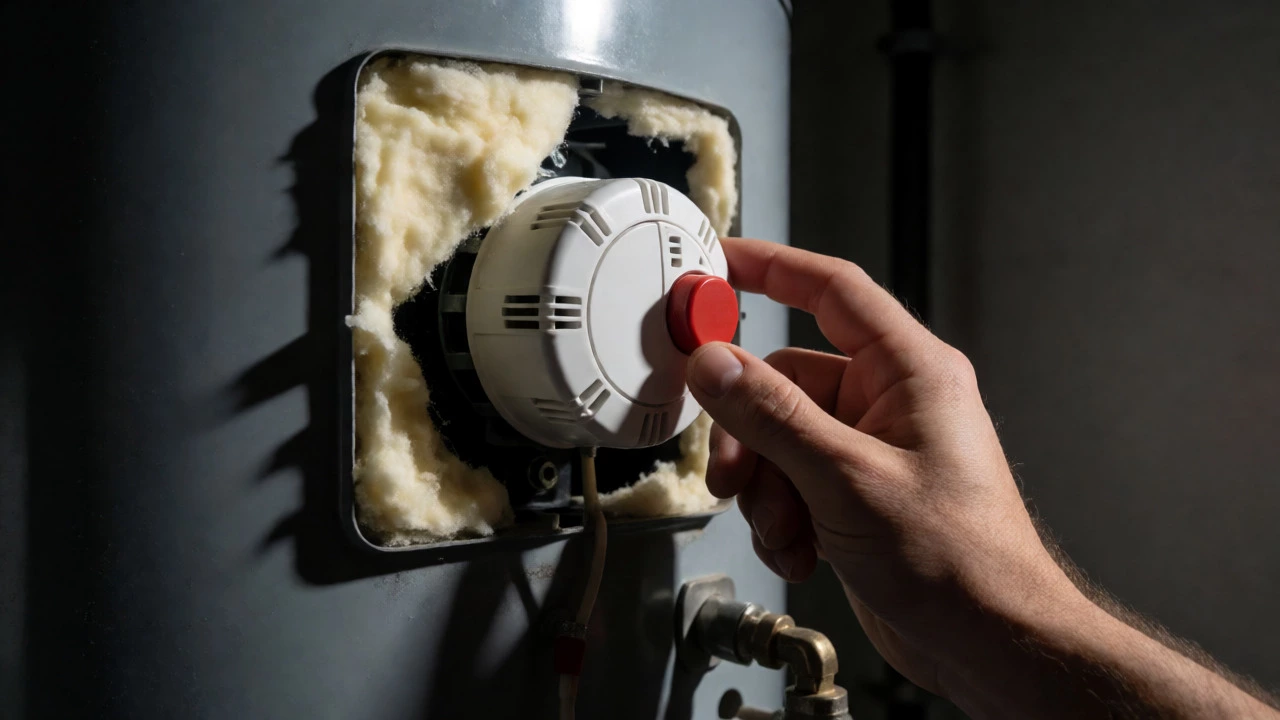
The reset button on an electric water heater isn’t there for convenience. It’s a safety device called a High Limit Switch (or ECO - Emergency Cut Off). Its job is simple: if the water inside the tank gets dangerously hot, usually above 180°F (82°C), this switch cuts power to prevent a catastrophic explosion or melting of internal components. If it trips repeatedly, you don’t have a "button problem." You have a heat generation problem. Let’s figure out exactly what’s causing those trips so you can stop guessing and start fixing.
Understanding the Safety Mechanism
To fix the issue, you need to know what you’re dealing with. Most residential electric water heaters use two heating elements: one at the top and one at the bottom. Each element has its own thermostat attached directly to the tank wall. These thermostats regulate temperature by turning the elements on and off. The reset button is part of a separate, higher-priority circuit.
The High Limit Switch is a thermal safety device integrated into the upper thermostat assembly of an electric water heater. Unlike the standard thermostat, which cycles the heater on and off to maintain set temperatures (usually around 120°F-140°F), the High Limit Switch only activates when temperatures exceed safe operational limits. When triggered, it physically breaks the electrical connection to the heating elements until manually reset.
Think of it like the circuit breaker in your home’s main panel, but located inside the water heater’s insulation. If your house breaker trips, it means too many appliances are drawing current. If your water heater reset trips, it means the water got too hot, too fast. This distinction is critical because the causes for these two scenarios differ significantly.
Common Culprits Behind Repeated Trips
When the reset button pops out, three main scenarios are usually at play. We’ll break them down from most common to least likely.
Failed Heating Element
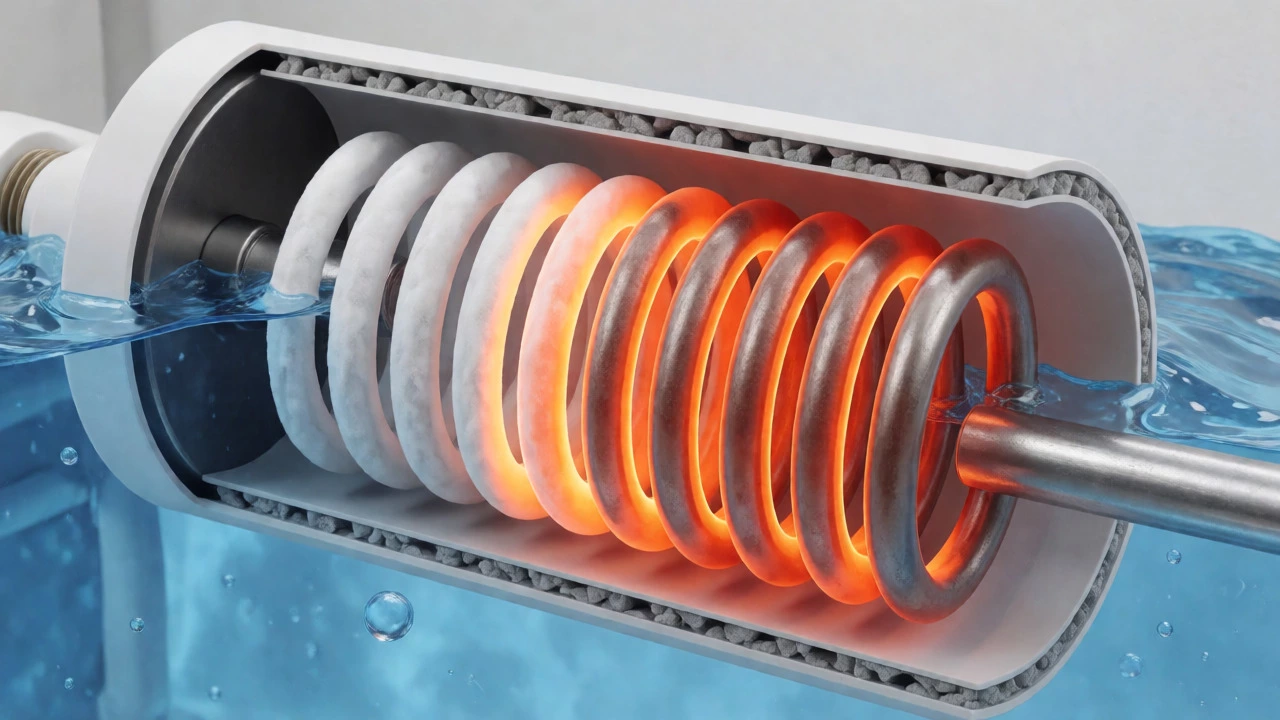
This is the number one cause of repeated resets. A heating element is essentially a metal coil surrounded by a sheath. Over time, mineral deposits from hard water build up on the outside of the element. This scale acts as an insulator. The element continues to generate heat, but that heat can’t transfer efficiently to the water. Instead, the heat builds up inside the element itself, raising its internal temperature well beyond what the water temperature indicates.
The thermostat senses the water temperature via a probe clamped to the tank. If the scale prevents heat transfer, the water might read 120°F, but the element itself could be glowing red hot. Eventually, the localized heat triggers the High Limit Switch. Even if you replace the element, if you don’t address the hard water issue, the new element will fail the same way within a year or two.
Faulty Thermostat Calibration
Thermostats aren’t perfect. They can drift out of calibration over time. A faulty thermostat might allow the heating element to stay on longer than it should. Imagine your car’s speedometer reading 60 mph when you’re actually doing 80 mph. Similarly, a bad thermostat might think the water is at 120°F when it’s actually at 150°F. If it fails completely in the "closed" position, it sends continuous power to the element, boiling the water until the safety switch kicks in.
You can test this with a multimeter. Set the thermostat to 120°F. Use a reliable thermometer to check the actual water temperature near the thermostat probe. If there’s a discrepancy of more than 10 degrees, the thermostat is unreliable and needs replacement.
Short Circuit or Ground Fault
Sometimes, the issue isn’t heat, but electricity. If the insulation on the heating element wires degrades, or if the element itself develops a crack, live electricity can arc to the grounded tank casing. This creates a short circuit. While this often trips the main household breaker immediately, a partial ground fault can sometimes cause erratic behavior in the control circuits, leading to false trips of the high limit switch.
Step-by-Step Troubleshooting Guide
Before calling a plumber, you can perform some basic diagnostics. Always prioritize safety. Working with water heaters involves high voltage and hot water.
- Cut the Power: Go to your main electrical panel and turn off the breaker dedicated to the water heater. Verify it’s off using a non-contact voltage tester on the heater’s access panel.
- Check the Temperature Setting: Remove the access panels on the side of the tank. Peel back the insulation carefully. Look at the thermostat dials. Ensure they are set between 120°F and 140°F. Settings above 140°F increase the risk of scalding and put extra strain on the system.
- Inspect for Leaks: Look for signs of moisture around the element flanges and pipe connections. A leaking tank or loose fitting can drip onto electrical connections, causing shorts.
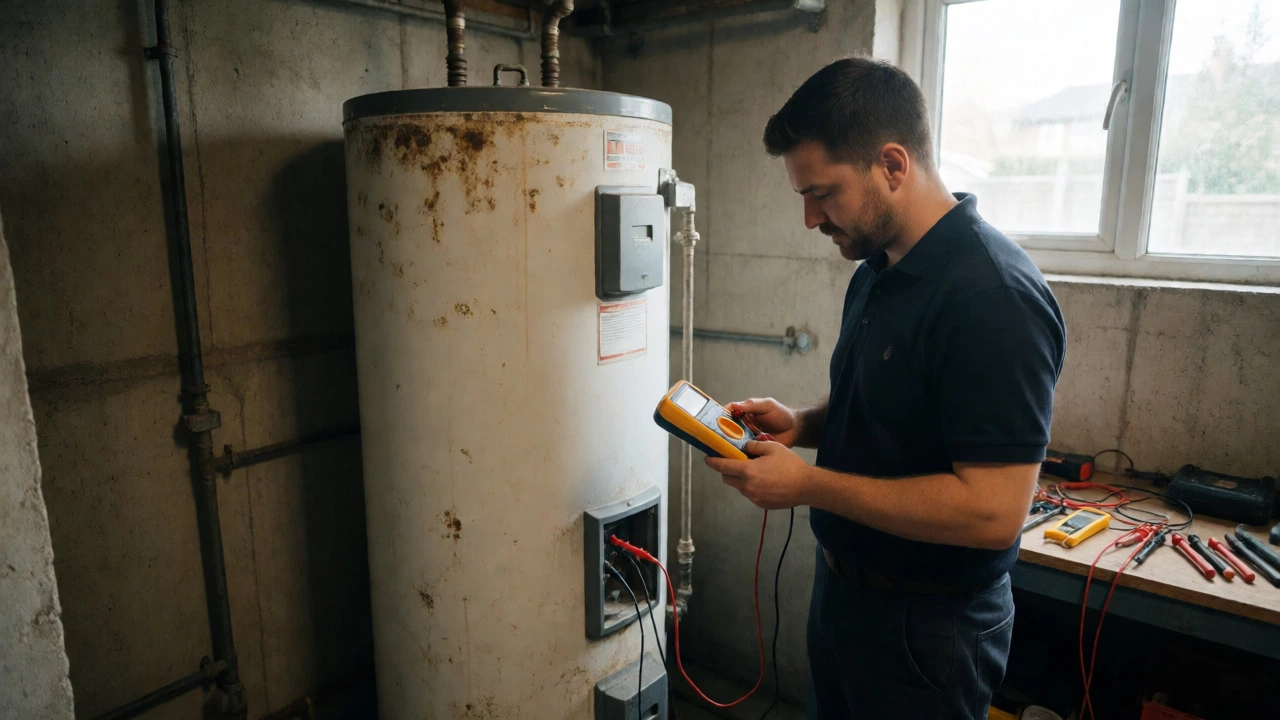
- Test the Elements: This requires a multimeter. Disconnect the wires from the lower heating element first. Measure the resistance across the terminals. A healthy element typically reads between 10 and 16 ohms. If it reads infinite (OL) or zero, the element is dead or shorted. Repeat for the upper element.
- Check Continuity to Ground: With one probe on an element terminal and the other on the metal tank body, measure resistance. There should be no continuity (infinite resistance). If you get a low reading, the element is grounding out against the tank.
Hard Water: The Silent Killer
If you live in an area with hard water-high levels of calcium and magnesium-you are fighting a losing battle without maintenance. Hard water doesn’t just clog pipes; it destroys efficiency. The mineral buildup described earlier is the primary reason heating elements burn out prematurely.
| Component | Effect of Scale Buildup | Consequence |
|---|---|---|
| Heating Element | Insulates element, trapping heat | Element overheats and burns out; trips reset button |
| Tank Bottom | Reduces volume capacity | Less hot water available; increased energy usage |
| Thermostat Probe | Poor thermal contact with tank | Inaccurate readings; overheating or underheating |
Flushing the tank annually helps remove sediment, but it doesn’t always remove hardened scale on the elements themselves. In severe cases, installing a whole-home water softener is the only long-term solution to protect your investment.
When to Call a Professional
Some jobs are DIY-friendly; others are not. Replace heating elements yourself if you’re comfortable working with 240-volt circuits and plumbing fittings. However, call a licensed plumber or electrician if:
- The tank itself is leaking from the seams or bottom.
- The reset button trips instantly upon resetting, before any heating occurs.
- You smell burning plastic or see smoke coming from the wiring compartment.
- The unit is over 10 years old. At this age, replacing the entire water heater is often more cost-effective than repairing individual components.
Remember, the reset button is a symptom, not the disease. Ignoring repeated trips by simply pressing the button over and over is dangerous. It masks underlying failures that could lead to tank rupture or fire hazards. Address the root cause-whether it’s a bad element, a stuck thermostat, or excessive scale-and you’ll restore reliable hot water safely.
Why does my water heater reset button keep popping out?
The reset button, or High Limit Switch, pops out when the water temperature exceeds approximately 180°F (82°C). Common causes include a failed heating element covered in scale, a faulty thermostat that stays closed, or a short circuit. It is a safety feature preventing the tank from overheating.
Can I replace the water heater reset button myself?
Yes, but it is rarely replaced in isolation. The reset button is typically built into the upper thermostat assembly. Therefore, replacing the thermostat usually resolves the reset button issue. Always disconnect power before accessing the internal components.
How do I know if my heating element is bad?
Use a multimeter to test for continuity. A good element shows 10-16 ohms between terminals and infinite resistance (no continuity) between either terminal and the ground (tank). If it shows zero resistance or continuity to ground, the element is shorted and must be replaced.
Does hard water really trip the reset button?
Indirectly, yes. Hard water causes mineral scale to build up on heating elements. This scale insulates the element, causing it to overheat internally even if the water temperature is normal. This excess heat triggers the High Limit Switch, causing the reset button to pop.
Is it safe to keep resetting the button?
No. Constantly resetting the button ignores the underlying safety violation. If the cause is a stuck thermostat or shorted element, continued operation can damage the tank, waste significant energy, or potentially cause a fire hazard due to overheated wiring.