Boiler Service Finder
Not sure who to call? Answer these three questions to find the right professional for your boiler problem.
Important Checks Before You Call:
Your boiler just threw an error code. The house is getting cold, and you’re staring at a machine that looks like a complicated metal box with too many pipes. You know it needs fixing, but who exactly do you call? A plumber? A gas fitter? An electrician? Or some mythical "heating wizard"?
This confusion costs people time and money. Calling the wrong person means waiting around for hours, only to be told they don’t touch boilers. In Australia, regulations are strict because gas and water mix badly if handled incorrectly. Getting this right isn't just about convenience; it's about safety and compliance.
| Professional | Primary Role | Can They Service Boilers? |
|---|---|---|
| Gas Fitter | Installs and repairs gas lines, burners, and combustion systems. | Yes, mandatory for any work involving the gas supply or burner unit. |
| Licensed Plumber | Manages water supply, drainage, and hot water systems. | Yes, for water-side issues (leaks, pressure) and system flushing. |
| Heating Engineer | Specializes in complex heating controls, pumps, and radiators. | Often dual-qualified as Gas Fitters; best for whole-system diagnostics. |
| Electrician | Handles electrical components like control boards and sensors. | Rarely services the boiler itself, but may fix power supply issues. |
The Golden Rule: It Depends on Your Fuel Type
Before you pick up the phone, look at your boiler. Is it connected to a natural gas line, LPG cylinders, or just electricity? This single detail dictates who you hire. If you have a gas boiler, which is a heating device that uses natural gas or LPG to heat water via a combustion process, you legally need a licensed gas fitter for anything related to the flame, burner, or gas valve. In most Australian states, doing this yourself or hiring an unlicensed handyman can void your insurance and lead to fines.
If you have an electric boiler, which uses electrical resistance elements to heat water without combustion, the rules loosen slightly. While a qualified electrician handles the wiring, many plumbers are trained to service these units because the core issue is usually water flow or element failure, not gas safety. However, always check local state regulations. In Western Australia, for instance, specific licensing applies even to certain high-voltage electric heating installations.
Plumber vs. Gas Fitter: Do You Need Both?
Here’s where it gets tricky. Modern combi boilers are integrated machines. They take in cold water, heat it instantly using gas, and send hot water to your taps and radiators. Because of this integration, problems often span both disciplines.
Imagine your boiler has low water pressure. That’s a plumbing issue-likely a leak in the pipework or a faulty pressure relief valve. A plumber is a tradesperson specializing in installing and maintaining systems used for potable water, sewage, and heating. They can find the leak, fix the pipe, and top up the system.
But what if the pressure is fine, yet the boiler won’t ignite? Now we’re talking about the spark electrode, the gas valve, or the fan motor. These are internal components of the heating unit. A general plumber might spot the problem, but they cannot legally open the sealed gas chamber to replace the valve unless they also hold a gas fitting license. Many professionals in Perth and across Australia hold dual licenses. When you search for help, look for terms like "Licensed Gas Plumber" or "Dual Qualified Technician." This saves you from paying two separate call-out fees.
What About Manufacturer-Specific Technicians?
Big brands like Rinnai, Bosch, or Rheem often recommend using their own authorized service agents. Why? Warranty protection. If your boiler is less than five years old, having an unauthorized person tamper with the internals can void the manufacturer’s warranty. Authorized technicians have access to proprietary diagnostic tools and genuine spare parts that generic handymen don’t.
However, "authorized" doesn’t always mean "best for your budget." These specialists often charge premium rates. For older boilers out of warranty, a reputable independent gas fitter who specializes in heating systems is often more cost-effective and equally skilled. Always ask the technician upfront: "Are you certified by [Brand Name]?" If they say no, and your boiler is still under warranty, think twice before letting them proceed.
DIY Checks: What You Can Safely Do Yourself
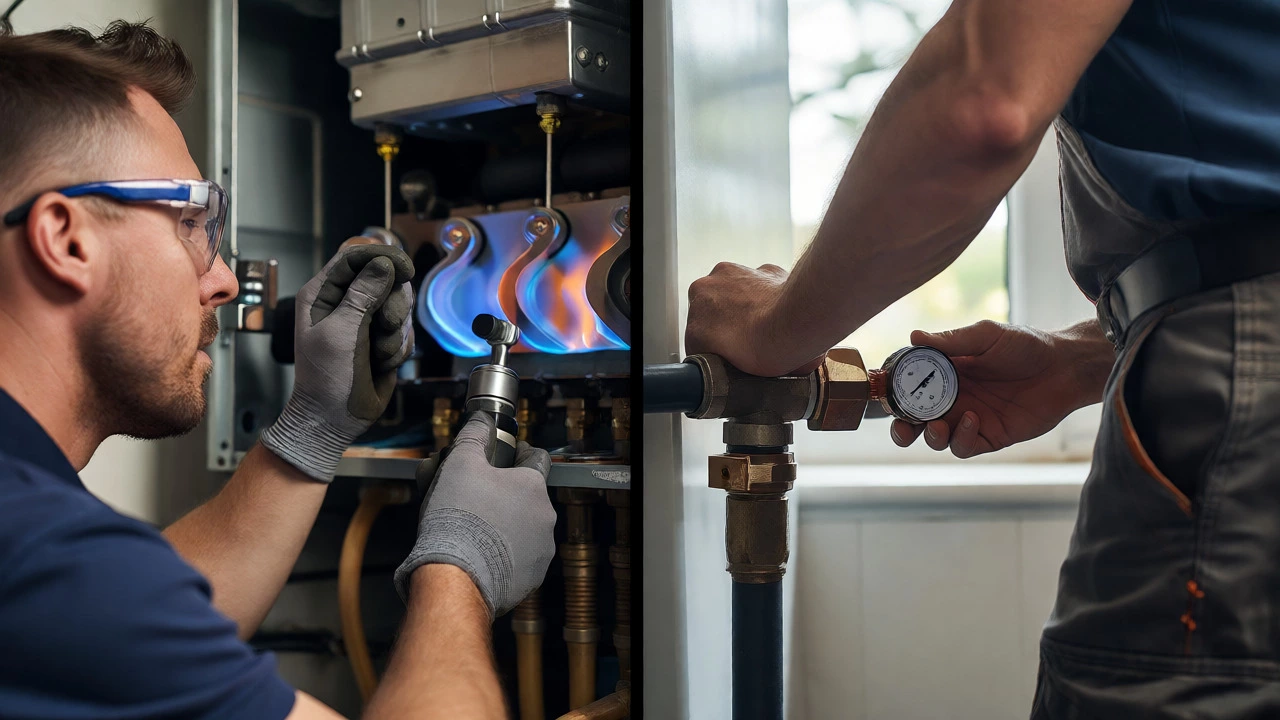
You don’t always need a pro. Before booking a service, run through these basic checks. They resolve about 30% of minor boiler complaints.
- Check the Pressure: Look at the gauge. It should sit between 1.0 and 1.5 bar when cold. If it’s near zero, try topping it up via the filling loop (consult your manual). If it drops again quickly, you have a leak-call a plumber.
- Inspect the Pilot Light (Older Models): If the flame is yellow instead of blue, or keeps going out, it’s likely a draft or a dirty thermocouple. Don’t mess with the gas supply; just note the symptom for the tech.
- Reset Button: Sometimes a temporary glitch trips the safety cut-off. Pressing the reset button once is safe. If it trips again immediately, stop pressing it. You have a hard fault.
- Bleed Radiators: Cold spots at the top of radiators indicate trapped air. Bleeding them helps efficiency but doesn’t fix the boiler itself.
If none of these work, stop tinkering. Forcing a reset repeatedly can damage the printed circuit board (PCB), turning a $150 sensor fix into a $400 board replacement.
Red Flags When Hiring a Technician
Not all tradespeople are created equal. Here is how to spot a bad fit for your boiler job.
- No License Number: Ask for their gas fitting license number. In WA, you can verify this with the Building and Energy department. No number? Walk away.
- Quotes Over the Phone: Be wary of anyone giving a firm price without seeing the unit. Boiler faults are visual and auditory. A good tech will give a range or offer a fixed diagnostic fee.
- Pressure Sales for Replacement: If a technician says your 3-year-old boiler needs replacing after one visit, get a second opinion. Often, cleaning the heat exchanger or replacing a diverter valve solves the issue for a fraction of the cost.
- Ignoring Ventilation: Combustion requires air. If a tech blocks vents or ignores flue condition, they don’t understand the physics of your system.
Cost Expectations in 2026
Prices vary by region and complexity, but here’s a realistic breakdown for Australia. Note that labor rates have risen due to skilled trade shortages.
- Call-Out Fee: $80-$150. This covers travel and initial diagnosis. Some companies waive this if you accept the repair quote.
- Standard Service: $150-$250. Includes cleaning, checking seals, testing carbon monoxide levels, and safety inspection.
- Common Repairs:
- Pump replacement: $200-$350.
- Diverter valve repair: $150-$250.
- PCB replacement: $300-$500+.
- New Boiler Installation: $2,500-$4,500 depending on brand, output (kW), and installation complexity.
Remember, the cheapest quote isn’t always the best value. A cheap job that fails in three months costs you double in the long run.
Frequently Asked Questions
Can I service my own boiler?
You can perform basic maintenance like bleeding radiators or checking pressure, but you cannot legally open the casing to service internal gas components in most Australian states. Doing so risks invalidating your home insurance and creating safety hazards.
How often should I service my boiler?
Manufacturers typically recommend an annual service. This ensures efficiency, maintains warranty validity, and detects carbon monoxide leaks early. Skipping annual services can lead to higher energy bills and unexpected breakdowns during winter.
What is the difference between a boiler service and a repair?
A service is preventative maintenance performed when the boiler is working correctly. It involves cleaning, inspecting, and testing. A repair is reactive work done when the boiler has failed or is malfunctioning. Services are cheaper and predictable; repairs are variable based on part costs.
Do I need a gas certificate after a service?
Yes. After any work involving the gas connection or burner assembly, a licensed gas fitter must provide a Certificate of Compliance (or equivalent state-specific document). This proves the work meets safety standards and is essential for selling your home later.
Why is my boiler making loud noises?
Loud banging or gurgling often indicates "kettling," caused by limescale buildup on the heat exchanger. This reduces efficiency and overheats the water. A professional descaling flush or powerflush of the system can resolve this. Clicking sounds may point to a failing relay or expansion vessel issue.