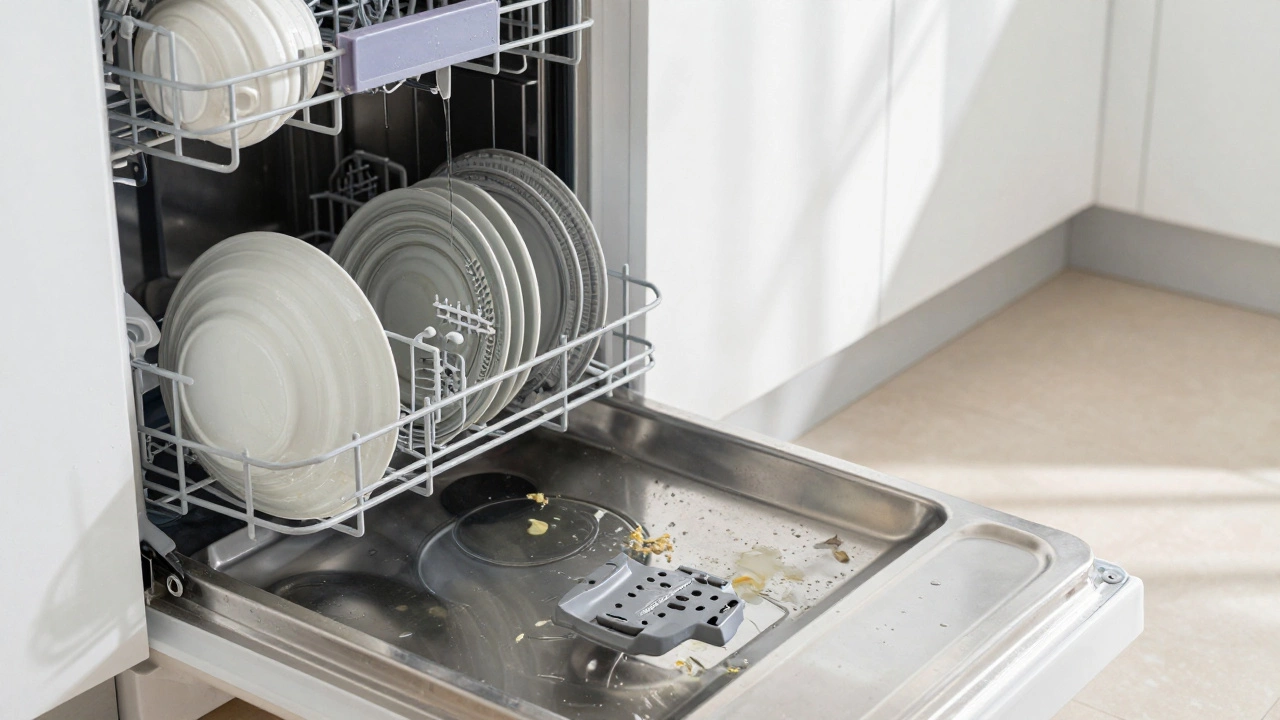
Dishwasher Repair vs. Replace Calculator
The "50% Rule" Estimator
Enter your details and click "Analyze" to see if a repair is recommended.
Pro Tip: According to the guide, if the repair cost exceeds 50% of the price of a new machine, replacement is usually the smarter financial move. Consider the energy efficiency of newer models if your machine is over 10 years old.
Quick Takeaways
- Most dishwashers are repairable, especially if the issue is electrical or a clogged pipe.
- The "golden rule" is that if the repair cost exceeds 50% of a new machine's price, you replace it.
- Common culprits include the drain pump, door seal, and heating element.
- Modern machines are designed with modular parts, making it easier for techs to swap components.
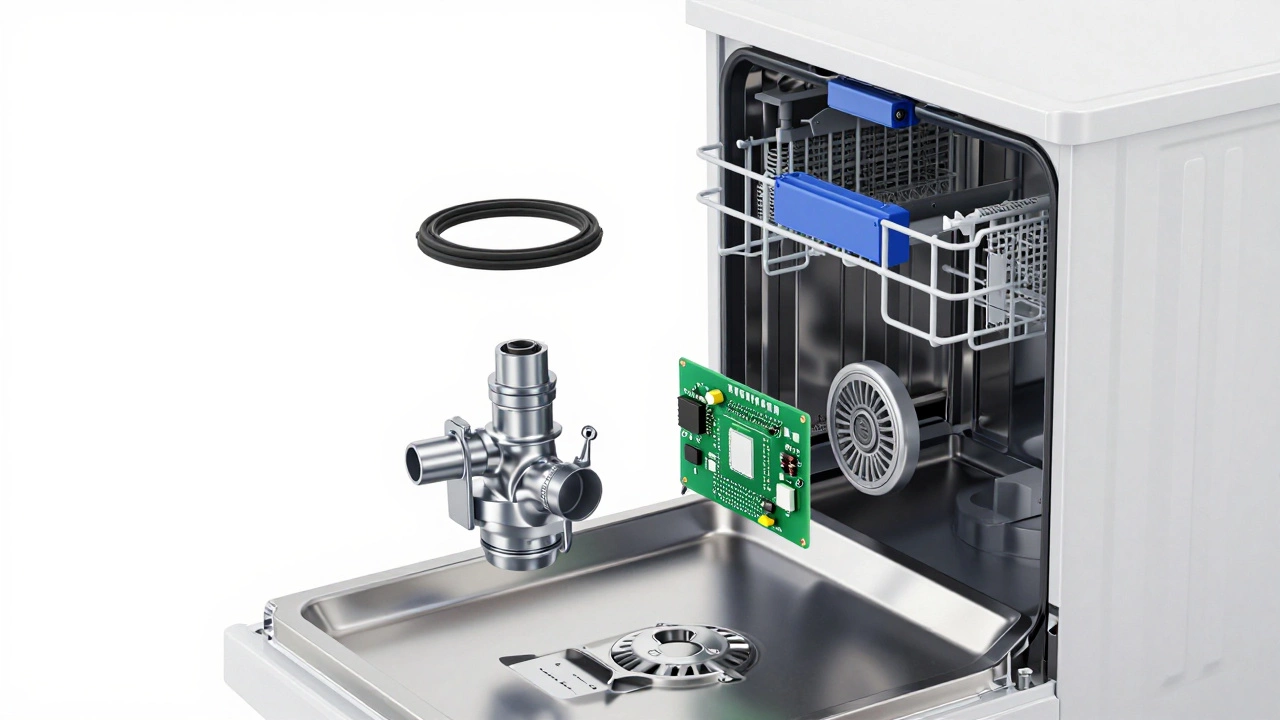
When we talk about whether a machine can be fixed, we have to look at the dishwasher repair is the process of diagnosing and fixing mechanical or electrical failures in an automatic dishwashing machine. Unlike a smartphone where the screen is glued to the motherboard, dishwashers are essentially a collection of separate modules: a pump, a heater, a control board, and a motor. If one fails, you don't toss the rest.
When Repair is the Obvious Choice
If your machine is relatively new-say, under five years old-repair is almost always the right move. Most high-end brands use a Control Board (the "brain" of the machine) that can be reset or replaced without affecting the rest of the unit. If your dishwasher simply won't start or the buttons are unresponsive, it's often just a blown capacitor or a glitchy board.
Then there are the "nuisance" failures. Have you noticed water leaking from the bottom? That's usually a perished Door Gasket, a rubber seal that keeps water inside. Replacing a seal is a cheap, straightforward job that takes a professional less than an hour. It's a lot better than spending $800 on a new appliance just because a piece of rubber wore out.
Clogs are another huge area where repair wins. Food debris, grease, and tiny pieces of plastic often get stuck in the Drain Pump. When the pump can't push water out, the machine throws an error code and stops. Clearing the filter or swapping out the pump motor is a standard procedure that restores the machine to full health.
| Problem | Likely Cause | Repairability | Typical Fix |
|---|---|---|---|
| Water won't drain | Clogged pump or filter | High | Clean filter / Replace pump |
| Dishes come out cold | Heating element failure | Medium | Replace heating element |
| Leaking from bottom | Worn door seal | High | Replace gasket |
| Won't start/No power | Faulty control board | Medium | Replace PCB/Control module |
The Red Flags: When to Give Up
Despite the repairability of most parts, there are moments when you're just throwing good money after bad. The biggest red flag is a rusted-out tub. If the inner lining of the dishwasher has corroded to the point where water is leaking through the metal itself, you're done. You can't "patch" a dishwasher tub; it's a structural failure.
Another tricky situation is the Heating Element. While these can be replaced, if you have an older model where the element is integrated into the chassis or requires a total teardown of the machine, the labor costs will skyrocket. If a technician spends four hours taking the machine apart to fix a $40 part, you're paying for the time, not the part.
Age is the final deciding factor. If your machine is 12-15 years old, it's likely operating on outdated efficiency standards. Modern machines use significantly less water and electricity. If a major component like the motor fails on a 15-year-old unit, the energy savings from a new, Energy Star-rated model might actually pay for the new machine over a few years.
How to Diagnose the Problem Yourself
Before you call a pro, you can do some basic detective work. Start with the Filter. Most people ignore the filter at the bottom of the tub for months. If it's coated in a thick layer of slime and food particles, your machine will struggle to drain or clean. Pop it out, scrub it with a brush, and see if the problem vanishes.
Check your Water Supply Valve. Sometimes the machine isn't "broken"; it's just not getting water. Ensure the valve under the sink is fully open. If you're hearing a humming sound but no water is entering, you might have a clogged inlet valve-a part that is easily swapped out by a technician.
Listen to the sounds. A loud grinding noise usually points to the pump or the spray arm getting stuck on a dish. A clicking sound without any movement often suggests a relay failure on the control board. Knowing these sounds helps you explain the issue to a repair person, which reduces the time they spend diagnosing the problem (and saves you money on the hourly rate).
The Cost Equation: Repair vs. Replace
How do you actually decide? I use the "50% Rule." If the total cost of the repair (parts + labor) is more than 50% of the cost of a brand-new equivalent model, buy the new one. For example, if a new dishwasher costs $600 and the repair quote is $350, you're better off upgrading. If the repair is $150, fix it.
Consider the Manufacturer Warranty. Many people forget they have a 1-year general warranty or a 5-to-10 year warranty specifically on the stainless steel tub. Always check your paperwork or the serial number online before paying for a repair out of pocket.
Also, think about the installation headache. Replacing a dishwasher isn't just about buying the box; it's about disconnecting the old unit, potentially modifying the cabinetry to fit a new model, and hooking up new plumbing. A simple repair that happens inside the existing shell is often less stressful than a full replacement.
Professional Repair vs. DIY
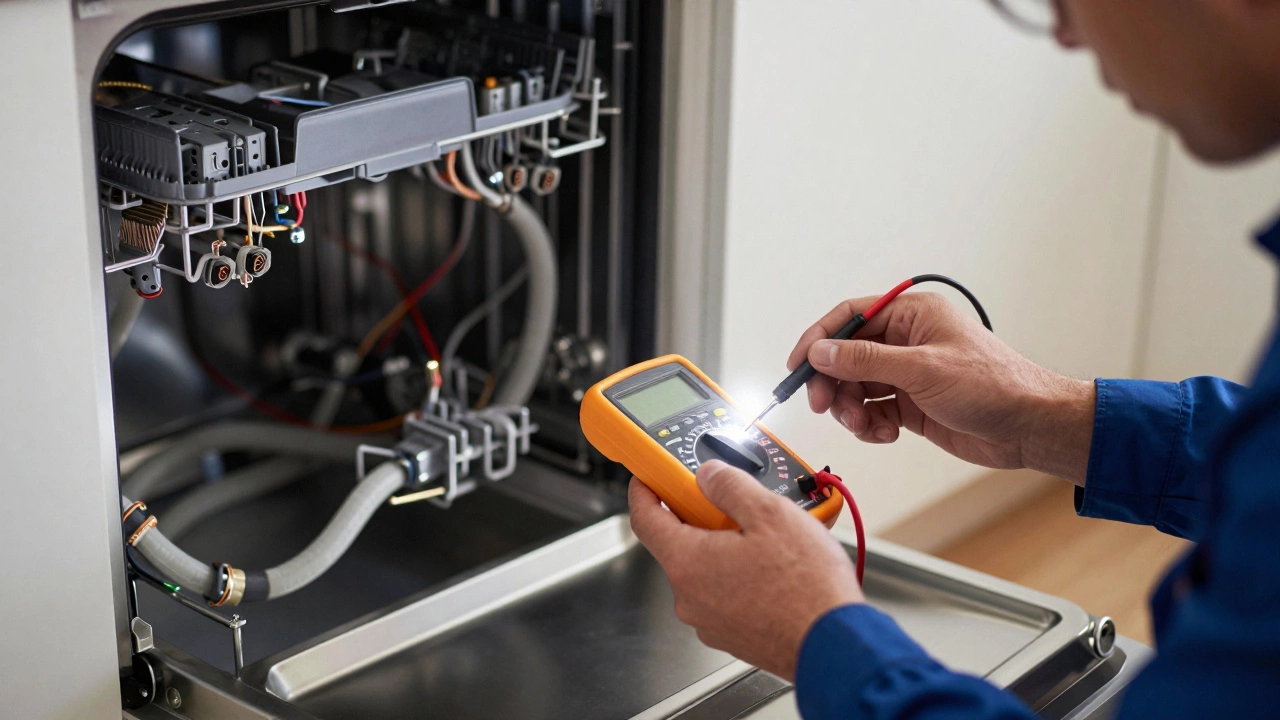
If you're handy with a screwdriver and a multimeter, some fixes are easy. Changing a filter or replacing a spray arm is a DIY job. However, when it comes to the Electrical Wiring or the main pump, calling a professional is safer. Dishwashers combine water and electricity in a tight space-a dangerous mix if a wire isn't seated correctly.
A professional technician has access to specialized diagnostic tools that can pinpoint exactly which sensor is failing. Instead of guessing and buying three different parts, they can tell you that the pressure switch is the culprit. This accuracy saves you from the "trial and error" cost of DIY repairs.
Is it worth fixing a 10-year-old dishwasher?
It depends on the part. If it's a simple seal or a pump replacement, yes. But if the motor is dead or the tub is leaking, the machine has likely reached its end-of-life. At 10 years, you're also missing out on the water-saving technology of newer models.
Why is my dishwasher not draining water?
The most common causes are a clogged filter, a kinked drain hose, or a failed drain pump. Check the filter first, as this is a free fix. If the filter is clean and water remains, the pump may be blocked by a foreign object like a piece of broken glass or a fruit seed.
Can a dishwasher be fixed if it's not heating up?
Yes. This is usually caused by a burnt-out heating element or a faulty thermostat. A technician can test the continuity of the element with a meter. If it's broken, the element can be replaced, though the cost varies depending on whether the element is separate or integrated into the base.
How do I know if my control board is dead?
Signs include the machine not responding to buttons, flashing random error codes, or the machine starting and stopping for no reason. Often, a "hard reset" (unplugging the machine for 10 minutes) can fix a glitch, but if the hardware is fried, the board needs replacement.
Do dishwasher repairs usually take a long time?
Most standard repairs-like replacing a pump or a seal-take between 1 and 3 hours. The longest part of the process is usually the diagnosis. If a part needs to be ordered, the actual repair is quick, but you'll have to wait for the shipping of the component.
What to Do Next
If you're staring at a broken machine right now, your first step is to check the manual for any error codes appearing on the display. This narrows down the search for the technician. Next, clear your filters and check the power supply.
If those don't work, gather your model number and serial number. This allows a repair person to check if parts are still available for your specific version. If the machine is an ancient model and parts are no longer manufactured, that's your signal to start shopping for a replacement. Otherwise, a quick service call can usually get your kitchen back in order without the cost of a full installation.