
Most homeowners wonder at least once: Can I service my boiler myself? It’s not just about saving money. It’s about control. You want to know your system is working right, not just hoping the technician didn’t miss something. But here’s the hard truth: trying to service your own boiler can be dangerous, illegal, or both-depending on where you live and what you’re trying to fix.
What Does Boiler Service Actually Involve?
Boiler service isn’t just cleaning the outside. A professional service includes checking the gas pressure, inspecting the heat exchanger for cracks, testing the flue for proper ventilation, cleaning the burner and ignition system, checking for carbon monoxide leaks, and verifying the safety controls work. These aren’t simple tasks. They require tools most people don’t own-like a combustion analyzer, manometer, and gas leak detector. Even if you have the tools, you need training to interpret what they’re telling you.For example, a gas pressure reading that’s off by just 0.1 mbar can cause incomplete combustion. That means carbon monoxide builds up inside your home. You can’t smell it. You can’t see it. But it kills. In the UK alone, over 20 people die each year from carbon monoxide poisoning linked to faulty gas appliances. Most of those cases involve untrained people trying to adjust or repair their own systems.
Why DIY Boiler Work Is Often Illegal
In the United States, Canada, the UK, Australia, and most of Europe, only certified gas engineers are legally allowed to work on gas boilers. In the UK, that means someone registered with Gas Safe. In the US, it’s typically a licensed HVAC technician with gas appliance certification. If you’re caught servicing a gas boiler without the right license, you could face fines-or worse, be held liable if someone gets hurt.Insurance is another big issue. If your boiler explodes or causes a fire because you messed with it, your home insurance won’t cover the damage. Most policies require proof of annual servicing by a certified professional. That’s not a loophole-it’s a safety rule. You’re not just risking your own life. You’re risking your neighbors’ too.
What You CAN Do Yourself (Safely)
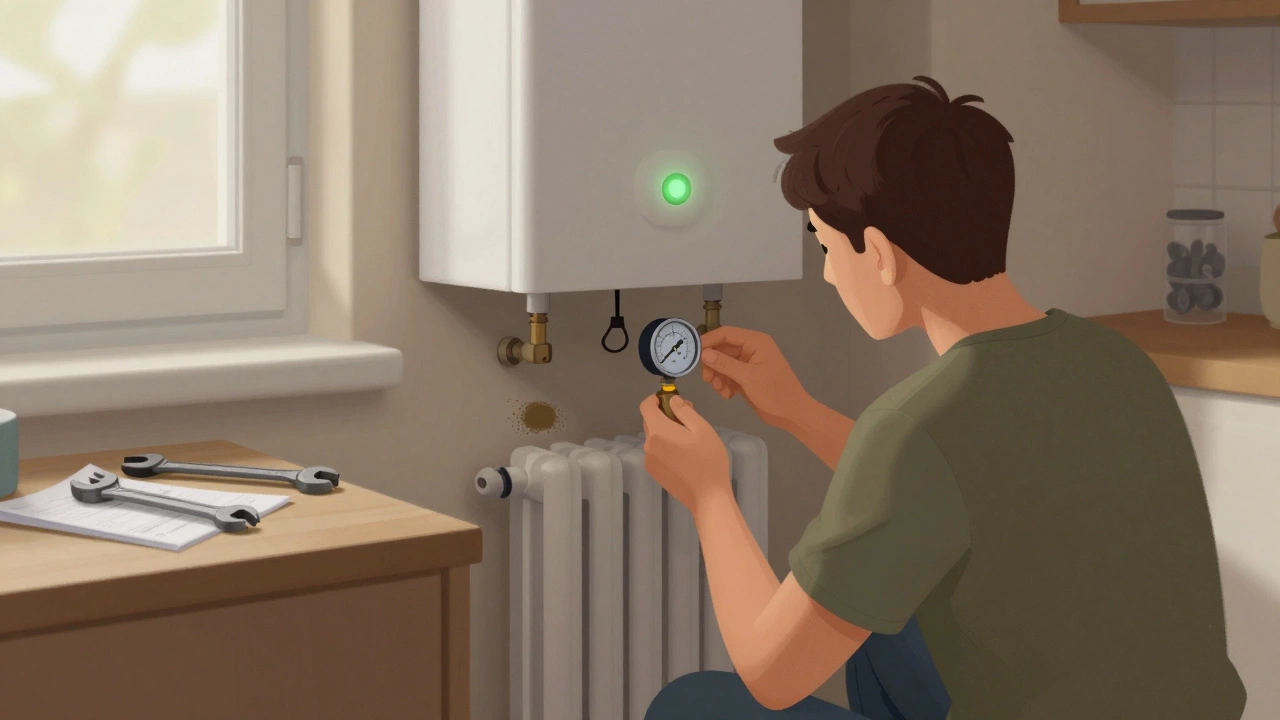
You don’t have to sit back and do nothing. There are real, safe things you can do to keep your boiler running longer and catch problems early.- Check the pressure gauge. Most boilers run best between 1 and 1.5 bar. If it drops below 0.5, you might have a leak. Re-pressurizing is simple-just follow the instructions on your boiler’s manual.
- Look for leaks. Check the pipes and valves for damp patches or rust. A slow drip can turn into a big repair.
- Listen for strange noises. Banging, whistling, or gurgling can mean air in the system or limescale buildup. Bleeding radiators helps with air. Flushing the system helps with scale.
- Keep vents clear. Make sure the air intake and flue aren’t blocked by snow, leaves, or boxes. Blocked flues cause dangerous gas buildup.
- Test your carbon monoxide alarm. Press the test button monthly. Replace the batteries every year. If you don’t have one, get one now.
These are all low-risk, high-reward tasks. You don’t need a license. You don’t need special tools. Just a little attention.
When You Absolutely Must Call a Pro
If you notice any of these signs, stop. Don’t try to fix it. Call a certified technician immediately:- The boiler won’t light, or it keeps turning off
- You smell gas (like rotten eggs)
- The pilot light is yellow instead of blue
- You see soot or black marks around the boiler
- Your carbon monoxide alarm goes off
- The boiler is over 10 years old and you haven’t had it serviced in the last year
Older boilers are more prone to cracks in the heat exchanger. That’s a silent killer. No amount of YouTube tutorials can safely fix that. Only a pro with the right diagnostic tools can spot it.
How Much Does Professional Service Actually Cost?
A typical boiler service costs between $100 and $200 in the US, £80 to £150 in the UK, or CAD $120 to $200 in Canada. That’s less than a new pair of winter boots. But here’s the real math: if you skip service and your boiler fails in the middle of January, a replacement can cost $3,000 to $7,000. Emergency repairs are 2-3x more expensive than scheduled ones. And if you cause a carbon monoxide leak, the cost isn’t just financial-it’s irreversible.Think of boiler service like an oil change for your car. You don’t wait until the engine seizes. You don’t try to replace the timing belt yourself unless you’re a mechanic. Same logic applies here.
What Happens During a Professional Service?
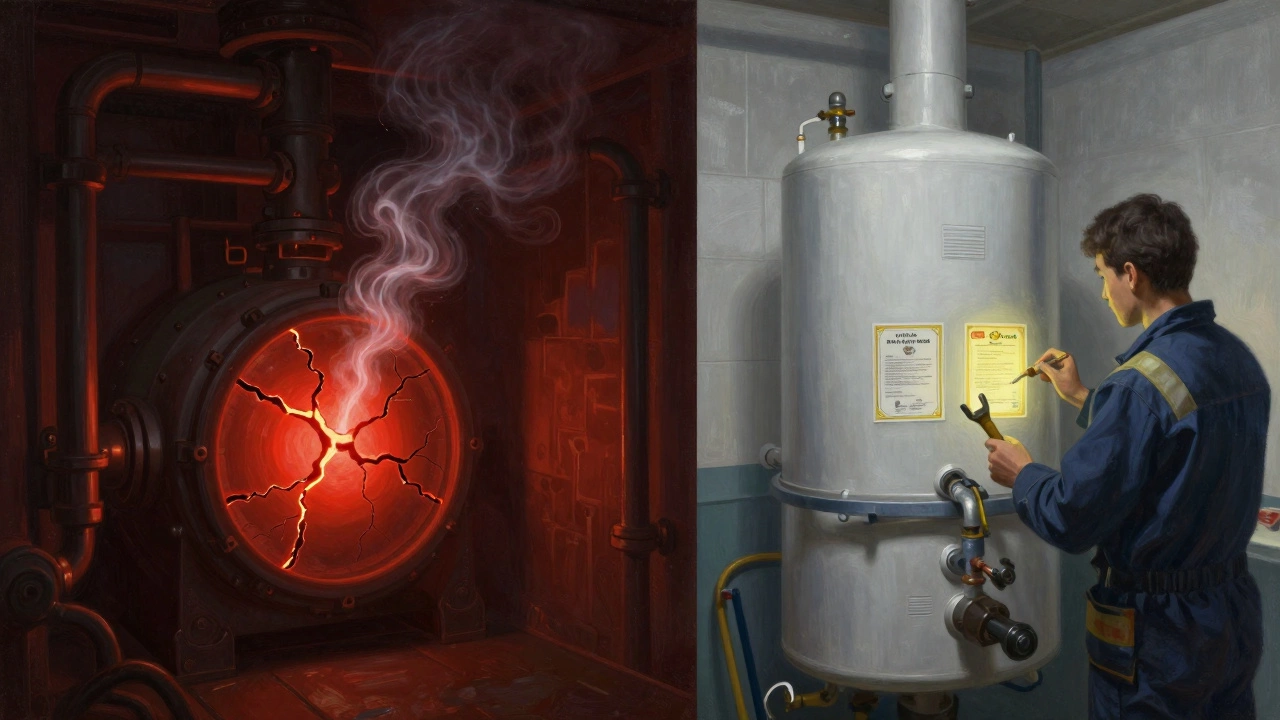
When a certified technician shows up, here’s what they actually do:- Turn off the boiler and disconnect power
- Check gas pressure and flow with a calibrated meter
- Inspect the heat exchanger for corrosion or cracks
- Test the flue for gas leakage and proper ventilation
- Measure carbon monoxide levels at the flue outlet and around the boiler
- Clean the burner, ignition electrodes, and condensate pipe
- Check safety controls: overheat stat, pressure relief valve, thermostat
- Test boiler efficiency and combustion quality
- Provide a service certificate (required by law in many places)
This process takes 45 to 90 minutes. The technician will show you the results and explain any issues. You’ll get a signed document proving the boiler was checked. That’s not paperwork-it’s protection.
Common Myths About DIY Boiler Service
There are a lot of misleading videos online. Here’s what they don’t tell you:- Myth: “I just cleaned the filter-my boiler is fine.”
Truth: Most modern boilers don’t even have a filter you can clean. The ones that do are usually just a mesh screen. Cleaning it doesn’t fix internal issues. - Myth: “I watched a YouTube video. I can do it.”
Truth: YouTube doesn’t test your work. It doesn’t issue a safety certificate. And it doesn’t pay your medical bills if you get poisoned. - Myth: “My boiler’s been working fine for years-I don’t need service.”
Truth: That’s when problems hide. A cracked heat exchanger doesn’t make noise until it’s about to fail. By then, it’s too late.
How to Find a Reliable Boiler Technician
You don’t have to guess who’s trustworthy. Here’s how to pick the right one:- Check their license number on the official registry (Gas Safe Register in the UK, NATE in the US, etc.)
- Ask for a service certificate after they finish
- Look for reviews that mention specific details-not just “great service,” but “checked my flue and explained the pressure issue”
- Ask if they use a combustion analyzer. If they say no, walk away
- Get a written quote before they start
Don’t fall for the cheapest quote. Cheap service often means skipped steps. A good technician will show you the dirty parts they cleaned and explain why they matter.
Final Answer: Can You Service Your Boiler Yourself?
No, you cannot safely or legally service a gas boiler yourself. The risks far outweigh any savings. But you can-and should-be an informed homeowner. Know how to check pressure. Know how to spot warning signs. Know how to find a qualified pro. That’s the real power.Boilers aren’t like coffee makers. They burn fuel. They produce heat. They handle gas and pressure. That’s not DIY territory. It’s professional territory. Treat it that way.
Can I clean my boiler myself?
You can wipe down the outside and check for visible leaks, but you should never open the casing or touch internal parts like the burner, heat exchanger, or gas valves. These components require specialized tools and training. Cleaning them incorrectly can cause gas leaks, carbon monoxide buildup, or damage that leads to expensive repairs.
Is it cheaper to service my boiler myself?
In the short term, yes-but only if you ignore the risks. A professional service costs $100-$200. A broken boiler replacement costs $3,000-$7,000. If you cause a carbon monoxide leak, the cost isn’t financial-it’s life. Insurance may also deny claims if you didn’t have a certified service. The real savings come from preventing failure, not skipping maintenance.
What happens if I service my boiler without a license?
In most countries, it’s illegal to service gas appliances without certification. You could be fined, held liable for injuries or deaths caused by your work, and your home insurance could be voided. If a fire or poisoning occurs because of your actions, you could face criminal charges. The legal consequences are serious and real.
How often should a boiler be serviced?
Every year. Annual servicing is required by law in many places and by most home insurance policies. It’s also the best way to catch small problems before they become big ones. Boilers older than 10 years need even more attention-cracks in the heat exchanger develop slowly and are invisible without professional tools.
Can I service an electric boiler myself?
Electric boilers are safer to maintain than gas ones, but you still shouldn’t open the casing unless you’re qualified. Even electric systems have high-voltage components and pressure controls that require proper testing. You can check the pressure gauge and flush the system, but internal diagnostics and safety checks should still be done by a licensed technician.