
DIY Fridge Repair Savings Calculator
Estimate how much you can save by performing common refrigerator repairs yourself instead of hiring a professional technician.
You Could Save: $0
| Professional Service Call Fee: | $0 |
| Professional Labor Cost: | $0 |
| Professional Parts Markup: | $0 |
| Total Professional Estimate: | $0 |
| Your DIY Parts Cost: | $0 |
| Your DIY Time Investment: | 0 hours |
It’s 2 AM. You wake up thirsty, open the kitchen door, and realize your milk is warm. The compressor isn’t humming. The light is off. Panic sets in. Before you call an expensive technician, you ask yourself: can you fix a fridge by yourself?
The short answer is yes-but with major caveats. Some issues are simple enough for anyone with a screwdriver and a YouTube subscription. Others involve high-voltage electricity, pressurized refrigerant gas, or sealed systems that require specialized certification. Getting it wrong can turn a $50 part swap into a $800 disaster-or worse, a safety hazard.
This guide breaks down exactly what you can handle alone, what should be left to pros, and how to diagnose common failures without guessing. We’ll walk through tools, safety steps, and real-world scenarios so you know when to roll up your sleeves and when to pick up the phone.
Understanding Your Refrigerator’s Core Systems
To decide if you’re capable of fixing your unit, you first need to understand what’s inside. A standard household refrigerator relies on three main systems working in harmony:
- The Cooling System: This includes the compressor, condenser coils, evaporator coils, and refrigerant lines. It circulates Freon (or modern equivalents like R-600a) to absorb heat from inside the box and release it outside.
- The Electrical Control System: This involves the thermostat, control board, relays, sensors, and wiring harnesses. It tells the compressor when to turn on and monitors temperatures.
- The Airflow & Mechanical System: This covers the evaporator fan, condenser fan, door seals (gaskets), and defrost timer/heater. Proper airflow ensures even cooling and prevents ice buildup.
Most DIY-friendly repairs fall into the third category-mechanical parts that are accessible and low-risk. The first two categories often require technical knowledge or special tools. For example, replacing a faulty start relay is easy; repairing a leak in the refrigerant line is not.
Safety First: When to Stop and Call a Pro
Before touching any screws, you must assess risk. Electricity and refrigerants are dangerous if mishandled. Here are non-negotiable rules:
- Unplug the fridge. Always disconnect power before removing panels or testing components. Even unplugged units can hold residual charge in capacitors.
- Never puncture refrigerant lines. Modern fridges use flammable hydrocarbon gases (like isobutane). Leaking them near sparks can cause fires. Only certified technicians should handle sealed system repairs.
- Avoid water + electricity combos. If you’re cleaning coils or checking drains, ensure no standing water contacts live terminals.
- Know your limits. If a repair requires vacuum pumps, manifold gauges, or soldering copper lines, stop. These aren’t weekend projects.
If your issue involves gas leaks, burning smells, tripped breakers, or complex circuit boards, hire a professional. Your safety-and your home’s insurance coverage-depends on it.
DIY-Friendly Fixes: What You Can Handle Alone
Many common fridge problems stem from simple, accessible components. Here are five repairs most homeowners can complete safely:
1. Cleaning Condenser Coils
Dusty coils force the compressor to work harder, leading to overheating and failure. Locate the coils (usually behind the bottom kickplate or at the back of the unit). Use a coil brush or vacuum attachment to remove debris. Do this every six months to extend lifespan.
2. Replacing Door Gaskets
Worn seals let warm air in, causing frost buildup and higher energy bills. Test with the dollar bill trick: close the door on a bill. If it slides out easily, replace the gasket. Pull off the old seal, clean the groove, and snap in the new one. No tools needed.
3. Swapping Start Relays
If your compressor clicks but doesn’t run, the start relay may be dead. Located on the back near the compressor, these small black boxes cost under $20. Unplug the fridge, remove the cover, unclip the old relay, and install the new one. Match the model number exactly.
4. Clearing Clogged Defrost Drains
Water pooling under the fridge? The drain tube is likely blocked by ice or food particles. Remove the interior panel, find the drain hole (usually near the evaporator coils), and flush it with warm water using a turkey baster or pipe cleaner. Prevent future clogs by keeping the area clean.
5. Replacing Light Bulbs and Thermostats
Burnt-out lights or inaccurate temperature readings are quick fixes. Most bulbs are standard appliance types. Thermostats vary by model-check the manual for location and wiring diagrams. Label wires before disconnecting to avoid confusion.
| Problem | Cause | DIY Difficulty | Estimated Cost | Time Required |
|---|---|---|---|---|
| Fridge not cooling | Dusty coils / Bad relay | Easy | $10-$30 | 30 mins |
| Water leaking inside | Clogged drain | Medium | $5-$15 | 1 hour |
| Noisy operation | Faulty fan motor | Medium | $20-$50 | 1-2 hours |
| Compressor won’t start | Dead capacitor / Relay | Easy | $15-$40 | 20 mins |
| Ice buildup in freezer | Broken defrost heater/timer | Hard | $30-$70 | 2-3 hours |
| Refrigerant leak | Sealed system breach | Pro Only | $200+ | N/A |
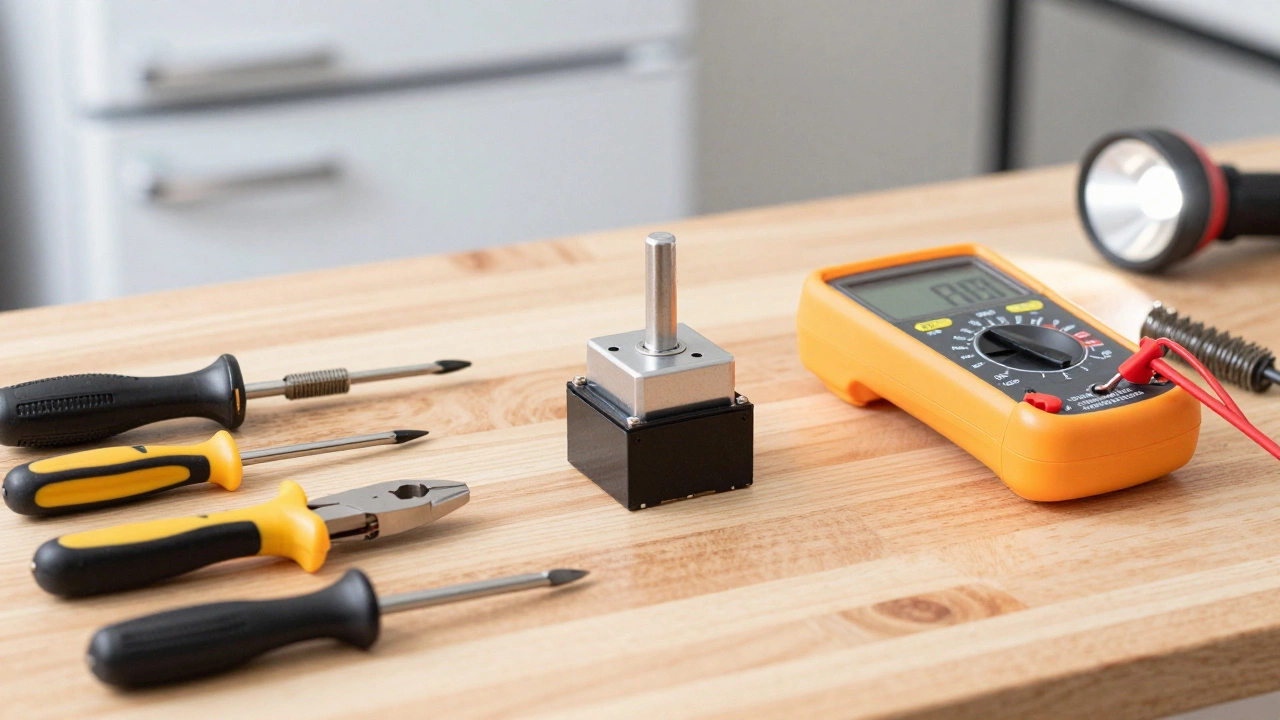
Tools You’ll Need for Basic Repairs
You don’t need a full mechanic’s toolkit. Keep these essentials on hand:
- Phillips and flathead screwdrivers: For removing panels and accessing components.
- Multimeter: Tests continuity, voltage, and resistance. Crucial for diagnosing electrical faults.
- Coil brush or vacuum extension: Keeps condenser coils clean.
- Pliers and adjustable wrench: Useful for tightening connections or removing clips.
- Flashlight: Helps see dark corners behind units or inside cabinets.
Invest in a quality multimeter ($20-$50). It pays for itself after one successful diagnosis. Cheap models give false readings, leading to wasted time and parts.
When to Hire a Professional Technician
Some jobs demand expertise. Don’t attempt these unless you’re trained:
- Refrigerant recharging or leak detection: Requires EPA certification and specialized equipment.
- Compressor replacement: Heavy, complex, and often not cost-effective compared to buying a new fridge.
- Main control board repair: Soldering microchips or tracing circuits needs electronics experience.
- Gas line connections: In dual-fuel ranges or integrated systems, improper handling risks explosion.
Ask yourself: Is the repair cost less than 50% of a new unit’s price? If not, consider upgrading. Newer models are more energy-efficient and come with warranties.
Step-by-Step Diagnostic Flowchart
Start here before ordering parts. Follow this logical path:
- Check power supply. Plug another device into the same outlet. Try a different outlet for the fridge.
- Listen for sounds. Humming? Compressor running. Clicking? Relay issue. Silence? Power or control problem.
- Feel for warmth. Back/sides warm? Good airflow. Cold? Poor circulation or refrigerant loss.
- Inspect visually. Ice buildup? Drain or seal issue. Dusty coils? Clean them. Burn marks? Electrical fault.
- Test components. Use multimeter to check thermostats, heaters, and fans for continuity.
Document each step. Take photos before disassembly. Note wire colors and positions. This saves headaches during reassembly.

Cost Comparison: DIY vs. Professional Service
Let’s put numbers to it. Average service calls range from $75-$150 just for diagnosis. Parts markup adds 20-50%. Labor runs $50-$100/hour.
Example: Replacing a start relay costs $15 online. A tech charges $120 total (call fee + labor). Saving: $105.
Example: Fixing a clogged drain takes 30 minutes and free materials. Tech visit: $90. Saving: $90.
But if you misdiagnose and buy the wrong part, you waste money and delay resolution. Accuracy matters. Research your model number thoroughly. Watch multiple tutorials. Ask forums if unsure.
Maintenance Tips to Prevent Future Breakdowns
Prevention beats cure. Adopt these habits:
- Clean condenser coils twice yearly.
- Check door seals annually with the dollar test.
- Vacuum around the base to prevent dust intake.
- Keep vents clear inside the fridge for proper airflow.
- Defrost manually if your model lacks auto-defrost (every 3-6 months).
Set calendar reminders. Ten minutes of upkeep can add years to your appliance’s life.
Real-Life Case Study: Sarah’s Fridge Rescue
Sarah noticed her Samsung RF28R7351SR wasn’t cooling evenly. She checked the coils-they were packed with pet hair. After cleaning, temps improved slightly. Still warm in the upper shelf. She tested the evaporator fan-it spun freely. Then she found ice blocking the drain pan. Cleared it with hot water. Problem solved. Total cost: $0. Time: 45 minutes. She avoided a $120 service call.
Her key takeaway: Start simple. Assume user error or dirt before blaming expensive parts.
Is it safe to repair a fridge yourself?
Yes, for basic mechanical and electrical tasks like cleaning coils, replacing gaskets, or swapping relays. Never attempt repairs involving refrigerant lines, high-voltage components, or sealed systems without proper training and certification.
How much does it cost to fix a fridge yourself?
Most DIY repairs cost between $10 and $70 for parts. Tools like a multimeter may add $20-$50 initially. Compare this to professional services averaging $100-$300 including labor and diagnostic fees.
What tools do I need to fix a fridge?
Essential tools include screwdrivers, a multimeter, pliers, a coil brush, and a flashlight. Optional but helpful: needle-nose pliers, wire strippers, and a camera for documenting disassembly steps.
When should I call a professional instead of trying DIY?
Call a pro if the issue involves refrigerant leaks, compressor failure, complex circuit boards, gas lines, or if you feel uncomfortable working with electricity. Also consider hiring help if the repair cost exceeds half the value of a new fridge.
Can I save money by fixing my fridge myself?
Absolutely. Simple fixes like cleaning coils or replacing a start relay can save $100-$200 per incident. Over several years, consistent DIY maintenance significantly reduces ownership costs compared to relying solely on paid services.