Heat Pump Repair vs. Replace Calculator
System Details
Analysis Result
Evaluate Inputs
Pending AnalysisEnter your system details to see if repairing the compressor makes financial sense compared to a full replacement.
Financial Comparison
| Metric | Repair Scenario | Replace Scenario |
|---|---|---|
| Upfront Cost | $2,500 | $6,000 |
| % of New System Cost | 41% | 100% |
| Lifespan Remaining* | ~2 Years | 15 Years |
| Efficiency | 13 SEER | 16+ SEER (Est.) |
That humming sound from your outdoor unit just stopped. Instead of warm air, you’re getting nothing-or worse, cold air in the middle of winter. If a technician tells you the compressor is dead, your stomach probably drops. It’s the heart of the system, and it’s expensive. But how much exactly? The short answer is anywhere from $1,500 to $4,500 for a full replacement, including labor. However, if you can catch issues early or if the rest of the system is healthy, there are ways to manage that bill.
Understanding what drives this cost helps you avoid being overcharged and makes the decision between repairing and replacing much clearer. Let’s break down the numbers, the hidden fees, and when it actually makes sense to pull the trigger on a new unit.
The Core Cost Breakdown: Parts vs. Labor
When you get a quote for a heat pump compressor replacement, you aren’t just paying for the metal box itself. You are paying for specialized refrigerant handling, electrical work, and often, a complete system flush. Here is where the money goes.
| Cost Component | Low End Estimate | High End Estimate | Notes |
|---|---|---|---|
| Compressor Unit Only | $800 - $1,200 | $1,500 - $2,500+ | Varies by SEER rating and brand availability. |
| Labor (Installation) | $500 - $800 | $1,000 - $1,500 | Typically 6-10 hours of skilled HVAC work. |
| Refrigerant & Line Set Flush | $200 - $400 | $500 - $800 | Required to remove contaminants from old failure. |
| Diagnostic Fee | $75 - $150 | $200+ | Often waived if you proceed with repair. |
| Total Project Cost | $1,575 | $5,000+ | Does not include potential ancillary part replacements. |
The compressor unit itself is pricey because modern heat pumps use high-efficiency scroll compressors that are precision-engineered. If you have an older R-22 system (rare now due to phase-outs) or a niche brand like Mitsubishi or Daikin, the part cost jumps significantly compared to standard Carrier or Trane models. Labor is equally critical. This isn’t a plug-and-play job. Technicians must evacuate the line set, replace the filter drier, install the new compressor, vacuum the system to remove moisture, and charge it with precise amounts of refrigerant.
Why Is the Compressor So Expensive?
You might wonder why a single component costs more than some entire small appliances. A heat pump compressor pressurizes refrigerant gas to facilitate heat exchange. It runs constantly during extreme weather. When it fails, it rarely does so cleanly. Metal shavings, carbon deposits, or acid from burned windings often contaminate the copper lines.
If you simply swap the compressor without cleaning the system, those contaminants will kill the new unit within months. That’s why reputable technicians insist on a "system flush" or replacing the evaporator and condenser coils if they suspect major contamination. This adds to the upfront cost but saves you from buying a second compressor next year. Always ask your technician: "Are we flushing the lines, or just swapping the part?" If they don’t mention flushing, walk away.
Repair vs. Replace: The 50% Rule
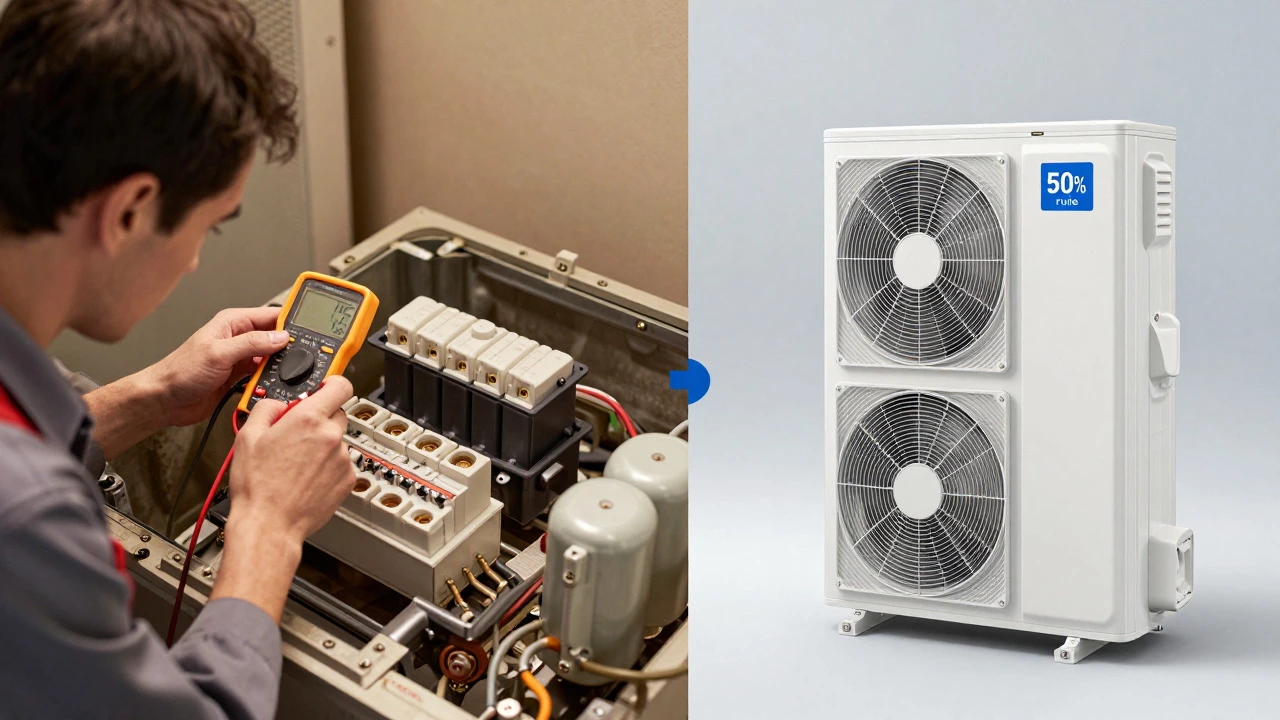
This is the biggest decision you’ll face. Do you spend $3,000 on a compressor for a 10-year-old unit, or buy a new heat pump? Industry experts generally follow the "50% rule." If the cost of the repair exceeds 50% of the cost of a new system, and the current unit is more than half its expected lifespan (typically 10-15 years), replacement is usually the smarter financial move.
A new mid-range heat pump system costs between $5,000 and $8,000 installed. If your repair quote is $2,500, you’re right on the edge. However, consider efficiency. New units have higher SEER2 ratings. An older unit might run at 13 SEER, while a new one operates at 16+ SEER. That’s a 20-30% reduction in electricity bills. Over five years, those savings might offset the difference between repairing the old unit and buying a new one.
Also, check warranty status. Most manufacturers offer a 5-10 year parts warranty. If your unit is still under warranty, the compressor might be covered, leaving you only with labor costs. If it’s out of warranty, you’re paying full price for a part that has likely seen heavy wear.
Hidden Costs and Ancillary Parts
A compressor doesn’t fail in isolation. It’s usually the victim of another problem. Before authorizing a compressor replacement, ensure the technician has ruled out or replaced these common culprits:
- Run Capacitor: Cheap ($20-$50) and easy to fix. If the capacitor failed, it may have sent a voltage spike that killed the compressor. Always replace both capacitors (run and start) if one fails.
- Contactors: These switches handle high voltage. Pitted contacts cause arcing, which damages the compressor winding. They should be replaced simultaneously with the compressor.
- Filter Driers: Essential for removing moisture and debris. Never reuse the old one.
- Thermostats: Short-cycling caused by a bad thermostat can burn out a compressor. Ensure your control system is functioning correctly.
If your technician quotes you $3,000 for a compressor but ignores the contactor and capacitor, you’re looking at a recurring issue. Insist on a comprehensive diagnostic report that explains why the compressor failed. Was it age? Electrical surge? Lack of maintenance? Knowing the root cause prevents future headaches.
Signs Your Compressor Is Failing (Before It Dies)
Catching problems early can save you thousands. While a compressor doesn’t give many warnings, there are red flags:
- Loud Noises: Grinding, screeching, or loud banging from the outdoor unit indicates mechanical failure inside the compressor.
- Weak Airflow: If the blower works but the air isn’t hot or cold, the compressor might be struggling to pressurize refrigerant.
- Tripping Breakers: Frequent electrical trips suggest the compressor is drawing excessive amperage due to internal shorts.
- Ice Buildup: Excessive ice on the coils can indicate low refrigerant pressure, often caused by a failing compressor or leak.
- Higher Electric Bills: A gradual increase in energy usage without changed habits suggests the system is working harder to maintain temperature.
If you notice any of these, call a pro immediately. Running a struggling compressor accelerates its death and risks contaminating the entire refrigerant loop.

How to Lower the Cost
While you can’t negotiate the physics of refrigerant, you can manage the economics:
- Get Three Quotes: Prices vary wildly between local independents and large franchises. Don’t just pick the lowest bid-check reviews and ask about their experience with your specific brand.
- Ask About Rebates: In 2026, federal tax credits (like the Inflation Reduction Act provisions) and state utility rebates often cover 15-30% of new system costs. If you’re leaning toward replacement, factor these in.
- Maintenance Plans: Some companies waive diagnostic fees or offer discounts on parts if you’re enrolled in an annual maintenance plan. Check if your current provider offers this.
- Timing: Avoid emergency calls during peak heatwaves or freezes. Technicians charge premium rates for after-hours or weekend emergencies. Schedule non-urgent diagnostics during mild weather.
FAQ: Common Questions About Compressor Costs
Is it worth replacing a heat pump compressor?
It depends on the age of your unit and the total repair cost. If your heat pump is less than 8 years old and the repair costs less than 50% of a new system, replacement is usually worth it. If the unit is older than 10 years, investing $2,000+ into a dying system is rarely wise; upgrading to a new, efficient model provides better long-term value and reliability.
Can I replace the compressor myself?
Technically yes, but practically no. Handling refrigerant requires EPA Section 608 certification. Improper evacuation or charging can void warranties, damage the environment, and create safety hazards. Additionally, the electrical work involves high-voltage components that pose serious shock risks. Professional installation ensures proper torque specs, vacuum levels, and refrigerant charges.
What causes a heat pump compressor to fail?
Common causes include lack of maintenance (dirty coils causing overheating), electrical surges damaging windings, failed capacitors sending voltage spikes, and refrigerant leaks leading to lubrication issues. Age is also a major factor; most compressors last 10-15 years before mechanical wear takes its toll.
How long does compressor replacement take?
A professional replacement typically takes 6 to 10 hours. This includes removing the old unit, flushing the lines, installing the new compressor, vacuuming the system to remove moisture, and charging with refrigerant. Complex installations or hard-to-access units may take longer.
Will a new compressor improve my heat pump's efficiency?
Not necessarily. A new compressor restores the system to its original factory efficiency rating. It won’t make an old 13 SEER unit perform like a new 16 SEER unit. To gain significant efficiency improvements, you need to upgrade the entire system, including the indoor coil and blower motor, which are designed to work together as a matched set.