Water Heater Replacement Time Estimator
This tool estimates how long it will take to replace your water heater based on the specific conditions in your home. Your estimate will range between 2-8 hours depending on these factors.
Replacing a hot water heater doesn’t have to be a week-long nightmare. Most homeowners get it done in 2 to 4 hours - if everything goes smoothly. But that’s the ideal scenario. If your old unit is rusted to the floor, your pipes are outdated, or your electrical panel can’t handle the load, you could be looking at a full day or even longer. The real question isn’t just how long it takes - it’s what’s hiding behind the walls, under the floor, or in your breaker box.
What Happens During a Water Heater Replacement?
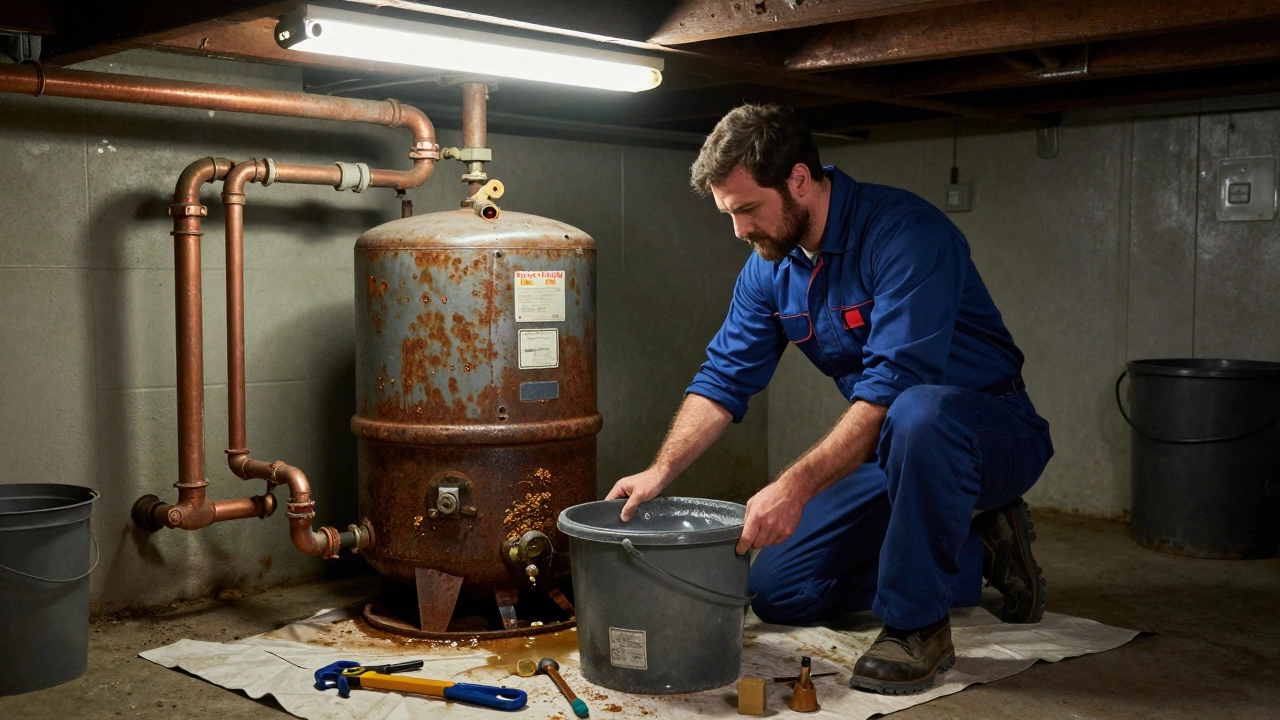
A professional doesn’t just unplug the old tank and screw in a new one. There’s a sequence. First, they shut off the power - electric or gas - and then turn off the water supply. After that, they drain the old tank. That alone can take 30 to 60 minutes, depending on how much sediment’s built up inside. A tank full of rust flakes and mineral chunks? Drain time doubles.
Next comes disconnecting the pipes and electrical or gas lines. Older homes often have galvanized steel pipes that haven’t been touched in 30 years. Those don’t just unscrew. They might need cutting, threading, or even partial replacement. If your water heater sits on a concrete slab and the floor pan is corroded, they might need to patch or replace that too.
Then comes the new unit. They’ll move it in, level it, reconnect the water lines, gas line (if applicable), and electrical wiring. They’ll test for leaks, check the pressure relief valve, and make sure the thermostat works. Finally, they’ll refill the tank and turn the power back on. The whole process sounds simple on paper - until you hit one of the common surprises.
Why Some Replacements Take All Day
Let’s say your 12-year-old water heater finally gave out. You call a pro, and they show up ready to go. But then they find this:
- The shut-off valve is seized - they have to replace it before they can drain the tank.
- The gas line is aluminum - code now requires copper or flexible stainless steel, so they need to run a new line.
- Your electrical panel is full. The new 4500-watt heater needs a dedicated 30-amp circuit, but there’s no room. They have to upgrade the panel or add a subpanel.
- The vent pipe for a gas heater is rusted through. It can’t just be patched - it needs to be replaced all the way to the roof.
- The old tank is bolted to the floor with rusted bolts. They have to cut them out with a reciprocating saw.
Each of these issues adds 1 to 3 hours. And if you’re in a house built before 1980, you’re almost guaranteed at least one of these surprises. That’s why a job that should take 3 hours can stretch to 8. It’s not the technician being slow - it’s the house fighting back.
DIY vs. Professional: Time and Risk
Some people think they can save time and money by doing it themselves. But here’s the truth: a DIY water heater replacement often takes longer than hiring a pro - and it’s riskier.
First, you need the right tools: a pipe wrench, a bucket, a hose, a voltage tester, a gas leak detector, and possibly a pipe cutter or threading tool. Most homeowners don’t own these. Renting them adds cost and delays.
Second, you have to know what you’re doing. Hooking up a gas line wrong? That’s a fire hazard. Wiring a 240-volt heater incorrectly? That’s a shock or electrocution risk. Failing to install a pressure relief valve properly? That tank could explode under pressure.
Third, you’ll likely run into the same hidden problems a pro would - but without the experience to fix them fast. You’ll spend hours trying to loosen a stubborn pipe, only to realize you need a new valve. Then you’ll have to go buy one. Then you’ll have to wait for delivery. Suddenly, your weekend project turns into a week-long headache.
Most pros can replace a standard 40- to 50-gallon electric water heater in under 3 hours. A DIYer with no experience? Expect 6 to 10 hours - and that’s if you don’t mess anything up.
What Slows Down the Process?
Not all delays are caused by bad plumbing. Here are the top 5 hidden slowdowns:
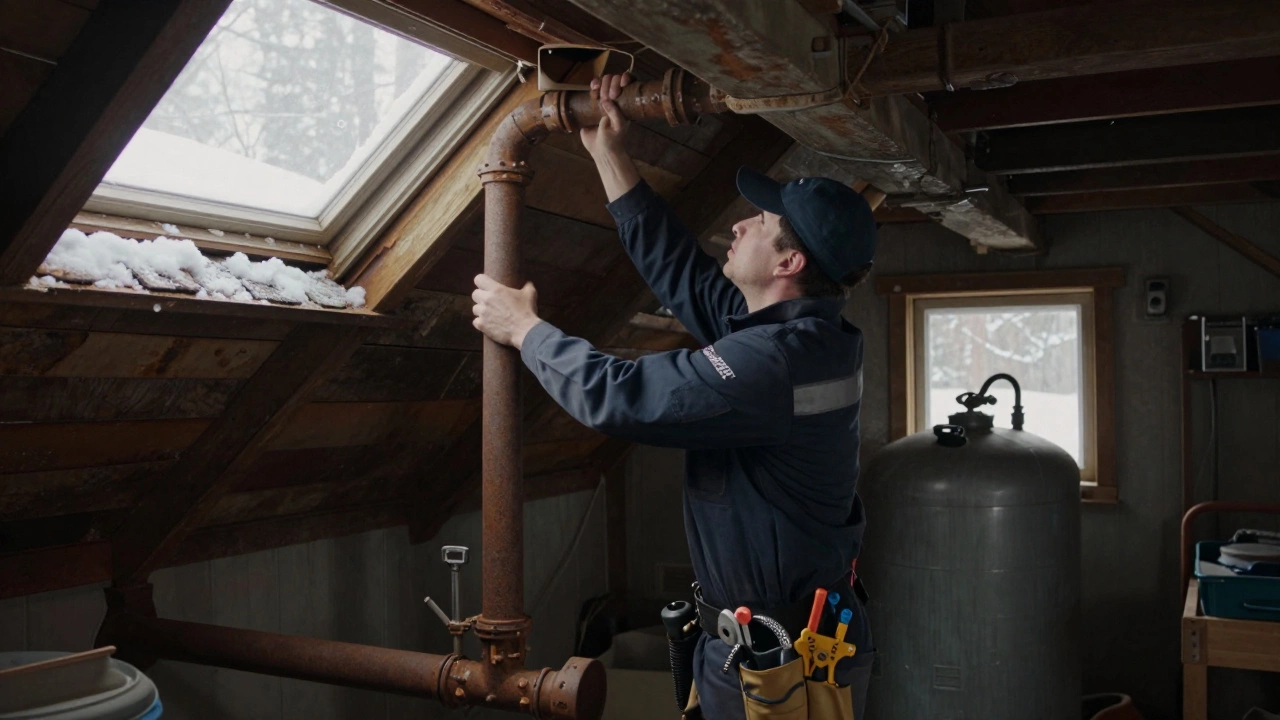
- Location - Water heaters in basements are easy. Ones in attics, closets, or crawl spaces? Harder. Tight spaces mean slower movement, more disassembly, and extra time for scaffolding or removal of obstacles.
- Age of the home - Homes built before 1990 often have outdated materials: lead solder, polybutylene pipes, knob-and-tube wiring. These require code-compliant upgrades, which add hours.
- Water quality - Hard water leaves thick mineral deposits. A tank full of scale takes longer to drain and may clog the drain valve, forcing the pro to flush it manually.
- Permits and inspections - In some cities, you need a permit to replace a water heater. The pro might have to wait for an inspector to sign off before turning on the gas or electricity. That can add a day.
- Weather - If you’re replacing a gas water heater in winter and the vent pipe is frozen or covered in snow, they’ll need to clear it before proceeding.
How to Speed Up Your Replacement
You can’t control everything - but you can control a few things to keep the job moving:
- Clear the area - Move boxes, tools, and storage away from the water heater. Give the technician at least 3 feet of space on all sides.
- Turn off power and water yourself - Don’t wait for them to do it. Flip the breaker and close the main valve ahead of time.
- Have the new unit ready - Don’t make them wait for delivery. Buy it in advance and have it on-site.
- Know your system - If you know whether you have gas or electric, what size your old tank is, and whether it’s a standard or high-efficiency model, you can save time explaining it.
- Ask about permits - Call your local building department. If a permit is needed, get it before the install day.
These steps won’t make a 6-hour job a 2-hour job - but they can shave off 45 minutes to an hour. That’s the difference between lunch being cold and still being warm.
When to Call a Pro - And When Not To
Here’s the bottom line: if your water heater is leaking, making noise, or not heating water, it’s time to replace it. But you don’t need to panic.
Call a pro if:
- You have a gas water heater (gas work requires certification)
- Your electrical panel is older than 1990
- You’re not sure about the type, size, or venting requirements
- You live in a city that requires permits or inspections
You might consider DIY only if:
- You have a 40-gallon electric water heater in a basement
- Your home is less than 15 years old
- You’ve replaced a toilet or faucet before
- You have time, tools, and patience
Even then, watch YouTube videos. Read the manual. And never skip the pressure test.
What to Expect on Install Day
On the day of replacement, expect this timeline:
- 8:00 AM - Technician arrives, checks the job site, confirms the new unit matches your old one.
- 8:15 AM - Shuts off power/water, begins draining the old tank.
- 9:30 AM - Disconnects pipes and lines. Removes old unit.
- 10:30 AM - Prepares area for new unit. May need to install new fittings or valves.
- 11:30 AM - Installs new water heater, connects lines, checks for leaks.
- 12:30 PM - Refills tank, turns on power/gas, tests temperature and pressure.
- 1:00 PM - Cleans up, explains how to use the new unit, leaves paperwork.
That’s a standard 5-hour window. Add an hour if your home is older or the unit is larger than 50 gallons.
How Long Until You Have Hot Water Again?
Don’t expect hot water right after installation. Even if the technician turns everything on at 1 PM, you’ll still have to wait.
Electric water heaters take 1 to 2 hours to heat a full tank. Gas heaters are faster - about 30 to 60 minutes. So if your replacement finishes at 1 PM, you might not have hot showers until 3 PM or later.
Pro tip: Turn on a hot water faucet in the bathroom right after the install. That helps purge air from the lines and speeds up heating.
Can I replace my water heater without turning off the water?
No. Turning off the water supply is mandatory. If you don’t, water will keep flowing into the tank while you’re disconnecting pipes - leading to flooding, damage to your floors, and serious injury risk. Always shut off the main valve or the dedicated shut-off valve near the water heater before starting any work.
How do I know if my water heater needs replacing?
Signs include rust-colored water, loud popping or rumbling noises, water pooling around the base, inconsistent hot water, or if it’s over 10 years old. Even if it still works, efficiency drops sharply after 10 years. Replacing it before it fails saves you from emergency repairs and water damage.
Do I need a permit to replace a water heater?
It depends on your city. Most places require a permit for water heater replacement, especially for gas units or electrical upgrades. Skipping a permit can void your home insurance and cause problems when you sell. Always check with your local building department before starting.
What’s the difference between a tank and tankless water heater replacement time?
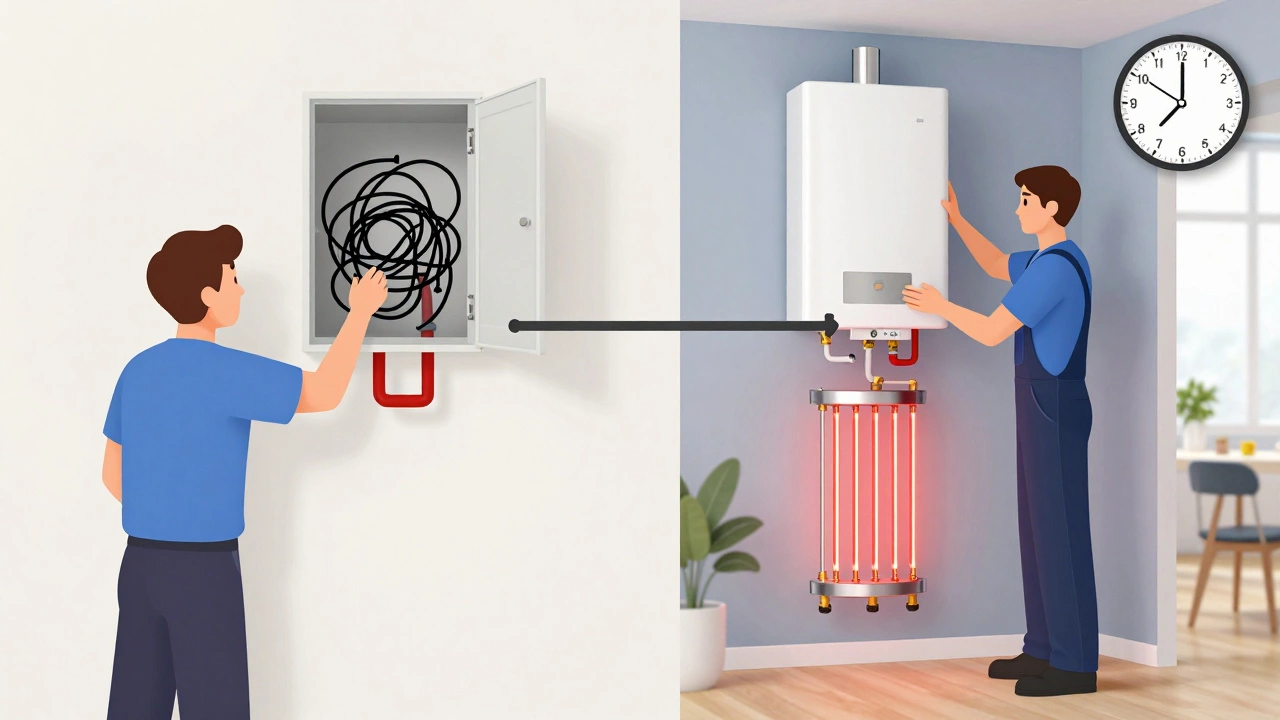
Tankless units take longer - usually 4 to 8 hours. They require new gas lines, larger electrical circuits, and special venting. Unlike tank heaters, which just replace a single unit, tankless systems often need plumbing rerouting and may need a new location entirely. The complexity adds significant time.
Can I install a larger water heater than what I had before?
Yes, but only if your space, gas line, and electrical system can handle it. A larger tank needs more clearance, more power, and sometimes a bigger vent. A pro will check your home’s capacity before recommending a size upgrade. Going bigger without checking can cause safety issues or code violations.
Final Thoughts
Replacing a hot water heater doesn’t have to be a surprise. Most jobs take 2 to 4 hours, but your home’s age, plumbing condition, and local codes can change that. If you’re replacing an older unit, assume it’ll take longer. Plan for a full day. Don’t schedule other projects. Keep your kids and pets away from the work area. And always hire a licensed pro for gas or electrical work - it’s not worth the risk.
When done right, your new water heater will give you 10 to 15 years of reliable hot water. The time it takes to replace it? A small price to pay for peace of mind.