Extractor Fan CFM Calculator & Selector
Ventilation Requirement Tool
Calculation Result
Key Takeaways:
- Calculate your room volume to determine the required air changes per hour.
- Choose between axial fans for short distances and centrifugal fans for long duct runs.
- Prioritize low Sones or decibel ratings for bedrooms and bathrooms.
- Match the fan type to the specific pollutant (steam, grease, or odors).
- Verify the duct diameter of your existing setup before buying.
Getting the Numbers Right: The CFM Secret
You can't just eyeball the power of a fan. The industry standard for measuring air movement is CFM is Cubic Feet per Minute, which measures the volume of air a fan can move in sixty seconds. If you're replacing an old unit, check the label for the CFM rating first. If that's missing, you'll need to do a quick bit of math based on your room size.
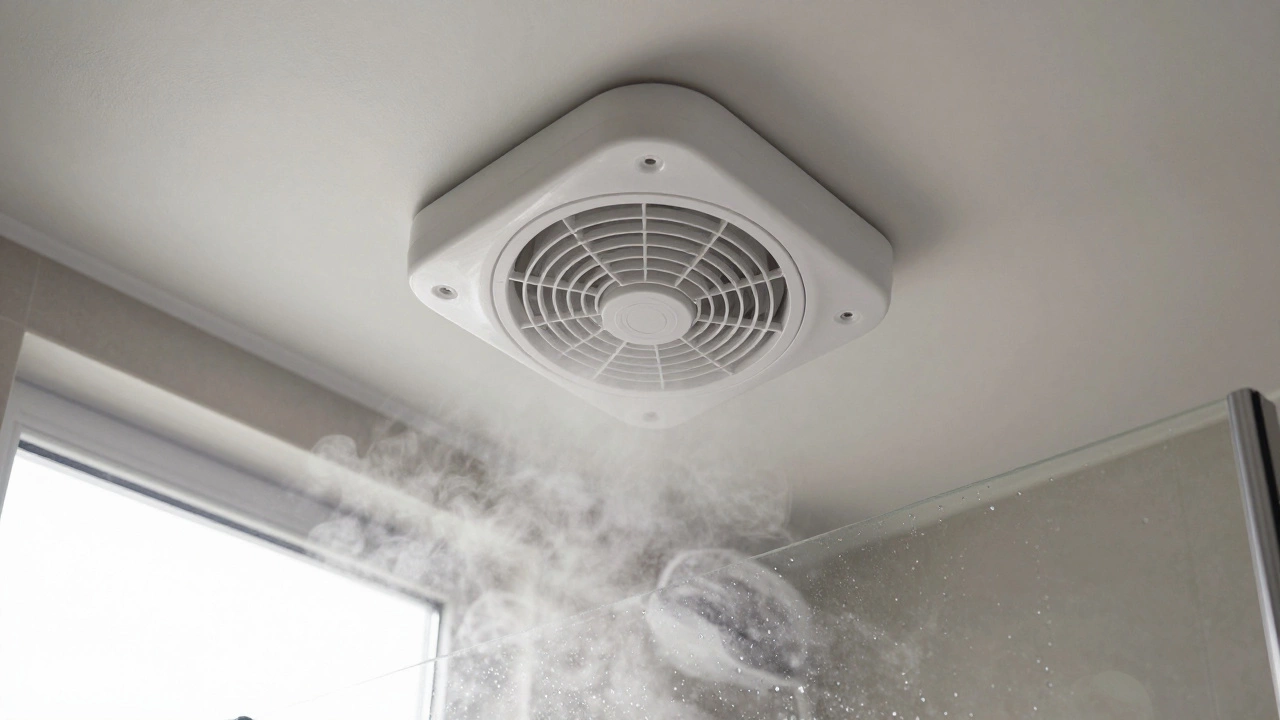
For a bathroom, the general rule is that you want to replace the air in the room about 8 times per hour. For example, if you have a small bathroom that is 8ft x 6ft with an 8ft ceiling, your total volume is 384 cubic feet. To get the right fan, multiply 384 by 8 and divide by 60. You'll need roughly 51 CFM. In a kitchen, the stakes are higher because you're dealing with heavy grease and heat, so you usually aim for a much higher exchange rate-often 15 to 20 times per hour.
Axial vs Centrifugal: Which One Actually Works?
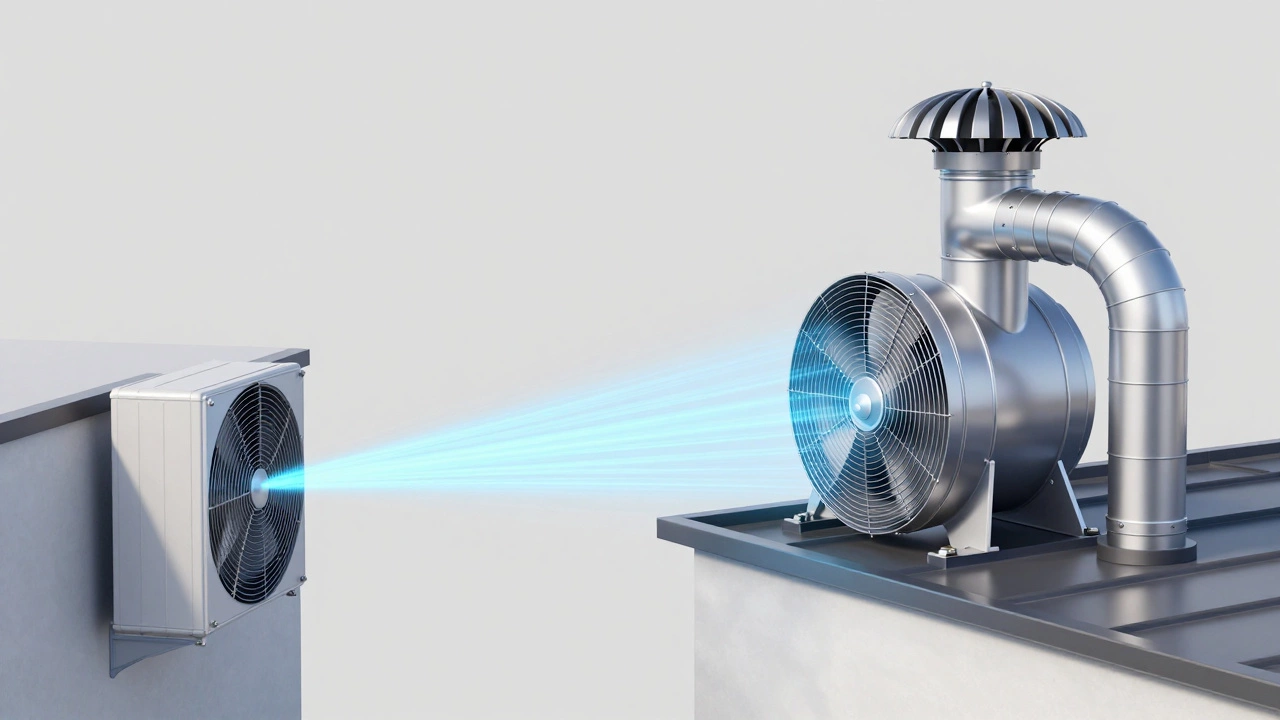
This is where most people make a mistake. They buy a cheap fan that looks right but doesn't fit their house's layout. Axial Fans are fans where the air flows parallel to the axis of the impeller, typically used for venting directly through a wall. These are great if your fan is mounted on an external wall and just pushes air straight out. They are cheaper and generally quieter for short distances.
However, if your fan has to push air through a long pipe (duct) to reach the roof or another side of the house, an axial fan will struggle. The air creates backpressure, and the fan just spins without actually moving much air. In this case, you need Centrifugal Fans are fans that pull air into the center and fling it outward at a 90-degree angle, creating higher pressure. They are designed specifically to overcome the resistance of ducting. If you have more than 3 meters of pipe, a centrifugal model is the only way to ensure your steam actually leaves the building.
| Feature | Axial Fan | Centrifugal Fan |
|---|---|---|
| Best For | Wall-mount / Short runs | Ceiling-mount / Long ducts |
| Air Pressure | Low | High |
| Noise Level | Generally Lower | Can be louder (depending on model) |
| Cost | Budget-friendly | More expensive |
| Efficiency | High for open air | High for piped systems |
Taming the Noise: Understanding Sones and Decibels
There is nothing worse than a bathroom fan that sounds like a vacuum cleaner. When shopping, you'll see ratings in Decibels (dB) or Sones are a loudness unit used specifically for household appliances to describe the perceived loudness of a sound. One Sone is roughly the sound of a quiet refrigerator humming in the background. A fan rated at 3 or 4 Sones is noticeable and can be annoying, while anything under 1.5 Sones is practically silent.
Keep in mind that a fan might be rated as "quiet," but if the ducting is poorly installed or the fan isn't secured tightly to the ceiling, you'll get vibration noise. This is called "structural noise," and no amount of fancy engineering in the fan itself can fix it. Always check if the fan comes with rubber mounting gaskets to dampen these vibrations.
Kitchen Specifics: Range Hoods and Grease Filters
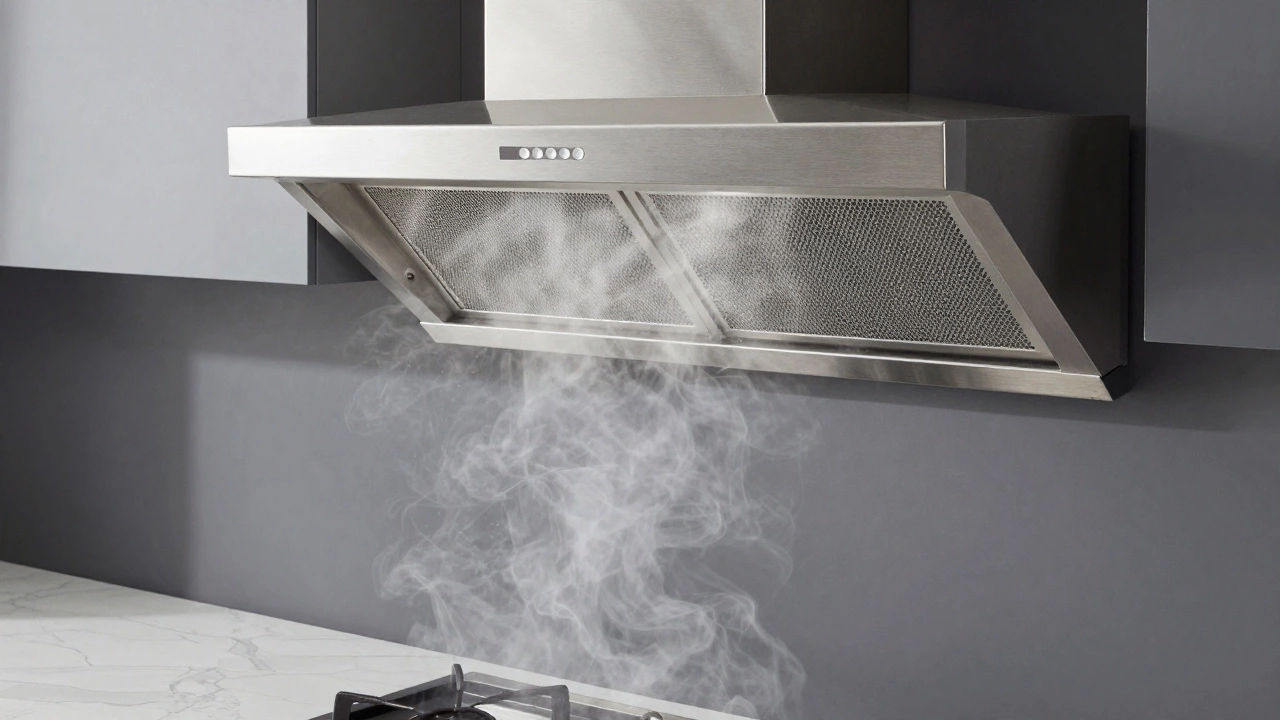
When buying for a kitchen, you're not just looking for a fan; you're looking for a Range Hood are ventilation devices installed above a cooktop to remove grease, smoke, and odors. You have two main choices here: recirculating or extracting. Recirculating fans pull air through a Charcoal Filter are filters that use activated carbon to trap odors from the air before blowing it back into the room and push it back into the room. These are common in apartments where you can't cut a hole in the wall.
True extracting fans are far superior because they physically remove the moisture and grease from your home. If you're choosing an extractor, look for a Baffle Filter are stainless steel filters with curved slats designed to force grease to condense and drip into a collector. Avoid the thin mesh screens if you cook with a lot of oil; they clog in days and are a nightmare to clean. Baffle filters are a professional-grade choice that lasts years with simple soap and water scrubbing.
The Installation Trap: Duct Size and Voltage
You've found the perfect fan, but will it actually fit? This is where the project usually stalls. Most residential ducting is either 4 inches (100mm) or 6 inches (150mm). If you buy a fan with a 6-inch outlet and your house has 4-inch pipes, you'll be tempted to use a reducer. Don't do it. Reducing the pipe size increases the static pressure, which kills the fan's efficiency and makes it louder.
Also, think about how the fan triggers. Do you want a simple on/off switch tied to the light? Or do you need a Humidity Sensor are electronic components that automatically trigger the fan when moisture levels in the air reach a certain threshold? Humidity sensors are a lifesaver for preventing mold in bathrooms because they keep running even after you've left the room and turned off the light. Just make sure the sensor has an adjustable "run-on timer" so it doesn't run for three hours after a quick shower.
Common Mistakes to Avoid When Buying
The biggest error people make is buying a fan based on the "maximum" CFM listed on the box. That number is usually measured in a lab with zero resistance. Once you add a few bends in the pipe and a vent grill, that 100 CFM fan might actually only move 60 CFM. Always over-specify your fan by about 20% to account for this loss.
Another mistake is ignoring the energy rating. Since extractor fans often run for long periods, an old-style AC motor can actually add a noticeable amount to your electricity bill. Look for EC (Electronically Commutated) motors. They are slightly more expensive upfront but use up to 50% less energy and typically run much quieter because they can vary their speed based on the need.
Can I replace a ceiling fan with a wall fan?
Not without significant renovation. Ceiling fans require a vertical duct run to the roof or a horizontal run to an external wall. Wall fans vent directly outward. You would need to install new ductwork and cut a new hole in your external wall to make the switch.
How often should I replace the filters in my kitchen extractor?
If you have a recirculating fan with charcoal filters, replace them every 3 to 6 months. Grease filters (metal mesh or baffle) don't need replacing, but they should be washed in hot soapy water or a dishwasher every 2 to 4 weeks depending on how much you fry food.
What is a "timer fan" and do I need one?
A timer fan continues to run for a set amount of time (usually 2 to 20 minutes) after you flip the switch off. These are highly recommended for bathrooms to ensure all the steam is cleared out, as most people leave the room long before the air is actually dry.
Why is my new extractor fan making a rattling noise?
Rattling is usually caused by loose mounting screws or the fan housing vibrating against the ceiling joists. Check that all screws are tight and consider adding rubber washers between the fan and the mounting surface to absorb the vibration.
Does a more expensive fan always mean better air extraction?
Not necessarily. You pay for three things: noise reduction (lower Sones), energy efficiency (EC motors), and aesthetics. In terms of raw air movement, a budget centrifugal fan can move just as much air as a luxury one, but it will likely be louder and use more power.
Next Steps for Your Installation
Once you've picked your fan, don't just buy the unit. Check if you need a new vent cover for the outside of your house; an old, clogged vent will choke your new fan and could even cause the motor to overheat. If you're installing a high-CFM fan in a very airtight home, you might also need to ensure there is a "make-up air" source-like a gap under the door or a trickling vent in the window-so the fan has air to pull from.
If you find that your new fan is still not clearing the steam, the problem is likely the ducting. Check for sharp 90-degree bends in the piping. Replacing a sharp elbow with two 45-degree bends significantly reduces air resistance and allows your fan to operate at its rated CFM.