
Extractor Fan Motor Cleaning Frequency Calculator
Determine how often you should clean your extractor fan motor based on your cooking habits and kitchen conditions. Proper maintenance prevents overheating, extends motor life, and reduces fire risks.
If your extractor fan has started making a loud grinding noise, isn’t pulling air like it used to, or smells like fried grease even when you haven’t cooked anything, the motor is probably clogged. Grease doesn’t just stick to the blades-it works its way into the motor housing, bearings, and even the windings over time. A dirty motor doesn’t just run poorly; it overheats, wears out faster, and can become a fire hazard. Cleaning it isn’t hard, but doing it wrong can break it for good. Here’s how to do it right.
Why cleaning the motor matters
Most people clean the grease filter every few weeks. That’s good. But the motor itself? That’s where the real buildup hides. In a busy kitchen, grease particles get sucked into the fan, then settle inside the motor housing. Over months or years, this turns into a sticky, hardened layer that makes the motor work harder. You’ll notice it when the fan runs slower, gets louder, or trips the circuit breaker after running for a few minutes.According to fire safety reports from the Australian Fire and Rescue Service, over 120 residential fires each year in Western Australia are linked to uncleaned extractor fans. Most of them start in the motor housing, where grease accumulates and ignites from overheating. Cleaning the motor isn’t just about performance-it’s about safety.
What you’ll need
You don’t need special tools. Here’s what actually works:- Phillips head screwdriver (size #1 or #2, depending on your model)
- Small flathead screwdriver (for prying clips)
- Microfiber cloths (at least 3)
- Isopropyl alcohol (70% or higher)
- Small stiff-bristle brush (like a toothbrush or paintbrush)
- Plastic scraper (old credit card works)
- Disposable gloves
- Mask (to avoid inhaling grease dust)
- Trash bag (for greasy rags)
Don’t use oven cleaner, degreasers, or water. They can damage the motor’s internal components. Isopropyl alcohol evaporates fast and leaves no residue. That’s why it’s the only cleaner professionals use.
Step 1: Turn off the power
This isn’t optional. Even if the fan is off, the motor might still be live. Go to your circuit breaker and shut off the power to the extractor fan. If you’re not sure which one it is, turn off the kitchen circuit. Use a non-contact voltage tester on the wiring behind the fan to confirm it’s dead. Better safe than shocked.Step 2: Remove the fan unit
Most extractor fans are mounted under a cabinet or in the ceiling. You’ll see screws holding the housing in place-usually four to six. Remove them carefully. Some models have clips or spring-loaded catches. Gently wiggle the unit free. Don’t yank it. The wiring is still connected.Once it’s loose, lower the unit and unplug the wiring harness. It usually clips in with a small tab. Press the tab and pull gently. Some older units have wire nuts-unscrew those and separate the wires. Label them with tape if you’re unsure which goes where (live, neutral, earth).
Step 3: Take apart the fan assembly
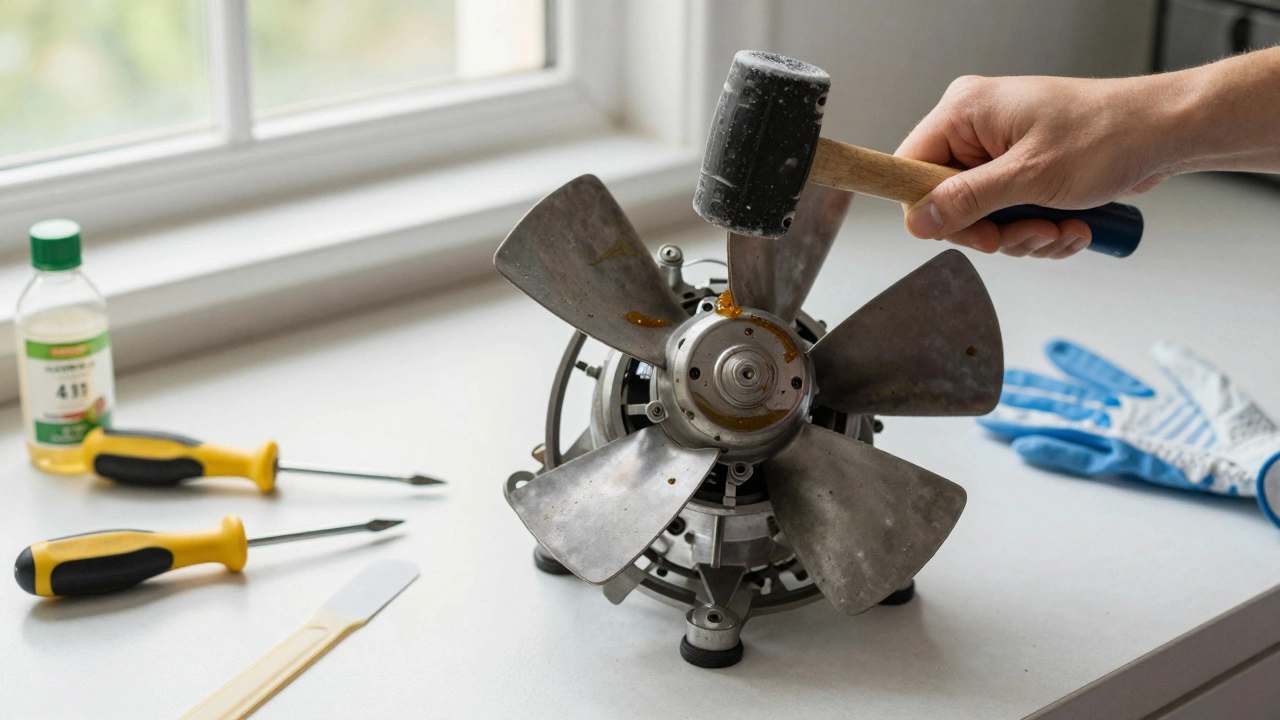
Now you’re at the motor. The motor is usually held in place by two or three screws. Remove those. The fan blade and housing will come off as one piece. Some blades are pressed onto the motor shaft-don’t force them. If it won’t budge, tap the center hub lightly with a rubber mallet or the handle of a screwdriver. A little vibration often breaks the grip.Once the blade is off, you’ll see the motor housing. It’s a metal or plastic cylinder with vents on the sides. This is where the grease has collected. Don’t touch the motor windings-they’re delicate. Focus only on the housing, bearings, and the area around the shaft.
Step 4: Clean the motor housing
Put on gloves and a mask. Use the plastic scraper to gently remove thick, hardened grease from the housing walls. Don’t dig into the metal-just lift it off. Then, dampen a microfiber cloth with isopropyl alcohol and wipe the inside. Use the stiff brush to scrub crevices and vent openings. Alcohol dissolves grease without leaving a film.For stubborn spots, soak a cloth in alcohol, press it against the grease for 30 seconds, then wipe. Repeat if needed. Don’t pour alcohol directly into the motor. You don’t need much-just enough to dissolve the gunk.
Check the bearings-the small metal rings where the shaft spins. If they’re caked in grease, use a cotton swab dipped in alcohol to clean around them. If the shaft feels gritty when you spin it by hand, the bearings are worn. That’s a sign the motor may need replacing soon.
Step 5: Clean the fan blade
The blade is probably just as dirty. Lay it on a towel and scrape off the grease with the plastic scraper. Wipe it down with alcohol-soaked cloths. Let it dry completely before reassembling. Don’t forget the backside-it’s often the dirtiest part.Step 6: Reassemble and test
Once everything is dry, put the fan blade back on the shaft. Make sure it’s seated properly. Reattach the motor to the housing, then screw the whole assembly back into the fan unit. Reconnect the wiring-double-check your labels. Slide the unit back into place and secure the screws.Turn the power back on. Turn the fan on high for 10 minutes. Listen. It should run smooth and quiet. If it’s still noisy or smells like burning, turn it off. You missed some grease-or the motor is damaged.
How often should you clean the motor?
If you cook daily-especially fried foods, stir-fries, or roast meats-clean the motor every 6 to 8 months. If you use the fan lightly (once or twice a week), once a year is enough. Keep a note on your fridge or calendar. Set a reminder for next June or July.Replace the grease filter every 2 to 3 months. That’s the first line of defense. But the motor? That’s the last line. If you clean the filter but ignore the motor, you’re just delaying the problem.
When to replace the motor instead
Cleaning helps-but it won’t fix everything. Here’s when you need a new motor:- The fan runs but doesn’t spin properly (wobbles, jerks)
- You smell burning plastic or electrical odor
- The motor hums but doesn’t turn
- There’s visible damage to the windings (blackened wires, melted insulation)
- It’s over 8 years old and you’ve cleaned it twice already
Most extractor fan motors cost between $60 and $120. Labor adds another $80 to $150 if you hire someone. But if you’re handy, you can swap it yourself in under an hour. Look up your model number (usually on a sticker inside the housing) and order the exact replacement from a local appliance parts supplier. Don’t guess.
Prevent future buildup
The best way to avoid cleaning the motor every year? Stop grease from getting there in the first place.- Turn the fan on 5 minutes before you start cooking
- Leave it running for 15-20 minutes after you finish
- Use a splatter screen when frying
- Wipe down the inside of the hood weekly with a damp cloth
- Upgrade to a fan with a higher CFM rating if you cook heavily
High-efficiency fans move more air and capture grease before it reaches the motor. Look for models with a CFM (cubic feet per minute) rating of at least 300 for a standard kitchen. For large or open-plan spaces, go for 400+.
Final thoughts
Cleaning your extractor fan motor isn’t glamorous, but it’s one of the most important maintenance tasks most homeowners ignore. A clean motor runs cooler, uses less electricity, lasts longer, and keeps your kitchen safer. You don’t need to be an electrician. You just need patience, the right cleaner, and a little time.Do this once a year. Your fan, your electricity bill, and your home will thank you.
Can I use water to clean the extractor fan motor?
No. Water can seep into the motor windings and cause rust, short circuits, or permanent damage. Always use isopropyl alcohol-it evaporates quickly and leaves no residue. Even a small amount of moisture left inside can lead to motor failure.
Why does my extractor fan make a grinding noise after cleaning?
A grinding noise after cleaning usually means the bearings are worn out, not dirty. Cleaning removes grease but won’t fix worn metal. If the shaft feels rough when you spin it by hand, or if the noise returns after a few days, the motor needs replacing. Don’t keep running it-it can overheat and cause a fire.
How do I know if my extractor fan motor is replaceable?
Most modern extractor fans have replaceable motors. Check the manufacturer’s model number inside the housing and search for the motor part online. If the motor is built into the housing and can’t be unbolted, it’s not replaceable. In that case, you’ll need to replace the whole unit. Older models (pre-2010) often have sealed motors that aren’t meant to be serviced.
Can I clean the motor without removing the fan unit?
No. You can’t reach the motor housing or bearings without removing the unit. Trying to clean it in place with a spray or cloth won’t get past the grease buildup inside. It’s like trying to clean a car engine without opening the hood. The only effective method requires full access.
Is it safe to run the fan after cleaning if it still smells like grease?
No. A lingering grease smell means there’s still residue inside-likely near the motor windings. Turn it off and check again. Use more alcohol and a cotton swab to clean around the shaft and vent edges. If the smell persists after a second cleaning, the motor may be damaged and should be replaced. Running it risks overheating and fire.