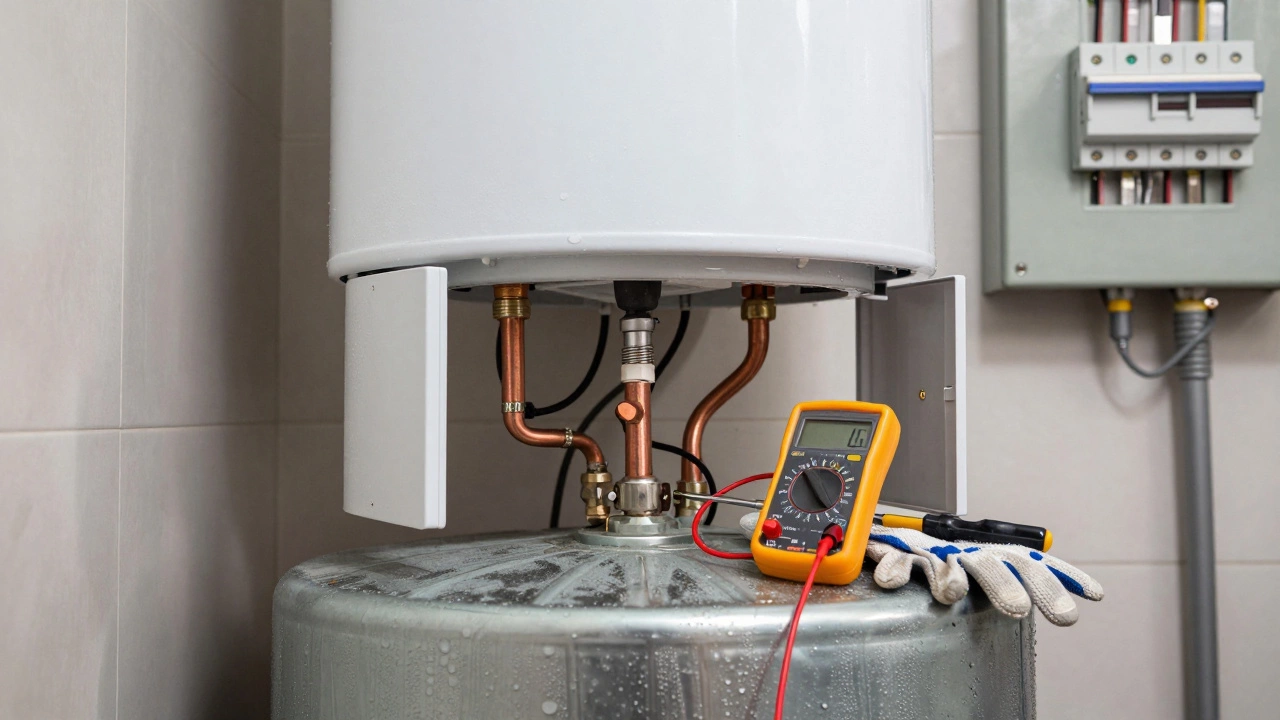
Water Heater Element Tester
Element Tester
Simulate testing your electric water heater element with a multimeter. Based on the article's guidelines:
Test Results
Resistance:
Ground Test:
If your hot water heater isn’t giving you enough hot water-or worse, none at all-it’s probably not a mystery. More often than not, one of the heating elements has gone bad. These elements are the heart of an electric water heater, and when they fail, you’re left with lukewarm showers or cold water in the morning. The good news? You don’t need to call a plumber right away. With a little time and a multimeter, you can check it yourself. Here’s how to tell if a hot water heater element is bad, step by step.
Understand How Electric Water Heater Elements Work
Most electric water heaters in Australian homes have two heating elements: one near the top and one near the bottom. The top element heats water first, and once it reaches the set temperature, it triggers the bottom element to kick in. This design keeps the tank stratified, so you get hot water quickly without wasting energy.
Each element is a metal rod with a resistive coil inside, sealed in a copper or stainless steel tube. It’s designed to handle constant heating and cooling cycles. But over time, mineral buildup from hard water, power surges, or just age can cause the element to burn out. When it does, the circuit breaks, and no heat gets generated.
That’s why you might notice symptoms like:
- Only a small amount of hot water before it turns cold
- No hot water at all, even after waiting hours
- Water that’s warm but never reaches the thermostat setting
- Strange noises like popping or crackling from the tank
These aren’t always clear signs. A thermostat issue or a tripped high-limit switch can mimic a bad element. That’s why testing is the only sure way to know.
Turn Off Power Before You Start
Safety comes first. Before you even touch the water heater, turn off the power at the circuit breaker. Don’t just turn off the switch on the wall-flip the breaker that controls the water heater. Use a non-contact voltage tester to confirm there’s no power at the unit. Even if you think it’s off, double-check. A live 240V circuit can kill you.
Also, shut off the cold water supply to the tank. This prevents water from leaking out when you remove the access panels. Let the water cool down for a few hours if the heater was running recently. Hot water and steam can cause burns.
Access the Heating Elements
Most electric water heaters have two access panels on the side of the tank-one for each element. These are usually covered by a metal or plastic cover secured with screws. Remove the screws and set them aside. Underneath, you’ll find insulation. Pull it back gently to expose the element and its wiring.
You’ll see two wires connected to each element: one for power and one for neutral. Don’t pull them yet. Just take a photo of how they’re wired. This helps when you reconnect them later.
Test the Element with a Multimeter
You’ll need a digital multimeter for this. Most hardware stores sell them for under $30. Set it to the ohms (Ω) setting, preferably on the 200Ω range.
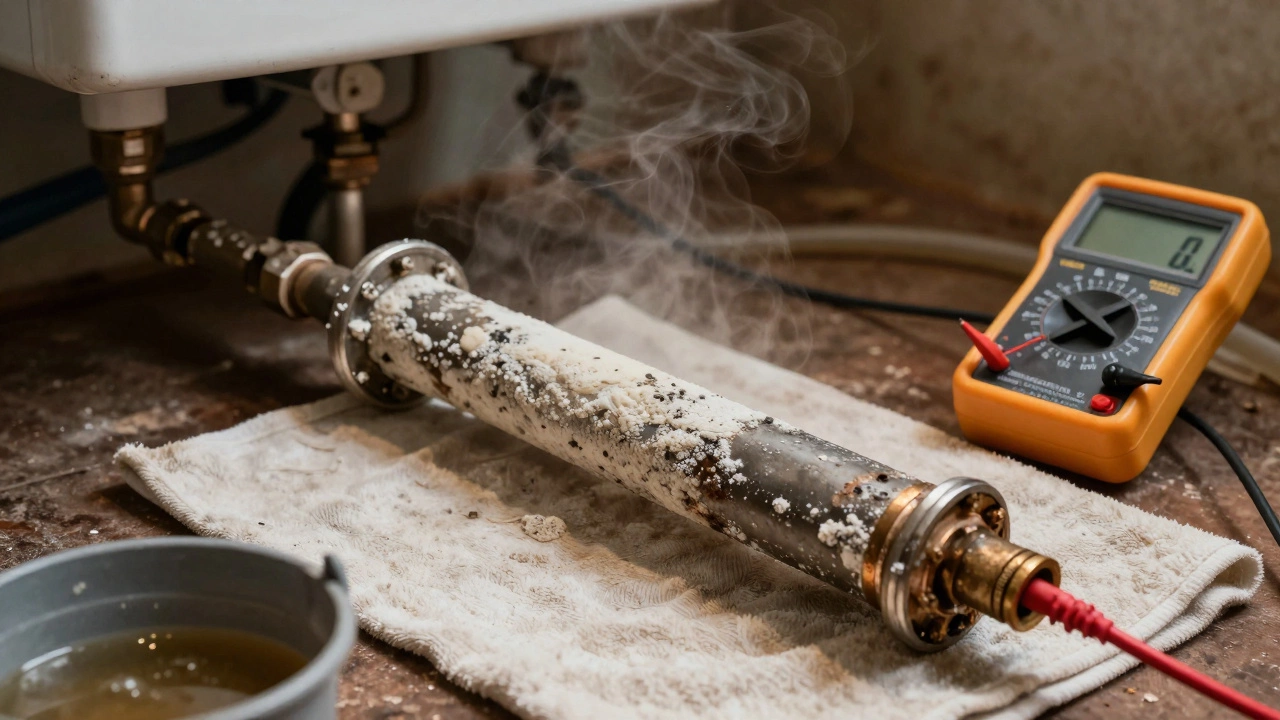
Disconnect the two wires from the element. Touch one probe to each terminal. You should get a reading between 10 and 30 ohms for a good element. If the meter shows OL (open loop) or no reading at all, the element is dead.
Now, test for a ground fault. Put one probe on a terminal and the other on the metal casing of the water heater. If you get any reading at all-even a few ohms-the element is shorted to ground. That’s another sign it’s bad. A good element should show infinite resistance (OL) when tested against the casing.
Repeat this test for both the top and bottom elements. It’s common for one to fail before the other. If both show OL or have a ground fault, you’ll need to replace both.
Check for Visible Damage
While you’re looking at the elements, inspect them visually. Remove the element by unscrewing it with a socket wrench. Look for:
- Cracks or breaks in the metal sheath
- White, chalky mineral deposits coating the coil
- Corrosion or pitting on the terminals
- Burn marks or melted insulation
Mineral buildup doesn’t always mean the element is dead, but it can cause overheating and shorten its life. If you see heavy scaling, it’s a sign your water is hard. Consider installing a water softener or flushing the tank regularly.
What If the Element Tests Good?
It’s possible to test the element and get a normal reading, but still have no hot water. That means the problem is elsewhere.
- Thermostat: The upper thermostat controls the top element. If it’s faulty, the bottom element won’t activate. Test it with the multimeter too. It should show continuity when the temperature is below the set point.
- High-limit switch: This safety device cuts power if the water overheats. If it’s tripped, you’ll need to reset it. Look for a small red button on the thermostat.
- Wiring: Loose or corroded wires can interrupt power. Check connections for signs of overheating or fraying.
- Power supply: Make sure both legs of the 240V circuit are live. If one leg is dead, the element won’t heat.
Many people replace the element and still have problems because they didn’t check the thermostat. Always test both.
How Often Do Elements Fail?
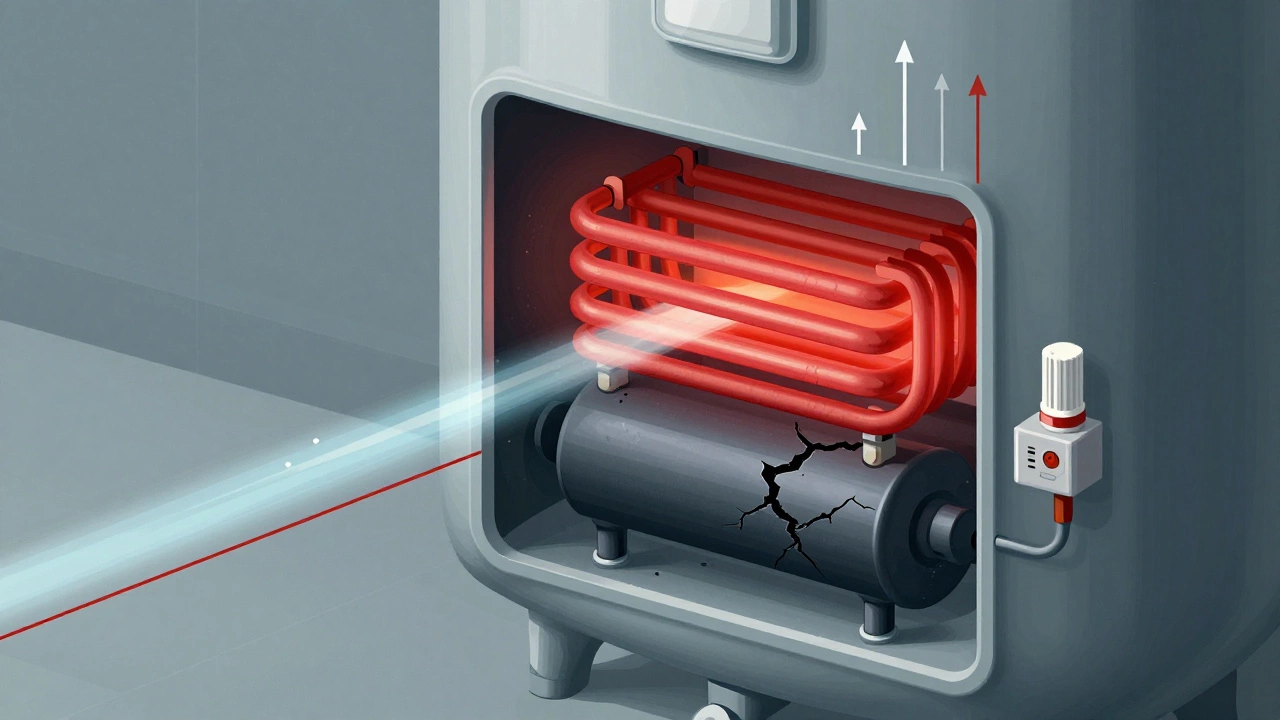
Electric water heater elements typically last 8 to 12 years, depending on water quality and usage. In Perth, where water is moderately hard, elements often start showing signs of wear after 6-7 years. If your heater is older than 10 years and you’re having issues, replacing the elements might buy you a couple more years-but consider upgrading the whole unit.
Older heaters are less efficient. Modern models use 20-30% less energy and have better insulation. If you’re replacing elements, it might be time to replace the tank too.
Replacing a Bad Element
If you’ve confirmed a bad element, replacement is straightforward. Buy a matching replacement-check the wattage (usually 2500W or 3500W) and the length (usually 10 or 12 inches). Universal elements are available, but make sure they match your tank’s specifications.
Drain the tank by opening the drain valve at the bottom and attaching a hose to a floor drain or bucket. You don’t need to empty it completely-just get the water level below the element.
Unscrew the old element, clean out any sediment with a shop vac or rag, and screw in the new one. Tighten it firmly, but don’t over-torque. Reconnect the wires, replace the insulation and panels, refill the tank, and turn the power back on.
Wait at least an hour before using hot water. This lets the tank fill and the element heat up without air pockets causing damage.
Prevent Future Failures
To make your elements last longer:
- Flush the tank once a year to remove sediment
- Set the thermostat to 50°C-higher settings increase mineral buildup and energy use
- Install a water softener if you live in a hard water area
- Use a surge protector for your water heater
These small steps can double the life of your heating elements and save you hundreds in repairs.
Can a bad water heater element cause high electricity bills?
Yes. If one element is failing, the other has to work harder to heat the same amount of water. This causes longer run times and more energy use. A bad element can increase your electricity bill by 20-40% if left unchecked. If your bill suddenly spiked and your water isn’t getting hotter, test the elements.
Is it safe to test a water heater element with the power on?
No. Never test a water heater element while power is on. Even though multimeters are designed for measuring voltage, testing for continuity requires the circuit to be dead. Working on a live 240V system is extremely dangerous and can cause electrocution or damage to your tools. Always turn off the breaker and verify with a voltage tester before touching any wires.
Why does my water heater only give me a few minutes of hot water?
This is the classic sign of a failed bottom element. The top element heats the upper portion of the tank, but without the bottom element, the lower water stays cold. When you use hot water, you’re only using the small amount of heated water at the top. Once it’s gone, you’re left with cold water. Testing both elements will confirm which one has failed.
Can I replace a water heater element myself?
Yes, if you’re comfortable with basic tools and electrical safety. You’ll need a multimeter, socket wrench, replacement element, and a drain hose. The process takes about 1-2 hours. If you’re unsure about turning off the power, testing circuits, or draining the tank, call a licensed electrician. Safety matters more than saving money.
Do I need to replace both elements if one is bad?
Not always, but it’s often recommended. If one element has failed after 8+ years, the other is likely close behind. Replacing both at once saves you from having to drain the tank again in a few months. Plus, new elements are relatively inexpensive-usually under $50 each. It’s a small cost to avoid a second repair.
If you’ve followed these steps and still have no hot water, the issue might be deeper-like a failing thermostat, sediment buildup, or a tank leak. At that point, it’s worth getting a professional opinion. But for most cases, a bad element is the culprit. And now you know how to find it.