
Fridge Compressor Diagnostic Tool
Select all symptoms you're experiencing with your refrigerator:
No Cooling
Interior is warm or room temperatureClicking Sounds
Repeated clicking followed by silenceCompletely Silent
No humming or running sounds at allOverheating
Compressor too hot to touchCold Exterior
Back/sides cold while interior is warmFreezer Cold, Fridge Warm
Temperature difference between compartmentsRuns Constantly
Never shuts off but isn't cooling properlyOil Leak
Oil pooling around compressor areaTell us more about your refrigerator:
Your kitchen is quiet. Too quiet. You open the fridge door, expecting that familiar chill, but instead, you’re hit with warm air. The milk is sweating, the leftovers are questionable, and your instinct tells you something is wrong. But before you call a technician and face a potentially hefty bill, you need to know if the heart of your machine-the compressor-has actually given up the ghost.
A dead compressor doesn’t always announce itself with a bang. Often, it’s a slow fade or a specific set of symptoms that point directly to this critical component. Knowing how to diagnose a failing refrigerator compressor can save you time, money, and spoiled groceries. Here is exactly how to tell if your fridge compressor is gone, what other parts might be mimicking its failure, and what steps you should take next.
The Silent Killer: Why the Compressor Matters
To understand why your fridge isn't working, you first need to understand what the compressor does. Think of it as the pump in your car’s engine. It circulates refrigerant through the coils, compressing the gas to create heat (which is then expelled at the back) and allowing it to expand and cool inside the fridge. Without a functioning compressor, there is no circulation, no pressure change, and ultimately, no cooling.
If the compressor stops, the temperature inside your fridge will slowly rise to match room temperature. This usually happens over several hours, giving you a window to diagnose the issue before everything spoils. However, assuming the compressor is dead when it’s actually a faulty thermostat or a dirty condenser coil is a common mistake. We need to rule out the simple stuff first.
Signs That Point Directly to Compressor Failure
While many issues cause a fridge to stop cooling, certain signs are red flags for compressor trouble. Look for these specific indicators:
- No Humming Sound: A healthy compressor makes a low, steady hum. If you put your ear near the back bottom of the fridge and hear absolute silence (while the light is on), the compressor might not be starting.
- Clicking Sounds: Do you hear a distinct 'click' followed by silence? This is often the start relay trying to kick the compressor into action, but the motor is too weak to turn. After a few clicks, it shuts off to prevent overheating.
- Hot Exterior, Cold Interior Fail: The back or sides of the fridge should feel warm to the touch because the compressor is expelling heat. If the exterior is cold to the touch while the interior is warm, the compressor isn’t running.
- Overheating: If the compressor housing feels excessively hot (too hot to keep your hand on for more than a second), it may be seizing up due to internal friction or lack of lubrication.
If you notice these signs, the compressor is likely the culprit. But remember, a clicking sound can also mean a bad start capacitor or relay, which is a much cheaper fix than replacing the entire compressor unit.
The Great Impersonators: Ruling Out Other Issues
Before condemning the compressor, you must eliminate the other usual suspects. Many homeowners replace compressors unnecessarily because they didn’t check these simpler components first.
1. The Thermostat
The thermostat tells the compressor when to turn on and off. If it’s broken, it might never send the signal to start. Try turning the temperature dial to the coldest setting. If the compressor kicks on after a few minutes, the thermostat was just miscalibrated or faulty. If nothing happens, move to the next step.
2. Dirty Condenser Coils
Located either behind the back panel or along the bottom front grille, condenser coils release heat. If they are clogged with dust, pet hair, and grime, the compressor has to work overtime. Eventually, it may overheat and shut down via its built-in overload protector. Unplug the fridge, pull it away from the wall, and vacuum the coils. If they were filthy, let the fridge rest for an hour, plug it back in, and see if it starts. This simple maintenance task saves thousands in repairs annually.
3. The Evaporator Fan Motor
In frost-free models, a fan circulates cold air from the freezer to the fridge. If this fan dies, the fridge compartment warms up while the freezer stays cold. Listen closely: do you hear the fan whirring in the freezer section? If not, the fan motor or its switch might be the issue, not the compressor.
How to Test the Compressor Yourself
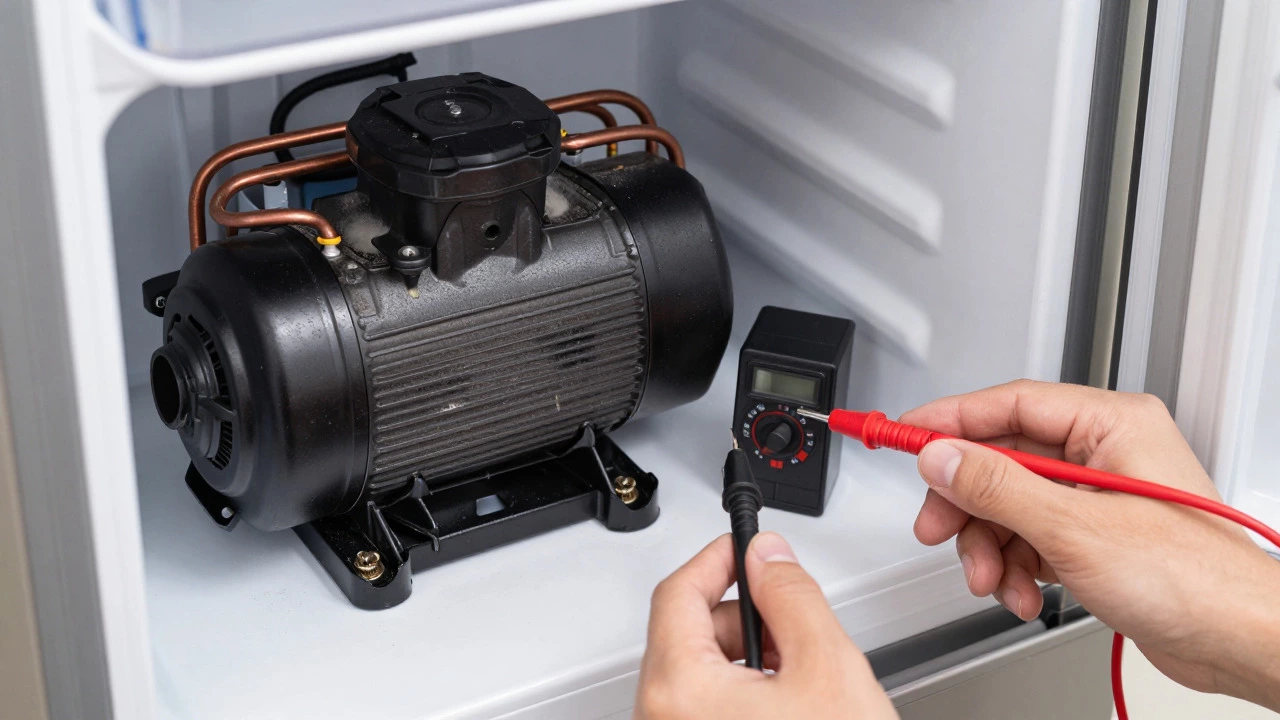
If you’ve ruled out the thermostat, coils, and fans, it’s time to test the compressor directly. You’ll need a multimeter for this. Safety first: unplug the refrigerator before touching any electrical components.
- Locate the Start Relay: Find the compressor at the back bottom of the fridge. Attached to it is a small black box called the start relay. Remove this relay carefully.
- Check for Continuity: Set your multimeter to the resistance (Ohms) setting. Touch the probes to the two terminals on the relay. If there’s no continuity (the display reads OL or infinite), the relay is dead. Replace it-it costs about $20-$40.
- Test the Compressor Windings: With the relay removed, place the multimeter probes on the three terminals of the compressor itself. There are three terminals: Common (C), Start (S), and Run (R).
- Measure between C and S.
- Measure between C and R.
- Measure between S and R.
This test provides definitive proof. If the windings are intact but the compressor still won’t start, the issue might be internal mechanical seizure, which also requires replacement.
| Symptom | Likely Cause | Difficulty to Fix | Estimated Cost |
|---|---|---|---|
| Fridge warm, Freezer cold | Evaporator Fan Motor | Medium | $50 - $150 |
| No cooling, No noise | Thermostat or Power Issue | Low | $20 - $100 |
| Clicking sound, then silence | Start Relay or Capacitor | Low | $20 - $60 |
| Compressor runs constantly, no cooling | Refrigerant Leak | High | $300 - $600+ |
| Dead compressor (burnt windings) | Compressor Replacement | Very High | $500 - $900+ |
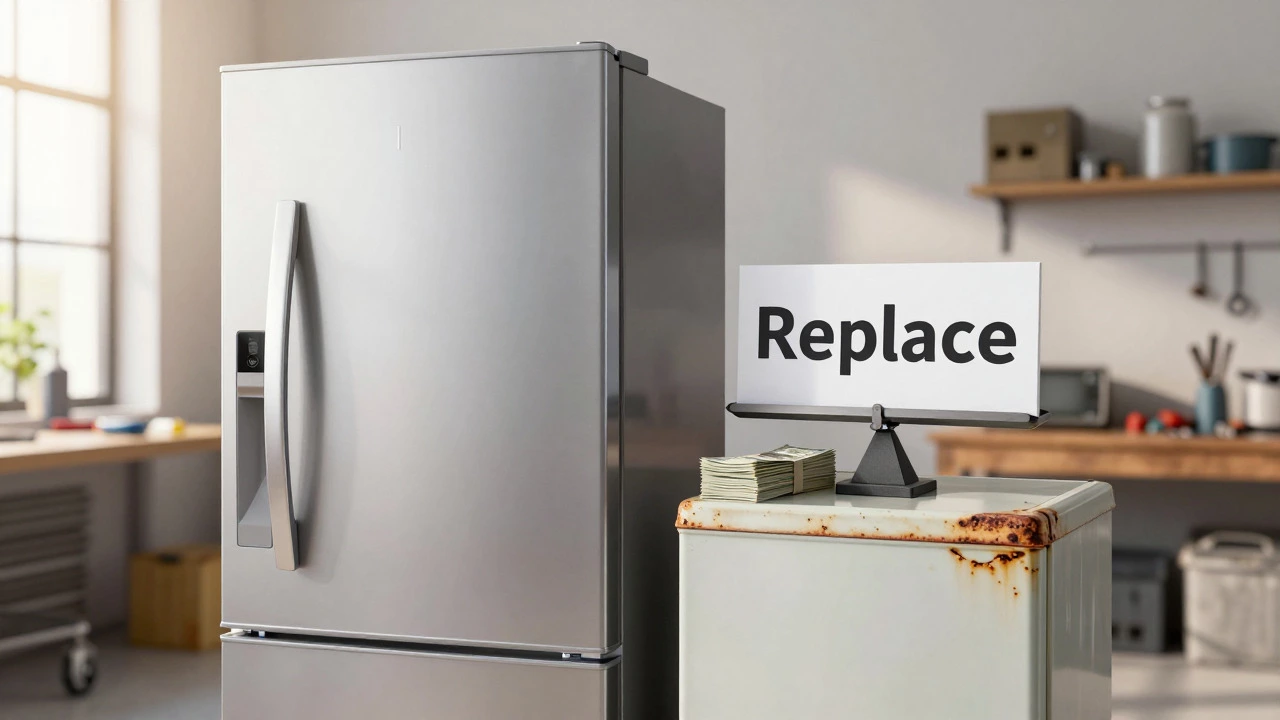
Is It Worth Repairing a Dead Compressor?
Here is the hard truth: replacing a compressor is expensive and labor-intensive. It involves recovering the old refrigerant, brazing new lines, installing the new unit, and recharging the system with gas. In Perth, Australia, where labor rates are high, this job can easily cost between $600 and $900 AUD, depending on the model and accessibility.
If your fridge is older than 10 years, this repair often doesn’t make financial sense. Modern fridges are significantly more energy-efficient. An old fridge with a new compressor might still use outdated insulation and inefficient motors, leading to higher electricity bills. Consider the age of your appliance. If it’s from the early 2010s or earlier, buying a new energy-efficient refrigerator might be the smarter long-term investment.
However, if you have a high-end French door model that is only five years old, replacing the compressor could extend its life by another decade. Always get a written quote from a licensed technician before making this decision.
What to Do While You Wait for Repairs
If you’ve confirmed the compressor is dead and you’re waiting for a technician or a new fridge, act fast to save your food.
- Keep Doors Closed: Every time you open the door, you lose the remaining cold air. Plan meals using the existing contents immediately.
- Use Ice: If you have dry ice available, it can keep the fridge cold for 24-48 hours. Regular ice packs help too, but they melt quickly.
- Monitor Temperature: Use a standalone thermometer. Food is safe as long as the internal temperature stays below 5°C (41°F).
- Dispose of Perishables Wisely: If the power has been out for more than 4 hours (or 24 hours for a full freezer), discard meat, dairy, eggs, and cooked foods. When in doubt, throw it out.
Preventing Future Compressor Failure
While you can’t control manufacturing defects, you can significantly extend the life of your compressor with proper care.
First, ensure proper ventilation. Don’t push the fridge flush against the wall. Leave at least 2-3 inches of space at the back so the condenser coils can breathe. Second, clean those coils every six months. Dust buildup forces the compressor to run longer and hotter, accelerating wear. Third, avoid overloading the fridge. Blocking the air vents inside with large containers prevents cold air circulation, causing the compressor to cycle on and off inefficiently.
Finally, consider a surge protector. Power spikes from storms or grid fluctuations can fry the electronic controls and damage the compressor motor. A simple whole-home surge protector or a dedicated appliance protector can save you from catastrophic failure during Perth’s summer thunderstorms.
How long does a fridge compressor last?
A typical refrigerator compressor lasts between 10 to 20 years, depending on usage, maintenance, and build quality. Frequent cycling, dirty coils, and power surges can shorten this lifespan significantly.
Can a fridge compressor be repaired without replacing it?
Generally, no. The compressor is a sealed unit. If the internal windings burn out or the piston seizes, the entire unit must be replaced. However, external components like the start relay or capacitor can be repaired or replaced cheaply.
Why is my fridge compressor running all the time?
If the compressor runs continuously but the fridge isn't getting colder, you likely have a refrigerant leak or a blocked capillary tube. This means the system is losing pressure, forcing the compressor to work endlessly to try and reach the set temperature.
Is it dangerous if the fridge compressor leaks oil?
Yes, it indicates a serious problem. Oil and refrigerant travel together in the system. If you see oil pooling around the compressor or on the floor, you have a refrigerant leak. This requires professional handling due to environmental regulations and safety concerns.
Can I replace the fridge compressor myself?
It is highly recommended to hire a professional. Replacing a compressor requires specialized tools to recover refrigerant, braze copper lines, and recharge the system with the correct amount of gas. Doing it incorrectly can void warranties and pose safety risks.