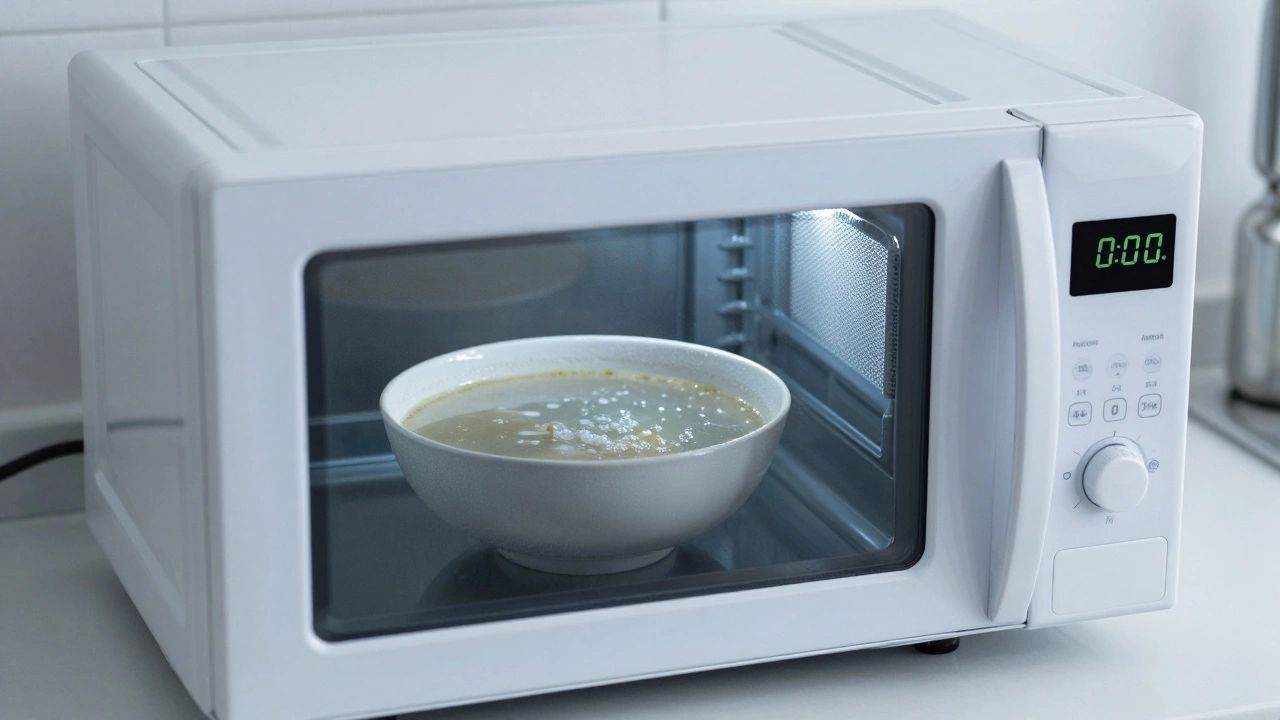
Microwave Health Diagnostic Tool
Select the symptom you are experiencing to find the likely cause and recommendation.
Diagnostic Result
- Uneven heating or cold spots often mean the magnetron is failing.
- Strange noises (grinding or loud buzzing) usually point to fan or turntable motor issues.
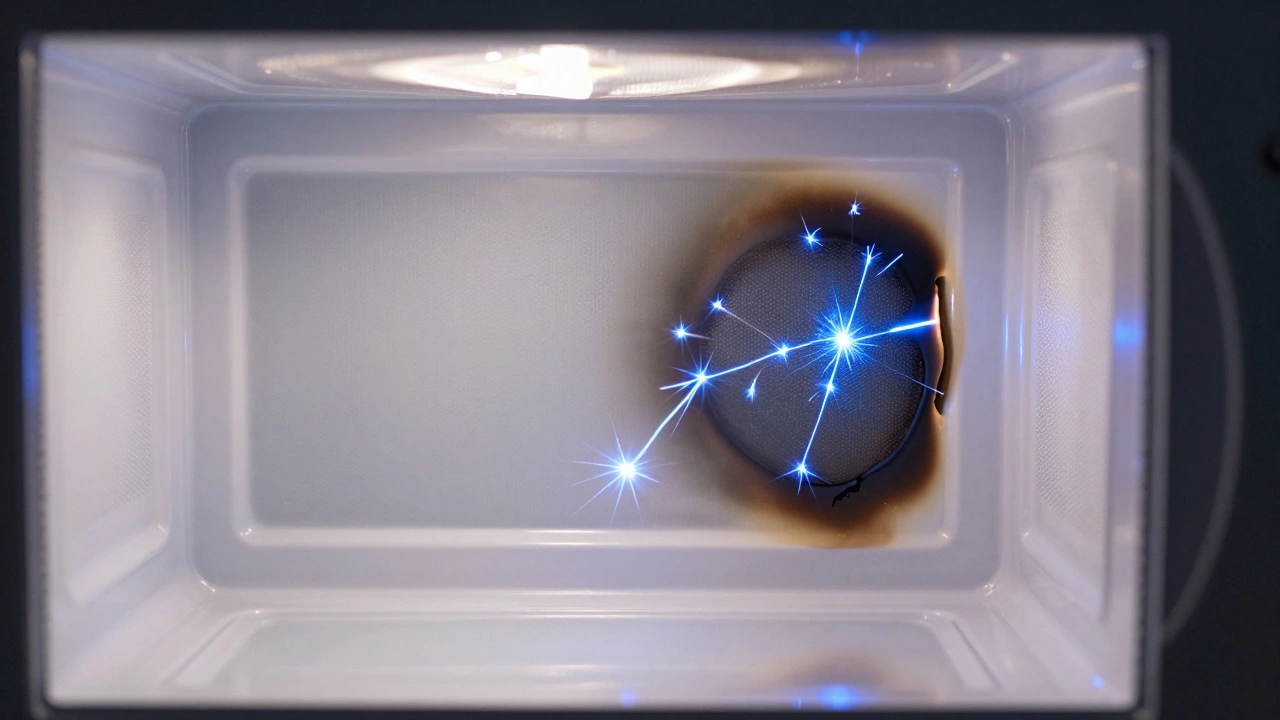
- Sparking inside the cabin is often a result of damaged waveguide covers or metal contamination.
- Electrical issues like flickering displays or failure to start can be simple fuse problems or complex control board failures.
- Safety first: Never open a microwave chassis yourself due to the high-voltage capacitor.
The Dreaded Cold Food: Magnetron Failure
The heart of your machine is the Magnetron is the vacuum tube that generates the microwaves used to heat your food. When this component starts to go bad, you won't see a sudden explosion. Instead, you'll notice a gradual decline. Maybe your soup takes four minutes to heat up when it used to take two. Or perhaps one side of your plate is boiling while the other is frozen.
If the magnetron has completely failed, the microwave will sound like it's working-the fan will blow and the light will stay on-but the food remains cold. This is usually a sign that the tube has lost its efficiency or the filament has burnt out. Since the magnetron is the most expensive part of the unit, replacing it is only worth it if you have a high-end built-in model. For a basic countertop unit, a failing magnetron is usually the "death knell" for the machine.
Strange Noises and Mechanical Grinds
A healthy microwave hums. A dying one screams, rattles, or grinds. Most of these sounds come from the Turntable Motor is the small electric motor that rotates the glass tray for even heating or the cooling fan. If you hear a rhythmic clicking or a loud grinding sound, your turntable motor is likely stripped or jammed. You can test this by gently spinning the tray by hand; if it feels stiff, the motor is shot.
Then there's the cooling fan. If the fan makes a loud, vibrating roar, it's either clogged with dust or the bearings are wearing out. This is a dangerous sign because the magnetron generates a massive amount of heat. If the fan can't pull that heat away, the internal components will overheat and shut down via a thermal fuse, or worse, melt the surrounding plastic. If your microwave feels unusually hot to the touch on the outside, your ventilation system is failing.
Sparks and Arcing: More Than Just a Fork
We all know not to put metal in the microwave, but what happens when you're careful and it still sparks? This is often caused by a damaged Waveguide Cover is the small piece of mica or cardboard that protects the magnetron from food splatter. If grease or food bits get stuck to this cover, they can carbonize. Over time, these carbon deposits act like a conductor, causing "arcing"-those scary blue sparks you see jumping across the wall of the oven.
If you see sparks and you're sure there's no foil inside, look at the waveguide cover (the small rectangular plate on the right-hand side). If it's charred or has a hole in it, it needs to be replaced. Ignoring this will eventually lead to the sparks entering the magnetron itself, which will destroy the unit instantly. It's a cheap fix that prevents a total replacement.
Electrical Glitches and Control Board Chaos
When your microwave starts acting like it has a mind of its own, you're likely dealing with a Control Board is the electronic circuit board that manages timers, power levels, and user inputs issue. Common signs include the display flickering, buttons not responding, or the timer counting down but the machine not actually starting.
Sometimes, the problem is simpler: a blown Fuse is a safety device that breaks the circuit if the current becomes too high to protect the electronics. If the microwave is completely dead-no lights, no clock-check the fuse. However, if the machine starts and stops randomly, or the power levels are inconsistent, the capacitors on the control board are likely leaking or failing. In 2026, with the rise of smart microwaves, these boards are increasingly complex and often cost nearly as much as a new machine to replace.
| Symptom | Likely Component | Repair Difficulty | Verdict |
|---|---|---|---|
| Food stays cold | Magnetron | High | Replace Unit |
| Sparks on the wall | Waveguide Cover | Low | Easy Fix |
| Loud grinding noise | Turntable Motor | Medium | Repairable |
| Dead display/No power | Fuse / Power Cord | Low/Medium | Repairable |
| Buttons don't work | Control Board | High | Replace Unit |
The Danger Zone: Why You Shouldn't Be a DIY Hero
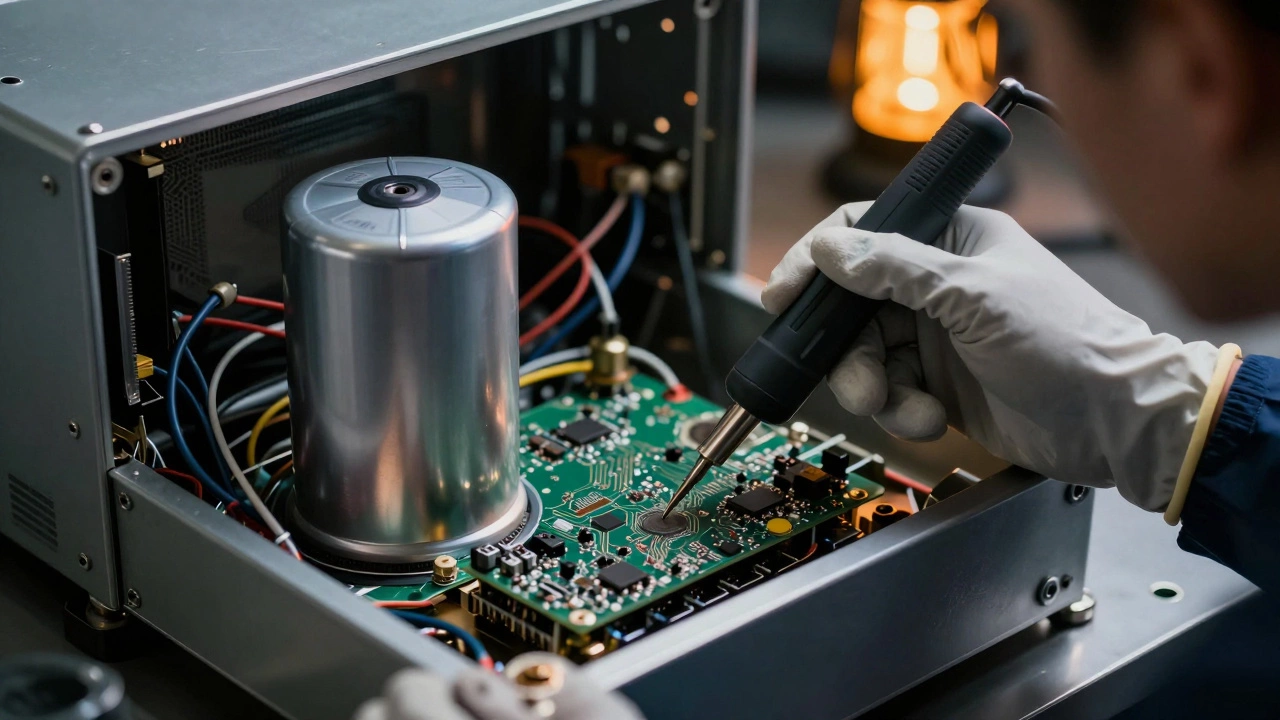
I have to be blunt here: microwaves are one of the few household appliances that can kill you even when they are unplugged. This is because of the High-Voltage Capacitor is an electrical component that stores a lethal amount of electricity to help the magnetron start. This capacitor holds a charge long after the power cord is pulled from the wall.
If you open the casing and touch the wrong part, you can receive a massive electrical shock. Professional microwave repair technicians use special discharging tools to safely drain this energy before they touch any internal components. If you aren't trained in high-voltage safety, leave the chassis closed. Your job is to diagnose the symptoms; let a pro handle the internals.
Deciding Between Repair and Replacement
When should you stop fighting for your old microwave? Use the 50% rule: if the cost of the repair (parts plus labor) exceeds 50% of the cost of a new, comparable model, toss it. Because microwave technology hasn't changed drastically in years, newer models are often more energy-efficient and have better safety sensors.
Consider the age. If your unit is more than 7-10 years old, the internal wiring and seals may be degrading. A new unit will not only be more reliable but will likely have better "Inverter technology," which allows for more precise power levels-meaning you can actually simmer things rather than just blasting them with 100% power.
Why does my microwave smell like burning plastic?
This is usually caused by one of three things: food debris on the waveguide cover carbonizing and burning, a failing cooling fan causing the internal wiring to overheat, or using a container that isn't actually microwave-safe. If the smell persists even with a clean oven, it's likely an electrical component melting and you should unplug it immediately.
Can I replace the magnetron myself?
It is strongly discouraged. The high-voltage capacitor can store a lethal charge even when unplugged. Unless you have the specific tools and knowledge to discharge the capacitor safely, you should hire a professional technician.
My microwave is running but not heating. Is it always the magnetron?
Not always, but usually. It could also be a blown high-voltage diode or a failed capacitor. These components work together to power the magnetron. If any one of them fails, the microwave will sound like it's working, but no heat will be generated.
How do I clean the waveguide cover?
The waveguide cover is the small plate on the side wall. You can gently clean it with a damp cloth and mild soap. If it is charred, burnt, or has a hole, do not try to clean it; buy a replacement mica sheet and slide it into place. It's a very cheap part and doesn't require opening the machine.
Is it worth repairing a countertop microwave?
Generally, no. Most countertop models are built to be replaced rather than repaired. Once the magnetron or control board fails, the labor cost of a technician usually exceeds the price of a new mid-range unit. Repairs are typically only worth it for expensive over-the-range or built-in models.
Next Steps for Troubleshooting
If you're unsure what to do, start with the easiest check: the power source. Plug a different appliance into the same outlet to ensure you haven't just tripped a circuit breaker. Then, do a "water test." Fill a microwave-safe glass with water and run it for 60 seconds. If the water is cold, you have a heating element failure (magnetron/diode). If the glass doesn't rotate, you have a motor failure.
If you decide to call a professional, have your model number and serial number ready. This allows the technician to know if parts are still available for your specific version. If you're replacing the unit, look for an "Inverter" model-they handle low-power settings much better, which prevents your food from being burnt on the edges and frozen in the middle.