Refrigerator Health Assessment Tool
Assess Your Fridge's Condition
Check all signs that apply to your refrigerator. This tool will calculate your fridge's health status and recommend next steps.
Your Fridge Assessment Result
Recommended Action:
You’ve noticed your fridge is louder than usual. The back feels hotter than it should. Food keeps spoiling even though you set the temperature to 3°C. You start wondering-is this fridge just old, or is it truly done?
Most fridges last between 10 and 15 years. But age alone doesn’t tell the whole story. A fridge can die early from poor maintenance, bad wiring, or a failing compressor. And if you wait too long to notice the signs, you risk food waste, higher electricity bills, or even a leak that floods your kitchen.
Your fridge is working harder than it should
If your fridge runs constantly-day and night-you’re paying for it. A healthy fridge cycles on and off every 15 to 20 minutes. If it’s running 90% of the time, something’s wrong. The compressor is struggling to keep cold air in. That could mean the door seal is cracked, the condenser coils are clogged with dust, or the refrigerant is leaking.
Check the door gasket. Run your hand along the edge. If you feel cold air leaking out, or if the seal feels brittle or torn, that’s a red flag. A weak seal lets warm air in, forcing the compressor to work overtime. Replacing the gasket costs $30-$60. But if the fridge is over 10 years old and the seal keeps failing, it’s not worth fixing.
Food spoils faster than it should
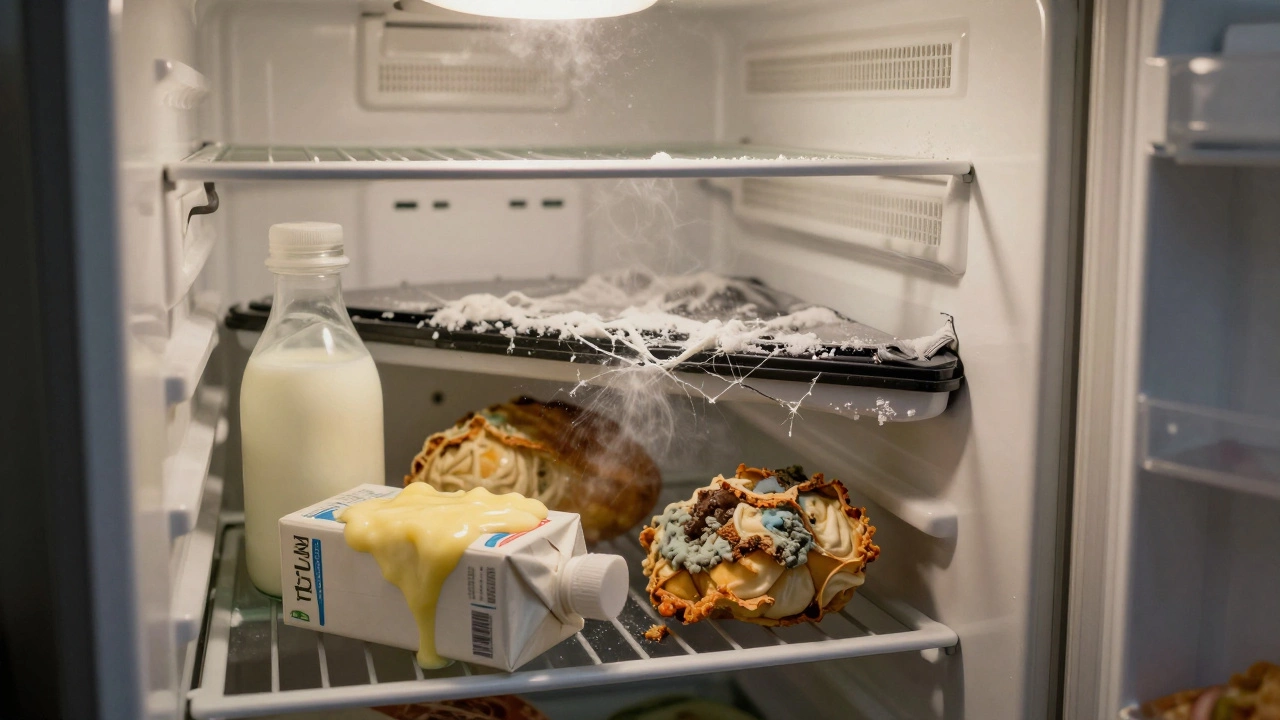
Your milk goes sour in three days. Leftovers develop mold in two. You’re not overfilling the fridge. You’re not leaving the door open. Yet food keeps going bad. That’s not your fault. That’s your fridge’s fault.
Modern fridges should maintain a steady 3°C to 4°C in the main compartment. If the temperature fluctuates or climbs above 7°C, bacteria grow fast. Use a standalone fridge thermometer-don’t trust the built-in display. If the reading is off by more than 2°C, the thermostat or control board is failing. Repairing this can cost $150-$300. But if your fridge is 12+ years old, you’re better off replacing it. A new energy-efficient model will save you $100+ a year on electricity.
The back or bottom of the fridge is hot to the touch
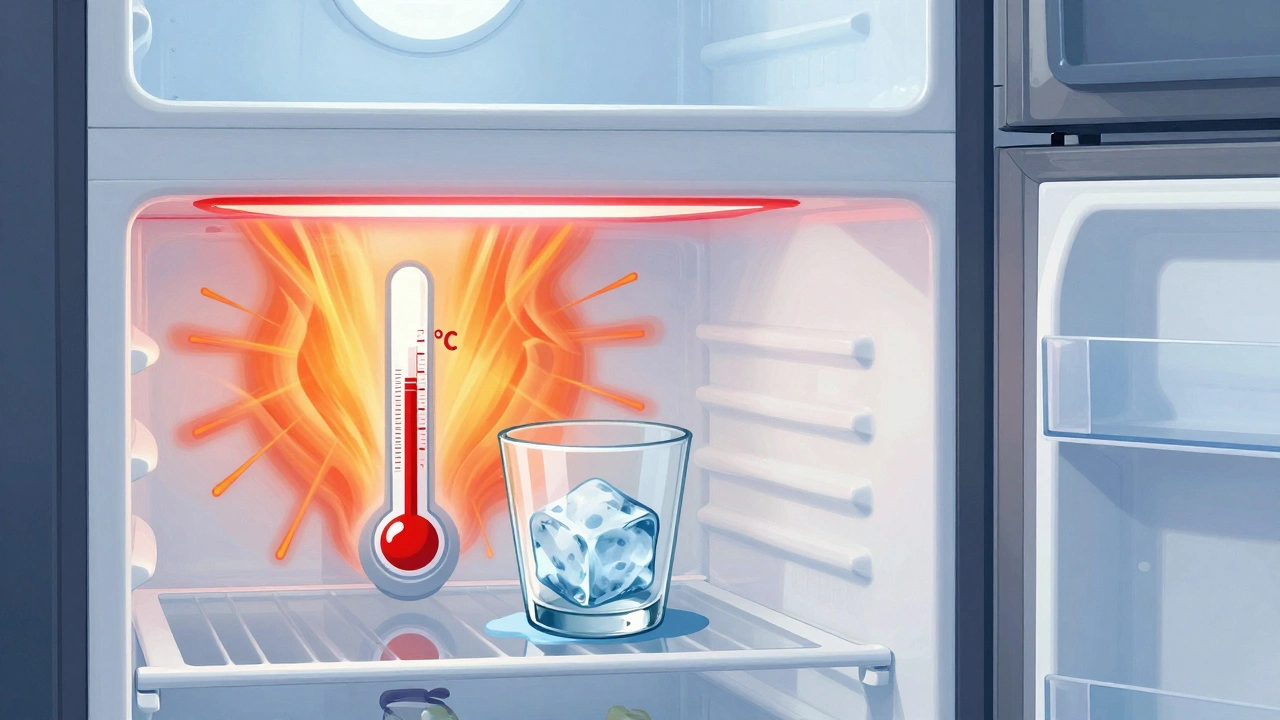
It’s normal for the back of a fridge to be warm. That’s where the condenser releases heat. But if it’s so hot you can’t hold your hand on it for more than two seconds, something’s wrong. Overheating means the compressor is under too much strain. It’s either fighting a refrigerant leak, or the condenser coils are clogged with dust, pet hair, or lint.
Unplug the fridge. Pull it away from the wall. Look at the coils at the back or bottom. If they’re covered in fluff, clean them with a brush or vacuum. Do this every six months. But if the fridge still overheats after cleaning, the compressor is failing. Compressors don’t get repaired-they’re replaced. And a new compressor costs nearly as much as a new fridge.
You hear strange noises
Every fridge makes some noise. A quiet hum. A soft click when it turns on. But if you start hearing buzzing, grinding, or loud knocking, pay attention.
- A high-pitched buzz? Could be a failing fan motor.
- A rhythmic clunking? The compressor is struggling to start.
- A loud rattling from the bottom? The condenser fan or motor is loose or broken.
These sounds don’t always mean the end. A fan motor replacement costs $80-$150. But if you hear grinding or knocking from the compressor itself, that’s the death rattle. Compressors don’t just wear out-they fail suddenly. Once it’s gone, the fridge stops cooling. No amount of tinkering will bring it back.
Water is pooling under or inside the fridge
Standing water under your fridge? That’s not a spill. That’s a leak. The most common cause is a clogged defrost drain. Ice builds up in the freezer, melts, and can’t drain properly. It spills into the fridge compartment and leaks out the bottom.
Clear the drain with warm water and a pipe cleaner. But if the leak keeps coming back, the drain pan might be cracked, or the defrost heater is broken. If the fridge is under 8 years old, fixing this is worth it. If it’s older than 10, the whole system is wearing out. A leaking fridge often means other parts are failing too-like the insulation or the evaporator coil.
The freezer works, but the fridge doesn’t
This one’s tricky. The freezer is cold. Your ice cream is solid. But the fridge section is warm. You adjust the temperature. You clean the vents. Nothing helps.
This usually points to a faulty evaporator fan or a blocked air duct. Cold air from the freezer is supposed to circulate into the fridge. If the fan is broken or frozen over, air doesn’t move. The fridge stays warm. Fixing the fan costs $100-$200. But if this happens more than once, or if the fridge is over 10 years old, the problem will come back. The system is out of balance.
It’s over 10 years old-and you’re spending more on repairs than it’s worth
This is the hardest truth. Most fridges hit their tipping point around 10-12 years. After that, parts become harder to find. Repair costs climb. Efficiency drops. Your electricity bill creeps up.
Here’s a simple rule: if a repair costs more than half the price of a new fridge, walk away. A new basic fridge costs $600-$900. If you’ve spent $400 on repairs this year, it’s time. New models use 40% less energy than ones from 2015. That’s $120 a year saved on power bills. Plus, modern fridges have better temperature control, smarter defrost cycles, and quieter compressors.
Don’t fall for the myth that “it still works.” A fridge that runs but doesn’t cool properly is wasting electricity and risking your food. It’s not a bargain-it’s a liability.
What to do next
If you’ve checked all these signs and more than two apply, your fridge is likely beyond repair. Don’t wait for it to die suddenly in the middle of summer. Start looking for a replacement now.
- Look for ENERGY STAR certified models-they’re the most efficient.
- Choose a size that fits your space without overcrowding. Overfilled fridges don’t cool well.
- Check the warranty. At least one year on parts, five on the compressor.
- Don’t buy used unless you know the history. A second-hand fridge could be a ticking time bomb.
If you’re unsure, call a technician. A good one will tell you straight: “It’s not worth fixing.” Don’t let them upsell you on a $300 repair when a $700 new fridge will pay for itself in two years.
When your fridge dies, it’s not just an appliance. It’s your food safety system. Don’t gamble with it.
How long does a refrigerator usually last?
Most refrigerators last between 10 and 15 years. High-end models with better build quality can hit 18 years, but that’s rare. Budget fridges often fail before 8 years. The key is maintenance-cleaning coils, checking door seals, and avoiding overloading.
Can a fridge be repaired if it’s not cooling?
Sometimes. If the issue is a dirty condenser coil, a faulty door seal, or a broken fan, yes-it’s fixable. But if the compressor is failing or there’s a refrigerant leak, repairs cost $500-$800. At that point, it’s usually cheaper to replace the unit, especially if it’s over 10 years old.
Is it worth fixing a 15-year-old fridge?
Almost never. A 15-year-old fridge uses 50-70% more electricity than a new model. Even if a repair works, you’ll pay more in power bills over the next year than a new fridge costs. Plus, parts are harder to find. It’s not worth the risk or the cost.
Why is my fridge making a loud humming noise?
A loud, continuous hum usually means the compressor is working too hard. That could be from a dirty condenser coil, a failing fan, or low refrigerant. If the noise started suddenly and the fridge isn’t cooling, the compressor may be failing. If it’s always been noisy, it might just be old-but still functional.
Should I replace my fridge if the freezer works but the fridge doesn’t?
Yes, especially if it’s over 8 years old. This usually means the evaporator fan or air duct is blocked. It’s fixable, but if this has happened before, the system is failing. A new fridge will cool evenly, use less power, and won’t leave you guessing whether your milk is still good.