Extractor Fan CFM Calculator
Calculate Your Fan Requirements
Determine if your extractor fan is properly sized for your space. Based on standard ventilation guidelines from the article.
Required CFM
Based on room size of m²
Ever walk into your kitchen and smell last night’s fried onions three hours later? Or notice condensation fogging up your bathroom mirror even after a hot shower? Chances are, your extractor fan isn’t doing its job. These quiet little devices are meant to pull out steam, smoke, and odors - but when they fail, the mess sticks around. The good news? Most extractor fan problems aren’t expensive to fix. You don’t always need a technician. With a few basic tools and some simple checks, you can often get it running smoothly again.
Is the fan even getting power?
Before you start taking apart anything, check the simplest thing: is the fan getting electricity? It sounds obvious, but a tripped circuit breaker or a blown fuse is the number one reason an extractor fan suddenly goes quiet. Head to your home’s electrical panel and look for a switch that’s flipped to the middle or off position. If you find one, reset it. If it trips again right away, there’s a deeper electrical issue - don’t keep resetting it. Call an electrician.
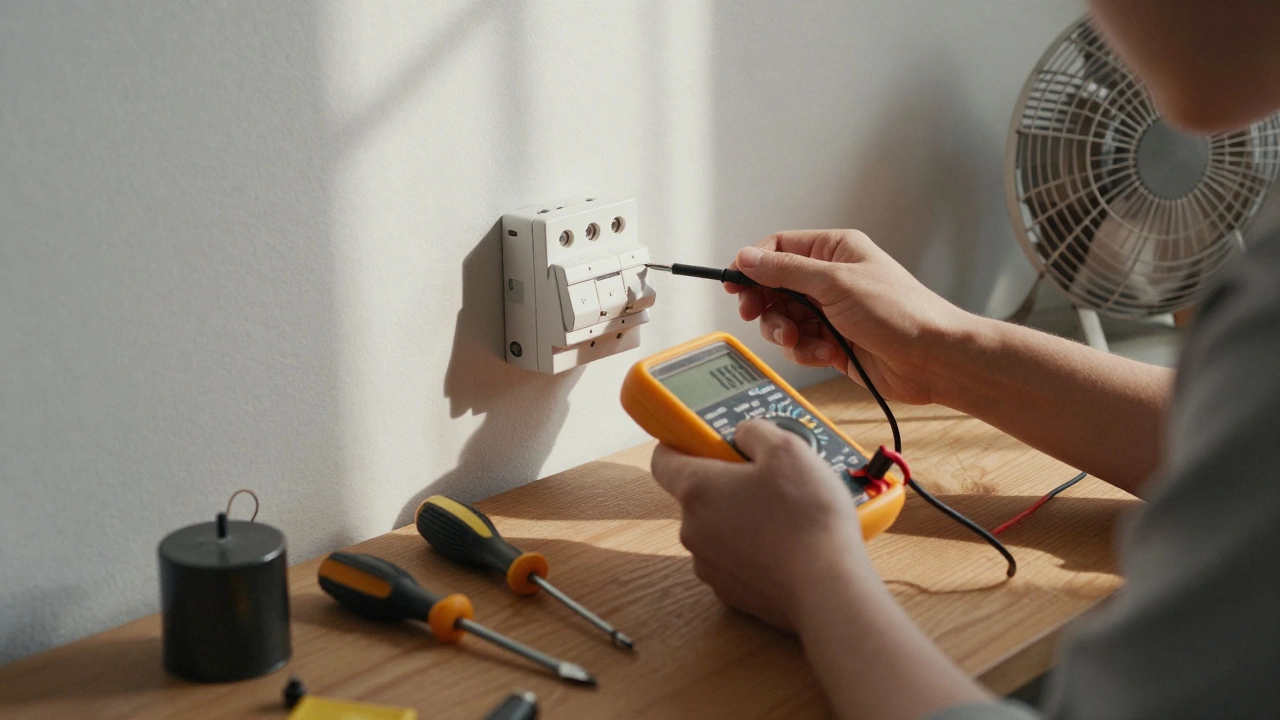
Also, check the wall switch. Some extractor fans have a separate switch that controls them. Maybe someone turned it off by accident. Try flipping it on and off a few times. If the fan still doesn’t respond, the switch itself might be faulty. You can test it with a multimeter if you have one, or just replace it - they’re cheap and easy to swap.
Is it clogged with grease and grime?
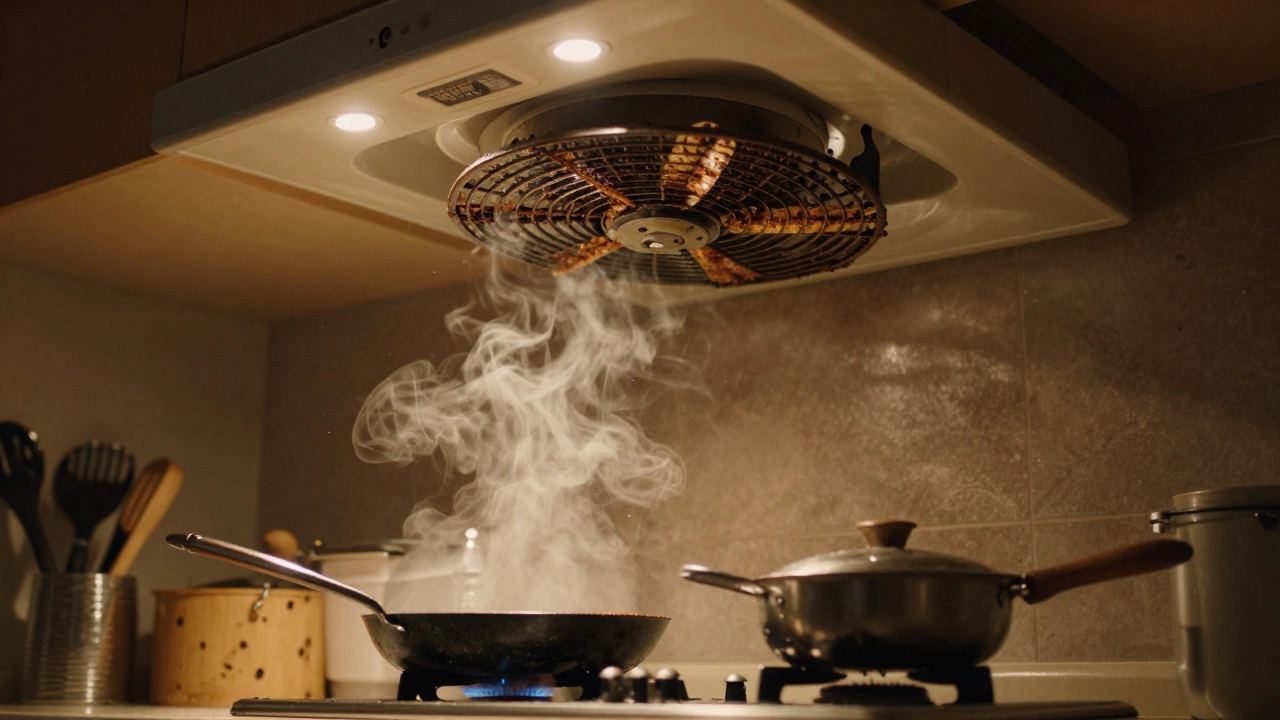
If your fan runs but sounds like a jet engine, or it’s barely moving air, it’s probably clogged. This is especially common in kitchens. Over time, cooking oil, steam, and food particles stick to the blades, the duct, and the motor housing. Grease buildup doesn’t just reduce airflow - it puts extra strain on the motor, which can burn it out.
Here’s how to clean it: First, turn off the power at the breaker. Then remove the grill or cover. Most just snap off or are held by a couple of screws. Once it’s out, soak the cover in warm, soapy water for 15 minutes. Use an old toothbrush to scrub off the sticky residue. For the fan blades, wipe them down with a damp cloth and a bit of degreaser. Don’t use harsh chemicals - they can warp plastic parts. If the duct behind the fan is visible and accessible, give it a quick wipe too. A vacuum with a brush attachment works well here.
Do this every 3 to 6 months if you cook often. It’s not glamorous, but it’s the single best way to keep your fan running quietly and efficiently.
Is the motor dead or just stuck?
If the fan makes a humming sound but doesn’t spin, the motor might be trying to start but can’t. This usually means the bearings are seized or the capacitor has failed. You can try a quick fix: turn off the power, then gently spin the fan blade by hand. If it moves freely, the issue might be the capacitor - a small cylindrical component usually mounted near the motor. Capacitors cost less than $10 and are easy to replace. Just take a photo of the wiring before you disconnect anything, and match the new one’s microfarad (μF) rating and voltage.
If the blade doesn’t spin at all, even with a little push, the motor bearings are likely seized. You can try spraying a drop of lightweight lubricant like WD-40 into the shaft area, but this is only a temporary fix. Most modern extractor fans have sealed motors that can’t be serviced. If the motor is truly dead, replacing the whole unit is often cheaper than repairing it.
Is the duct blocked or kinked?
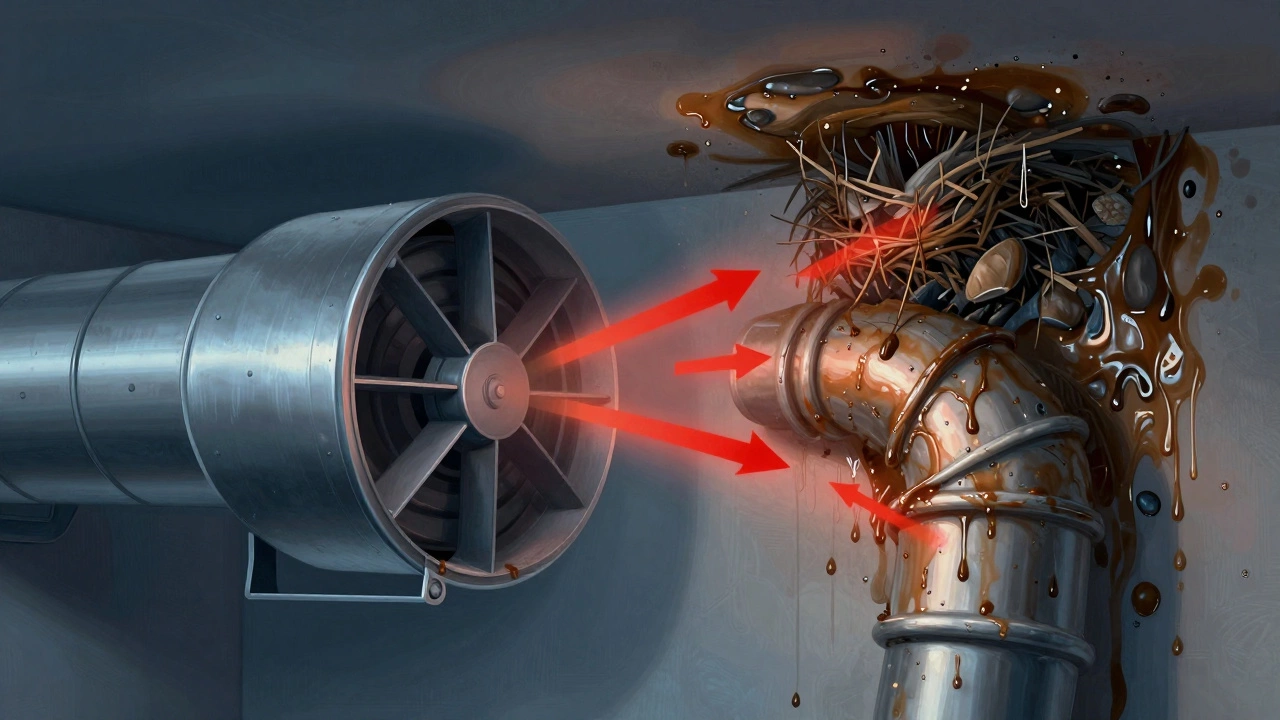
Even if the fan spins and the blades are clean, the air has to go somewhere. If the duct is crushed, clogged with bird nests, or has too many sharp bends, airflow gets stuck. This is common in older homes where ducts were poorly installed or have been compressed by insulation or renovation work.
Check the external vent - the one on the outside wall or roof. Is it clear? Are leaves, spider webs, or even a dead bird blocking it? Use a flashlight to look inside. If you can’t see through it, you’ll need to clear it. A long, flexible brush designed for dryer vents works well. If the duct runs through the attic or ceiling, you might need to disconnect it at a joint to check for kinks. Replace any crushed or sagging sections with rigid metal ducting - it lasts longer and doesn’t trap grease like flexible plastic ducts do.
Is it the wrong size or installed incorrectly?
Not every extractor fan is built the same. If you’ve recently replaced yours, or if it was installed by someone who didn’t know what they were doing, the fan might be underpowered. A small fan in a large kitchen or bathroom won’t keep up. Look for the CFM rating (cubic feet per minute) on the unit. For a typical kitchen, you need at least 100 CFM. For a bathroom, 50-80 CFM is enough. If your fan is rated lower than that, it’s too weak.
Also check the duct length. Every 90-degree elbow or long run reduces airflow. A fan with a 10-foot straight duct might work fine. The same fan with a 20-foot duct full of bends? It’ll struggle. If you suspect this is the issue, consider upgrading to a more powerful model or shortening the duct path.
Is it making strange noises?
Wobbling, rattling, squealing - these sounds tell you something’s wrong. A wobbling fan usually means the blades are bent or dirty. Clean them first. If it still wobbles, the motor shaft might be worn. A rattling sound could mean a loose screw or a damaged housing. Turn off the power and tighten all screws holding the fan to the wall or ceiling. Check the mounting bracket too.
Squealing is often a sign of a dry bearing. Try lubricating the motor shaft with a drop of light oil. If the noise comes back after a few weeks, the bearing is failing. Replace the fan. Don’t ignore squealing - it usually means the motor is about to give out.
When should you replace it instead of repair?
Some repairs are worth it. Cleaning, replacing a capacitor, or fixing a duct are cheap and easy. But if your fan is over 10 years old, it’s probably time to upgrade. Older models are noisy, inefficient, and hard to find parts for. Modern extractor fans are quieter, use less energy, and often come with features like timers, humidity sensors, and LED lighting.
Also, if the motor has burned out more than once, or if the housing is cracked or rusted, replacement is your best bet. A new fan costs between $80 and $250, depending on features. Installation is usually simple if you’re replacing it with the same size and type. Just match the duct position and electrical wiring.
Prevention is the best fix
The best way to avoid troubleshooting your extractor fan? Keep it clean and check it regularly. Set a reminder every three months to: turn off the power, remove the cover, wipe down the blades, and look at the duct. If you notice moisture on the walls or ceiling near the fan, that’s your cue to act fast. Condensation means the fan isn’t pulling air out properly - and that can lead to mold.
Also, don’t run the fan on high all the time. Use it only when you’re cooking or showering. Running it nonstop wears out the motor faster. And never block the vent with a towel or plastic bag - it’s tempting, but it causes more damage than help.
Why does my extractor fan turn on by itself?
If your extractor fan turns on without you touching the switch, it likely has a humidity or motion sensor. Many modern fans automatically activate when they detect steam or movement in the room. Check your fan’s manual to see if this feature is enabled. If it’s not supposed to do this, the sensor might be faulty - try resetting the unit or replacing the sensor.
Can I run my extractor fan without a duct?
No - and you shouldn’t try. Ductless fans (sometimes called recirculating fans) use charcoal filters to clean the air and blow it back into the room. They’re okay for small spaces or rentals where ducting isn’t possible, but they’re far less effective. They won’t remove moisture, which means you’ll still get condensation and mold. Always duct to the outside if you can.
How do I know if my extractor fan is powerful enough?
Multiply the room’s square footage by 1.5 to find the minimum CFM you need. For example, a 10m² bathroom needs at least 15 CFM. Most bathrooms need 50-80 CFM, and kitchens need 100-200 CFM. If your fan’s rating is lower than that, it’s underpowered. Also check the duct length - every 3 meters of duct or 90-degree turn reduces airflow by about 10%.
Why does my extractor fan make a clicking sound?
A single click when turning on or off is normal - it’s the relay switching. But if it clicks repeatedly, something’s wrong. It could be a failing capacitor, a faulty switch, or a motor trying to start but not getting enough power. If the clicking continues after the fan runs, turn it off and replace the capacitor or switch. Don’t ignore repeated clicking - it can damage the motor over time.
Can I use a regular light bulb in my extractor fan?
No - unless the fan specifically says it’s safe. Many extractor fans have built-in lights that require special heat-resistant bulbs. Regular bulbs can overheat and crack, especially near steam. Always use the bulb type recommended in the manual - usually LED or halogen with a maximum wattage marked on the fixture.