Dryer Repair vs Replacement Calculator
Is it worth fixing your dryer?
Calculate the cost-effectiveness of repairing your 10-year-old dryer versus buying a new one based on repair costs, energy savings, and total ownership costs.
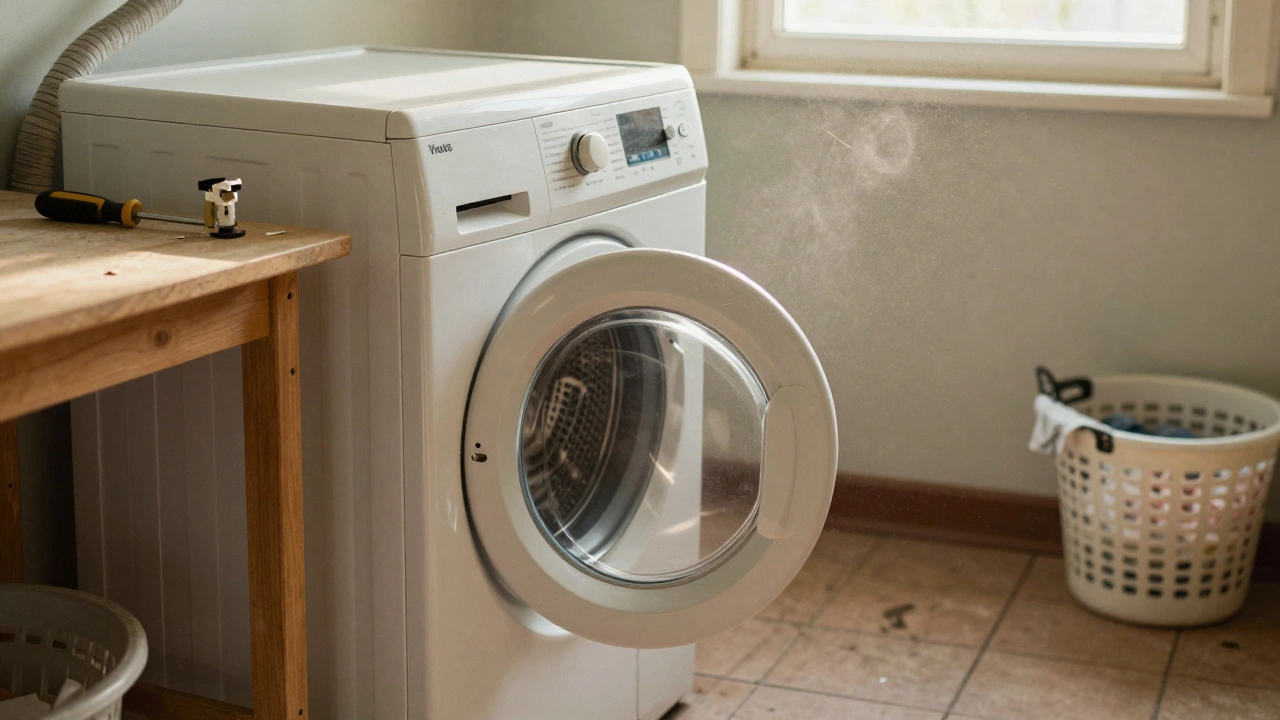
You walk into the laundry room and hear it-the familiar rumble of your dryer, then silence. It’s not spinning. Not heating. Just dead. You sigh. It’s a 10-year-old dryer. You’ve had it since before your kid started kindergarten. Now you’re stuck wondering: is a 10-year-old dryer worth fixing? Or should you just buy a new one?
How long do dryers actually last?
Most tumble dryers are built to last between 10 and 13 years. That’s the average lifespan according to appliance manufacturers and repair professionals who service hundreds of units every year. If yours is hitting 10, you’re right at the edge of its expected life. Not dead yet, but definitely in the late innings.
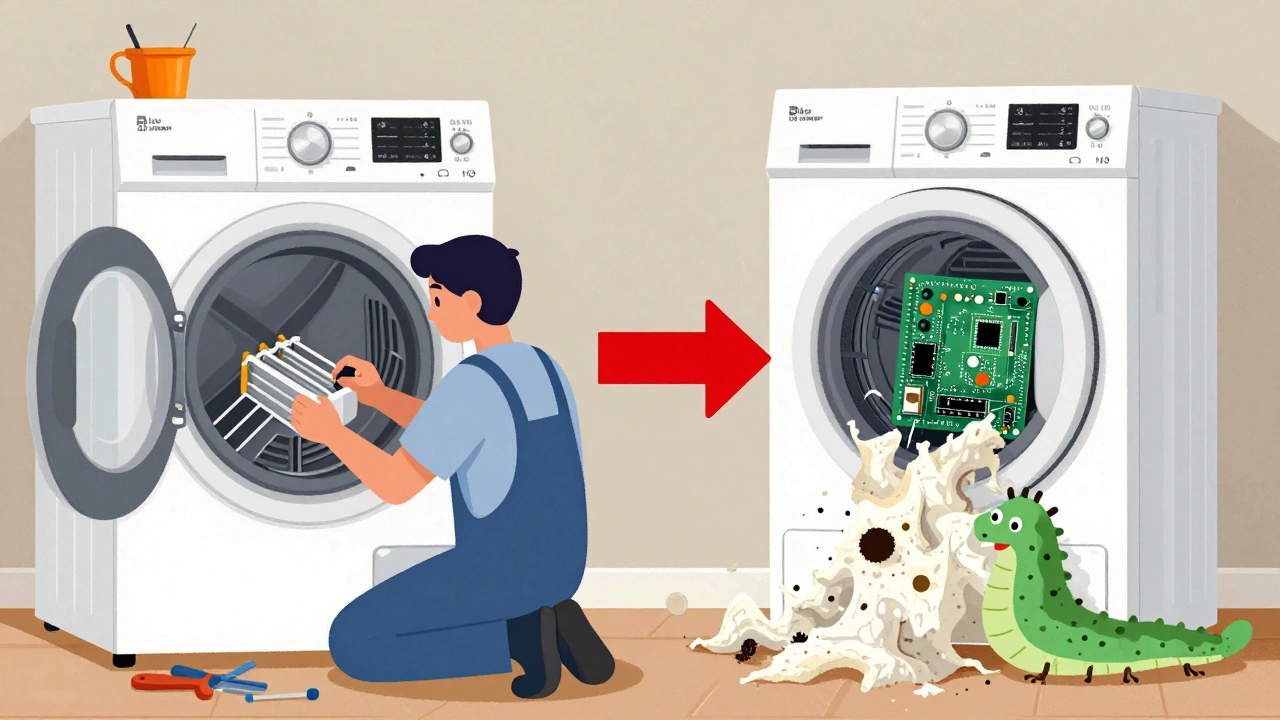
That doesn’t mean it’s done. Some dryers run fine for 15 years or more if they’ve been cleaned regularly. Others die at 7 because someone never cleaned the lint trap or blocked the vent with a sock. Age alone isn’t the killer-it’s neglect.
What’s broken? The fix matters more than the age
Not all repairs are equal. Some fixes cost $40 and last five more years. Others cost $200 and buy you six months before the next part fails.
Here’s what’s usually worth fixing:
- Thermal fuse - $15 part, $70 total repair. If this blew, the dryer won’t heat. It’s a safety feature that trips when it overheats. Easy fix. Always check this first.
- Drum belt - $30 part, $120 labor. If the drum spins but doesn’t tumble, the belt’s likely snapped. Common on older models. Worth replacing.
- Heating element - $50 part, $150 total. If the dryer runs but stays cold, this might be it. Common in electric dryers. Usually worth fixing if the machine is otherwise solid.
- Door switch - $20 part, $80 total. If the dryer won’t start when you close the door, this tiny switch could be the culprit. Simple test, simple fix.
Here’s what’s usually not worth fixing:
- Motor - $180-$300 part, $250+ labor. If the motor’s gone, you’re paying more than half the cost of a new dryer. Even if it works after repair, the rest of the machine is aging fast.
- Control board - $200-$400. Modern dryers have digital boards that fail from moisture or power surges. Replacing this is expensive, and the new board might fail again in 2 years.
- Drum rollers or glides - $60-$100 parts, $180 labor. If the drum is squeaking or wobbling, these wear out. It’s fixable, but if the dryer’s already noisy and slow, you’re just delaying the inevitable.
Cost comparison: Fix vs. Replace
Let’s say your dryer won’t heat. You get a quote: $175 to replace the heating element and clean the vent. That’s a bargain.
Now, a new mid-range electric dryer? Around $550-$700. Installation? $100-$150 if you need a new vent or electrical hookup. Total: $650-$850.
So if the repair costs under $300 and the dryer still looks and runs well otherwise, fixing it makes sense. If the repair hits $400 or more, you’re flirting with buying a new one anyway.
Here’s a quick rule: if the repair is less than half the price of a new dryer, and the machine has no other major issues, fix it. If it’s more than half, walk away.
Energy efficiency: The hidden cost of an old dryer
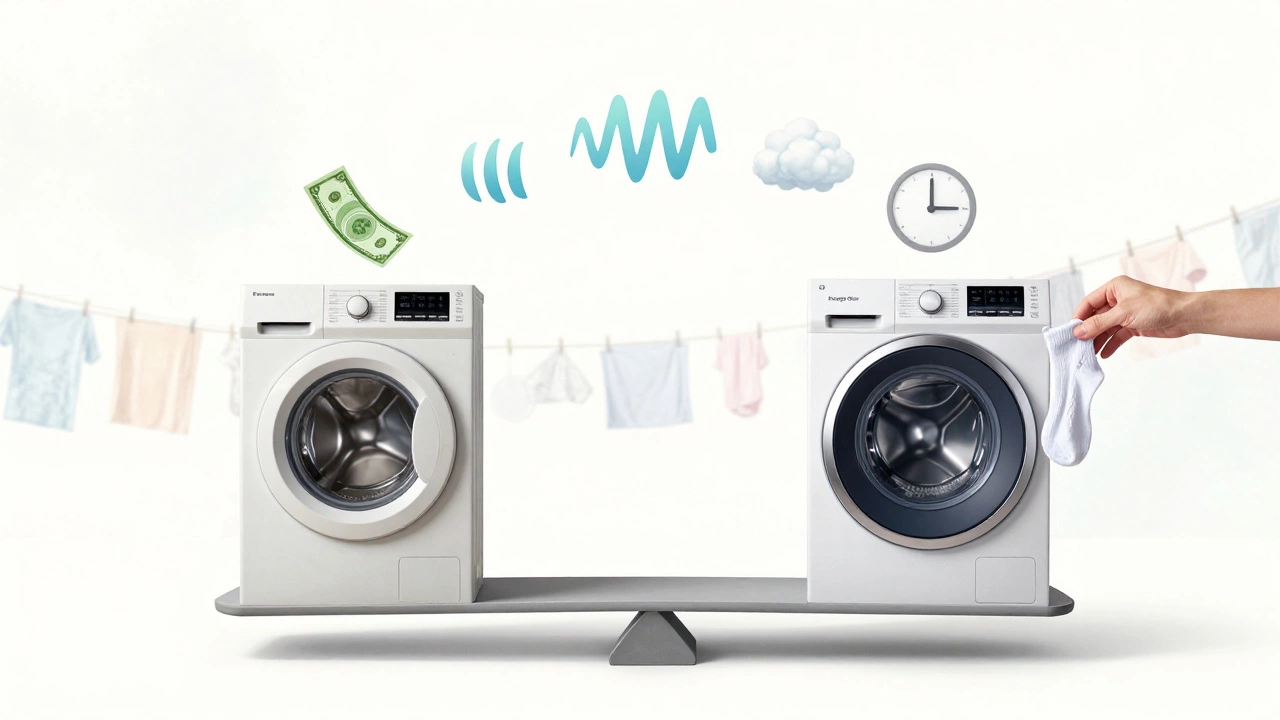
Old dryers from 2016 used about 5.5 kWh per load. New Energy Star models use 3.5 kWh or less. That’s a 36% drop in energy use.
If you do 5 loads a week, that’s 260 loads a year. At $0.15 per kWh, your old dryer costs $45.65 a year to run. A new one? $29.20. You save $16.45 a year.
That doesn’t sound like much-but over five years, that’s $82 saved on electricity. Add in lower maintenance and fewer breakdowns, and the new dryer pays for itself in 3-4 years.
And don’t forget: new dryers have moisture sensors, steam cycles, and auto-dry settings that prevent over-drying. That means less shrinkage, less wear on your clothes, and less lint buildup over time.
Condition matters more than age
One client had a 12-year-old dryer that still worked like new. Why? He cleaned the lint trap after every load. He vacuumed the vent every six months. He never overloaded it. He didn’t use fabric softener sheets (they clog vents). That dryer was still running strong.
Another had a 7-year-old dryer that died because the vent was packed with lint and fur from two dogs. The motor burned out. That wasn’t age. That was neglect.
So ask yourself: Is this dryer well-maintained? Or is it a ticking time bomb of lint and dust? If it’s clean and quiet, it’s worth saving. If it’s loud, smelly, and covered in fuzz, it’s already on its last legs.
What to do if you decide to replace it
If you’re replacing it, here’s what to look for:
- Electric vs. gas - If you already have a gas line, stick with gas. It’s cheaper to run. If you don’t, electric is easier to install.
- Capacity - Most families need 7-8 cubic feet. If you do large loads (king sheets, comforters), go bigger.
- Moisture sensor - Don’t skip this. It stops the cycle when clothes are dry. Saves energy and prevents damage.
- Warranty - Look for at least a 1-year full warranty. Some brands offer 5-year parts warranties on the motor.
Brands like LG, Whirlpool, and GE consistently rank highest in reliability surveys. Avoid the cheapest models-they cut corners on motors and drums.
Final decision checklist
Before you call a technician or head to the store, run through this:
- How much will the repair cost? (Get a written quote)
- Is that less than half the price of a new dryer?
- Has the dryer been cleaned and maintained?
- Are there other signs of wear-noisy, slow, overheating?
- How much do you spend on electricity per year?
- Would a new model save you money long-term?
If you answered yes to questions 1, 3, and 5-and no to 4-then fix it.
If you answered no to 1 or 3, or yes to 4, then replace it.
There’s no magic number. A 10-year-old dryer isn’t automatically trash. But it’s not a bargain either. It’s a decision point. And you’ve got all the info you need to make the right call.
Is it cheaper to fix a 10-year-old dryer or buy a new one?
It depends on the repair. If the fix costs less than half the price of a new dryer-say, under $300-and the machine is otherwise in good shape, fixing it saves money. But if the repair is $400 or more, you’re better off replacing it. New dryers are more energy-efficient and come with warranties.
What’s the most common reason a 10-year-old dryer stops working?
The most common cause is a blown thermal fuse or a broken heating element, both of which are inexpensive to replace. But many dryers fail because of neglected lint buildup, which strains the motor and causes overheating. Cleaning the vent annually can double a dryer’s lifespan.
Should I replace my dryer if it’s still working?
If it’s working fine and you’re not spending a lot on repairs or electricity, you don’t need to replace it yet. But if you’re noticing longer dry times, strange noises, or higher bills, it’s a sign the machine is losing efficiency. Replacing it now could save you money in the long run.
How often should I clean my dryer vent?
Clean the lint trap after every load. Vacuum the vent hose every six months. Have the full vent system professionally cleaned once a year if you have a long or complex vent path, or if you dry heavy items like towels and blankets often.
Do newer dryers really save money?
Yes. A new Energy Star dryer uses about 30% less electricity than a 10-year-old model. If you do 5 loads a week, that’s roughly $16 a year saved. Over five years, that’s $80-plus less wear on your clothes and fewer breakdowns. The efficiency adds up fast.