Dishwasher Repair vs. Replace Calculator
Enter the details below to get an instant recommendation based on industry standards.
Fill in the costs to see if it's worth fixing.
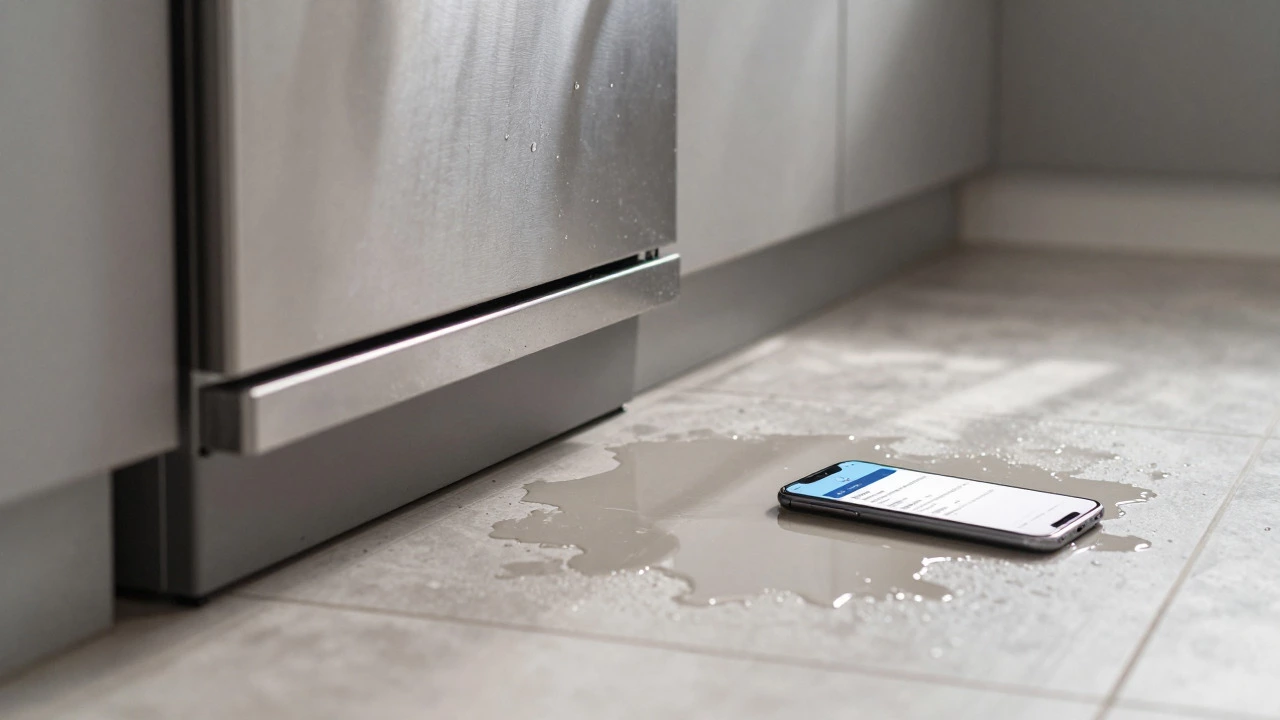
You’re staring at a puddle on the kitchen floor or listening to that high-pitched grinding noise again. The technician just called with a quote: $350 for a new control board. Your current dishwasher is a built-in or portable appliance designed to clean dishes using hot water and detergents, typically lasting between 7 to 10 years depending on usage and maintenance. You pause. Is it worth spending nearly half the price of a new unit to fix the old one?
This is the classic appliance dilemma. Throw money at a dying machine, or cut your losses and start over? There is no single "yes" or "no" answer because every situation depends on three specific variables: the age of the unit, the nature of the failure, and the cost of the parts versus labor.
In this guide, we’ll break down the exact math behind the decision so you can stop guessing and start acting. We will look at common failure points, calculate the true cost of ownership, and give you a clear checklist to determine if your appliance deserves another year of service or a trip to the recycling center.
The 50% Rule: The Golden Standard for Appliance Decisions
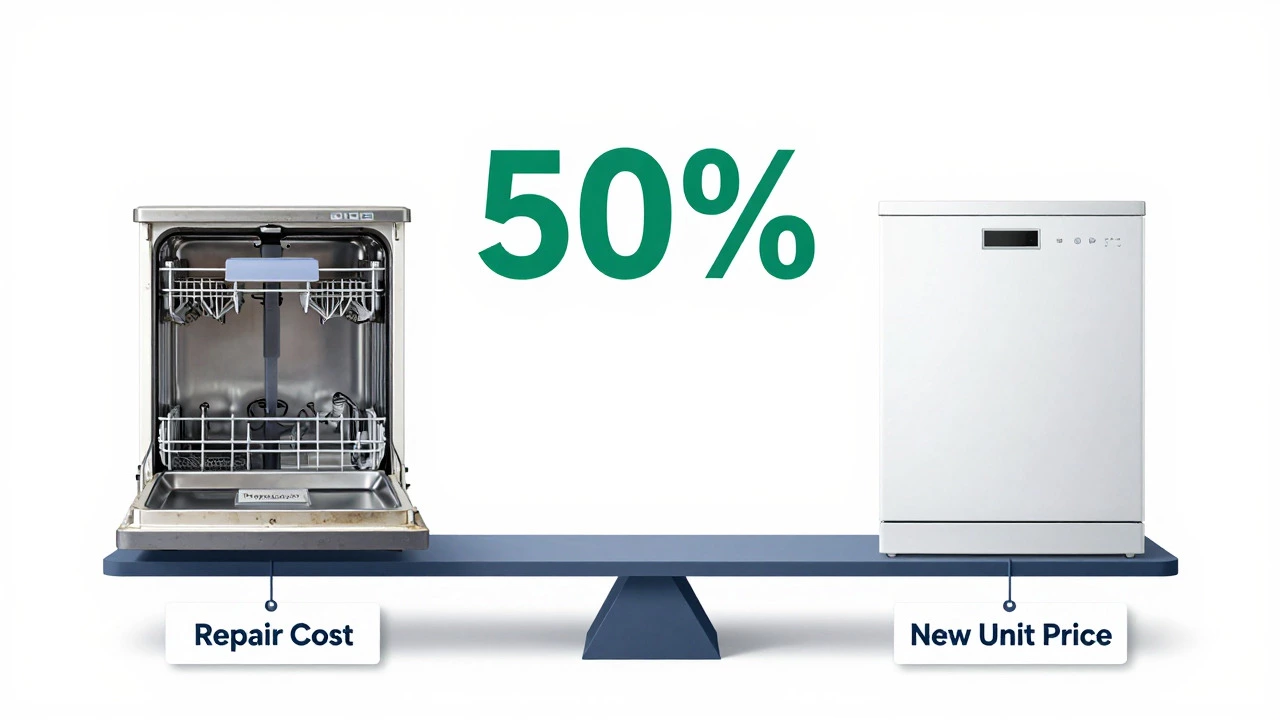
If you want a quick heuristic to make this decision, use the 50% rule. This is a widely accepted industry standard among appliance technicians. If the cost of the repair exceeds 50% of the price of a comparable new dishwasher, you should generally replace the unit rather than repair it.
Why 50%? Because appliances depreciate rapidly. Once you pay for a major repair, you are essentially buying a used machine with a ticking clock. If you spend $400 fixing a dishwasher that costs $800 new, you have now invested heavily in a unit that might fail again next month. That same $400 could go toward a down payment on a brand-new model that comes with a full manufacturer warranty, energy efficiency upgrades, and modern features like soil sensors and quiet operation.
However, the 50% rule has exceptions. If your dishwasher is less than five years old and under warranty, the repair cost might be minimal. In that case, the math changes entirely. Let’s look closer at how age impacts the value of a repair.
Age Matters: When to Fix and When to Fold
The lifespan of a typical residential dishwasher ranges from 7 to 10 years. Some high-end models from brands like Miele or Bosch can last 15 years or more, but they come with higher upfront costs and specialized parts. Here is how age influences your decision:
- 0-3 Years Old: Almost always repair. These units are likely still under warranty. Even if out of warranty, the internal components (motor, pump, heating element) are relatively fresh. A repair here extends the life significantly.
- 4-7 Years Old: The gray zone. Use the 50% rule. If the repair is minor (door latch, spray arm, filter clog), fix it. If it’s major (control board, motor burnout), consider replacing unless the unit is a premium model.
- 8+ Years Old: Lean towards replacement. Parts become harder to find, seals degrade, and energy efficiency drops compared to 2026 standards. The risk of secondary failures increases dramatically.
Consider this scenario: You have a 9-year-old basic model. The circulation pump fails. Replacement costs $300 plus labor. A new entry-level dishwasher costs $450. Replacing saves you $150 immediately and gives you five extra years of expected life. Repairing buys you maybe two years before the next component fails. The economic logic favors replacement.
Common Failures: Which Problems Are Worth Fixing?
Not all breakdowns are created equal. Some issues are cheap and easy to resolve, while others signal systemic decay. Understanding what’s broken helps you apply the 50% rule accurately.
| Issue | Estimated Repair Cost (Parts + Labor) | Severity | Recommendation |
|---|---|---|---|
| Clogged Filter/Spray Arm | $0 - $50 (DIY) | Low | Fix Immediately (Maintenance) |
| Door Latch/Handle Broken | $80 - $150 | Low | Repair if unit is <7 years old |
| Leaking Hose/Gasket | $100 - $200 | Medium | Repair if leak is isolated |
| Heating Element Failure | $150 - $250 | Medium | Repair if unit is <6 years old |
| Control Board/Electronics | $300 - $500+ | High | Replace Unit (Usually) |
| Motor/Pump Burnout | $350 - $600+ | High | Replace Unit |
Notice the pattern? Mechanical wear items like hoses and latches are cheaper to fix. Electronic and motor failures are expensive because they require specialized diagnostics and often involve removing the entire tub assembly. If your technician mentions "control board" or "motor," brace yourself for a higher bill. These are the tipping points where replacement usually makes more sense.
Hidden Costs: Energy Efficiency and Water Usage
We often forget that older dishwashers are inefficient. Models manufactured before 2013 consume significantly more water and electricity than those sold in 2026. According to ENERGY STAR guidelines, modern dishwashers use about 3.5 gallons per cycle, while older models can use up to 6-7 gallons. Over a year, that adds up to hundreds of gallons of wasted water and higher utility bills.
If you live in an area with tiered water pricing-like Perth, Australia, where water conservation is critical-keeping an old, leaking, or inefficient dishwasher costs you money every time you run it. A new model not only fixes the immediate problem but also reduces your ongoing operational costs. Factor this into your decision. If your current unit uses double the water of a new one, the "real" cost of keeping it is higher than the sticker price suggests.
DIY vs. Professional Repair: Saving Money Without Risk
Before calling a pro, ask yourself: Can I fix this myself? Many dishwasher problems are user-serviceable. Clogged filters, blocked spray arms, and faulty door switches are often accessible without tools beyond a screwdriver. YouTube tutorials for your specific model number can save you $100-$150 in labor fees.
However, avoid DIY for electrical components or gas lines (if applicable). If the issue involves the main power supply, control board, or internal wiring, leave it to a licensed technician. Incorrect repairs can void warranties, cause electrical hazards, or lead to water damage that far exceeds the cost of a new dishwasher.
When hiring a professional, get multiple quotes. Ask specifically about diagnostic fees and whether they are waived if you proceed with the repair. Also, inquire about warranty on the repair itself. A reputable service provider should guarantee their work for at least 90 days.
Signs Your Dishwasher Is Beyond Saving
Sometimes, the signs are obvious. If your dishwasher exhibits any of the following, skip the repair quote and start shopping for a replacement:
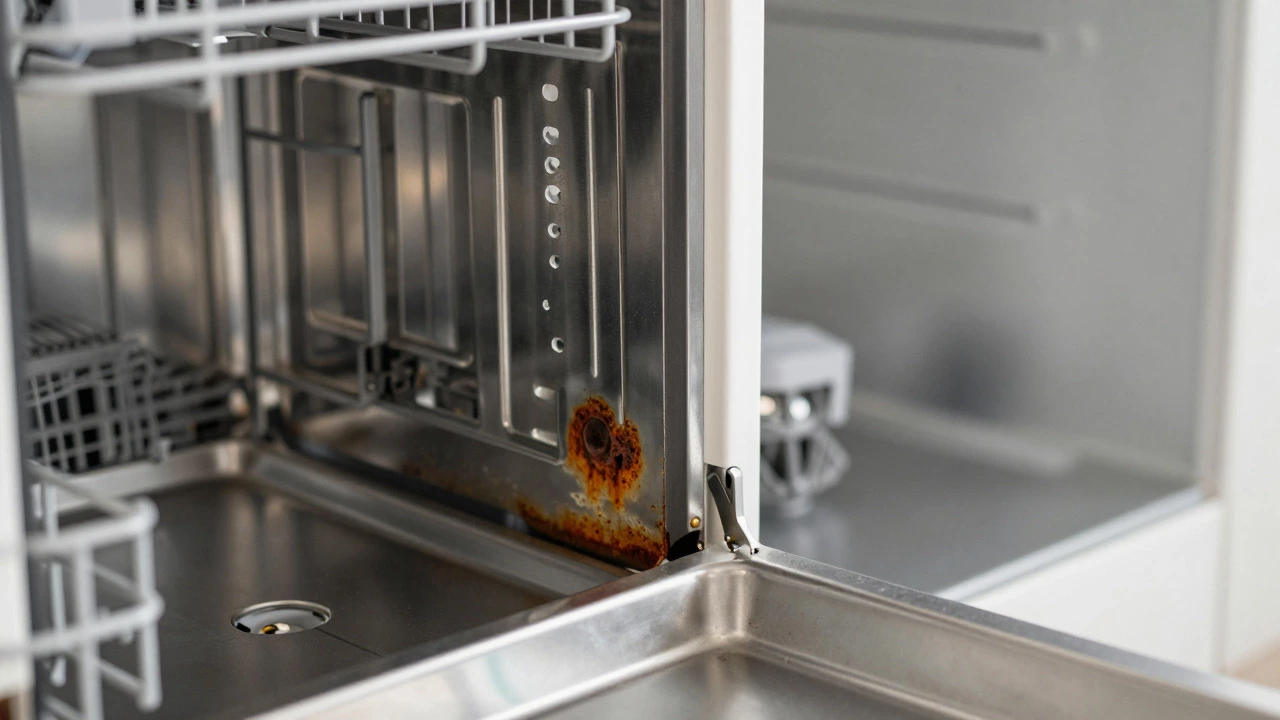
- Rust inside the tub: This indicates structural corrosion. Patches won’t hold, and rust flakes can contaminate your dishes.
- Frequent breakdowns: If you’ve repaired it twice in the last year, it’s on its last legs. One more failure is inevitable.
- Loud, unusual noises: Grinding, screeching, or loud banging often signals bearing failure or foreign objects stuck in the pump. These are hard to fix permanently.
- Water not draining properly: Chronic drainage issues can point to a failing garbage disposal connection, clogged air gap, or worn drain pump. If it persists after cleaning, the pump may be shot.
- Dishes coming out dirty: If cleaning the filter and spray arms doesn’t help, the circulation pump or heater may be weak. This is a core functional failure.
Decision Checklist: Should You Repair or Replace?
Use this quick checklist to finalize your decision. Answer yes or no to each question.
- Is the dishwasher less than 5 years old?
- Is the repair cost less than 50% of a new comparable unit?
- Is the issue mechanical (latch, hose) rather than electronic/motor?
- Are there no signs of rust or chronic leaks?
- Will the repair extend the useful life by at least 3 years?
If you answered "yes" to at least four questions, repair it. If you answered "no" to three or more, replace it. This framework removes emotion from the equation and focuses on long-term value.
Next Steps After Your Decision
If you choose to repair, schedule the service promptly. Water leaks can cause mold and structural damage to your cabinetry. Keep a record of the repair for future resale value or warranty claims.
If you choose to replace, recycle your old unit responsibly. Many retailers offer haul-away services when you buy a new dishwasher. Check local council guidelines for bulky waste disposal. Then, research models that fit your budget and space constraints. Look for features like adjustable racks, quiet operation (under 45 decibels), and energy efficiency ratings.
How much does it cost to repair a dishwasher in 2026?
Repair costs vary widely based on the issue. Minor fixes like replacing a door latch or cleaning a clog may cost $50-$150. Major repairs involving control boards, motors, or pumps typically range from $300 to $600 including labor. Always get a written estimate before authorizing work.
What is the average lifespan of a dishwasher?
The average lifespan of a residential dishwasher is 7 to 10 years. High-end models from premium brands can last 12-15 years with proper maintenance. Regular cleaning of filters and spray arms can extend longevity.
Should I replace my dishwasher if it’s leaking?
Not necessarily. Small leaks from door gaskets or loose hoses are often inexpensive to fix ($100-$200). However, if the leak originates from the bottom of the tub due to rust or cracked plastic, replacement is recommended as these are difficult to seal permanently.
Can I fix a dishwasher myself?
Yes, many simple issues are DIY-friendly. Cleaning the filter, unclogging spray arms, and checking the door alignment are tasks most homeowners can handle. For electrical or internal pump issues, hire a professional to avoid safety risks and further damage.
Is it better to repair or replace an 8-year-old dishwasher?
Generally, replacement is better for an 8-year-old unit. At this age, components are near the end of their lifecycle. Unless the repair is very minor (under $150), investing in a new, energy-efficient model offers better long-term value and reliability.