Boiler Replacement Mess Assessment Tool
This tool helps you understand how messy your boiler replacement might be based on your home's characteristics. Based on the article information about common mess factors, we've calculated your expected mess level and provided recommendations to minimize disruption.
Assessment Questions
Replacing a boiler doesn’t have to mean your living room turns into a construction zone. But it’s not a clean, tidy job either. If you’ve been told your old boiler needs swapping out, you’re probably wondering: Is replacing a boiler messy? The short answer? Yes, there will be dust, dirt, and some disruption-but with the right prep and a skilled technician, it’s far from the nightmare you might imagine.
What Makes Boiler Replacement Messy?
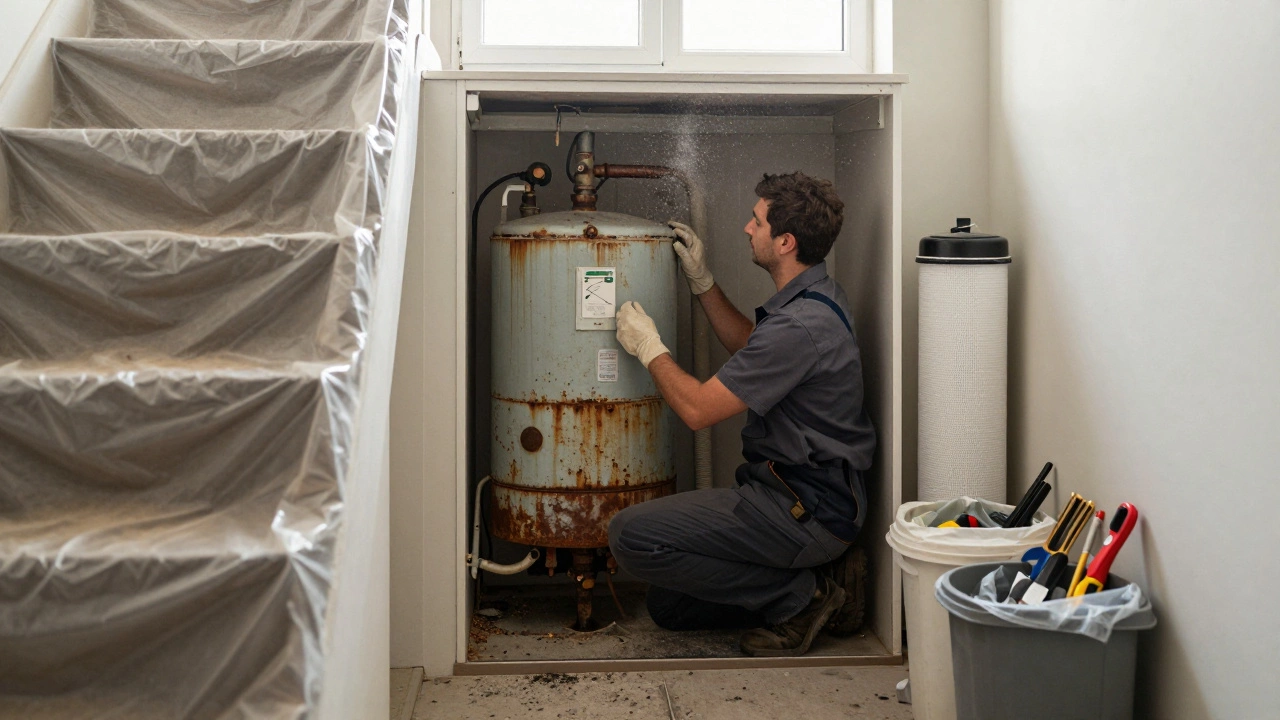
Boilers aren’t like changing a lightbulb. They’re heavy, connected to pipes, gas lines, and electrical systems, and often tucked into tight spaces like cupboards, lofts, or utility rooms. When a pro removes your old unit, they have to:
- Shut off the gas and water supply
- Drain the entire heating system
- Disconnect pipes, flues, and wiring
- Move or cut into walls if the new boiler doesn’t fit the old spot
- Remove the old unit, which can be rusted, covered in grime, or leaking
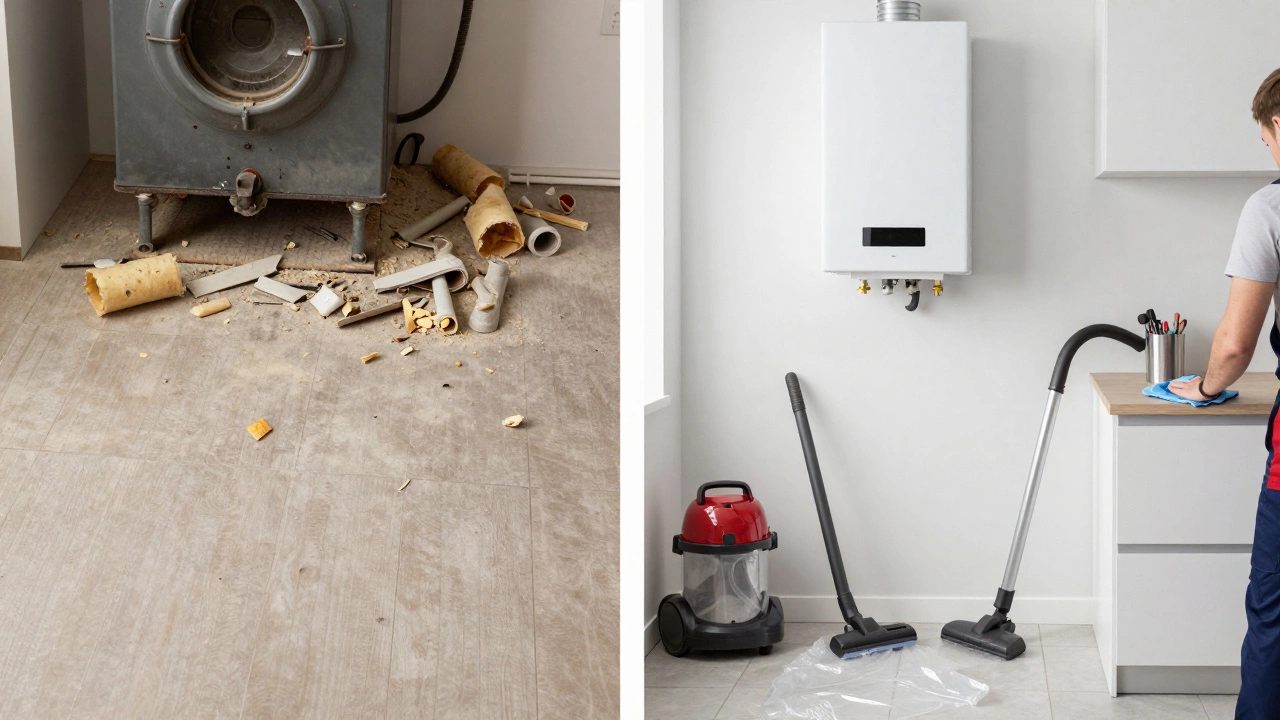
All of this creates debris. You’ll see metal shavings, pipe sealant residue, old insulation bits, and dust from drilling. If your boiler’s in a kitchen or near living areas, the mess can spread. But here’s the thing: professional installers don’t leave it that way. They use dust sheets, suction tools, and sealed containers to trap debris. Most teams clean up as they go-vacuuming, wiping surfaces, and hauling away all waste.
Where Does the Mess Come From?
The level of mess depends heavily on your home’s setup. If your boiler is in a dedicated utility room with easy access, the job stays contained. But if it’s in a cramped cupboard under the stairs, or tucked into a bathroom with limited space, things get trickier.
In older homes-especially those built before 2000-you’ll likely find:
- Lead-based pipe sealants
- Asbestos insulation around old pipes
- Corroded pipes that snap or leak when moved
- Walls that crumble when drilled into
These aren’t just inconveniences-they’re hazards. That’s why licensed installers test for asbestos before starting and follow strict safety protocols. They’ll isolate the work area with plastic sheeting and use HEPA filters to trap fine particles. If you live in an older home, ask your installer about their asbestos and lead handling procedures. Reputable companies in Perth follow Australian Work Health and Safety (WHS) standards.
How Long Does the Mess Last?
A standard boiler replacement takes one to two days. Most of the mess happens on Day 1 during removal. By the end of Day 2, when the new boiler is installed and tested, the cleanup is mostly done. But don’t expect your floors to be spotless the next morning.
You’ll likely find:
- Dust on window sills and shelves
- Small scratches on floorboards from moving equipment
- Residue near the boiler location
That’s why most installers recommend:
- Moving valuables away from the work zone
- Removing rugs or covering them with heavy-duty plastic
- Keeping pets and kids out of the area
- Waiting 24 hours before vacuuming or dusting near the boiler
After the install, your installer should do a final walkthrough. They’ll vacuum the area, wipe down surfaces, and remove all packaging and debris. If they don’t, ask them to. A good team leaves your home cleaner than they found it.
What You Can Do to Minimize the Mess
You can’t stop all the mess-but you can reduce it. Here’s what works:
- Clear the space: Move furniture, decorations, and anything fragile at least 2 meters from where the boiler lives.
- Seal off vents: Use tape and plastic to cover air vents, door gaps, and HVAC registers. This stops dust from spreading through your ducts.
- Protect flooring: Lay down thick cardboard or floor protectors. Even if the team brings their own, adding a second layer helps.
- Ask about containment: A good installer will use negative air machines or portable HEPA filters to pull dust out of the room.
- Plan for cleanup: Have a vacuum and damp cloths ready for post-install touch-ups.
One Perth homeowner I spoke with covered her entire hallway with painter’s plastic and taped down the edges. She said it made the difference between "a dusty mess" and "just a normal day."
What’s Not Messy: The New Boiler Itself
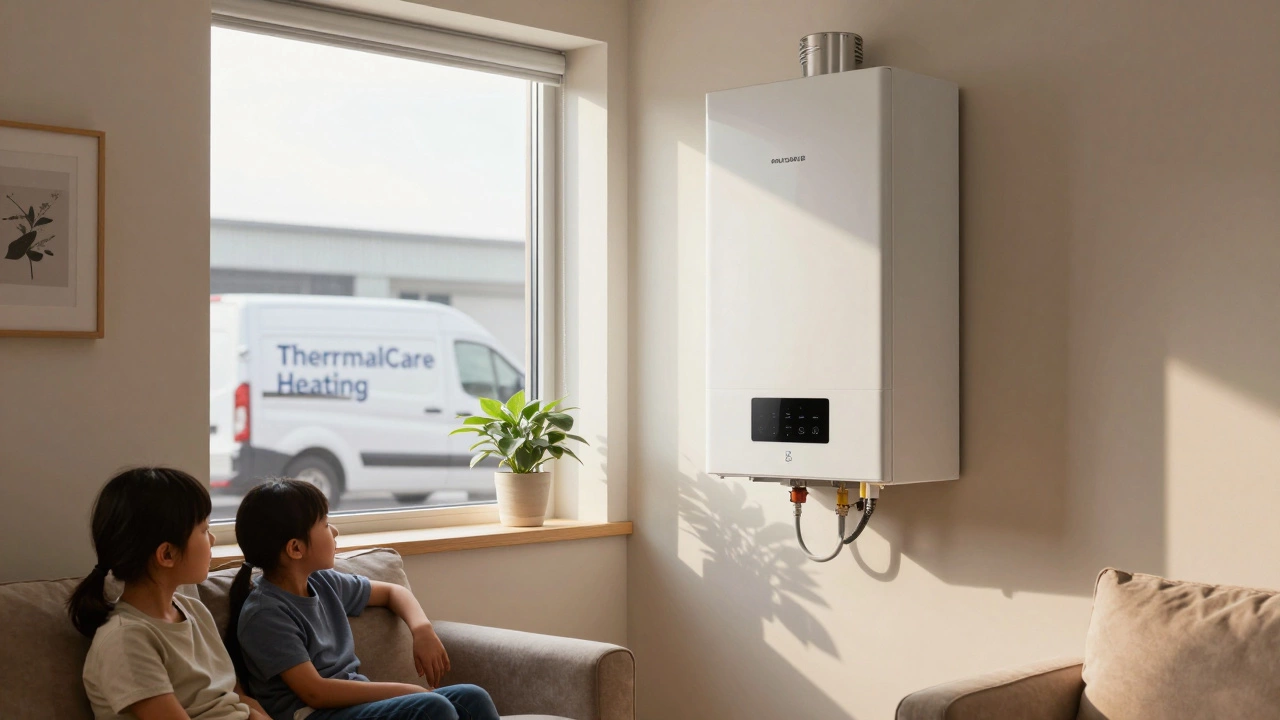
Here’s the good news: once the new boiler is in, everything changes. Modern boilers are compact, quiet, and efficient. Condensing boilers-common in Australia since 2018-have sealed flues that don’t leak soot or fumes. Many are wall-mounted, so they take up less floor space. And they’re designed to be low-maintenance.
Unlike your old boiler, which might’ve rattled, leaked, or dripped rusty water, the new one runs silently. No more puddles under the unit. No more hissing sounds. No more strange smells. That’s not just comfort-that’s peace of mind.
When the Mess Is Worse Than Expected
Sometimes, things go sideways. If your installer:
- Leaves dust in your kitchen or bedroom
- Breaks tiles or damages walls without fixing them
- Doesn’t clean up the debris
-then you’ve got a problem. Always check reviews before hiring. Look for mentions of "clean job," "no mess," or "left the place spotless." In Perth, companies like ThermalCare Heating and PowerFlow Boiler Services consistently score high on post-install cleanliness.
If you’re unhappy after the job, ask for a re-cleanup. Most reputable installers will come back. If they refuse, you can report them to the Australian Competition and Consumer Commission (ACCC) or your local plumbing authority.
Final Thoughts: Is It Worth It?
Yes. Even if the process is messy, the payoff is huge. A new boiler cuts your energy bills by 20-30%. It reduces breakdowns. It heats your home evenly. And it lasts 15-20 years with basic care.
The mess? It’s temporary. The benefits? They last for years. Most homeowners say the disruption was worth it-especially after their old boiler broke down in winter. One family in Subiaco told me they were annoyed during the install… but by week two, they were amazed at how fast their house warmed up. "We forgot how quiet heating could be," they said.
So, is replacing a boiler messy? Yes. But it’s a controlled, temporary mess-and it’s one of the best upgrades you can make to your home.”
Do I need to move out during boiler replacement?
No, you don’t need to move out. Most boiler replacements take one to two days, and installers work around your schedule. You’ll lose heating and hot water for a few hours while they drain and reconnect the system, but you can stay home. Just plan to avoid using the bathroom or kitchen during active work hours. Some families choose to stay with relatives for the day if they have young kids or pets, but it’s not required.
Can I replace my boiler myself to avoid the mess?
No, and you shouldn’t try. Boiler replacement involves gas, pressurized water, and electrical connections-all regulated under Australian plumbing and gas safety laws. Only licensed plumbers and gasfitters can legally install boilers. DIY attempts can lead to leaks, gas explosions, or invalid warranties. Even if you think you can handle the install, the mess isn’t the real risk. The danger is.
Will the new boiler fit in the same spot as the old one?
Sometimes, but not always. Modern boilers are smaller, so they often fit in the same space. But if your old boiler was a combi unit and you’re switching to a system boiler, you might need to relocate the hot water cylinder. Installers will assess your layout before quoting. If the new unit needs to go elsewhere, they’ll explain why and show you the new location. Most homes can accommodate the new boiler without major renovations.
How do I know if the installer cleaned up properly?
Check for these signs: floors are vacuumed, surfaces are wiped down, all packaging and old parts are gone, and the work area looks better than before. Ask for a before-and-after photo if you’re unsure. A professional team will offer to walk you through the cleanup. If they don’t, ask. Reputable companies in Perth include cleanup as part of their service-and they’ll be proud to show you.
What should I do if I find dust or debris days after the install?
It’s normal to find small amounts of dust settling after the install, especially if vents were open. Vacuum thoroughly, especially near the boiler and along baseboards. If you see large clumps of dirt, rust, or debris that looks like it came from the installation, contact the company. They may have missed a spot or left tools behind. Most will return to clean it up at no extra cost.