
Quick Summary of Costs
- DIY Cost: $30 to $150 (cost of the part only).
- Professional Cost: $150 to $350 (part plus labor).
- Average Labor Rate: $80 to $120 per hour.
- Typical Repair Time: 45 to 90 minutes.
Breaking Down the Cost of Parts
The first thing to understand is that not all Heating Elements is the electrical components in an oven that convert electricity into heat through resistance. Depending on whether you have a basic electric oven or a high-end convection model, the price of the part varies wildly.
For a standard bake element (the one at the bottom), you're looking at roughly $40 to $90. If you're replacing a broil element (the top one), those are often slightly cheaper, ranging from $30 to $70. However, if you own a luxury brand like Wolf or Miele, expect those parts to cost double or triple the price of a generic GE or Whirlpool component.
There's also the matter of "OEM" versus "Aftermarket" parts. OEM (Original Equipment Manufacturer) parts are made by the brand that built your oven. They cost more but fit perfectly. Aftermarket parts are generic versions that are cheaper but might have slightly different dimensions or a shorter lifespan. If you're planning to keep the oven for another ten years, go OEM.
Professional Labor and Service Fees
When you call a technician, you aren't just paying for the part; you're paying for the expertise and the truck to get there. Most companies charge a "diagnostic fee" or a "service call fee" just to show up and confirm the element is actually the problem. This fee usually ranges from $75 to $125.
The good news is that replacing an element is one of the simpler jobs in oven heating element cost management. A pro will usually charge for one hour of labor. When you add the service call, the labor, and the marked-up price of the part, a $50 element can easily turn into a $250 bill. But here's the trade-off: a pro ensures your Electrical Wiring is safe and that the oven isn't drawing too much current, which could be a fire hazard if handled wrong.
| Expense Item | DIY Approach | Professional Service |
|---|---|---|
| Part Cost | $30 - $120 | $60 - $180 (includes markup) |
| Labor | Free (Your time) | $80 - $150 |
| Diagnostic Fee | $0 | $75 - $125 |
| Total Estimated | $30 - $120 | $215 - $455 |
How to Tell if Your Element is Actually Dead
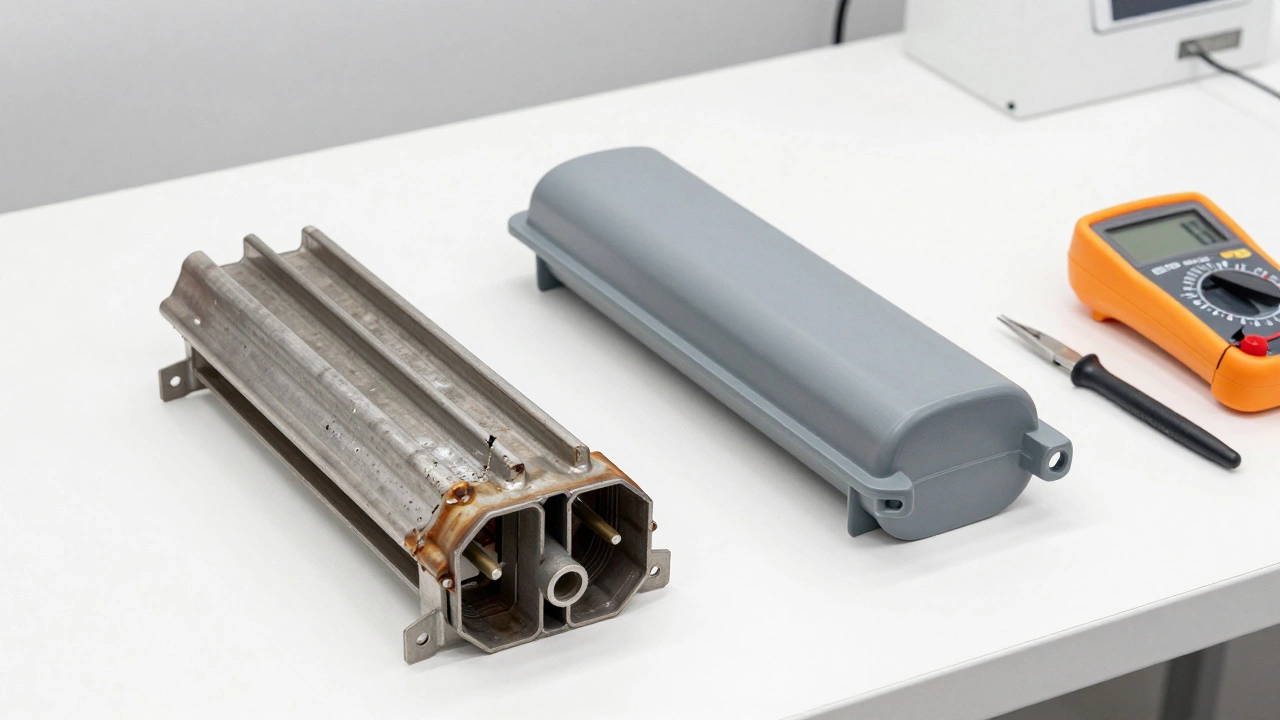
Before you spend money, you need to be sure the element is the culprit. Sometimes the problem is actually a failed Thermostat or a blown Thermal Fuse. Here are the signs of a failing element:
- Visible Damage: Look at the element. Do you see any blisters, cracks, or spots where the metal has actually melted? If it looks like it's been through a war, it's dead.
- Uneven Heating: If your food is cooked on one side but raw on the other, the element may have a "dead spot" where the internal filament has snapped.
- The "No Heat" Scenario: If the oven light works and the timer ticks, but the air stays cold, the element has likely suffered a complete break.
If you're comfortable with a Multimeter, you can test the element for continuity. If the multimeter shows "OL" (Open Line) or infinite resistance, the internal circuit is broken, and the part must be replaced.
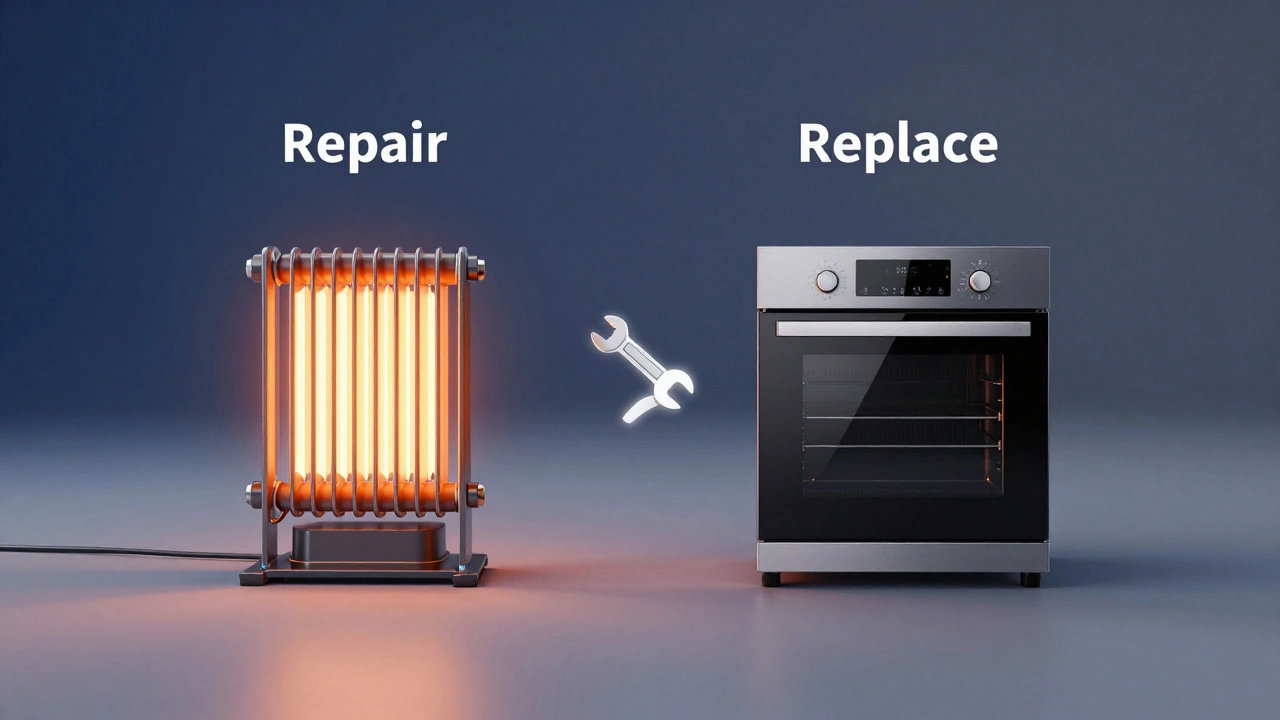
Is it Worth it to Repair or Replace the Whole Oven?
This is the "million-dollar question." If your oven is five years old and the only problem is a $60 heating element, repairing it is a no-brainer. However, if your oven is 15 years old and you're seeing other signs of age-like a door seal that doesn't close or a control board that glitches-you might be throwing good money after bad.
A general rule of thumb in the appliance world is the "50% Rule." If the repair cost is more than 50% of the price of a new oven, and the appliance is more than halfway through its expected lifespan, it's time to shop for a new one. Since a new electric oven typically costs between $600 and $1,500, a $300 repair on a very old unit is a risky bet.
Step-by-Step: Replacing it Yourself
If you decide to go the DIY route, follow these steps carefully to avoid shocking yourself or damaging the oven.
- Kill the Power: Don't just turn off the oven. Go to your Circuit Breaker and flip the switch for the oven. Electricity and metal ovens are a dangerous mix.
- Remove the Racks: Clear everything out of the oven cavity.
- Unscrew the Element: Most elements are held in by two screws or nuts at the back of the oven. You'll likely need a nut driver or a socket wrench.
- Pull Out the Wiring: Gently pull the element forward. You'll see two wires connected to the element with spade connectors. Pull these off carefully; if they're stuck, use needle-nose pliers.
- Install the New Part: Slide the new element in, attach the wires firmly, and tighten the screws. Don't over-tighten, or you might crack the porcelain insulator.
- Test Run: Flip the breaker back on and set the oven to 350°F. Check for a steady glow and consistent heat.
Common Pitfalls to Avoid
One of the biggest mistakes people make is buying the wrong part. Oven elements are not universal. Even within the same brand, a 2018 model might have a different plug or length than a 2020 model. Always use your oven's model number-found on a sticker inside the door frame or on the back-to find the exact matching part.
Another common error is ignoring the wiring. If the wires connecting to your element look burnt or brittle, simply replacing the element won't fix the problem. You might need a Wiring Harness replacement, which adds more cost and complexity to the job.
Why is my oven element glowing red but not heating the food?
If the element glows but the oven doesn't reach temperature, you might have a failing element that can't reach full wattage, or more likely, a faulty temperature sensor or thermostat that is cutting the power too early. You should check the oven's internal temperature with a separate oven thermometer to verify.
Can a heating element be repaired without replacing it?
No. Heating elements are sealed units containing a resistive wire encased in a protective sheath. Once the internal wire snaps or burns out, it cannot be soldered or patched. The only safe and permanent fix is a total replacement of the element.
How long do oven heating elements usually last?
On average, an oven element lasts between 7 and 12 years. Their lifespan depends on how often you use the oven and whether you use high heat settings frequently, which puts more stress on the material.
Does a new heating element smell?
Yes, it is normal for a new element to produce a slight "burning" smell or even a small amount of smoke the first time it's used. This is just the factory protective coating burning off. Run the oven empty at a high temperature for 30 minutes to clear this out before cooking food.
Is it dangerous to replace an oven element myself?
It is generally safe as long as the power is completely disconnected at the circuit breaker. However, if you are uncomfortable working with electrical components or if you see charred wiring throughout the oven, you should call a licensed professional to avoid the risk of electrical shock or fire.
Next Steps for Homeowners
If you're staring at a cold oven right now, start by finding your model number. Check the price of the part online to see if it fits your budget. If the part is under $100 and you have a screwdriver and a nut driver, the DIY route is a great way to save a few hundred dollars. If the idea of touching a circuit breaker makes you nervous, or if the oven is a high-end built-in unit with complex wiring, call a technician and ask for a flat-rate quote to avoid surprises.