
Oven Repair vs. Replace Calculator
Calculate Costs
Quick Cost Breakdown
Before we get into the weeds, here is the high-level view of what you'll likely pay in 2026. Keep in mind these are averages; a luxury Wolf or Miele oven will always cost more to fix than a basic budget model.
| Common Issue | Estimated Part Cost | Labor (est.) | Total Range |
|---|---|---|---|
| Bake Element | $50 - $120 | $100 - $200 | $150 - $320 |
| Temperature Sensor | $30 - $80 | $100 - $180 | $130 - $260 |
| Control Board | $150 - $400 | $120 - $250 | $270 - $650 |
| Door Seal/Gasket | $40 - $100 | $80 - $150 | $120 - $250 |
| Igniter (Gas Ovens) | $60 - $150 | $100 - $200 | $160 - $350 |
The Labor Game: Understanding the Call-Out Fee
One of the biggest shocks for homeowners is the "Diagnostic Fee." Most technicians won't drive to your house for free. You'll likely see a call-out fee ranging from $80 to $150. The good news? Many reputable companies will waive this fee or apply it toward the final repair cost if you agree to the fix. If you decide the oven is too far gone to save, you're still paying that fee just for the expert's opinion.
Labor is usually billed hourly or as a flat rate per job. For a simple broken oven cost fix, you're looking at one to two hours of work. If the technician has to source a rare part from a warehouse, you might pay for a second visit, which doubles your labor cost. Always ask if the quote includes the trip charge and the actual time spent turning the screwdriver.
When the Heat Stops: Element and Sensor Issues
If your oven turns on but doesn't get hot, the culprit is usually the Bake Element. This is the metal coil at the bottom of the oven. Over time, these coils crack or burn out. Replacing them is relatively straightforward, but it requires disconnecting the power. Because it's a common failure, parts are plentiful and cheap, making this one of the most affordable repairs.
Then there's the Temperature Sensor. If your oven is swinging wildly between 300 and 400 degrees despite your setting, the sensor is likely lying to the control board. It's a small probe usually located in the upper back corner. While the part itself is inexpensive, the labor cost remains the same as any other visit because the technician still has to come to your home.
The Brain of the Oven: Control Board Failures
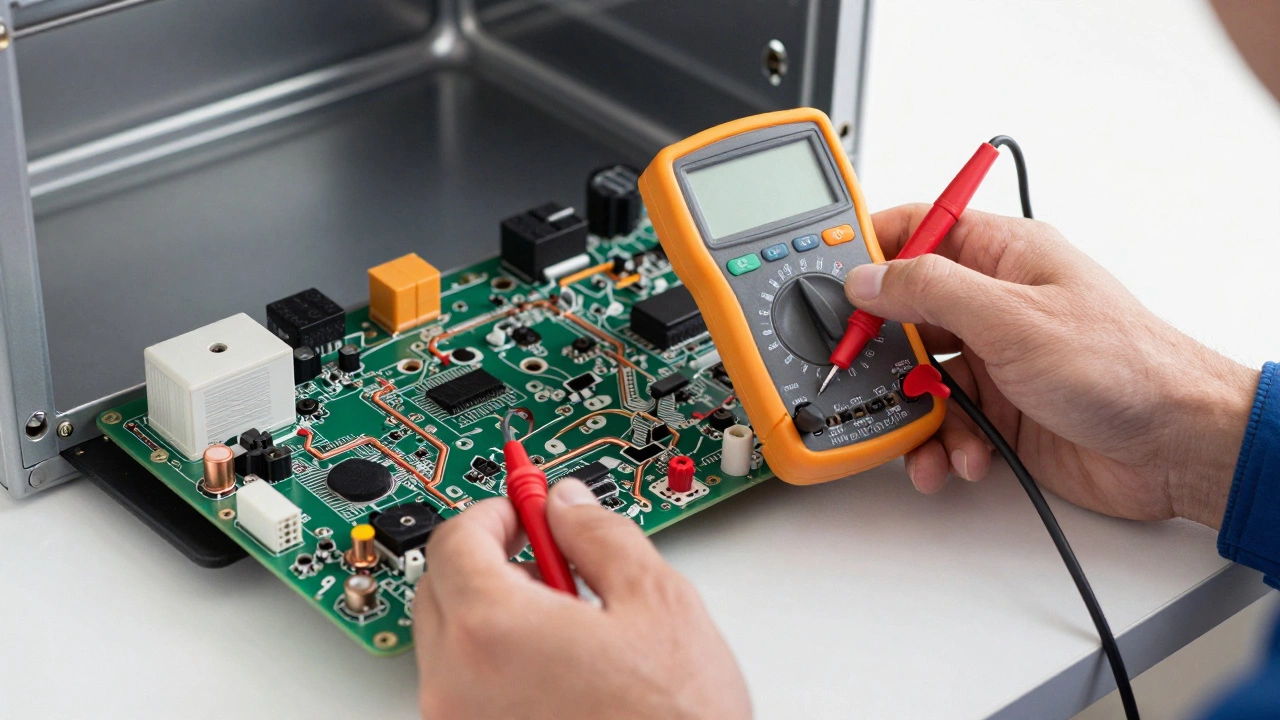
Modern ovens are essentially computers that heat food. The Electronic Control Board (ECB) manages everything from the clock to the convection fan. When this dies, you might see a blank screen, random buttons pressing themselves, or a total refusal to start. This is where costs spike.
A replacement board for a mid-range oven can easily cost $200 on its own. If you have a high-end smart oven with a touch screen, that board can climb toward $500. Because this part is central to the appliance, the technician spends more time testing circuits with a multimeter to ensure the board is actually the problem and not just a loose wire.
Gas vs. Electric: Different Problems, Different Prices
Gas ovens introduce a different set of variables. Instead of a heating element, you have an Igniter. If you hear a clicking sound but no flame appears, the igniter is likely worn out. These are generally priced similarly to electric elements, but the safety checks are more rigorous. A gas technician must check for leaks using a manometer, which adds a layer of professional necessity to the job.
Electric ovens are more prone to "blown" elements, whereas gas ovens struggle more with airflow and ignition issues. Regardless of the fuel source, the cost of a technician's visit remains the primary driver of the total price.
Is It Worth Fixing or Should You Replace?
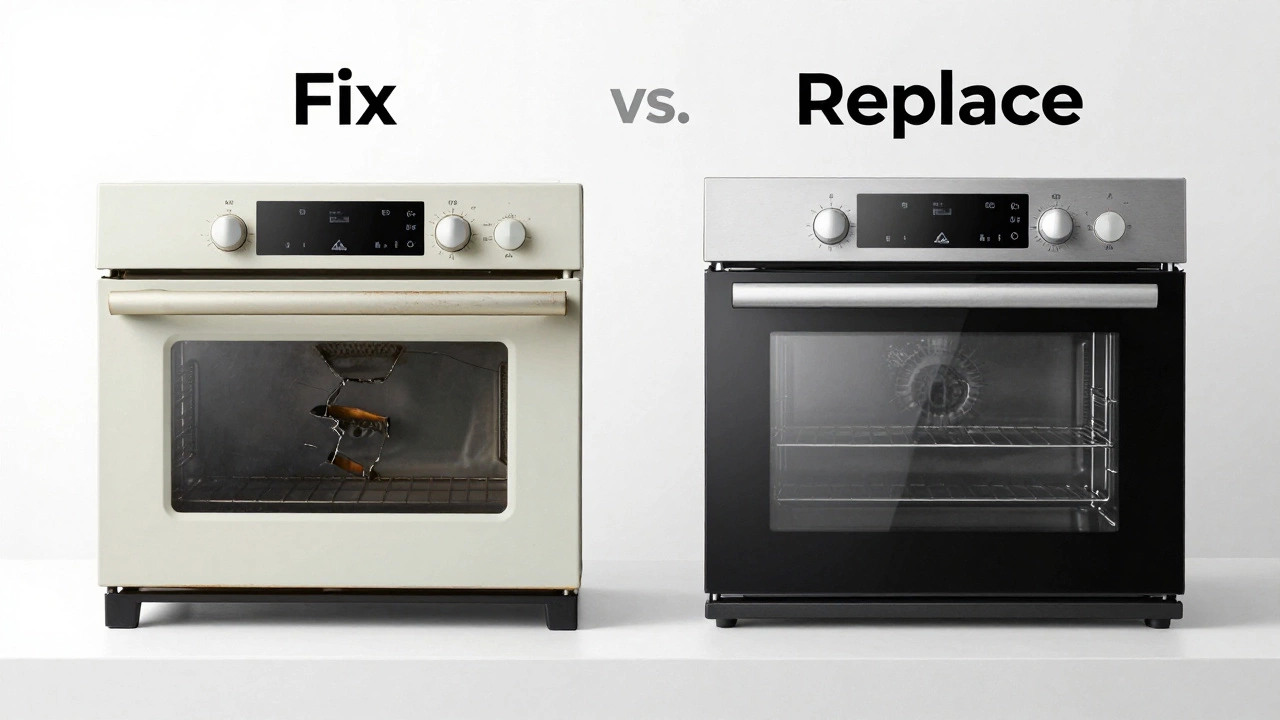
The "50% Rule" is a great thumb rule for appliances. If the repair cost is more than 50% of the price of a new oven, and the appliance is more than 8 years old, it's usually time to shop for a new one. Why? Because if you spend $400 on a control board today, the heating element might fail next month, and the door seal the month after that.
Consider these scenarios:
- Fix it: It's a 3-year-old oven with a failed sensor. The cost is $200. A new oven costs $800. Fix it.
- Replace it: It's a 12-year-old oven with a dead motherboard. The cost is $600. A new energy-efficient model costs $1,100. Replace it.
- The Middle Ground: If the oven is a built-in wall unit, replacement is much more expensive because it involves cabinetry work. In these cases, spending a bit more on a repair is often the smarter move.
How to Avoid Overpaying for Repairs
You don't have to be a mechanic to avoid getting ripped off. Start by checking your warranty. Many ovens have a 1-year general warranty and a 5-to-10-year warranty on the chassis or specific parts. If you're still under warranty, the manufacturer pays for the part, and you might only pay the labor.
When calling for quotes, be specific. Don't just say "my oven is broken." Say "my oven is a GE model, and the bake element isn't heating, but the broiler works." This helps the technician bring the right part on the first trip, potentially saving you a second call-out fee. Also, ask for a written estimate before any work begins so there are no "surprise" charges for screws or wiring clips.
Can I fix a broken oven myself?
Yes, if you're comfortable with basic tools and safety. Replacing a bake element or a door gasket is a common DIY task. However, you should never attempt to fix gas lines or internal wiring if you aren't trained, as this can lead to carbon monoxide leaks or electrical fires.
Why is my oven repair so expensive?
The cost is split between the part and the expertise. High-quality replacement parts from the original manufacturer are often expensive. Additionally, the labor includes the travel time and the specialized diagnostic tools required to find the exact fault without guessing.
How long does a typical oven repair take?
Most common repairs, like replacing an element or sensor, take between 45 and 90 minutes once the technician is on-site. More complex issues, like replacing a control board or fixing a gas valve, can take 2 to 3 hours.
Does insurance cover oven repairs?
Standard home insurance typically does not cover wear-and-tear repairs. However, if your oven was damaged by a power surge during a storm or a house fire, your insurance might cover the replacement. Check your specific policy for "appliance coverage" riders.
What is the most common cause of an oven not heating?
In electric ovens, the most common cause is a burnt-out bake element. In gas ovens, it is usually a failed igniter or a malfunctioning thermocouple that prevents the gas from flowing for safety reasons.
What to Do Next
If you've decided to move forward with a repair, your first step should be finding your model number. It's usually found on a sticker inside the oven door or on the side of the frame. With that number, you can check if parts are still available for your specific model. If the part is "discontinued," you're officially in the "Replace It" category.
For those who prefer a professional, gather three quotes. Don't just go for the cheapest; look for a technician who offers a warranty on their labor (usually 30 to 90 days). This ensures that if the part fails immediately, you won't be paying for another visit.