Water Heater Health Checker
Check for signs your water heater might be failing. Answer these questions based on your experience.
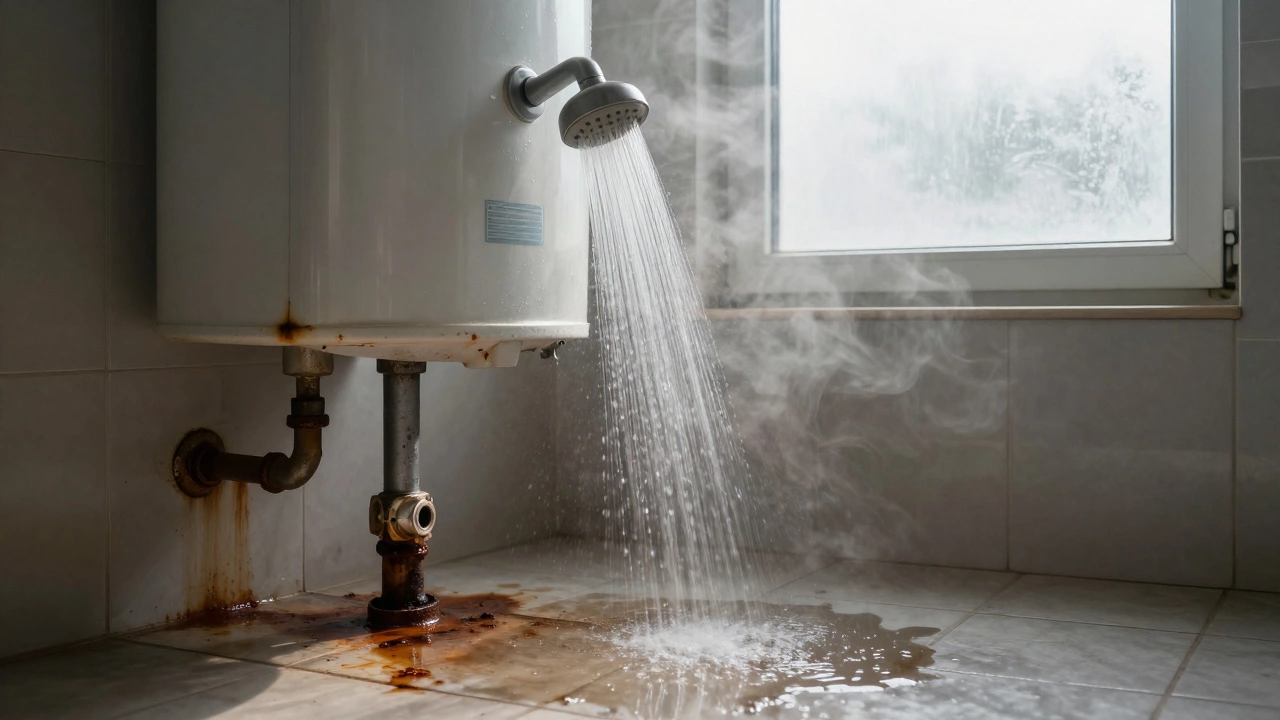
You wake up one morning and the shower runs cold after just 30 seconds. Or you notice a puddle under the unit you’ve never paid attention to before. Maybe the water smells like rotten eggs, or the heater makes noises like a kettle on the verge of boiling over. These aren’t just inconveniences-they’re red flags. Your hot water heater is likely on its last legs.
Water That’s Too Cold or Runs Out Too Fast
If you used to get 20 minutes of hot water for showers and now you’re lucky to get 5, your tank isn’t heating efficiently. This happens when the heating element wears out or the sediment buildup insulates the element from the water. In electric models, one or both elements can fail. In gas models, the pilot light might be flickering or the thermocouple is worn. You’ll notice this most during peak usage-morning showers or doing laundry back-to-back.
A 50-gallon tank should last a full household for at least two showers in a row. If it can’t, it’s not a plumbing issue-it’s the heater. The average lifespan is 8 to 12 years. If yours is older than 10 and you’re fighting for hot water, replacement is cheaper than constant repairs.
Water Discoloration or Strange Odors
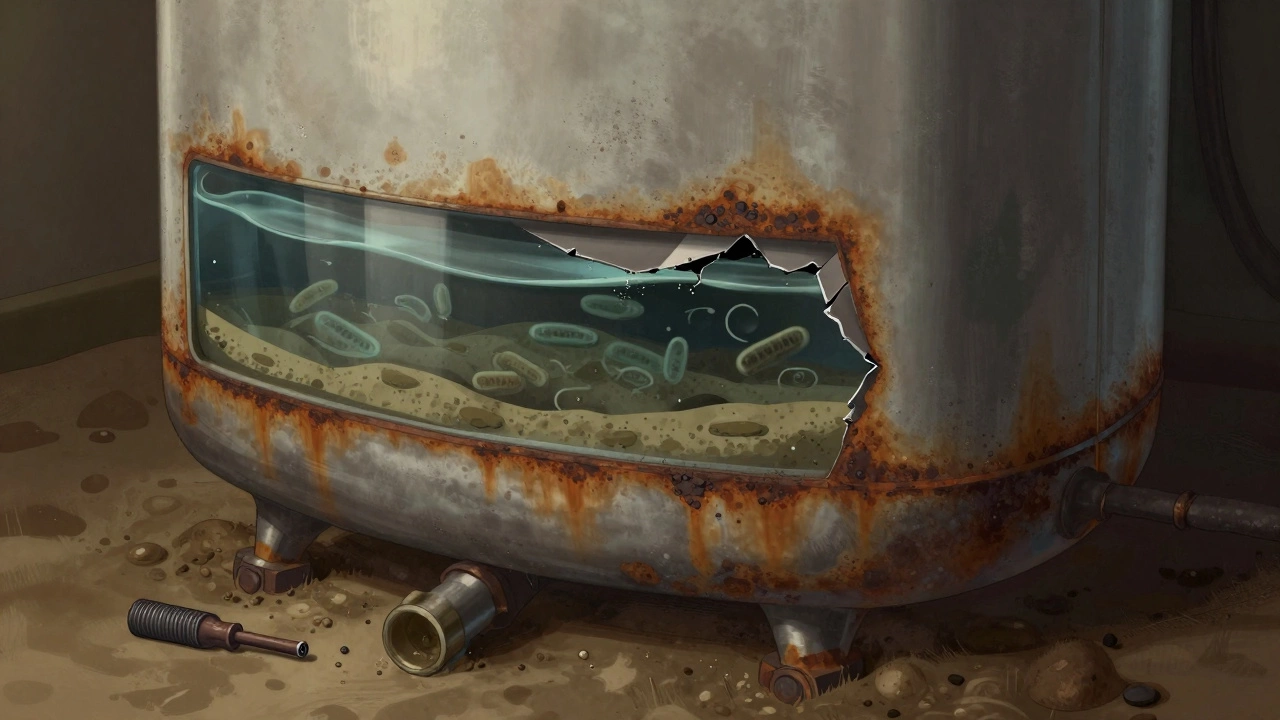
Yellow, rusty, or brown water coming from your hot taps is a major warning sign. It means the inside of your tank is corroding. The glass lining, which protects the steel shell, has broken down. Once that happens, water contacts the metal directly, and rust forms. This isn’t just ugly-it’s dangerous. Rust can clog your showerheads, faucet aerators, and even damage your dishwasher or washing machine.
Then there’s the smell. A rotten egg odor in hot water usually comes from sulfur-reducing bacteria feeding on magnesium anode rods. It’s not toxic, but it’s unbearable. You can flush the tank and replace the rod, but if the smell returns within months, the tank itself is likely too far gone. Corrosion and bacteria thrive in the same environment: an aging, neglected tank.
Leaking Water Around the Base
A small drip under your water heater is never normal. If you see water pooling near the base, it’s not condensation-it’s a leak. The most common causes are a failed pressure relief valve, a corroded tank, or a loose fitting. But here’s the catch: if the tank itself is leaking, you can’t fix it. No patch, no sealant, no plumber’s trick will save it. Once the steel shell rusts through, the tank is done.
Some people try to ignore a slow drip, thinking it’s just a valve. But a leak that grows over weeks, especially after 8+ years of service, is almost always tank failure. Water damage to your floor, drywall, or basement can cost thousands. Replacing the heater before it bursts is far cheaper than repairing water damage.
Loud or Strange Noises
That rumbling, popping, or banging sound coming from your water heater? It’s sediment. Over time, minerals in hard water settle at the bottom of the tank. When the heating element turns on, it heats the sediment instead of the water. The trapped heat creates steam pockets that explode-literally-against the metal. That’s the noise you hear.
Flushing the tank yearly can prevent this. But if you’ve never done it and your heater is over 8 years old, the sediment layer is probably an inch thick or more. The noise means the heater is working harder, burning more energy, and wearing out faster. It’s also a sign the tank’s efficiency has dropped by 20% to 40%. You’re paying more to get less.
Age of the Unit
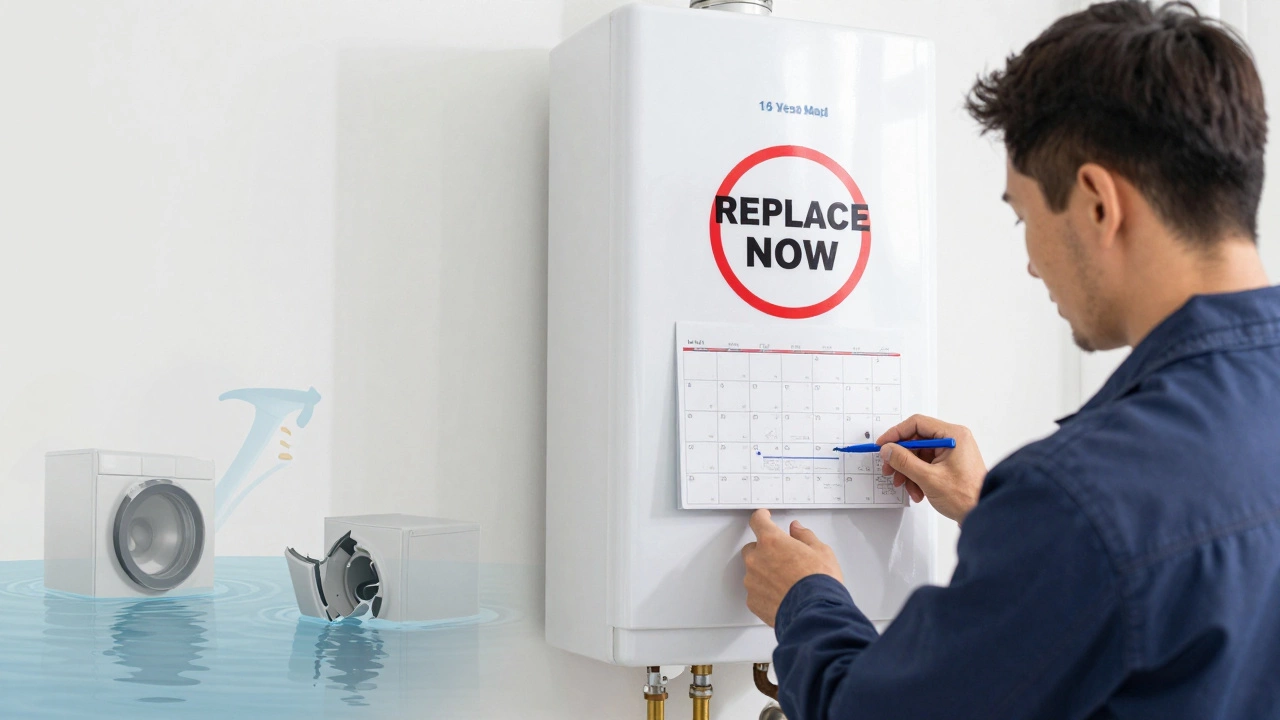
Even if everything seems fine, age is the biggest predictor of failure. Most tank-style water heaters last 8 to 12 years. Tankless models can go 20+, but they’re not common in older homes. If your heater was installed in 2014 or earlier, you’re in the danger zone. Manufacturers put expiration dates on them for a reason. They don’t just stop working-they fail suddenly, often at the worst time.
Check the serial number on the label. The first two digits are the year, the next two are the week. If it says 1215, it was made in the 15th week of 2012. That’s 14 years old. Even if it’s still working, it’s playing Russian roulette with your home.
Higher Energy Bills Without Reason
If your gas or electric bill has crept up over the last year and you haven’t changed your habits, your water heater is the likely culprit. A failing unit has to work harder to heat the same amount of water. Sediment buildup, worn elements, poor insulation, or a leaky tank all force it to run longer and more often.
According to the U.S. Department of Energy, water heating accounts for about 18% of home energy use. A 10-year-old heater can be 30% less efficient than a new one. That’s hundreds of dollars a year wasted. Replacing an old heater isn’t just about comfort-it’s about saving money.
Constant Repairs
How many times have you called a technician this year? Once? Twice? Three times? If you’re paying $100 to $200 per service call for things like thermostat replacements, element swaps, or pressure valve fixes, you’re throwing money away. Each repair only buys you a few more months. The parts are cheap. The labor isn’t. And the tank itself is still aging.
There’s a rule of thumb: if the repair costs more than half the price of a new unit, walk away. A new 50-gallon electric water heater costs $800 to $1,200 installed. If you’ve spent $500 on repairs in the last year, you’re already at the tipping point. Don’t wait for the big leak.
What to Do Next
If you’ve noticed two or more of these signs, don’t wait. Start researching replacements now. Look at energy-efficient models with a 10-year warranty. Consider a tankless heater if you have high usage and want endless hot water. Or go with a hybrid heat pump model if you want to cut energy bills by 50%.
Don’t wait until you’re standing in a cold shower with water flooding your floor. Proactive replacement is cheaper, safer, and less stressful. Most plumbers can install a new unit in a single day. And many utility companies offer rebates for upgrading to efficient models.
Your water heater isn’t a luxury. It’s essential. When it fails, everything stops. Don’t gamble with it. Pay attention to the signs-and act before it’s too late.
How long does a typical water heater last?
Most tank-style water heaters last between 8 and 12 years. Tankless models can last up to 20 years with proper maintenance. Age is the biggest factor in failure-so if yours is over 10 years old, start planning for replacement even if it still works.
Can I fix a leaking water heater?
You can fix leaks from valves, pipes, or fittings-but not from the tank itself. If the steel shell is rusted through, no repair will hold. A tank leak means it’s time for replacement. Ignoring it risks major water damage to your home.
Why does my hot water smell like rotten eggs?
The smell comes from sulfur-reducing bacteria reacting with the magnesium anode rod in the tank. It’s not harmful, but it’s unpleasant. Flushing the tank and replacing the rod can help. But if the smell keeps coming back, the tank is likely corroding inside and needs replacement.
Should I replace my water heater before it breaks?
Yes. Waiting for a full failure can lead to flooding, property damage, and emergency repair costs. Replacing your heater before it fails saves money, avoids mess, and gives you time to choose the right model without rushing.
How do I know if my water heater is too old?
Check the serial number on the manufacturer’s label. The first two digits are the year it was made. If it’s 14+ years old, it’s past its expected lifespan. Even if it still works, the risk of sudden failure increases sharply after 10 years.