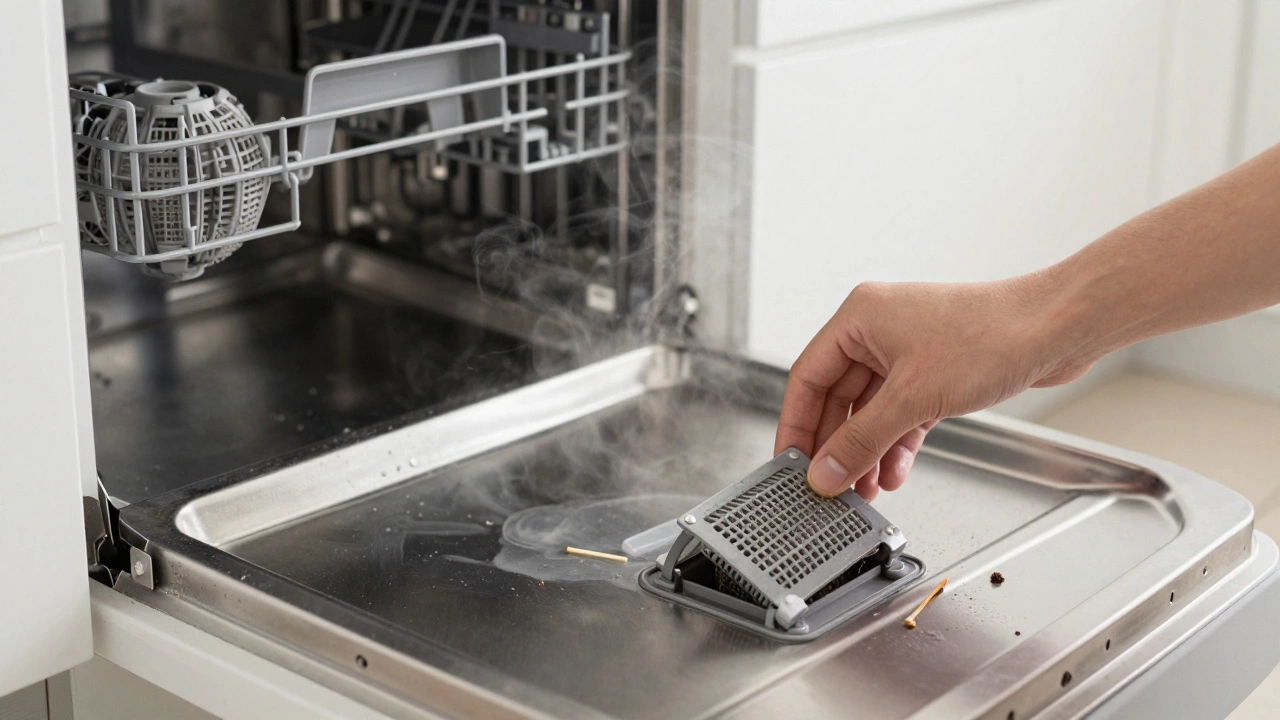
If your dishwasher is leaving dishes grimy, making strange noises, or just sitting there silent after you press start, you’re not alone. Across homes in Perth and beyond, one problem keeps showing up more than any other: dishwasher not draining. It’s the number one fault reported by repair technicians, and it’s the reason most dishwashers end up sitting idle in the kitchen.
Why Your Dishwasher Won’t Drain
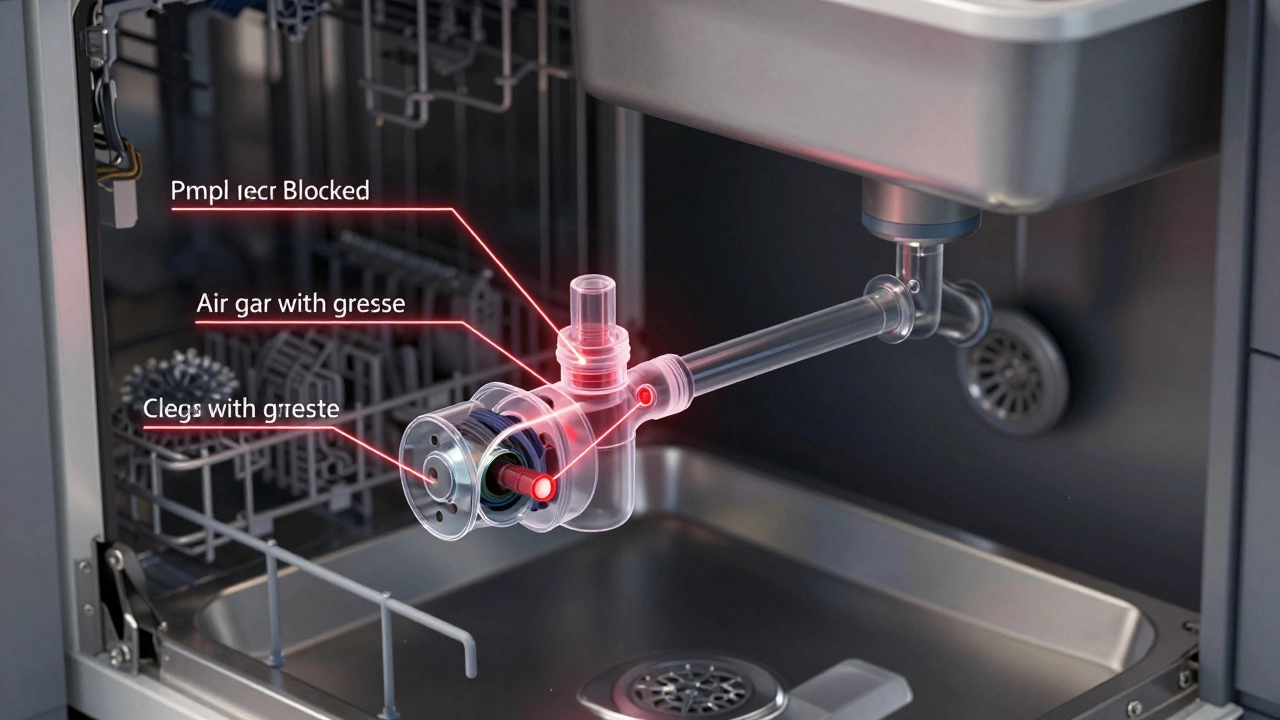
The drain system is the dishwasher’s lifeline. When it fails, water pools at the bottom, food particles sit where they shouldn’t, and the machine can’t complete its cycle. Most people assume it’s a clog, but it’s rarely that simple. The real issue usually lies in one of three places: the drain pump, the air gap, or the drain hose.The drain pump is a small motor that pushes water out of the tub. Over time, its impeller - the spinning part that moves the water - gets clogged with bits of food, broken glass, or even plastic wrap. If you’ve ever found a tiny piece of a toothpick or a popcorn kernel stuck in the filter, that’s a warning sign. The pump can’t spin properly, so it just sits there humming while water builds up.
Then there’s the air gap. It’s that little chrome cylinder near the sink, usually hidden behind the faucet. Its job is to prevent dirty sink water from flowing back into the dishwasher. But if it’s clogged with grease or food gunk, drainage stops. You’d think it’s easy to clean, but most people don’t even know it exists. In Perth homes, where hard water and heavy dishwashing are common, this part gets gunked up faster than you’d expect.
The drain hose is the third culprit. It connects the dishwasher to the sink’s drain line or garbage disposal. If it’s kinked, crushed under the sink, or has a low loop that traps water, drainage slows or stops. A hose that’s too long or improperly installed can create a siphon effect, pulling water back in after it’s supposed to be gone.
What Happens When Drainage Fails
A dishwasher that won’t drain doesn’t just leave water behind. It triggers a chain reaction. The machine senses standing water and automatically shuts down the cycle to avoid overflow. That means your dishes don’t get the final rinse, the drying cycle doesn’t activate, and everything comes out damp, streaky, and still dirty.Left unchecked, the water sitting in the tub becomes a breeding ground for mold and mildew. You’ll start noticing a sour smell every time you open the door. The rubber seal around the door can rot from constant moisture, leading to leaks. And if the water sits long enough, it can corrode the bottom of the tub, especially in older models with thin steel liners.
Some people try to fix it by running hot water in the sink first. That helps a little - it clears debris from the shared drain line - but it doesn’t solve the root problem. Others resort to pouring baking soda and vinegar down the drain. It might freshen things up, but it won’t move a clog stuck in the pump or hose.
How to Diagnose the Problem Yourself
You don’t need a technician to start. Here’s how to check the three main areas in under 20 minutes:- Check the filter. Remove the bottom rack and twist out the filter (usually at the back of the tub). Rinse it under running water. If it’s caked with food or grease, scrub it with an old toothbrush. Reinstall it and run a quick rinse cycle.
- Inspect the drain hose. Pull the dishwasher out a few inches (unplug it first). Look for kinks or sharp bends. The hose should have a gentle upward loop before connecting to the drain - this prevents backflow. If it’s lying flat or sagging, reposition it.
- Clean the air gap. If you have one, unscrew the cap on top. Use a wire hanger or a pipe cleaner to pull out any gunk. Rinse it with warm water. Reassemble and test.
If those steps don’t fix it, the pump is likely the issue. You can hear it working - a steady hum - but no water is moving. That means the impeller is jammed or the motor is failing. Replacing it isn’t a DIY job unless you’re comfortable with wiring and plumbing. Most models require removing the entire lower panel and disconnecting hoses and electrical connectors.
Other Common Dishwasher Faults (And Why They’re Less Frequent)
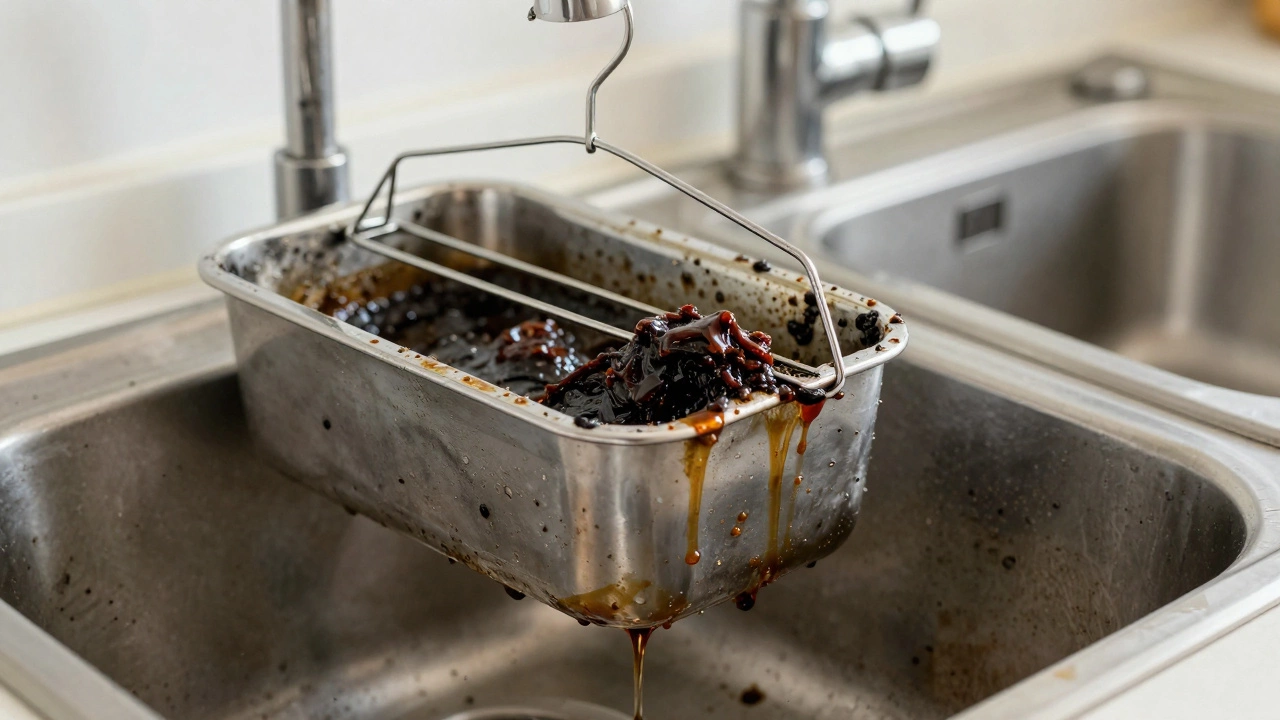
While drainage issues dominate, other problems pop up too:- Leaking from the door: Usually caused by a worn gasket or misaligned door latch. Happens in older units, especially if the door is slammed shut often.
- Not cleaning dishes: Often tied to low water pressure, clogged spray arms, or using the wrong detergent. Hard water in Perth can cause scale buildup on spray arms, blocking holes.
- Not starting: Could be a faulty door switch, control board, or thermal fuse. These are less common than drainage failures.
- Excessive noise: Usually a worn pump bearing or something stuck in the spray arm. Not dangerous, just annoying.
None of these are as widespread as drainage failure. Why? Because drainage is the one part that connects directly to the home’s plumbing system - and that’s where most household messes end up.
Prevention Tips for Perth Homes
Hard water and heavy use make dishwashers work harder here than in other parts of Australia. To keep yours running smoothly:- Scrape plates, don’t rinse. Modern detergents work better with food particles - rinsing removes what they need to break down.
- Use a rinse aid every other cycle. It helps with drying and reduces mineral buildup.
- Run a monthly cleaning cycle with a dishwasher cleaner (not vinegar). It removes grease and scale from internal parts.
- Check the filter every two weeks. A quick rinse stops clogs before they start.
- If you have a garbage disposal, run it before starting the dishwasher. It clears the shared drain line.
When to Call a Technician
If you’ve checked the filter, hose, and air gap - and the dishwasher still won’t drain - it’s time to call in a pro. Replacing the drain pump costs between $180 and $320 in Perth, depending on the model. Labor is usually $90 an hour. If your dishwasher is over eight years old, ask yourself: is it worth repairing?New entry-level dishwashers start around $500. High-efficiency models with steam cleaning and smart features go up to $1,500. If you’re paying more than half the cost of a new unit to fix it, replacement is often smarter. Plus, newer models use 30% less water and energy than ones from 10 years ago.
Why does my dishwasher leave water at the bottom after a cycle?
This is almost always a drainage issue. The water isn’t being pumped out because the drain pump is clogged, the drain hose is kinked, or the air gap is blocked. Food debris, grease, or hard water scale can block any of these parts. Start by cleaning the filter and checking the hose for bends. If that doesn’t work, the pump impeller may be jammed or the motor may have failed.
Can I use vinegar to clean my dishwasher’s drain?
Vinegar can help remove mild mineral buildup and odors, but it won’t clear a serious clog. It’s fine for monthly maintenance - pour a cup into the bottom and run a hot cycle. But if water is pooling, vinegar won’t move food particles, grease, or plastic bits. For real blockages, you need mechanical cleaning - removing the filter, checking the hose, or replacing the pump.
Is it normal for my dishwasher to make a grinding noise?
A grinding noise usually means something is stuck in the drain pump or spray arm. Turn off the dishwasher and check the filter area for small objects - bottle caps, toothpicks, or broken pieces of ceramic. If nothing’s visible, the pump’s impeller may be damaged. Continuing to run it can destroy the motor. Stop using it and get it inspected.
How often should I clean the dishwasher filter?
Clean it every two weeks if you use the dishwasher daily. If you use it less often, once a month is enough. The filter catches food scraps, and if it gets clogged, it slows drainage and reduces cleaning performance. A quick rinse under running water with an old toothbrush is all it takes. Don’t wait until water pools - that’s already too late.
Should I replace my dishwasher if it’s 12 years old and keeps having drainage issues?
Yes. Dishwashers older than 10 years are typically less efficient and more prone to repeated failures. A new model will use 30% less water and energy, clean better, and come with a warranty. Repairing a 12-year-old unit often costs 60-70% of a new one’s price. Even with labor, replacement is usually the smarter long-term choice.