Freezer Repair Cost Calculator
This tool helps you determine whether it's more cost-effective to repair or replace your freezer based on age, symptoms, and potential energy savings.
Cost Analysis
Estimated repair cost:
Estimated replacement cost:
If your freezer suddenly stops cooling, you’re not just dealing with a broken appliance-you’re staring down a potential $200+ loss in spoiled food, plus the hassle of scrambling for alternatives. It’s not rare, especially in Perth’s hot summers when your freezer is working overtime. The good news? Most freezer failures aren’t catastrophic. You don’t always need to call a technician right away. Here’s what to do, step by step, before you panic or spend money on a repair you might not need.
Check the power first-always
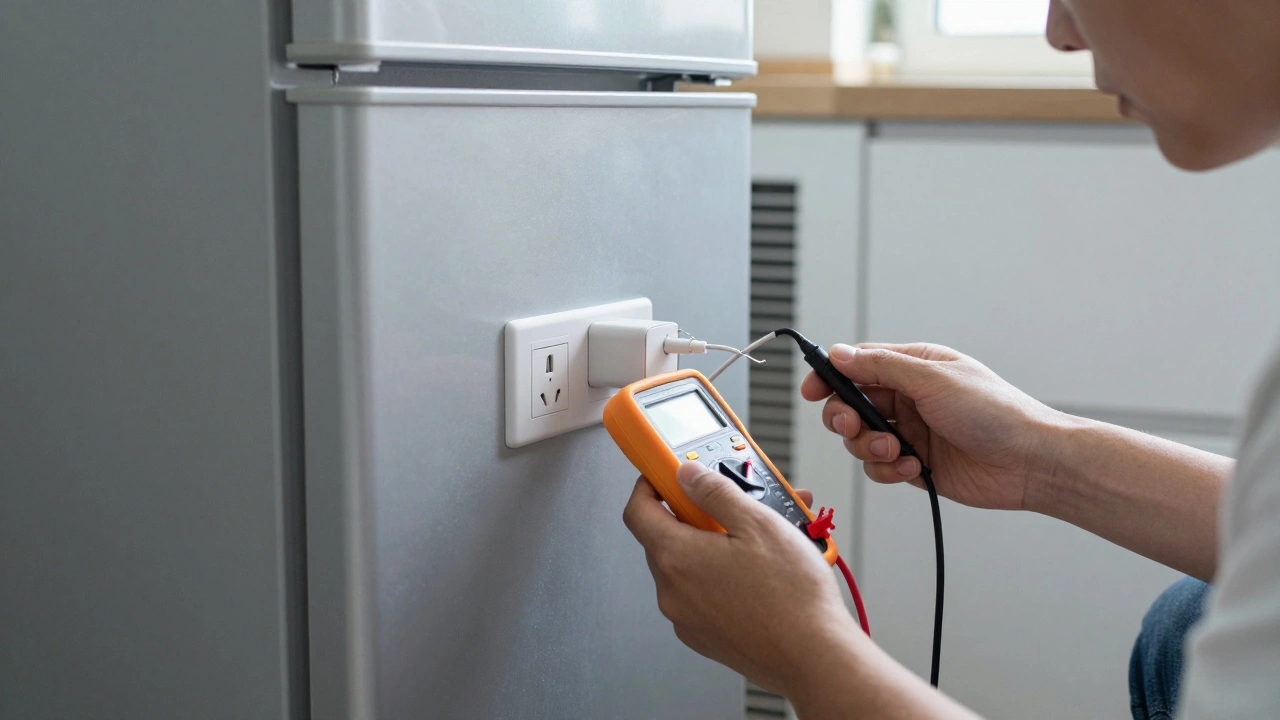
Before you assume the compressor is dead or the coolant leaked, make sure the freezer is actually getting electricity. This sounds obvious, but it’s the #1 cause of "dead" freezers. A power outage, a tripped GFCI outlet, or a loose plug can look like total failure.- Unplug the freezer and plug it back in firmly.
- Check the outlet with another device, like a phone charger.
- Look at your circuit breaker panel. If the freezer’s circuit is tripped, reset it once. If it trips again, stop. That’s a wiring or compressor issue.
- Don’t forget double-check the power cord. Frayed wires, especially near the plug or where it bends into the unit, are common in older models.
If the freezer hums or the interior light turns on, you’ve ruled out a power issue. If nothing happens-not even a click-then the problem is likely internal.
Listen for the compressor
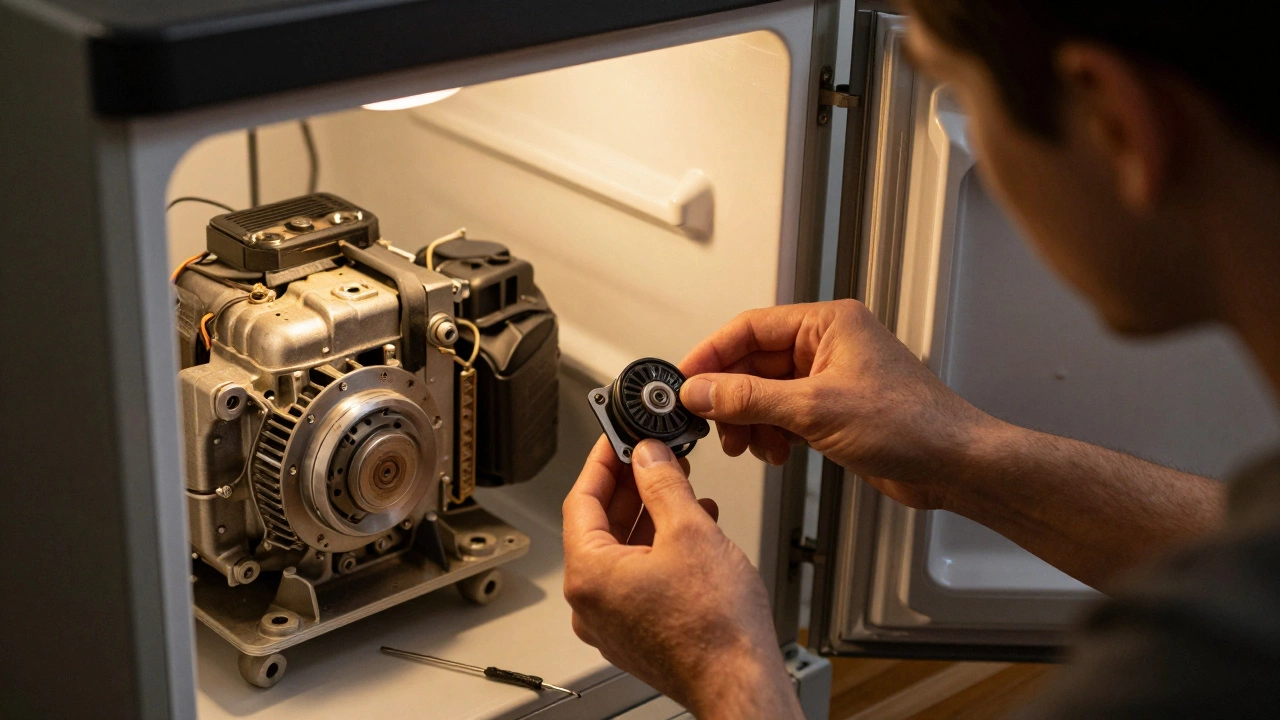
A working freezer makes noise. Not loud, but a steady, low hum from the back or bottom. If you hear silence, that’s a red flag.Wait 10 minutes after plugging it back in. Some compressors have a built-in delay to prevent short cycling. If after 10 minutes there’s still no hum, the compressor may be dead-or the start relay is fried.
Here’s a quick test: unplug the freezer, then remove the back panel (if you’re comfortable). Locate the small, box-like start relay on the side of the compressor. Shake it gently. If you hear rattling inside, it’s broken. Replacing it costs under $20 and takes 15 minutes. Many DIYers fix this themselves. If it doesn’t rattle, the compressor itself may be the issue.
Inspect the condenser coils
Dust and pet hair clog condenser coils faster than you think. In Perth’s dusty climate, this is a leading cause of freezer failure. When coils are blocked, the system can’t release heat. The compressor overheats and shuts down to protect itself.- Move the freezer away from the wall. Pull out the bottom grille or back panel.
- Use a vacuum with a brush attachment to clean the coils. Don’t use compressed air-it just pushes dust deeper.
- If the coils are coated in thick grime, use a coil brush ($10 at hardware stores) to loosen debris.
After cleaning, plug the freezer back in. Wait 24 hours. If it starts cooling again, you just saved a $300 repair bill. Clean coils every 6 months if you have pets or live near construction.
Check the thermostat and temperature settings
It’s easy to accidentally bump the dial. Maybe someone turned it to "Off" or "Demo" mode. Some newer freezers have digital controls with hidden settings.- Make sure the temperature is set between -18°C and -20°C. That’s the safe zone for food storage.
- If it’s digital, press and hold the "Settings" button for 5 seconds. Some models reset to 0°C by accident.
- Test the thermostat with a standalone freezer thermometer. Place it inside for 6 hours. If it reads above -10°C, the thermostat is likely faulty.
Thermostats fail often. Replacement parts are cheap and easy to install. Look up your freezer model number on the manufacturer’s site or repair forums like RepairClinic.com.
Look for frost buildup or ice blockage
If your freezer is frosty on the inside, especially around the back wall or evaporator fan, you’ve got a defrost issue. This is common in older frost-free models.When the defrost heater or timer fails, ice builds up and blocks airflow. The freezer feels cold near the top, but the bottom stays warm. Food thaws slowly because air can’t circulate.
- Turn off the freezer and unplug it.
- Remove all food and leave the door open for 24 hours to let the ice melt naturally.
- Once dry, plug it back in. If it works fine for a few days and then freezes up again, the defrost heater or control board is bad.
Replacing the defrost heater costs $40-$80. Replacing the control board? That’s $150-$250. If your freezer is over 10 years old, consider replacement instead.
Check the door seal
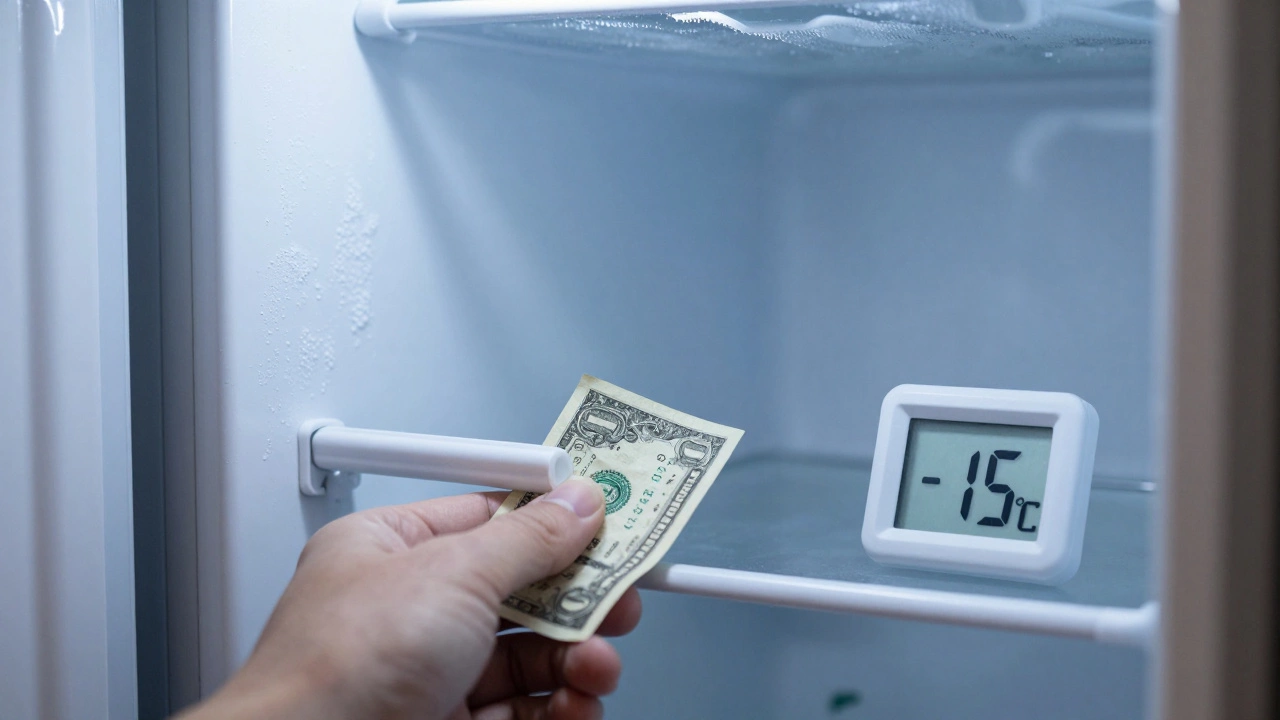
A bad door seal is a silent killer. It doesn’t make noise. It doesn’t stop the compressor. But it lets warm air in, forcing the freezer to run nonstop-and eventually burn out.- Close the door on a dollar bill. Try to pull it out. If it slides out easily, the seal is weak.
- Run your hand along the gasket. Feel for cracks, stiffness, or gaps.
- If the seal is damaged, replace it. Most seals snap in place. No tools needed.
A good seal keeps your freezer running efficiently. A bad one can double your electricity bill and shorten the compressor’s life.
What to do with your food
If your freezer has been off for more than 2 hours, food safety becomes urgent. Here’s how to handle it:- If the food still has ice crystals, it’s safe to refreeze.
- Meat, poultry, and seafood that’s thawed but still cold (below 4°C) can be cooked immediately and then refrozen.
- Ice cream, yogurt, and dairy products with visible melting? Pitch them.
- Use a cooler with ice packs to store essentials while you fix the freezer.
Keep a freezer thermometer inside at all times. It’s the only way to know if your food is safe after a power loss or failure.
When to call a professional
You can fix most freezer problems yourself-unless:- You smell burning plastic or see smoke.
- The compressor is running but the freezer isn’t cooling (possible refrigerant leak).
- There’s water pooling under the unit (likely a blocked drain line or cracked internal pan).
- Your freezer is over 12 years old and needs a major part replacement.
Refrigerant leaks are dangerous and illegal to handle without certification. Only licensed technicians can recover and refill refrigerant. Don’t risk it.
Prevention tips for the long term
Avoid another freezer disaster with these simple habits:- Keep the freezer 3/4 full. Empty freezers work harder. Use water bottles to fill space.
- Defrost manually if you have a manual-defrost model. Ice over 6mm thick reduces efficiency.
- Don’t put hot food directly inside. Let it cool first.
- Check the door seal monthly.
- Clean coils every 6 months.
- Buy a surge protector. Power spikes kill compressors.
Most freezers last 10-15 years. With basic care, yours can hit the upper end. Neglect? It’ll die in 6.
Why is my freezer running but not cold?
If the compressor is running but the freezer isn’t cooling, the most likely causes are a blocked evaporator coil, a faulty thermostat, or a refrigerant leak. Start by checking for frost buildup inside the freezer. If the back wall is covered in ice, the defrost system has failed. If there’s no frost, test the thermostat with a separate thermometer. If the temperature is way off, replace the thermostat. If everything checks out but it’s still not cold, you likely have a refrigerant leak-call a licensed technician.
Can I fix a freezer leak myself?
You can fix water leaks from the drain pan or defrost drain tube yourself. Unplug the freezer, locate the drain hole at the back bottom, and clear it with warm water and a pipe cleaner. But if the leak is from a cracked internal line or the evaporator coil, that’s a refrigerant issue. Refrigerant is under pressure and requires certification to handle. Don’t attempt it yourself.
How long does a freezer last before it needs replacing?
Most freezers last between 10 and 15 years. If your unit is older than 12 and you’re facing a major repair-like a compressor or control board replacement-it’s usually cheaper to buy new. Modern freezers use 40% less energy than models from 2010. A new $600 freezer pays for itself in electricity savings within 3-4 years.
Is it safe to leave a broken freezer plugged in?
If the freezer isn’t cooling but the compressor is running, it’s safe to leave it plugged in temporarily. But if you smell burning, hear loud clicking, or see sparks, unplug it immediately. A failing compressor or electrical component can overheat and cause a fire. When in doubt, unplug it.
What’s the most common cause of freezer failure?
The most common cause is dirty condenser coils. Dust buildup prevents heat from escaping, forcing the compressor to overwork and eventually fail. In Perth’s dry, dusty climate, this happens faster than in humid areas. Cleaning the coils every 6 months can double your freezer’s lifespan.
Next steps if your freezer won’t start
If you’ve gone through all the steps and your freezer still won’t cool:- Write down your freezer’s model number (usually inside the door frame).
- Search for that model + "repair manual" or "parts diagram" online.
- Compare the cost of the faulty part to the price of a new freezer.
- If the repair costs more than half the price of a new unit, walk away.
- Call a certified appliance technician only if you suspect a refrigerant leak or electrical fault.
Don’t rush to replace it. Most freezers die from neglect, not design flaws. A little maintenance today saves you a lot of stress-and spoiled food-tomorrow.