Boiler Safety Checker
This tool helps you determine if your boiler shows signs requiring immediate attention. Select all symptoms you're experiencing.
Boilers are one of those things you don’t think about until they stop working. In Perth, where winters can dip below 5°C and mornings are crisp, a broken boiler isn’t just inconvenient-it can be dangerous. But not every strange noise or drop in heat means you need a new boiler. So when should you actually worry? Here’s what to look for, based on real-world issues seen in homes across Western Australia.
Your boiler is making loud banging or knocking noises
Some boilers hum. That’s normal. But if you hear loud banging, gurgling, or knocking-especially when the system turns on or off-it’s not just annoying. This is often caused by limescale buildup in the heat exchanger. Hard water in Perth’s supply leaves mineral deposits over time. When water heats up too fast, it gets trapped and boils in pockets, creating steam explosions inside the pipes. This isn’t just noise. It stresses the metal, cracks welds, and can lead to leaks. If the banging started suddenly and gets louder, don’t wait. Get it checked within a week.
The boiler keeps turning itself off
If your boiler turns on, runs for a few minutes, then shuts off, and repeats, it’s in a cycle called short-cycling. This isn’t normal. It usually means the thermostat is misreading the temperature, but more often, it’s because the boiler is overheating. Overheating can be caused by a blocked flue, low water pressure, or a failing pump. Left unchecked, this stresses the internal components and can burn out the control board. A boiler that cycles more than three times in 15 minutes needs attention. It’s not a "wait and see" situation.
You see water pooling around the boiler
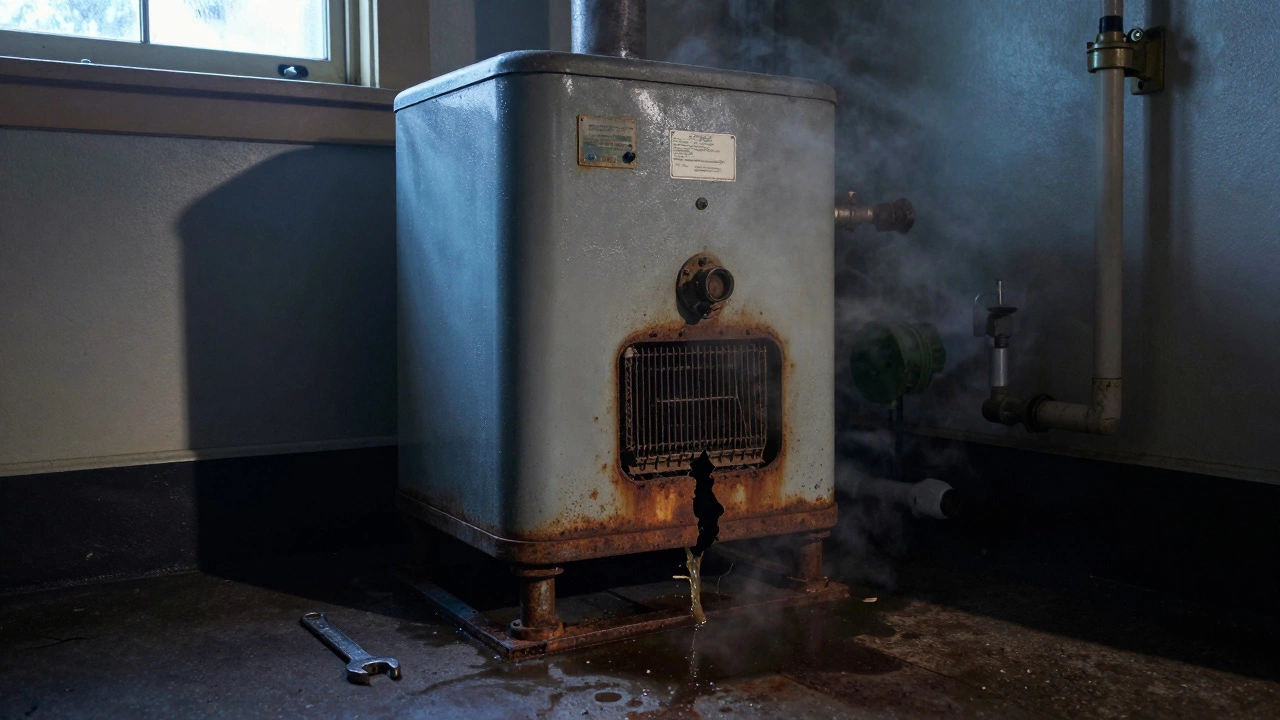
Any water under or near the boiler is a red flag. Even a small puddle. It could be from a leaking pressure valve, a cracked heat exchanger, or a loose pipe joint. In older boilers, corrosion from moisture and condensation eats through metal over time. If you’ve noticed damp patches on the wall behind the boiler or rust stains on the casing, that’s a sign of long-term leakage. Don’t assume it’s "just a drip." Water and electricity don’t mix. A leak near the electrical components can cause a short, a fire, or a gas valve failure. Shut off the boiler and call a technician immediately.
The pilot light won’t stay lit (or your boiler has no pilot light but still won’t ignite)
If you have an older boiler with a standing pilot light and it keeps going out, the thermocouple might be dirty or faulty. But if you’ve cleaned it, checked the gas supply, and it still won’t stay lit, it’s likely a deeper issue-like a cracked heat exchanger or a failing gas valve. Newer boilers don’t have pilot lights at all-they use electronic ignition. If yours won’t ignite at all, even after resetting, it’s not a power issue. It’s a sensor, valve, or combustion problem. Ignoring this risks carbon monoxide buildup. If you smell gas or feel dizzy when the boiler tries to start, turn off the gas supply and leave the house.
Your radiators are cold at the top but hot at the bottom
This is a classic sign of trapped air-but not the kind you can fix by bleeding the radiator. If bleeding doesn’t help, and multiple radiators behave this way, the problem is likely a failing circulation pump. The pump isn’t pushing hot water through the system properly. Or worse, there’s sludge buildup in the pipes from rust and debris. Sludge blocks flow, reduces efficiency, and can permanently damage the boiler’s internal components. If you’ve bled the system, flushed the radiators, and it’s still uneven, the boiler’s pump is probably struggling. This isn’t just about comfort-it’s about efficiency. You’re paying more for less heat.
The boiler display shows error codes you don’t understand
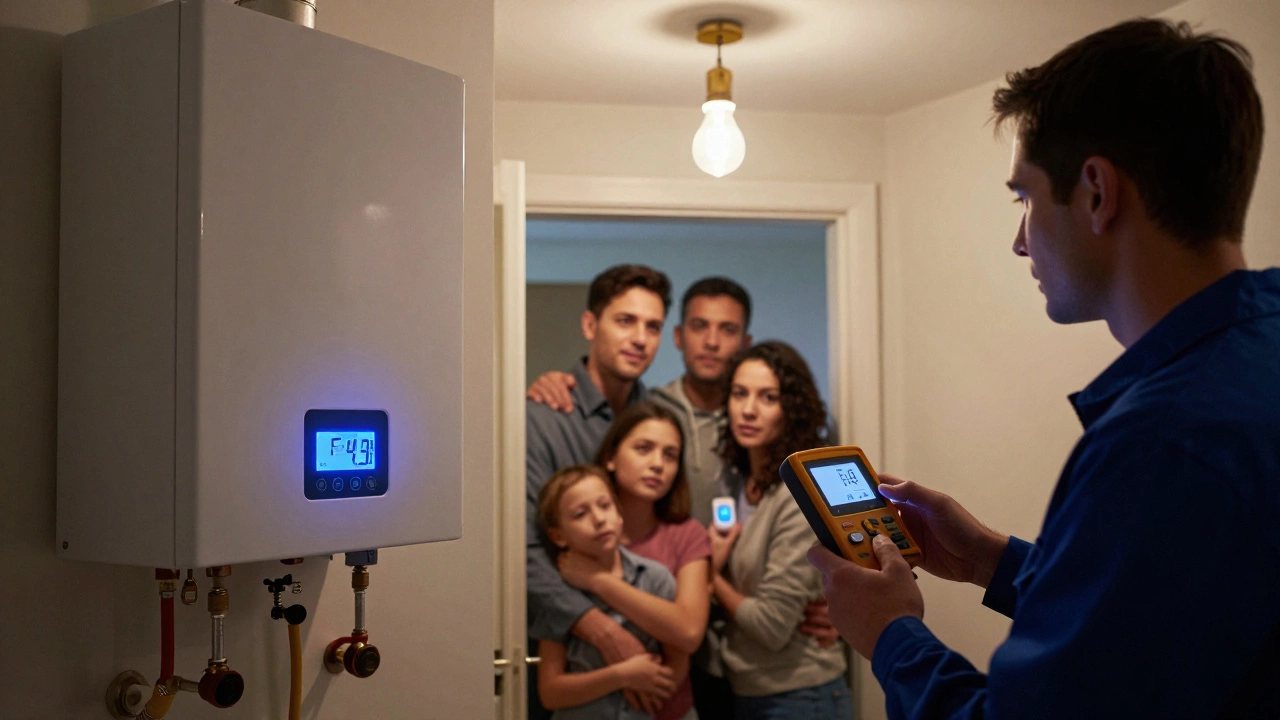
Modern boilers have digital displays with error codes like E1, F2, or 122. Don’t ignore them. These aren’t random. Each code corresponds to a specific failure: low pressure, sensor fault, flame failure, or pump lockout. A quick Google search might give you a hint, but don’t try to fix it yourself. These codes mean the boiler’s safety system detected a problem and shut down to prevent damage or danger. For example, code E1 on a Vaillant boiler means no flame detection. That could be a dirty electrode, a blocked gas line, or a failing ignition module. Trying to reset it without diagnosis could cause a gas leak. Always call a certified technician when you see an error code.
You smell gas or notice a strange odor
Gas leaks are rare, but deadly. If you smell rotten eggs near the boiler, that’s added mercaptan-a safety additive. Even a faint smell means gas is escaping somewhere. Don’t turn lights on, don’t use your phone, don’t plug anything in. Open windows, shut off the gas valve at the meter, and call the gas company immediately. This isn’t a repair issue. It’s an emergency. If you’ve ever smelled this odor, even once, get your boiler and gas lines inspected. It could be a loose joint, a cracked pipe, or a failing valve. No amount of money is worth the risk.
Your boiler is over 15 years old and needs constant repairs
If your boiler is older than 15 years, you’re past its expected lifespan. Modern boilers last 10-15 years with good maintenance. After that, parts wear out, efficiency drops, and repairs become more expensive than replacements. If you’ve had three or more repairs in the last year, you’re in the "repair trap." Each fix buys you a few months, but the next failure is likely bigger and costlier. A 20-year-old boiler might use 30% more gas than a new one. In Perth, where heating bills spike in winter, that adds up. Replacing it isn’t just smart-it’s economical. Look for an A-rated condensing boiler. It’ll cut your gas use and pay for itself in 3-5 years.
You feel dizzy, nauseous, or have headaches when the boiler runs
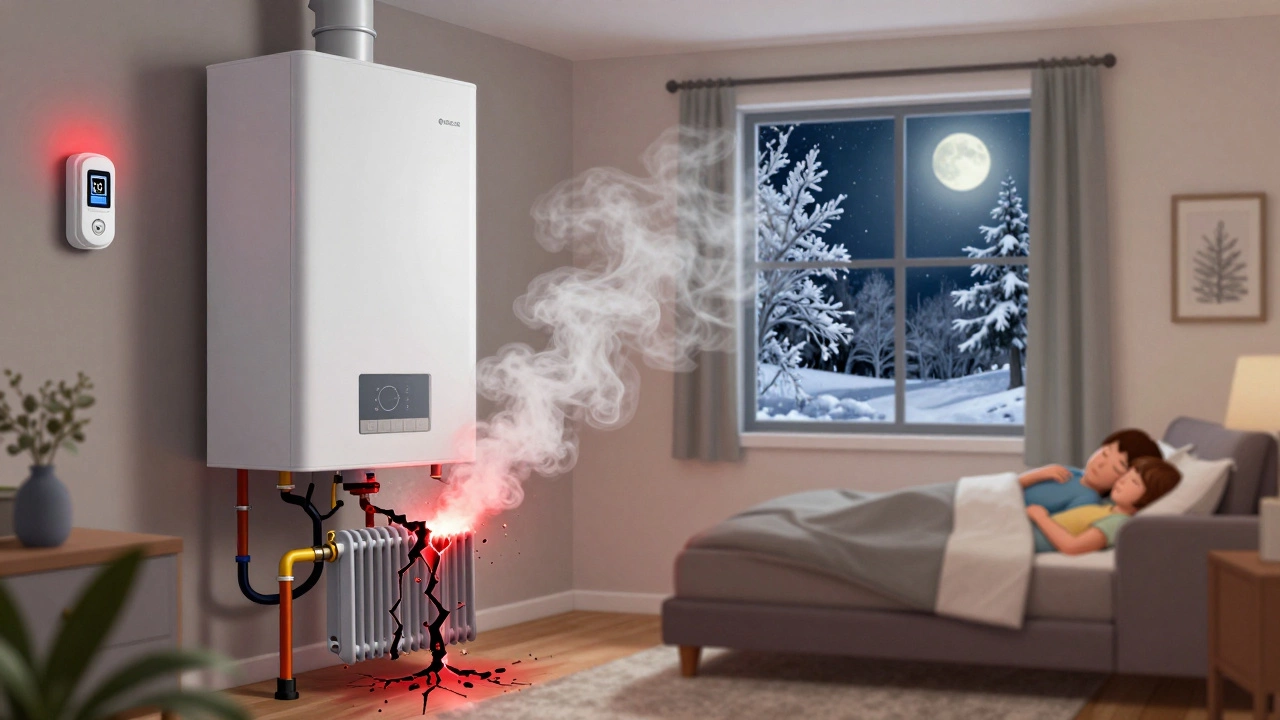
This is the most serious warning sign. Carbon monoxide (CO) is odorless, colorless, and deadly. A faulty heat exchanger or blocked flue can leak CO into your home. Symptoms like dizziness, nausea, confusion, or headaches that go away when you leave the house are classic signs. If you or your family experience this, get out of the house immediately. Call emergency services. Then, get a CO detector installed. Every home with a boiler should have one. It’s not optional. It’s life-saving. In Australia, CO poisoning is rare but preventable. Don’t wait for a tragedy.
What to do next
If any of these signs apply to your boiler, don’t delay. A boiler that’s struggling isn’t just broken-it’s unsafe. Book a service with a licensed gas fitter. In Western Australia, technicians must be certified by the Gas Safety Authority. Ask for a full safety inspection, including pressure tests, flue gas analysis, and CO detection. Don’t settle for a quick reset. You’re not just fixing a machine-you’re protecting your home.
Prevention is cheaper than repair. Get your boiler serviced once a year. Clean filters. Check water pressure (it should be between 1-1.5 bar). Bleed radiators in autumn. Keep the area around the boiler clear. A little maintenance now saves you thousands later.
Should I turn off my boiler if I suspect a gas leak?
Yes. Immediately shut off the gas supply at the main meter, open all windows, leave the house, and call emergency services. Do not use any electrical devices, including phones, until you’re outside. Gas leaks can ignite from sparks-even from a light switch. Your safety comes before everything else.
How often should a boiler be serviced in Perth?
Once a year, ideally before winter starts. Perth’s heating season runs from late April to September, and service providers get booked out fast. Annual servicing catches small issues before they become emergencies. It also keeps your warranty valid and improves efficiency by up to 15%.
Can I fix a boiler leak myself?
No. Even a small leak can mean internal corrosion or a failing heat exchanger. Trying to patch it with sealant or tape is dangerous and temporary. Only a licensed gas fitter can safely diagnose and repair boiler leaks. DIY fixes risk gas leaks, water damage, or fire.
Is it worth repairing a 20-year-old boiler?
Usually not. A 20-year-old boiler is at least 30% less efficient than a new one. Repairs cost $300-$800, but you’ll likely need another one within a year. A new A-rated boiler costs $2,500-$4,500 installed, but pays for itself in lower gas bills within 3-5 years. Plus, modern boilers are safer, quieter, and come with smart controls.
Do I need a carbon monoxide detector if I have a boiler?
Yes. Every home with a gas boiler, furnace, or water heater needs a CO detector. Install one near the boiler and another near bedrooms. Look for models with digital readouts and battery backup. They cost under $50 and are required by law in some states. In WA, while not yet mandatory, it’s strongly recommended by the Fire and Emergency Services Authority.