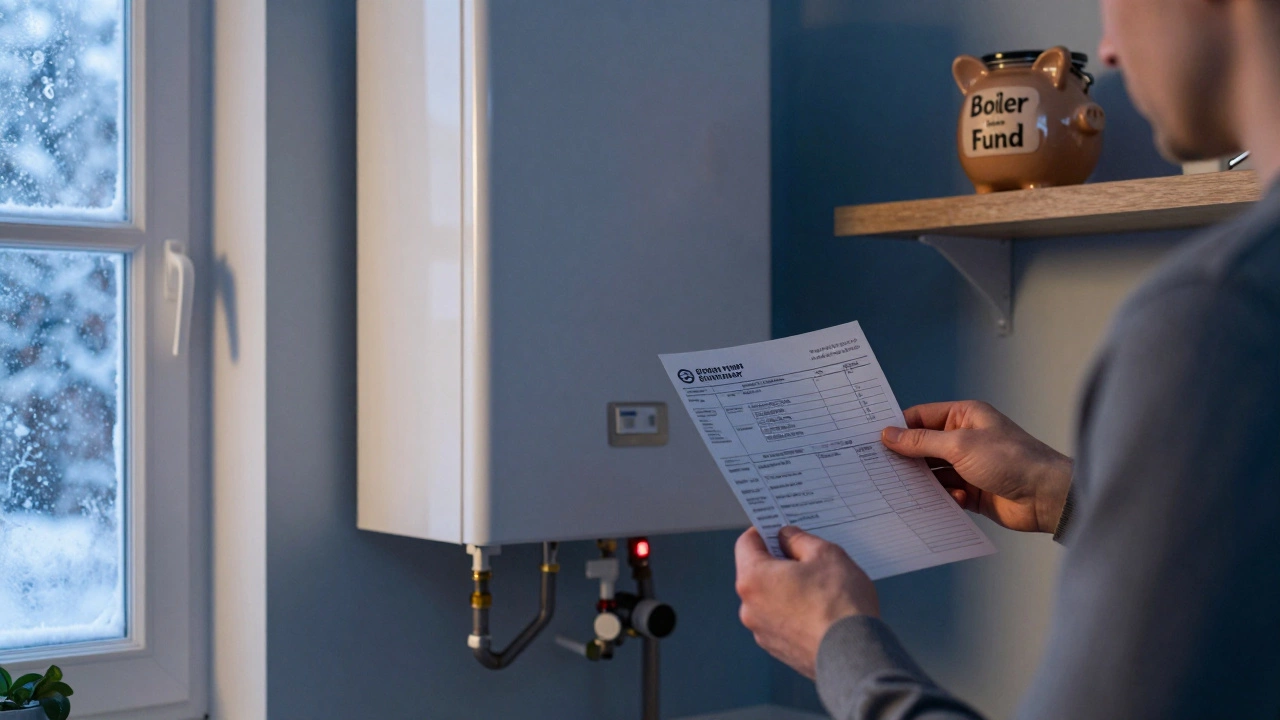
When your boiler breaks down in the middle of winter, the first question isn’t always how to fix it-it’s who pays for it. Boiler maintenance isn’t like replacing a lightbulb. It’s expensive, it’s critical, and the responsibility isn’t always clear. Whether you’re a renter, a landlord, or a homeowner, knowing who’s on the hook for repairs and routine service can save you hundreds-or even thousands-of dollars.
Homeowners Pay for Their Own Boiler Maintenance
If you own your home, you’re responsible for everything that happens with your boiler. No exceptions. That includes annual servicing, parts replacement, emergency callouts, and even upgrading to a more efficient model when it’s time. There’s no one else to blame, and no one else to call.
Most boiler manufacturers require an annual service to keep the warranty valid. Skip it, and your warranty disappears. A typical service costs between $100 and $200 in the U.S., depending on your location and the boiler’s age. If your boiler is over 10 years old, you might need a part replacement-like a pump, heat exchanger, or control board-which can run $300 to $800. Some homeowners skip maintenance to save money, but that’s a false economy. A poorly maintained boiler uses 15% to 20% more gas, and the risk of a sudden breakdown in freezing weather is very real.
Smart homeowners set aside $15 to $25 a month in a maintenance fund. That adds up to $180 to $300 a year-enough to cover one full service and a small buffer for unexpected issues. Some utility companies offer payment plans or discounts for annual servicing. Check with your gas provider; you might be eligible.
Landlords Are Legally Responsible for Tenant’s Boiler
If you rent out property, federal and state laws require you to maintain the boiler in safe, working condition. In the U.S., the Housing Quality Standards and the Implied Warranty of Habitability mean you must provide heat. A broken boiler isn’t just inconvenient-it’s a legal violation.
Landlords must pay for:
- Annual gas safety inspections (required by law in most states)
- Boiler servicing and repairs
- Replacement if the boiler is beyond repair
- Emergency callouts during cold months
Failure to do so can lead to fines, legal action from tenants, or even eviction bans in cities with strict rental laws. In New York, for example, landlords who don’t fix heating issues within 24 hours of a complaint can face penalties up to $1,000 per day. In California, tenants can withhold rent or repair-and-deduct if the landlord ignores heating problems.
Some landlords try to pass boiler costs to tenants through lease clauses. That’s usually illegal. You can’t force a tenant to pay for safety inspections or repairs unless they caused the damage. If a tenant throws a pot of boiling water into the boiler and ruins the heat exchanger, then yes-they’re responsible. But if the boiler just wears out? That’s your problem.
Tenants Don’t Pay for Routine Boiler Maintenance
Tenants are not expected to pay for annual boiler services, gas safety certificates, or general repairs. Your responsibility ends at keeping the boiler clean and reporting problems quickly. Don’t try to fix it yourself. Tampering with gas lines or pressure valves can be deadly-and it voids your tenancy rights.
What tenants should do:
- Report strange noises, no heat, or error codes immediately
- Keep vents and radiators clear of furniture or curtains
- Check the boiler pressure monthly (should be between 1 and 1.5 bar)
- Never bleed radiators without telling the landlord first
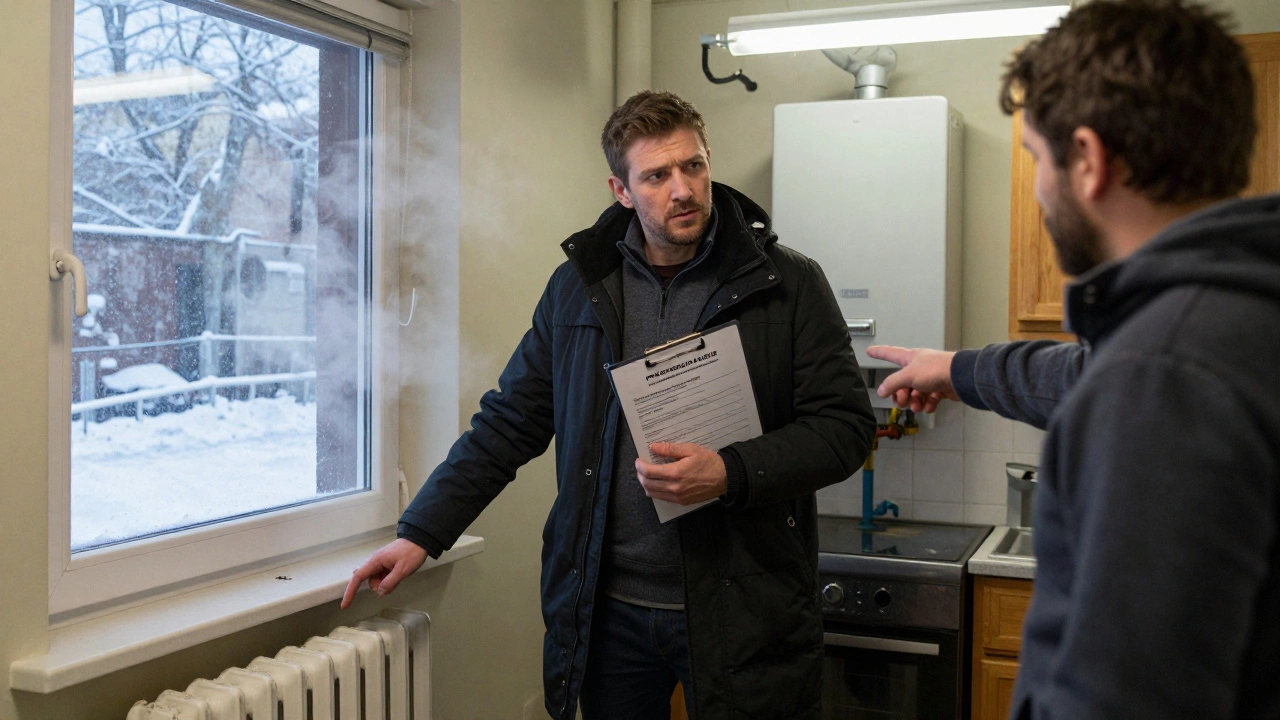
If your landlord refuses to fix a broken boiler, send a written notice via email or certified mail. Keep a copy. In most states, you have the right to call local housing authorities or file a complaint. Some cities have 24-hour heating emergency hotlines for rental units.
One common myth: tenants must pay for boiler maintenance if they signed a lease saying so. That’s not true. Courts consistently rule that safety-related repairs are the landlord’s duty, no matter what the lease says. A lease clause forcing tenants to pay for gas safety checks is unenforceable.
What About Boiler Insurance?
Boiler insurance-sometimes called home warranty or heating protection-is a popular option for homeowners and landlords. It’s not the same as homeowners insurance. Homeowners insurance covers sudden damage like fires or floods. Boiler insurance covers wear and tear.
For homeowners, boiler insurance typically costs $15 to $30 a month. It covers:
- Annual servicing
- Parts and labor for breakdowns
- Emergency callouts (24/7)
- Replacement if the boiler is over 15 years old
Landlords often buy boiler insurance to protect against unexpected costs. A single boiler replacement can cost $3,000 to $6,000. Insurance spreads that risk over monthly payments. Some insurance plans even include landlord liability coverage if a tenant gets sick from carbon monoxide due to a faulty boiler.
But not all plans are equal. Watch out for:
- Exclusions for boilers over 10 years old
- High excess fees ($100+ per claim)
- Only covering repairs, not replacements
- Requiring you to use specific engineers
Read the fine print. Compare at least three providers. Look for ones that include annual servicing-many cheaper plans don’t.
What If the Boiler Is Old?
Boilers older than 15 years are rarely worth repairing. The average lifespan is 10 to 15 years. After that, efficiency drops, breakdowns become frequent, and repair costs climb. In 2025, the U.S. Department of Energy recommends replacing boilers older than 12 years with high-efficiency condensing models.
For homeowners: Replacing a boiler costs $4,000 to $8,000. But you can get a federal tax credit of up to $2,000 under the Inflation Reduction Act if you install an ENERGY STAR-certified model. Some states offer additional rebates. Check energystar.gov or your state’s energy office.
For landlords: Replacing a boiler isn’t optional-it’s smart business. A new boiler can cut heating bills by 30%. That’s hundreds of dollars saved per tenant per year. Many landlords use the savings to offset the upfront cost over time. Plus, a modern boiler makes your property more attractive to renters.

Who Pays When You’re Buying or Selling a Home?
If you’re buying a house, the seller is expected to have the boiler serviced before closing. Most mortgage lenders require a recent boiler inspection report. If the boiler fails inspection, the seller must fix it-or reduce the price. Don’t skip the home inspection. A boiler that’s been neglected can cost you $5,000 in repairs within the first year.
If you’re selling, get the boiler serviced and keep the certificate. Buyers will ask for proof of maintenance. A clean service record can increase your home’s value and speed up the sale.
Bottom Line: Know Your Responsibility
Here’s the simple truth:
- Homeowners pay for everything.
- Landlords pay for everything-even if the lease says otherwise.
- Tenants pay for nothing unless they broke it.
Don’t assume. Don’t guess. If you’re unsure, check your lease, your homeowner’s policy, or call your local housing authority. Boiler maintenance isn’t optional-it’s a safety issue. And the person who pays for it is the one legally required to keep the heat on.
Do tenants have to pay for boiler servicing?
No, tenants are not required to pay for boiler servicing. Annual servicing and gas safety inspections are the legal responsibility of the landlord. Any lease clause requiring tenants to pay for these services is unenforceable in most U.S. states.
Can a landlord pass boiler repair costs to the tenant?
Only if the tenant caused the damage-for example, by freezing the pipes, ignoring warning signs, or tampering with controls. Normal wear and tear, aging parts, or manufacturing defects are always the landlord’s responsibility. Courts consistently side with tenants in these cases.
Is boiler insurance worth it for homeowners?
For most homeowners, yes. Boiler insurance typically costs $15-$30 per month and covers annual servicing, emergency repairs, and parts replacement. If your boiler is over 8 years old, the cost of a single repair could exceed a year’s worth of insurance. It’s especially valuable if you don’t have a maintenance fund.
What happens if a landlord doesn’t fix a broken boiler?
Tenants can report the issue to local housing authorities. In many states, tenants have the right to withhold rent, repair the boiler themselves and deduct the cost from rent, or even terminate the lease. Landlords can face fines, legal penalties, and eviction bans for failing to provide heat.
How often should a boiler be serviced?
Every year. Annual servicing by a licensed technician ensures safety, efficiency, and warranty validity. Skipping service increases the risk of carbon monoxide leaks, breakdowns, and higher energy bills. Most manufacturers require it to keep the warranty active.
Next Steps: What to Do Right Now
If you’re a homeowner: Set up your boiler’s annual service for early next year. Mark it on your calendar. Save $25 a month in a separate account for repairs.
If you’re a landlord: Review your boiler’s service history. If it’s been over a year, schedule an inspection now. If you don’t have boiler insurance, compare plans this week. A $20/month plan can save you $5,000 in a single winter.
If you’re a tenant: Check your boiler’s pressure. If it’s below 1 bar, notify your landlord in writing. If you haven’t had heat for more than 24 hours, contact your local housing authority. You have rights-and they’re enforceable.
Boiler maintenance isn’t a luxury. It’s the difference between a warm home and a dangerous one. Know who’s responsible-and don’t let anyone tell you otherwise.