Water Heater Lifespan Estimator
Enter details about your current water heater to get a personalized estimate of its remaining life and recommended actions.
Estimated Remaining Life
-- YearsRecommended Actions:
You bought a new electric storage water heater three years ago. It was supposed to last ten. Maybe fifteen. Then one Tuesday morning, you step into a cold shower, and the unit is leaking from the base. You check the warranty. It’s expired. Now you’re paying for a replacement that should have lasted twice as long. Why does this happen? It isn’t bad luck or cheap manufacturing alone. Most early failures come down to specific, preventable chemical and mechanical processes happening inside the tank right now.
In Perth, where our tap water is notoriously hard, these issues accelerate. The average lifespan of a standard tank-style heater here often drops to five or six years if left unchecked, compared to the ten-plus years advertised. Understanding why they fail quickly helps you save money on repairs and replacements. Let’s look at the real culprits behind premature death in your hot water system.
The Anode Rod: Your Tank’s Sacrificial Lamb
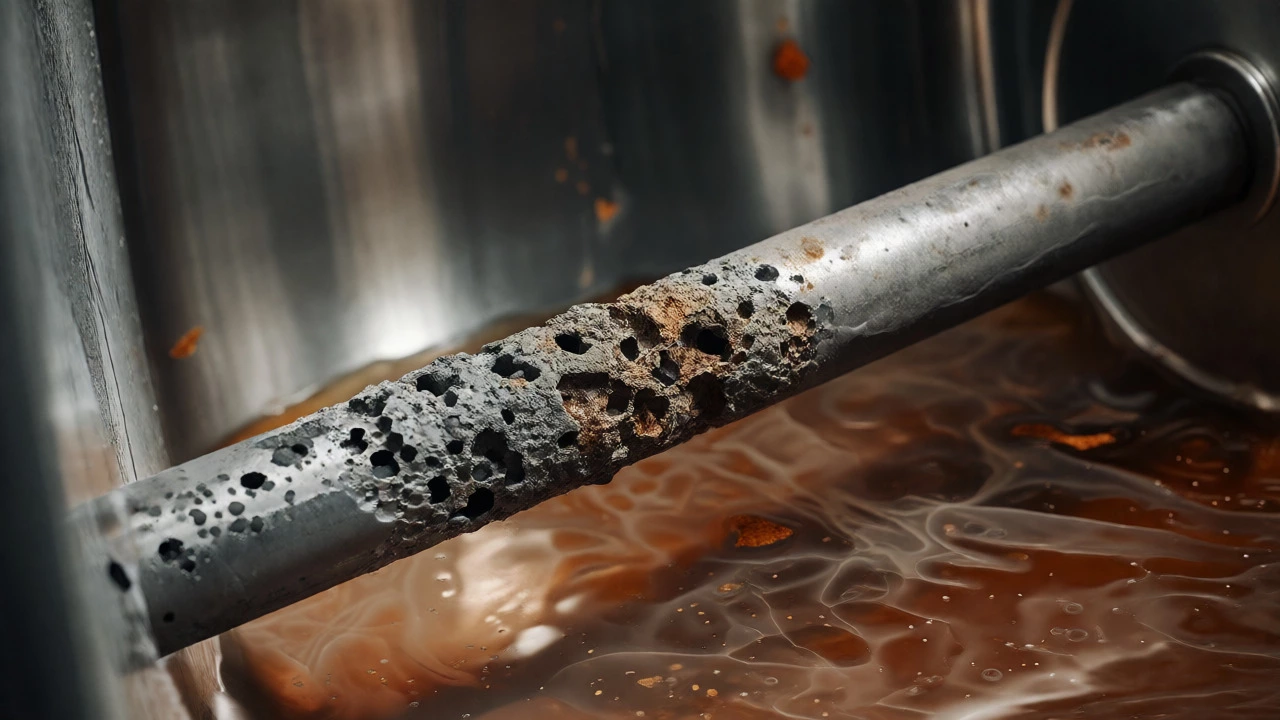
If there is one single reason most water heaters die young, it’s the anode rod. This metal rod, usually made of magnesium or aluminum, sits inside the tank. Its job is simple: corrode so the steel tank doesn’t have to. This process is called cathodic protection. The rod attracts corrosive elements in the water, sacrificing itself to protect the inner lining.
Here is the problem. Many homeowners never check the rod. In areas with aggressive water chemistry, like parts of Western Australia, the rod can dissolve completely in just two or three years. Once the rod is gone, the corrosion attacks the tank walls directly. You won’t see a leak immediately. Instead, you might notice rusty water coming out of your hot taps. That’s a clear sign the rod is spent and the tank is starting to rust from the inside out. If you catch it early, replacing the rod costs around $50-$100. If you wait until the tank leaks, you’re looking at a full replacement.
Sediment Buildup: The Silent Killer
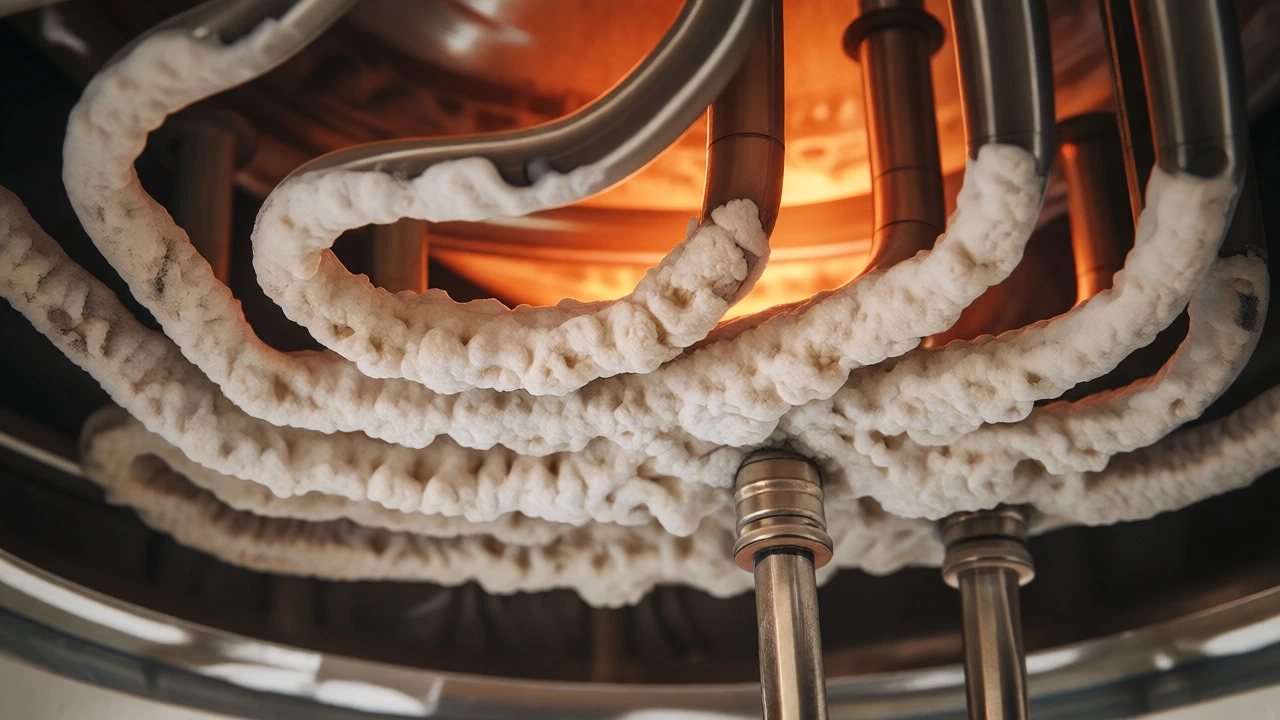
Hard water contains high levels of dissolved minerals, primarily calcium and magnesium. When water heats up, these minerals drop out of the solution and settle at the bottom of the tank as sediment. Think of it like the white crust you see on your kettle spout, but massive amounts accumulating over months.
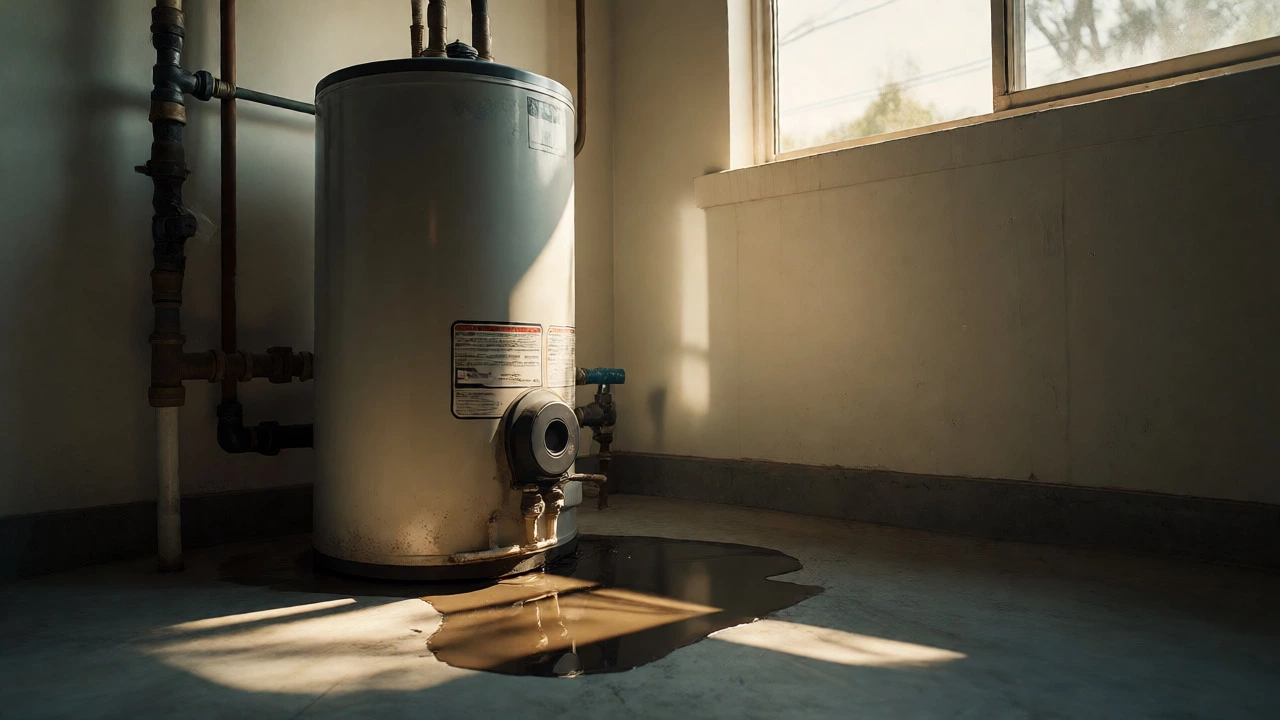
This layer of sediment acts as an insulator. In electric heaters, the heating elements are submerged. Sediment covers them, forcing the elements to work harder and longer to heat the water above. This leads to overheating and eventual burnout. In gas heaters, the sediment sits between the burner flame and the water. The heat gets trapped under the sediment layer, causing the tank floor to overheat. Metal expands when heated. Repeated thermal stress cracks the tank’s bottom seam. This is why many leaks start at the very base of the unit. Flushing your tank once a year removes this sludge and extends life significantly.
Pressure Problems and Expansion Tanks
Modern plumbing codes require sealed systems. When water heats, it expands. If your home lacks an expansion vessel, that expanding water has nowhere to go. Pressure builds up inside the tank. Eventually, the pressure relief valve (TRV) drips to release the excess. But constant pressure cycling stresses the tank joints and welds.
Over time, this hydraulic hammer effect weakens the structural integrity of the tank. You might hear banging noises in your pipes. These aren’t just annoying; they are warning signs of excessive pressure. A small expansion tank, costing less than $80 installed, absorbs this extra volume. Without it, your water heater fights a daily battle against physics, and eventually, it loses.
| Failure Point | Cause | Preventative Action | Estimated Cost to Fix |
|---|---|---|---|
| Tank Corrosion | Depleted Anode Rod | Inspect/Replace rod every 3-5 years | $50 - $150 |
| Heating Element Burnout | Sediment Insulation | Annual tank flush | $100 - $200 per element |
| Bottom Seam Leak | Thermal Stress from Sediment | Annual tank flush + Check T&P Valve | Full Replacement ($600+) |
| Leaking Relief Valve | High System Pressure | Install Expansion Vessel | $80 - $120 |
| Electrical Control Failure | Moisture/Dust Intrusion | Keep area clean/dry | $150 - $250 |
Temperature Settings: Too Hot to Handle
Most manufacturers recommend setting your thermostat to 60°C (140°F). This temperature kills Legionella bacteria while minimizing mineral scaling. However, many people crank it up to 70°C or higher for hotter showers. Every degree above 60°C accelerates mineral precipitation. Harder scale forms faster, coating elements and valves.
Additionally, higher temperatures increase internal pressure. If your pressure relief valve is old or faulty, it may not handle the extra stress. Keep it at 60°C. Use a mixing valve at the tap if you need hotter water for laundry. This balances safety, efficiency, and longevity.
Electrical Issues in Electric Units
For electric storage units, the connection points are vulnerable. Loose wiring causes arcing, which generates heat and damages terminals. Dust accumulation on top of the unit can also cause short circuits in the control panel. If your breaker trips frequently, don’t just reset it. Have a licensed electrician check the connections. A loose neutral wire can cause voltage fluctuations that fry the thermostat or heating elements prematurely.
Gas Heater Specifics: Ventilation and Combustion
Gas heaters rely on proper airflow. Blocked flues or poor ventilation cause incomplete combustion. This produces carbon monoxide and soot. Soot buildup on the heat exchanger reduces efficiency and creates hot spots. Overheating warps the metal, leading to cracks. Regular servicing ensures the burner flame is blue, not yellow. A yellow flame indicates trouble. Don’t ignore it.
Perth-Specific Factors: Hard Water Reality
Australia has some of the hardest water in the world, and Perth is no exception. The Department of Water and Environmental Regulation notes that groundwater supplies in Perth contain significant mineral content. This means generic advice about "flushing occasionally" isn't enough. You likely need annual maintenance. Consider installing a whole-house water softener if you have multiple appliances failing early. While expensive upfront, it protects your heater, dishwasher, and washing machine simultaneously.
When to Repair vs. Replace
Not every failure warrants a new tank. Here is a quick rule of thumb:
- Under 5 years old: Repair. Likely anode rod, element, or thermostat issue.
- 5-8 years old: Evaluate. If the tank itself is leaking, replace. If components fail, repair only if cost is low.
- Over 8 years old: Replace. Even if you fix the current issue, another component will fail soon. Invest in a new, efficient model.
Ignoring small signs leads to big bills. A dripping valve ignored for six months can flood your garage. A dead anode rod replaced yearly costs pennies compared to a new tank. Stay proactive.
How long should a water heater last?
Typically 8 to 12 years for well-maintained units. In hard water areas like Perth without maintenance, expect 5 to 7 years.
Can I change the anode rod myself?
Yes, if you are handy. Turn off power/gas and water first. Drain some water to reduce pressure. Use a large socket wrench. Be prepared for dirty water spillage.
Does flushing my water heater really help?
Absolutely. Removing sediment prevents insulation on heating elements and reduces thermal stress on the tank bottom, extending life by several years.
Why is my water heater making popping noises?
This is usually trapped steam bubbles escaping through sediment layers at the bottom of the tank. It indicates heavy buildup that needs flushing.
Is a water softener worth it for my heater?
In hard water regions, yes. It drastically reduces scaling, improving efficiency and preventing premature element and tank failure.