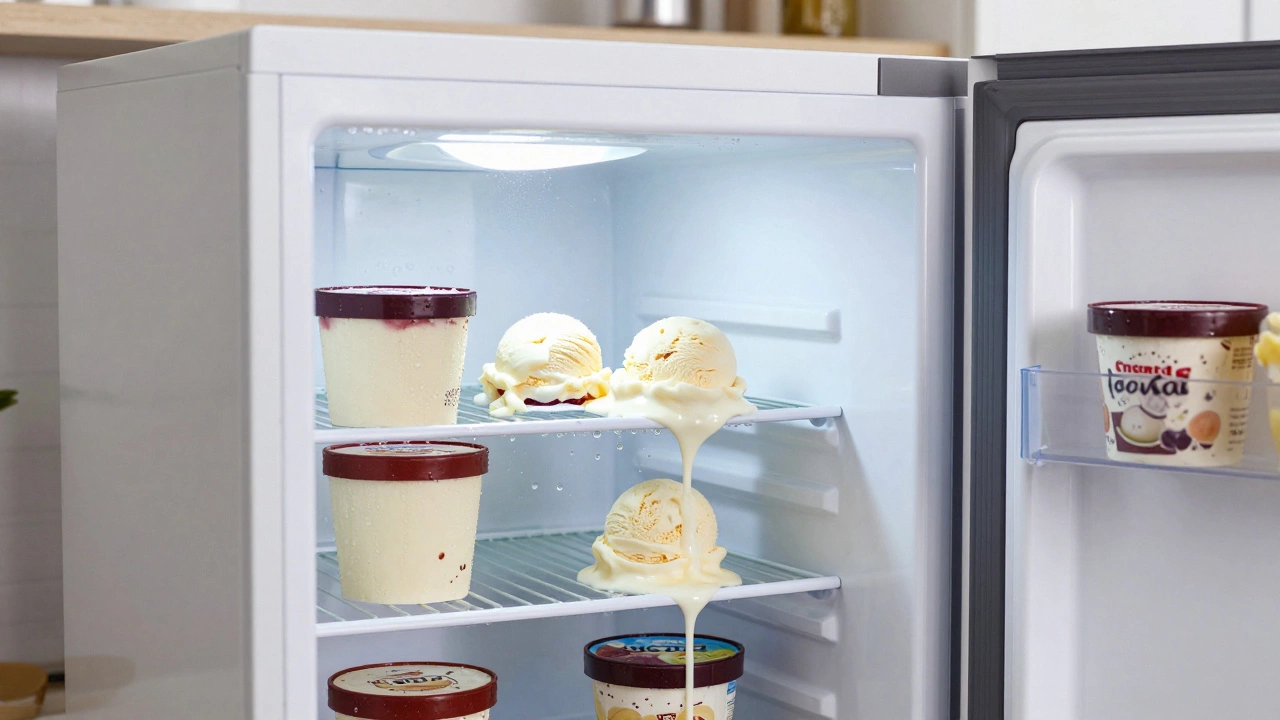
Freezer Troubleshooter
Diagnostic Steps
Is the freezer receiving power and set correctly?
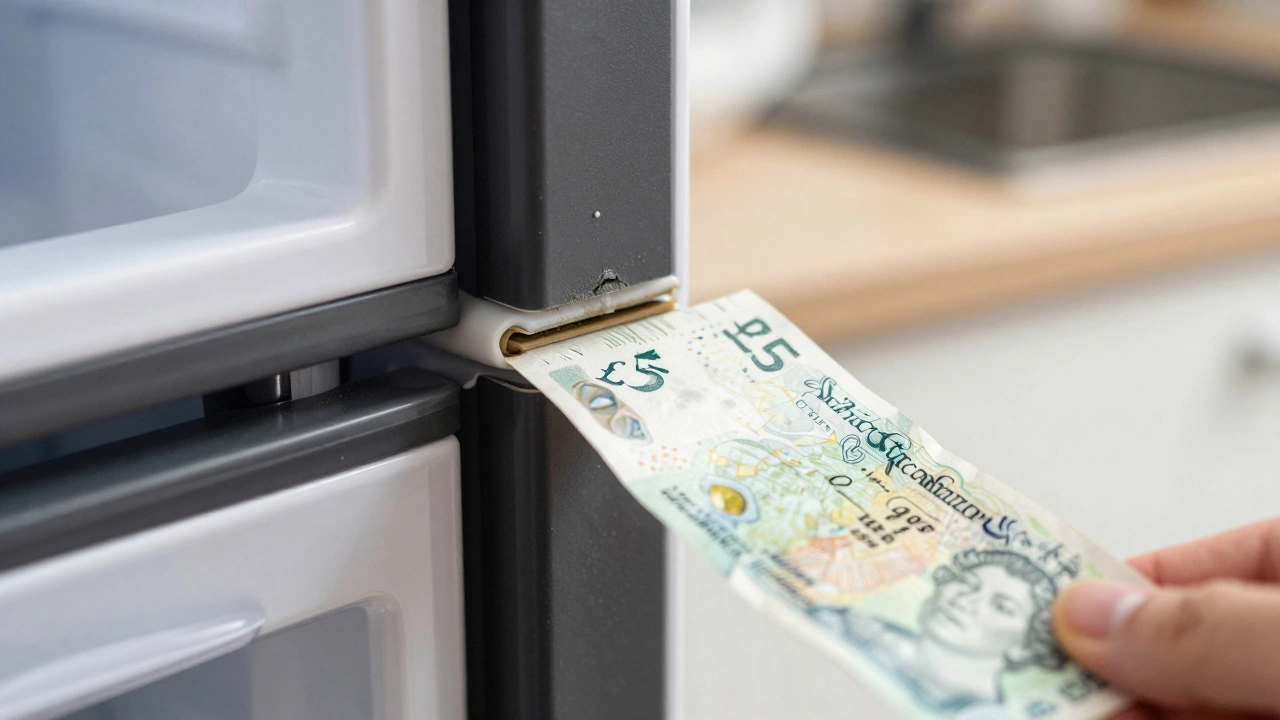
Perform the Dollar Bill Test.
Close the door on a dollar bill. Can you pull it out easily?
Inspect the back wall inside the freezer.
Note: If thick ice is present, the defrost system likely failed.
Check Condenser Coils (Bottom/Back) and Fan Noise.
Your freezer is supposed to be a reliable vault for your food, but when it starts losing its chill, panic sets in. You open the door, expecting frosty perfection, and instead find soft ice cream and thawing vegetables. It’s frustrating, especially when you have expensive groceries at stake. But before you call a technician or buy a replacement unit, there are several common reasons why your freezer might not stay frozen.
Most of the time, the issue isn’t a catastrophic failure of the compressor. It’s often something simple like a dirty coil, a stuck door seal, or a misconfigured setting. In this guide, we’ll walk through the most likely culprits, starting with the easiest fixes you can do yourself, moving toward more complex mechanical issues that might need professional help.
The Quick Check: Power and Settings
Before you start unscrewing panels, let’s rule out the obvious. Sometimes the problem is human error or a minor power glitch rather than a broken part. First, check if the freezer is actually receiving power. Is the light on inside? If not, check your circuit breaker or fuse box. A tripped breaker can stop the unit from running entirely.
If the power is good, look at the temperature controls. Many modern freezers have digital displays that can accidentally get bumped. Ensure the temperature is set to -18°C (0°F) or lower. If you recently unplugged the unit or moved it, give it 24 hours to stabilize. Also, consider if you’ve been leaving the door open too long or too frequently. Frequent opening lets warm air rush in, forcing the compressor to work overtime. If the freezer feels warm but the fridge section is cold, the issue might be isolated to the freezer compartment specifically.
Door Seals: The Silent Leak
One of the most common reasons a freezer fails to maintain temperature is a faulty door gasket. The rubber seal around the door creates an airtight barrier between the cold interior and the warm room. Over time, these seals wear out, tear, or become dirty, allowing warm air to seep in. This forces the compressor to run constantly, which can lead to overheating and eventual failure.
To test your seal, close the freezer door on a dollar bill or a piece of paper. If you can pull the paper out without resistance, your seal is weak. Another sign is excessive frost buildup on the sides of the door or near the hinges. Moisture from the air enters through gaps, freezes, and creates ice dams. Cleaning the seal with warm soapy water can sometimes restore its grip. If it’s cracked or warped, replacing the gasket is a relatively inexpensive fix that can save your appliance.
| Symptom | Likely Cause | Action Required |
|---|---|---|
| Paper slips out easily | Worn or dirty gasket | Clean or replace seal |
| Frost on door edges | Air leakage | Inspect seal integrity |
| Condensation inside | High humidity entry | Check seal alignment |
Ice Buildup and Defrost System Failure
In frost-free models, ice shouldn’t accumulate on the back wall of the freezer. If you see a thick layer of frost covering the evaporator coils, your defrost system has likely failed. Modern freezers use a defrost heater, a defrost timer (or control board), and a defrost thermostat to automatically melt ice periodically. When one of these components breaks, ice builds up and blocks airflow.
The evaporator coils are responsible for absorbing heat from the freezer. When they’re buried under ice, they can’t do their job. Air can’t circulate properly, leading to uneven cooling and warm spots. You might notice the fan making a grinding noise as it tries to push air through the ice blockage. To confirm this, unplug the freezer and leave the door open for 24 hours to let the ice melt completely. If the freezer works normally after this, the issue is definitely with the defrost system-likely a bad heater or a faulty defrost thermostat.
Dust and Debris on Condenser Coils
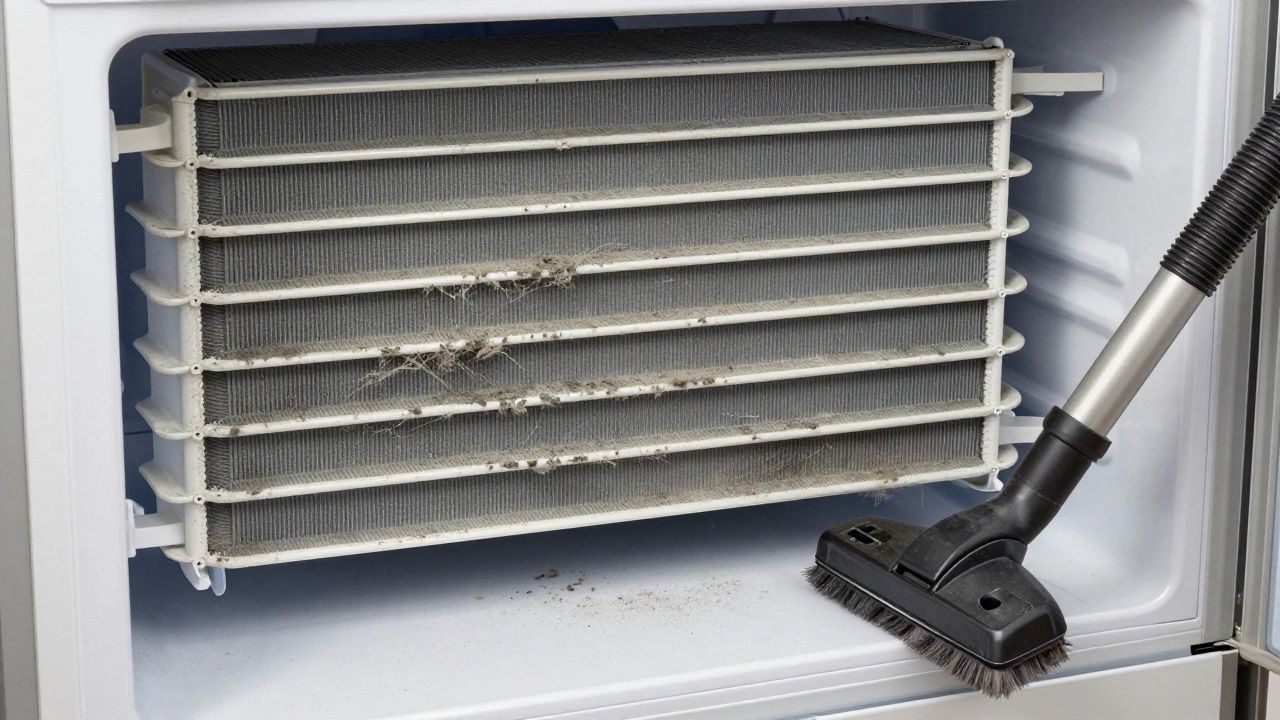
Your freezer has two sets of coils: evaporator coils inside the freezer and condenser coils outside, usually located at the bottom front or behind the unit. These coils release heat from the refrigerant. If they’re covered in dust, pet hair, and debris, the heat can’t escape efficiently. This causes the compressor to overwork, leading to higher internal temperatures and potential burnout.
Cleaning the condenser coils is one of the best maintenance tasks you can do. Use a vacuum cleaner with a brush attachment or a specialized coil brush to remove dirt. Do this at least twice a year. If your freezer is tucked into a tight cabinet space, ensure there’s enough ventilation around it. Poor airflow around the unit acts like a blanket, trapping heat and reducing efficiency. A clean coil can improve performance by up to 15% and extend the life of the compressor.
Fan Motors: Evaporator and Condenser
Freezers rely on fans to move cold air around. There are typically two fans: the evaporator fan inside the freezer and the condenser fan near the compressor. If either fan stops working, circulation halts. A broken evaporator fan means cold air stays trapped near the coils, while the rest of the freezer warms up. You might hear a humming sound from the compressor but no air movement.
To check the evaporator fan, listen for noise when the compressor runs. If it’s silent, the motor might be dead or obstructed by ice. The condenser fan, located at the back or bottom, cools the compressor. If it fails, the compressor overheats and shuts down as a safety measure. Both fans are relatively easy to inspect and replace if you’re handy. However, if the fan blades are jammed by debris, cleaning them might solve the problem without needing a new part.
Thermostat and Control Board Issues
The thermostat tells the compressor when to turn on and off based on the internal temperature. If it’s malfunctioning, it might not signal the compressor to cool when needed. In older models, the thermostat is a mechanical dial; in newer ones, it’s part of the electronic control board. If the display is blank or showing error codes, the control board might be fried.
Testing a thermostat requires a multimeter to check for continuity. If the thermostat doesn’t send a signal when the temperature rises, it needs replacement. For electronic boards, visual inspection for burnt components or bulging capacitors can indicate failure. These repairs are more technical and often require professional assistance, especially if warranty coverage is still active. Ignoring a failing control board can lead to further damage to the compressor.
Refrigerant Leaks and Compressor Failure
If all else fails, the issue might be with the refrigerant system or the compressor itself. Refrigerant is the fluid that carries heat away from the freezer. A leak means there’s not enough coolant to absorb heat, so the freezer can’t get cold. Signs of a leak include oily residue around the coils or hissing sounds. Refrigerant leaks require a certified technician to repair and recharge the system due to environmental regulations and safety concerns.
The compressor is the heart of the freezer. If it’s making loud noises, clicking, or not running at all, it might be failing. A bad start relay or overload protector can also mimic compressor failure. These parts are cheap and easy to swap, but if the compressor itself is dead, the cost of repair might exceed the value of the unit. In such cases, replacing the freezer is often the more economical choice.
When to Call a Professional
While many freezer issues can be DIY fixes, some require expert hands. If you suspect a refrigerant leak, a failed compressor, or a complex electrical fault, don’t risk it. Working with high-voltage components and refrigerants can be dangerous. Additionally, if your freezer is under warranty, attempting repairs yourself might void the coverage. Look for signs like burning smells, sparks, or complete silence from the unit. These are red flags that warrant immediate professional attention.
Regular maintenance can prevent most of these problems. Clean the coils, check the seals, and monitor the temperature regularly. By staying proactive, you can keep your freezer running efficiently and avoid costly emergency repairs. Remember, a well-maintained freezer not only saves your food but also reduces energy bills and extends the lifespan of your appliance.
How do I know if my freezer compressor is bad?
A bad compressor often makes loud humming, clicking, or buzzing noises. If the compressor runs continuously without cooling the freezer, or if it doesn’t run at all despite power being supplied, it may be failing. Check the start relay and overload protector first, as these are common culprits. If those are fine, the compressor itself might need replacement.
Why is my freezer making a rattling noise?
Rattling noises can come from several sources. Loose items inside the freezer can rattle against the walls. More seriously, a failing evaporator fan motor or a compressor with worn mounts can cause vibrations. Ice buildup on the fan blades can also create imbalance and noise. Inspect the fan area for obstructions and ensure the unit is level.
Can a clogged drain line cause my freezer to not freeze?
Yes, indirectly. A clogged drain line can cause water to back up and freeze around the evaporator coils or defrost heater. This ice buildup insulates the coils, reducing their ability to cool. Clearing the drain line with hot water or a turkey baster can resolve the issue and restore proper airflow.
How often should I clean the condenser coils?
It’s recommended to clean condenser coils at least twice a year. If you have pets or live in a dusty environment, monthly cleaning might be necessary. Dirty coils reduce efficiency, increase energy bills, and strain the compressor, potentially shortening the lifespan of your freezer.
Is it worth repairing an old freezer that won’t freeze?
If the repair cost exceeds 50% of the price of a new unit, replacement is usually better. Older models are less energy-efficient, meaning higher electricity bills. Additionally, finding parts for discontinued models can be difficult and expensive. Consider the age, condition, and energy rating before deciding.