Electric Hob Lifespan Estimator
Hob Information
Results & Recommendations
Enter your hob details to see results
Most people don’t think about how long their electric hob will last until it stops working. Then suddenly, you’re stuck with a broken stove, a pile of half-prepared meals, and no idea if replacing it is worth the cost. The truth? An electric hob doesn’t have a fixed expiration date. It can last anywhere from 10 to 15 years under normal use-but some last longer, and others fail in under five. Why the huge difference? It’s not magic. It’s how you treat it.
What Actually Determines an Electric Hob’s Lifespan?
Electric hobs don’t just wear out randomly. They fail because of predictable patterns. The main culprits are heat stress, electrical wear, and physical damage. The heating elements, especially the big ones, get hot over 1,000 times a year. Each cycle expands and contracts the metal. Over time, that leads to tiny cracks. When those cracks grow, the element stops heating evenly-or stops entirely. The control panel is another weak spot. Buttons and dials get pressed daily. Moisture from cooking, grease buildup, or even just dirty fingers can cause short circuits. A 2023 study by the Appliance Industry Research Group tracked 1,200 electric hobs over 8 years. They found that 68% of failures happened after the 10-year mark, but 22% failed before 6 years. Why? Poor cleaning habits and ignoring small signs of trouble.Signs Your Electric Hob Is Approaching the End
You don’t need to wait for everything to stop working. Look for these red flags:- One burner takes longer to heat up than the others
- Flashing error codes (even if the hob still works)
- Intermittent power-burners turn off randomly
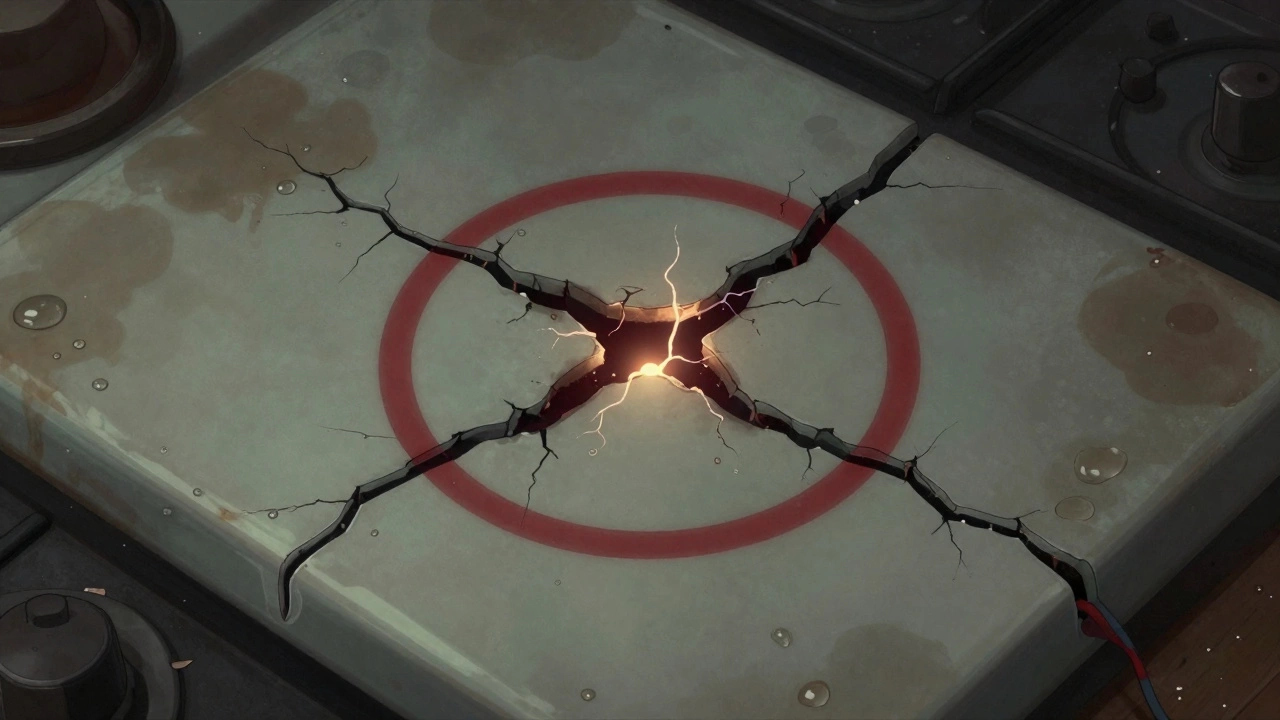
- Visible cracks or bubbling on the ceramic surface
- Sparking or buzzing sounds when you turn it on
How to Make Your Electric Hob Last Longer
The good news? You have way more control over its lifespan than you think. Here’s what actually works:- Keep it clean-but gently. Never use abrasive pads or metal scrapers on ceramic glass. Use a damp cloth and a专用 ceramic hob cleaner. Vinegar and baking soda can work too, but avoid letting them sit. Residue can etch the surface over time.
- Don’t drag pots. Lifting them off the surface prevents scratches. Even small scratches weaken the glass. A single deep scratch can let moisture in, leading to internal corrosion.
- Use the right cookware. Flat-bottomed pots and pans distribute heat evenly. Warped or uneven bases cause hot spots that stress the elements. Cast iron is fine, but make sure it’s not rusted or chipped.
- Don’t overload the circuits. If your hob shares a circuit with the microwave or fridge, it’s a recipe for trouble. Electric hobs draw serious power-up to 3,000 watts. Overloaded circuits cause voltage drops that damage control boards.
- Check the wiring every 3-5 years. A licensed electrician can inspect the terminal block and connections. Loose wires cause arcing, which burns out control panels faster.
Repair vs. Replace: When to Cut Your Losses
You might think repairing an old hob is cheaper. Sometimes it is. But here’s the math:| Option | Typical Cost | Expected Lifespan After | Warranty |
|---|---|---|---|
| Replace heating element | $80-$150 | 1-3 years | 3-6 months |
| Replace control board | $200-$400 | 2-4 years | 1 year |
| New electric hob (mid-range) | $500-$800 | 10-15 years | 1-5 years |
If your hob is over 8 years old and needs a control board fix, you’re probably just delaying the inevitable. The new hob might cost more upfront, but you’ll save money over time. Plus, modern models use 20-30% less energy. That’s $50-$100 saved per year on your electric bill.
What Happens When an Electric Hob Dies?
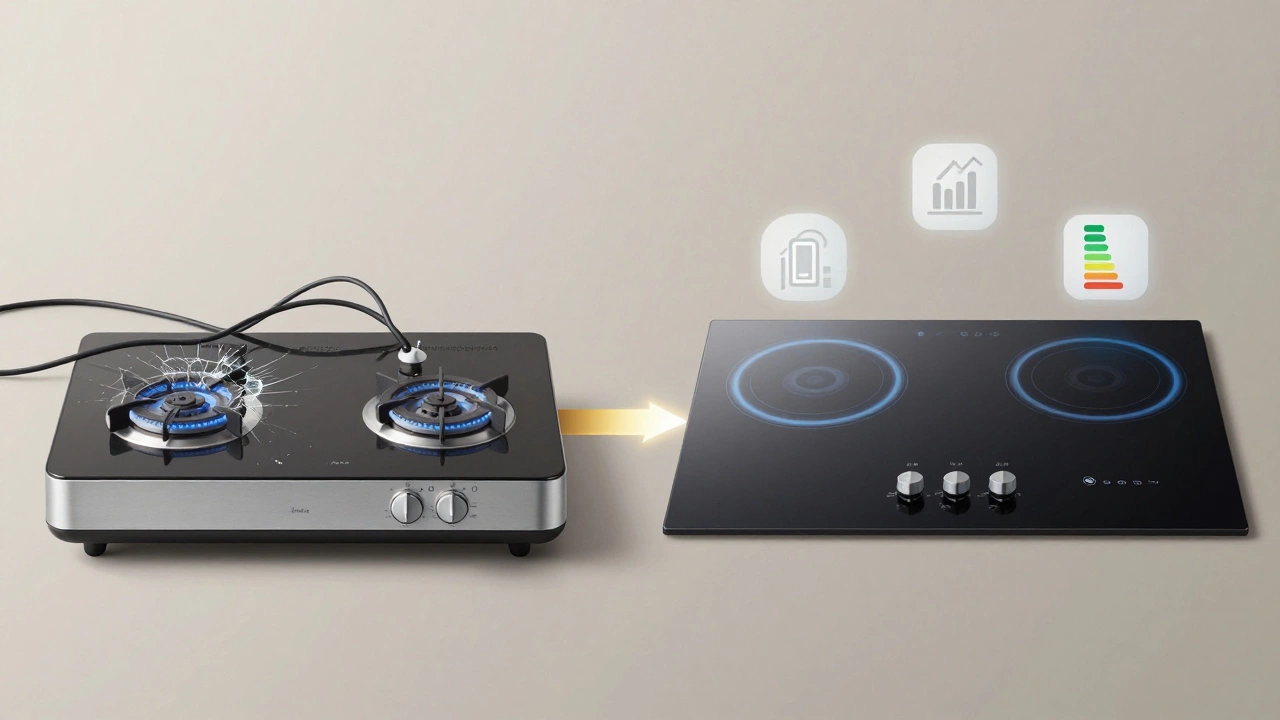
When the hob finally stops working, you’re left with a few choices:- Replace it with the same model. Easy, but outdated. Older models lack safety features like automatic shut-off and child locks.
- Upgrade to induction. Induction hobs heat faster, use less energy, and are safer. They cost more upfront ($700-$1,500), but last 15-20 years and cut cooking time in half.
- Switch to gas. Only if you have gas lines and proper ventilation. Gas hobs last 15+ years too, but require annual safety checks.
Don’t just grab the cheapest replacement. Look for models with solid repair networks. Brands like Bosch, Siemens, and Whirlpool have parts available for over a decade. Cheaper brands often disappear after 3 years-leaving you with a broken appliance and no way to fix it.
Why Most People Replace Too Early-or Too Late
A lot of folks replace their hob after 5 years because it looks dirty or slow. That’s a mistake. A well-maintained hob can easily hit 12 years. On the flip side, others wait until the hob catches fire or shocks them. That’s dangerous. The sweet spot? At 8-10 years, start thinking ahead. Check if replacement parts are still available. Look at energy ratings. Test if your kitchen layout can handle a new model. Planning ahead saves you from emergency repairs, last-minute shopping, and overpaying.Electric hobs aren’t disposable. They’re built to last-but only if you give them basic care. A clean surface, proper cookware, and occasional wiring checks can double its life. And when it finally goes, replacing it with a modern, energy-efficient model isn’t just smart-it’s cheaper in the long run.
Can you repair a cracked electric hob surface?
No, you can’t safely repair a cracked ceramic glass surface. Even small cracks let moisture into the electrical components underneath, which can cause short circuits, shocks, or even fire. The entire glass top must be replaced. It’s expensive-$200-$500 depending on the model-but it’s the only safe option. If the cost is close to a new hob, replacement is usually the better choice.
Do electric hobs use a lot of electricity?
They can, but modern ones are much more efficient. A standard 4-burner electric hob draws 3,000-5,000 watts when all burners are on full. That’s about the same as a hairdryer or space heater. But if you use them wisely-like matching pot size to burner size and turning them off early-the average household spends $15-$30 per month on cooking. Induction hobs cut that in half.
Is it worth fixing a 12-year-old electric hob?
Usually not. At 12 years, the hob is past its expected lifespan. Even if you fix one part, others are likely to fail soon after. Replacement parts for older models are harder to find and more expensive. Plus, newer models are 25-35% more energy-efficient. You’ll recover the cost of a new hob in 3-5 years through lower bills. Consider upgrading instead.
Can you use an electric hob with a broken element?
Technically yes-but you shouldn’t. A broken element often means the control system is under stress. Using the hob with one burner out can overload the remaining ones, causing them to fail faster. It also creates uneven cooking, which wastes time and energy. If one element is dead, get it replaced within a few weeks. Don’t ignore it.
How do you know if your hob’s wiring is faulty?
Signs include flickering lights when the hob turns on, burning smells, sparks under the unit, or tripping breakers. These aren’t normal. They mean the wiring, terminal block, or circuit board is overheating. If you notice any of these, turn off the power at the breaker and call an electrician. Don’t try to fix it yourself. Faulty wiring is a major fire risk.