Water Heater Safety Risk Calculator
This calculator helps you understand the safety risks associated with your water heater settings. Based on the article's research, water temperatures above 54°C (129°F) and pressure above 80 psi can lead to serious safety hazards including scalding and tank failure.
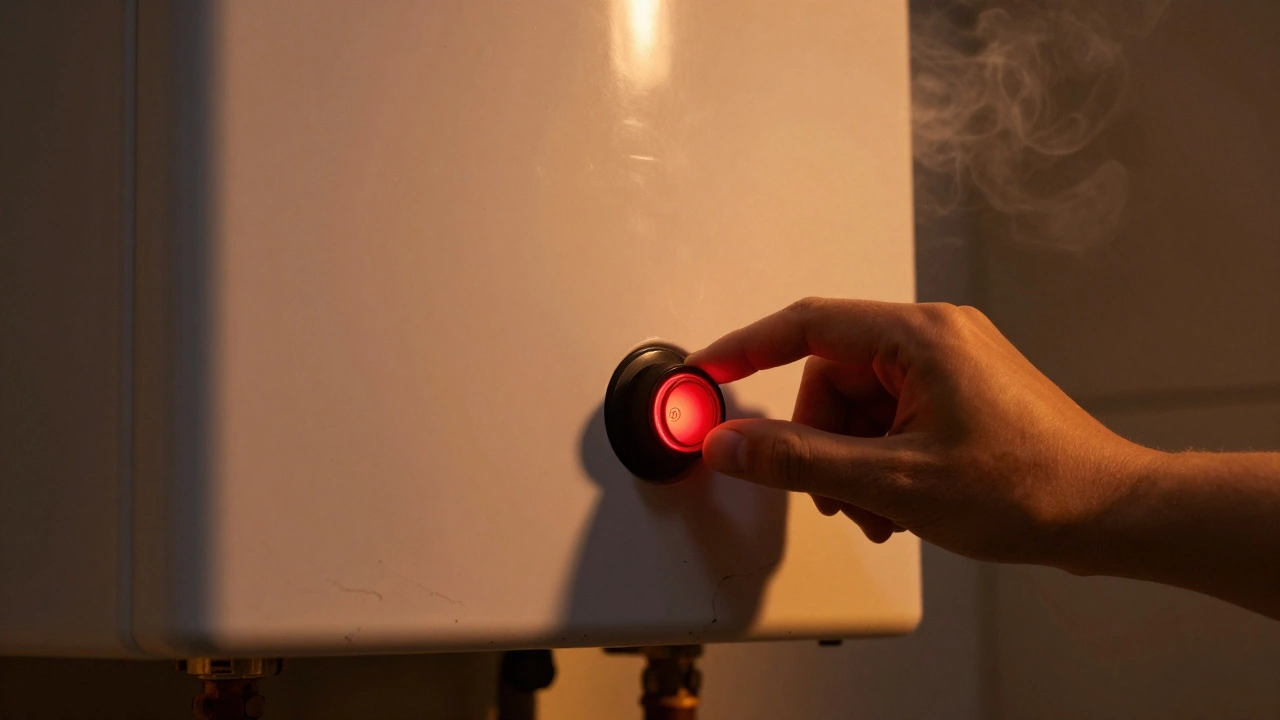
Every now and then, your water heater shuts off. The hot water stops. You panic. You find the reset button-usually a little red button near the thermostat-and you push it. Click. The lights come back on. Hot water flows again. You breathe a sigh of relief. But what if you keep doing this? What if you’re resetting it every week? Or worse-every day?
Resetting Isn’t Fixing
The reset button on your water heater isn’t a magic fix. It’s a safety switch. It trips when something’s wrong-like the temperature going too high, or the heating element overheating. Pushing it back on doesn’t fix the problem. It just lets the system run again… until it overheats again.
Think of it like ignoring a car’s check engine light. You keep driving. The light goes off after you restart the engine. But the real issue-maybe a bad sensor, a fuel leak, or failing catalytic converter-is still there. Resetting your water heater is the same thing. You’re not solving the root cause. You’re just delaying the crash.
What’s Actually Causing the Reset?
There are only a few real reasons your water heater keeps tripping the reset button:
- Thermostat failure - If the upper thermostat is stuck, it keeps sending power to the element even after the water’s hot. That’s what overheats the tank and triggers the reset.
- Faulty heating element - A shorted or grounded element can draw too much current, overheating the tank. This is common in older units or hard water areas like Perth.
- High water pressure - If your home’s water pressure is above 80 psi, it can cause the temperature and pressure relief valve to leak or the tank to overheat. Many people don’t even know they have this issue.
- Mineral buildup - Hard water leaves scale inside the tank. That scale acts like insulation. The element works harder, runs hotter, and trips the reset.
- Broken or loose wiring - A loose connection can arc and create heat spikes that trigger the safety cutoff.
None of these are fixed by pushing a button. And if you keep ignoring them, the damage gets worse.
What Happens When You Reset Too Often?
Every time you reset the water heater, you’re stressing the system. Here’s what builds up over time:
- Thermostat damage - Repeated overheating warps the thermostat’s internal contacts. Once they’re damaged, they won’t shut off properly-even if you replace the reset button.
- Element burnout - Constant overheating fries the heating element. Replacing one element is cheap. Replacing both because you waited too long? That’s $200+.
- Tank corrosion - When the element overheats, it boils water faster. That increases steam pressure and accelerates rust inside the tank. Once the tank corrodes, it’s not repairable. You need a full replacement.
- Pressure valve failure - The T&P valve is designed to release pressure once. If it’s been leaking because of repeated overheating, it may not seal properly after. That means your tank could overpressurize without warning.
In Perth, where water hardness is high and homes are often 20+ years old, this isn’t rare. I’ve seen water heaters that were reset 17 times in one year. The tank burst three months later. No warning. Just a flood in the laundry room.
The Hidden Danger: Scalding and Fire Risk
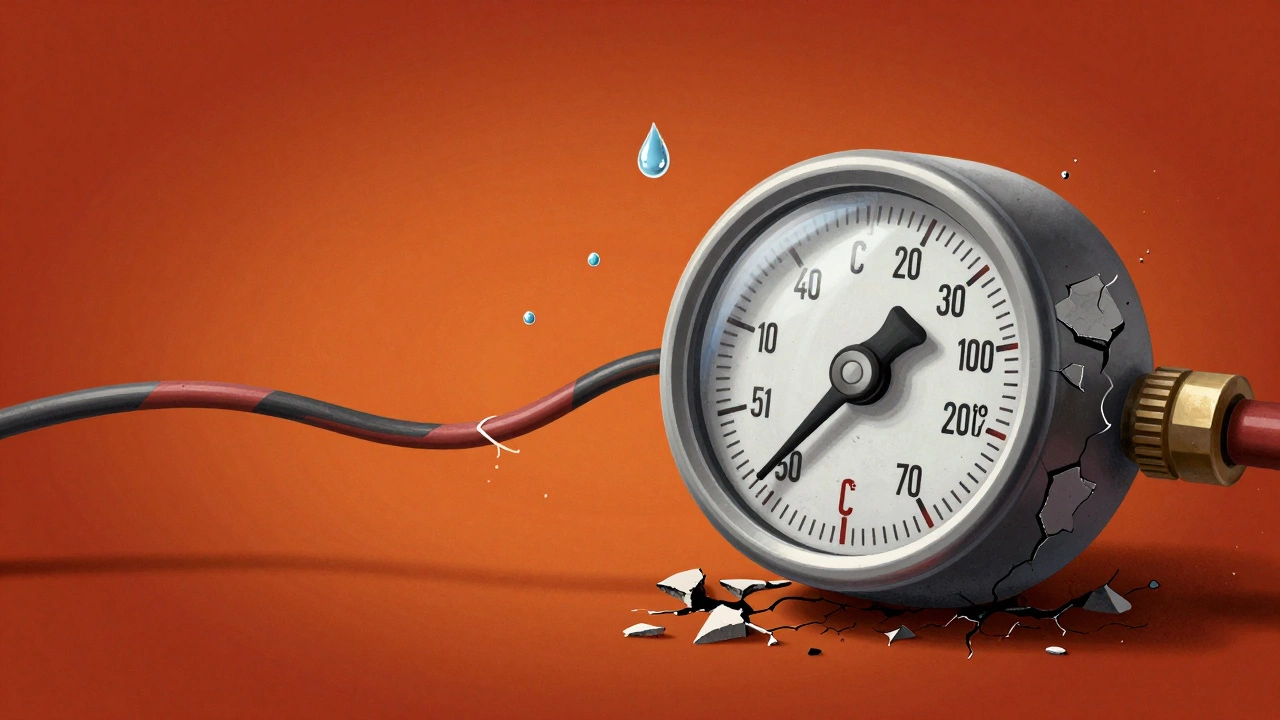
Here’s what most people don’t realize: when the thermostat fails and the reset keeps getting pushed, the water can get dangerously hot.
Normal hot water temperature is 49-54°C. That’s hot enough to scald in under 10 seconds. But if the thermostat is stuck, the water can hit 70°C or higher. That’s enough to cause third-degree burns in less than two seconds.
And it’s not just burns. Overheating can cause electrical components to melt. In rare cases, it can ignite nearby flammable materials-especially if the heater is in a garage, under a sink with cleaning supplies, or near insulation that’s too close to the tank.
There’s a reason the reset button exists. It’s not a convenience. It’s your last line of defense.
What You Should Do Instead
If your water heater keeps tripping, here’s what to do-step by step:
- Turn off the power - Flip the breaker. Don’t just unplug it. Electric water heaters need the circuit fully disconnected.
- Drain a few litres - Attach a hose to the drain valve and let out a bucket or two. This removes sediment that might be causing overheating.
- Check the temperature setting - Turn the dial to 50°C. If it’s set higher, lower it. Many people crank it to 70°C thinking they’ll get more hot water. All they get is higher bills and higher risk.
- Test the pressure - Buy a $15 water pressure gauge from a hardware store. Screw it onto an outdoor tap. Turn the water on. If it reads over 80 psi, you need a pressure-reducing valve installed.
- Call a licensed plumber - If the reset button keeps popping after you’ve done the above, it’s time for a pro. They’ll test the thermostat, elements, wiring, and tank integrity. Most repairs cost under $300. A new tank? $1,200-$2,500 installed.
Don’t wait for the tank to leak. Don’t wait for the water to scald someone. Don’t wait for the reset button to stop working altogether.
How Often Should You Reset It?
The answer? Never-unless it’s the first time.
If the reset button trips once, it’s a warning. Fix it. If it trips twice, it’s a problem. Fix it now. If it trips three times, you’re already in damage mode.
There’s no safe number of resets. One is too many if the cause isn’t addressed.
When to Replace, Not Repair
Here’s when you know it’s time to replace the whole unit:
- The tank is over 10 years old
- You’ve reset it more than five times in a year
- There’s rust around the base or the pressure valve
- The water smells like rotten eggs (sulfur bacteria + overheating = bad combo)
- It takes longer than 30 minutes to heat up
Modern water heaters are 20-30% more efficient than models from 10 years ago. You’ll save money on bills, and you’ll avoid the mess and stress of a sudden failure.
Prevention Is Cheaper Than Repair
Here’s what you can do every six months to avoid resets entirely:
- Drain 1-2 buckets of water from the tank’s drain valve
- Check the pressure gauge on the inlet pipe
- Make sure the temperature dial is at 50°C
- Look for leaks or corrosion around the fittings
That’s it. Five minutes every six months. That’s cheaper than your next reset.
Water heaters aren’t designed to be reset. They’re designed to run quietly, reliably, and safely. If yours isn’t doing that, it’s not broken-it’s begging for help. Don’t ignore it. Fix it before it fixes you-with a flood, a burn, or a replacement bill you didn’t plan for.
Why does my water heater keep tripping the reset button?
The reset button trips because the water heater is overheating. This usually happens because of a faulty thermostat, a shorted heating element, heavy mineral buildup from hard water, or electrical wiring issues. Resetting it doesn’t fix the cause-it just lets the problem continue.
Is it safe to keep resetting my water heater?
No. Each reset stresses the system and increases the risk of scalding, electrical failure, or tank rupture. Repeated resets can damage the thermostat, melt wiring, or cause the pressure valve to fail. It’s not a temporary fix-it’s a warning sign you’re ignoring.
How often should I drain my water heater?
Drain 1-2 buckets of water from the tank every six months, especially in areas with hard water like Perth. This removes sediment that insulates the heating element and causes it to overheat. Regular flushing extends the life of your heater and prevents reset trips.
What temperature should my water heater be set to?
Set it to 50°C (122°F). This is hot enough for showers and cleaning, but low enough to prevent scalding and reduce energy use. Higher settings increase the risk of overheating, mineral buildup, and safety switch trips.
When should I replace my water heater instead of repairing it?
Replace it if it’s over 10 years old, you’ve reset it more than five times in a year, you see rust around the base, the water smells like rotten eggs, or it takes longer than 30 minutes to heat up. Repairing an old tank is often more expensive than replacing it-and less reliable.