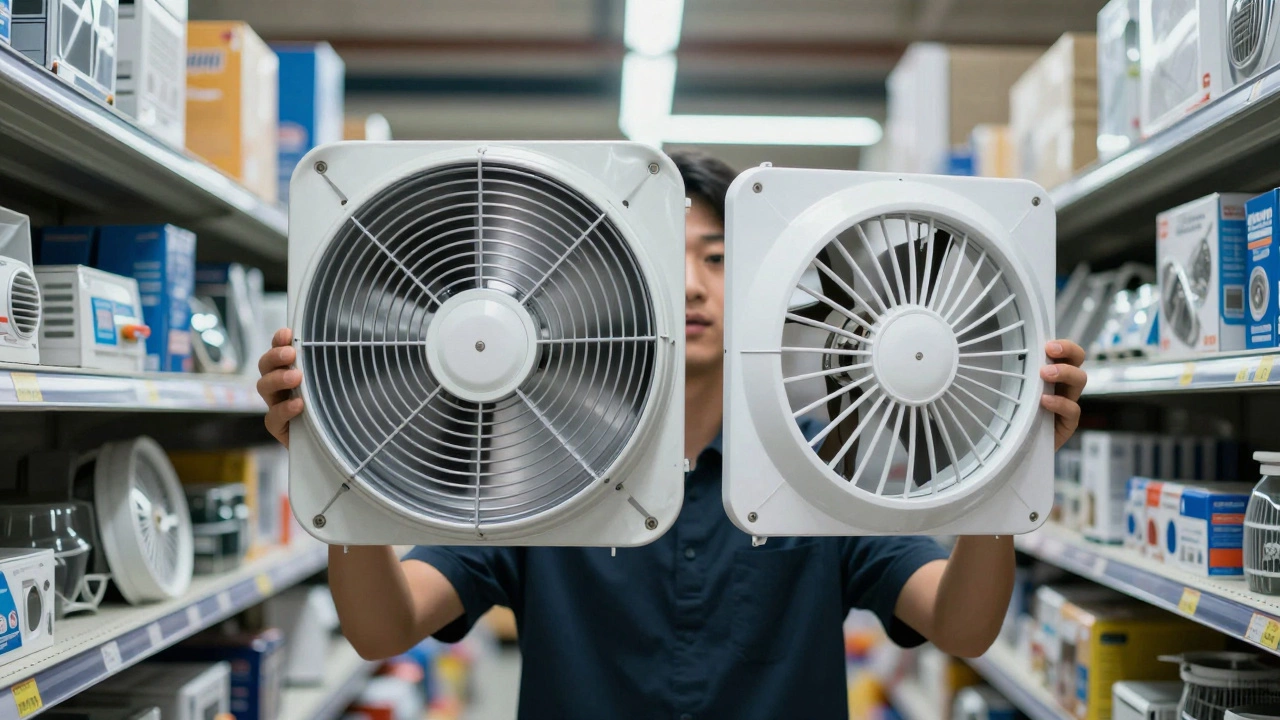
Smart Fan Selector & Diagnostic Tool
Confused by hardware store labels? This tool helps you determine if your space needs an Extractor Fan (removes air out of the house) or a Ventilation Fan (circulates air inside).
Analysis Result
You walk into a hardware store in Perth, confused by the labels. One sign says "Exhaust," another says "Circulation." You need to fix your bathroom because of mould, or perhaps you want to stop the grease from sticking to your ceiling. The confusion isn't just marketing jargon; using the wrong fan in a space can lead to condensation damage, higher power bills, or simply ineffective airflow. In many homes, these terms get mixed up, but mechanically and functionally, they perform distinct jobs. Knowing the difference matters most when you are planning a repair or replacement.
Extractor Fan is a device designed to pull stale, moist, or contaminated air out of a building completely. This means the air leaves your property through a ducted system, venting out via a roof hole or wall pipe. The goal is total removal. When you cook onions and the smell lingers, or your mirror fogs up for hours after a hot shower, an extractor fan is the tool meant to resolve that specific issue. It doesn't mix the air; it removes it.
Ventilation Fan is equipment that circulates air within a closed loop to maintain temperature or oxygen levels. Unlike the extractor, this unit often pulls air from one side and pushes it back into the same room or adjacent spaces without necessarily expelling it outdoors. You see this often in larger living areas where fresh air intake isn't the primary concern, but moving stagnant air is. While some systems blend both functions, pure ventilation focuses on flow rather than removal.
Mechanical Differences You Need to Spot
When you take apart a faulty unit for repair, the internal machinery tells you exactly what you're dealing with. The construction differs to suit the job.
| Feature | Extractor Fan | Ventilation Fan |
|---|---|---|
| Motor Power | High torque for static pressure | Medium torque for continuous flow |
| Blade Design | Centrifugal squirrel cage | Axial propeller style |
| Duct Connection | Rigid pipe required outdoors | Often open grille or internal |
| Sensor Type | Humidity / Steam detection | Temperature / Motion detection |
| Primary Output | Air exhaust | Air circulation |
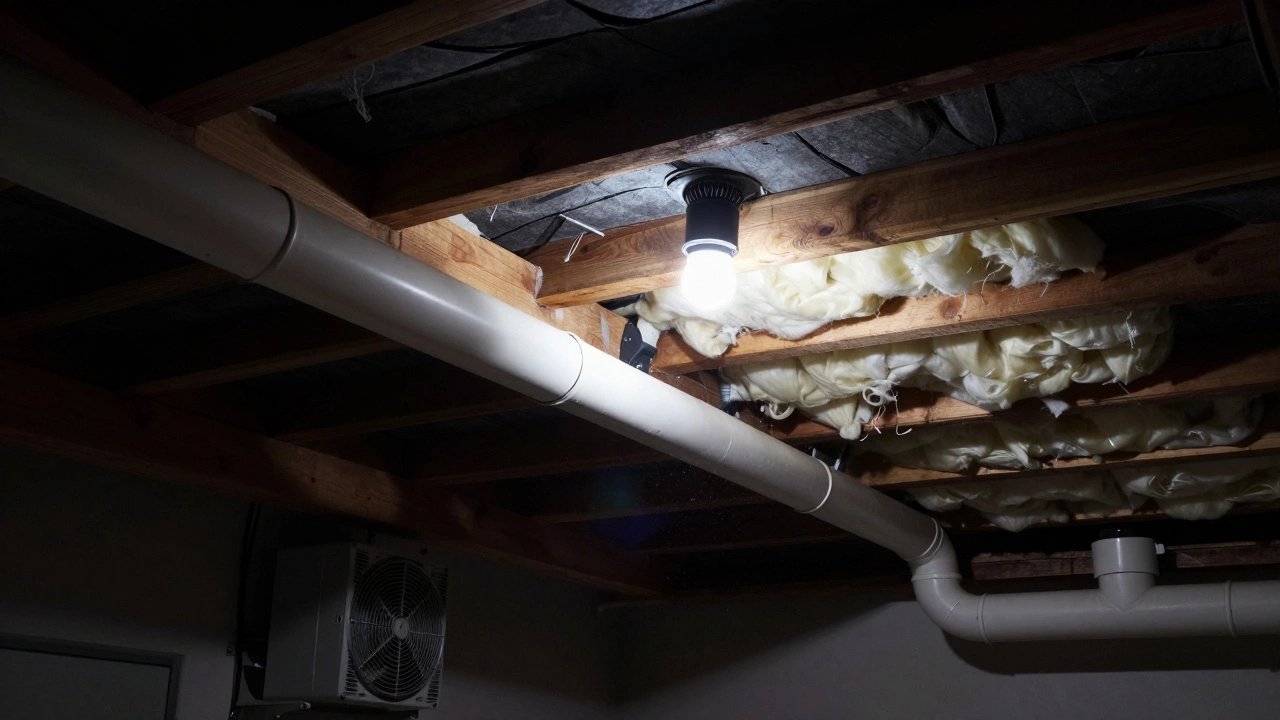
The squirrel cage impeller found in most high-performance extractor fans is built to push air through resistance. That resistance comes from long duct runs going through ceilings and roofs. In contrast, axial fans in ventilation units spin faster but lack the pressure to force air through tight pipes. If you try to duct a standard ceiling ventilation fan to the outside, it won't work efficiently. The motor will overheat because it was designed for low static pressure.
Where Should You Install Each Type?
In our local climate here in Western Australia, moisture control is critical. We deal with humidity spikes even during cooler months due to ocean influence. Placing the right fan in the right room prevents costly structural repairs later.
Bathrooms and Laundries
This is the domain of the extractor fan. These rooms generate moisture vapor rapidly. When water evaporates from a bath or clothes dryer cycle, it seeks the nearest surface to condense. Without extraction, that water settles on insulation, timber framing, and plasterboard. A proper extractor connects to the outside air, breaking the cycle. Look for units with humidity sensors that kick in automatically when moisture levels rise above 60 percent.
Kitchens
Cooking involves smoke, grease, and odours. An extractor hood pulls these contaminants away from surfaces before they settle. Some residential kitchens use range hoods that extract internally, but true extraction sends that air outside. Recycling filters exist, but they rarely capture oil particulates effectively enough for Australian cooking standards.
Living Areas
Here, you generally want ventilation. In a spacious living room, pulling air out directly might create negative pressure drafts around windows. Instead, circulation fans keep the air moving, reducing dead corners where dust mites thrive. This improves comfort without compromising the thermal envelope of the house too much.
Why Does This Matter for Repairs?
You asked the question because you likely have a broken unit or are considering a swap. Misidentifying the fan type during a repair leads to ordering the wrong parts. A technician might tell you a motor is "dead" when the fan itself is simply wrong for the application.
If you replace a working extractor with a cheaper circulating unit, you lose the ability to remove moisture. Conversely, installing an extractor in a bedroom creates unnecessary cold draughts. Understanding the physics saves money. For example, cleaning a lint filter on an internal fan is routine maintenance. However, clearing blocked ductwork on an outdoor exhaust requires checking the external roof outlet, often hidden from view.
Noise complaints are another area where identification helps. Extractors hum due to the vibration of the squirrel cage housing against the metal duct. Ventilation fans tend to whistle if the bearing dries out. Diagnosing the sound helps pinpoint whether you need a seal replacement or a full fan swap.
Building Codes and Compliance
Since 2020, Australian building standards have tightened around ventilation requirements. Under the National Construction Code (NCC), certain rooms require minimum airflow rates measured in litres per second (L/s). Bathrooms usually demand a specific extraction rate depending on their volume. Using a decorative ventilation fan often fails this test legally, even if it looks correct.
If you are renovating an older Perth home, you might encounter unducted systems. These rely on passive flow through walls. They are not classified as active extraction fans. Upgrading these to active extraction units improves efficiency but requires professional certification to ensure ducting doesn't leak air into the roof void. That leakage brings heat loss in winter and potential mould growth.

Troubleshooting Signs Before Calling a Pro
Before booking a service call, check these indicators to confirm the system type. Listen to the motor location. If the hum is coming from the central ceiling cavity, it's likely an extractor pushing against duct resistance. If the sound is right behind the grille, it is a direct drive ventilation unit. Check the grille. Is there a visible pipe leading to the roof? If yes, it's extraction. If it's a flush mount covering, verify if there is an external vent cap outside the house.
Humidity sensor failure is a common fault in modern extractors. The fan turns on but never shuts off. This usually means the PCB board has failed, not the motor. Replacing just the electronics module costs less than buying a new whole unit. Similarly, if the blade wobbles, the bearings have worn down. This is more common in units installed over ten years ago without regular filter cleaning.
Energetic Efficiency Considerations
Newer models focus heavily on Star Ratings. An efficient extractor pulls strong airflow with lower wattage. This matters in Perth where peak energy prices fluctuate. Older units often consume 30 to 50 watts continuously, while newer EC (Electronically Commutated) motors manage roughly 15 watts at full load. If your electric bill has jumped recently, swapping an old mechanical switch unit for a sensor-driven EC model could pay for itself in twelve months.
Can I use a ventilation fan instead of an extractor in my bathroom?
No, relying solely on a ventilation fan in a bathroom is risky. Ventilation moves air around the room, whereas extraction removes moisture-laden air outside. Without extraction, humidity accumulates in insulation and walls, leading to mould growth and structural decay over time.
How do I know if my fan is failing?
Signs include persistent steam on mirrors, loud rattling noises from the motor, or the unit turning on intermittently without trigger. Also, check if the grill feels warm when running, which suggests the motor is overheating due to blockage or age.
Is ducting always necessary for extractor fans?
For effective extraction, yes. Ducting directs the air outside. Without ducts, the extracted air dumps into your ceiling void or roof space, which provides no benefit and can damage the roof insulation. Recirculating fans do not need ducts, but they cannot remove moisture.
Do I need to replace the fan motor alone?
Most manufacturers sell complete replacement housings because the motor and fan blades are integrated. Buying separate motors is rare for older models and usually costs more labor than the new unit price. Always check model compatibility first.
How often should I clean the extractor fan filter?
At least once every six months. Grease and dust build-up reduces airflow efficiency significantly. Clean the mesh screen with warm soapy water and dry thoroughly before reinstalling to prevent electrical shorts.